Tokyo Hidden Gems: Lesser-Known Spots Locals Love

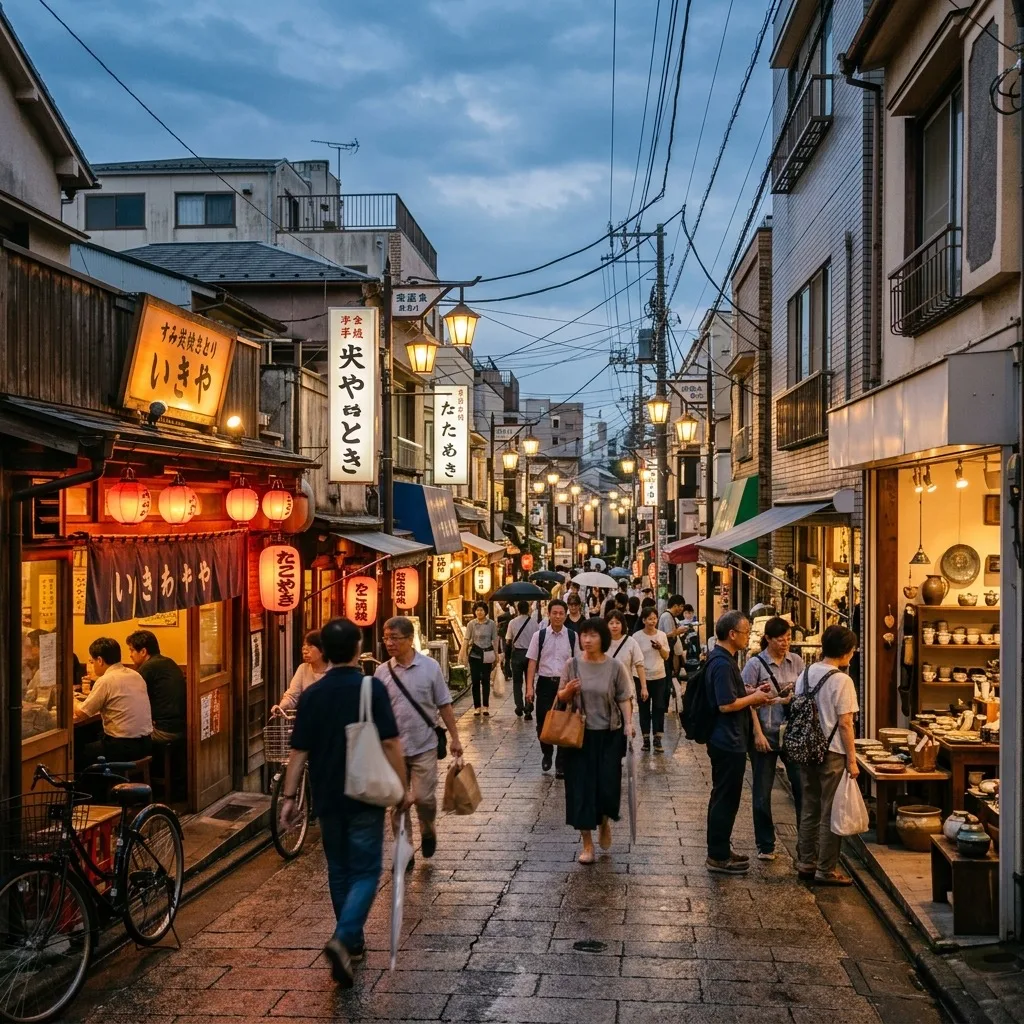
Every first-time visitor to Tokyo follows the same script: Shibuya Crossing, Senso-ji in Asakusa, a photo at the Skytree, maybe a stroll through Akihabara. That script isn't wrong — those places are popular for real reasons — but Tokyo is a city of 14 million people spread across 23 wards, and the neighborhoods that residents actually love are rarely the ones at the top of a travel listicle. This guide cuts through the noise and takes you to the Tokyo that locals quietly claim as their own.
Whether you're a repeat visitor who's already checked the obvious boxes or a first-timer who wants to see beyond the postcard version of the city, these spots reward curiosity. Most are free or low-cost, accessible by Tokyo's excellent train network, and genuinely underrun by tour groups. The secret is simply knowing where to look.
Why Tokyo's Hidden Gems Stay Hidden
Tokyo's tourist infrastructure is so efficient that it funnels visitors down a handful of well-worn corridors. The city's sheer scale — and its tendency to cluster attractions by ward — means entire neighborhoods go unvisited not because they lack appeal, but because no one told you to go there.
The spots in this guide share a few traits: they sit just outside the standard tourist orbit, they offer genuine local character that hasn't been sanitized for foreign audiences, and they give you that rare feeling of discovering something yourself rather than queuing behind a hundred other people with the same guidebook. None require advance booking. Most can be worked into a half-day itinerary alongside better-known nearby attractions.
If you're building your Tokyo itinerary from scratch, the Ultimate Tokyo Travel Guide 2026: Everything First-Timers Need to Know covers the essential logistics — transit passes, neighborhoods overview, and what to prioritize on a short trip. Come back here for the layer beneath that.
Yanaka: The Neighborhood That Survived the Earthquake and the Bombs
Yanaka sits in the northern part of Bunkyo Ward, tucked between Ueno Park and Nippori Station, and it is the closest thing Tokyo has to a time capsule. Because the area escaped both the 1923 Great Kanto Earthquake and the World War II firebombing that leveled much of the city, it still holds streets and buildings that look and feel genuinely old — wooden shop fronts, narrow lanes, moss-covered stone lanterns, and a cemetery so atmospheric that locals stroll through it on Sunday afternoons.
Yanaka Ginza: The Last Great Shotengai
The heart of Yanaka is the Yanaka Ginza, a 170-meter covered shopping street running east from the Yuyake Dandan sunset steps. Where most of Tokyo's old shotengai (neighborhood shopping streets) have either gone upscale or quietly died, Yanaka Ginza has survived by simply staying itself — a line of small butchers, pickled-vegetable shops, menchi katsu stands, and craft stores that cater to the people who actually live here.
Arrive around 4–5 PM on a weekday and you'll see the full picture: an elderly couple debating which cut of pork to buy, a woman in an apron hanging plastic fish signs outside her shop, school kids in uniform buying soft-serve from a hole-in-the-wall counter. The street ends at a small plaza where you can catch the famous sunset view that gave the Yuyake Dandan steps their name (yuyake dandan means "sunset steps").
Yanaka Cemetery and the Temples District
Yanaka Cemetery is not morbid; it's one of the finest places in Tokyo to do nothing in particular. Cherry trees line the main path and turn it into one of the city's less-photographed hanami spots in spring. The cemetery contains the tomb of the last Tokugawa shogun, Tokugawa Yoshinobu, and is ringed by over 70 Buddhist temples — more than any other neighborhood in Tokyo. The easiest way to spend a morning here is to enter from the Nippori Station side and wander south, stopping at any temple gate that catches your attention.
Getting there: Nippori Station on the JR Yamanote Line, or Nezu Station on the Tokyo Metro Chiyoda Line. The area is entirely walkable.
Nezu Shrine: Fushimi Inari Without the Crowds
If you've seen photos of the famous vermilion torii gates in Kyoto's Fushimi Inari and thought "I want that, but without two thousand other tourists in my frame," Nezu Shrine in Bunkyo Ward is your answer. It has its own tunnel of torii gates — smaller, yes, but genuinely atmospheric and often nearly empty on a weekday morning.
Nezu Shrine is one of Tokyo's oldest, dating to around 1706, and it sits at the edge of a gentle wooded hillside that feels wildly out of place in the middle of a dense urban ward. The main hall is designated an Important Cultural Property, and the grounds have a reflective pond, stone lanterns, and a fox shrine (inari) that draws locals with wishes to make.
The Azalea Garden (April–May)
Every spring, Nezu Shrine holds the Tsutsuji (Azalea) Festival, which runs through the month of April. The hillside garden explodes with over 3,000 azalea bushes in pink, red, white, and purple — a spectacle that rivals any hanami spot in the city but draws a fraction of the crowds that Ueno Park pulls. The 2026 festival runs April 1–30, with garden hours 9:00 AM–5:30 PM.
Admission: Entry to the shrine grounds is free. The azalea garden charges ¥500 at the start and end of the bloom season, rising to ¥1,000 at peak bloom (typically mid-to-late April).
Getting there: Nezu Station (Tokyo Metro Chiyoda Line), 5-minute walk. Or Sendagi Station on the same line.
Shimokitazawa: Tokyo's Indie Soul
Every major city has a neighborhood where artists, musicians, and vintage-obsessed twenty-somethings cluster because the rents are (or were) low and the streets feel alive. In Tokyo, that neighborhood is Shimokitazawa. It's a 15-minute train ride from Shibuya, and it might as well be a different city.
The neighborhood is built around two adjacent train stations — Shimokitazawa on the Odakyu and Keio Inokashira Lines — and its streets are narrow enough that the city's usual grid logic breaks down. Instead of blocks, you get alleyways branching into smaller alleyways, each one lined with record shops, ramen spots, second-hand clothing stores, and live music venues.
What to Do in Shimokitazawa
Vintage shopping: Shimokitazawa has the highest concentration of used clothing shops in Tokyo. Dig through racks of Americana denim, 1990s sportswear, and Japanese workwear at shops like Bear Pond (which also has one of the city's cult coffee counters — the owner is legendarily selective about who he serves, but worth trying). Standard vintage chain shops like Kinji and Chicago stock well-organized inventory; the smaller independent stores are where the real finds hide.
Live music: The neighborhood has more live music venues per square meter than anywhere else in Tokyo. Shimokitazawa's bar-venues (known as "live houses") host original bands most nights of the week, with door charges typically ¥1,500–¥3,000 including one drink. The Shimokitazawa scene helped launch some of Japan's biggest indie acts, and weekend nights feel genuinely electric.
Cafes and food: Coffee culture here predates the third-wave coffee movement by at least a decade. Seek out the narrow counter seats of small kissaten (traditional coffee shops) for properly brewed drip coffee, or follow the queue to whatever ramen shop locals are currently obsessed with. The area is full of small, owner-operated restaurants where the menu might change daily.
As a starting point for understanding where Shimokitazawa fits in Tokyo's neighborhood landscape, the Tokyo Neighborhoods Guide: From Shinjuku to Shimokitazawa maps out the broader geography and helps you plan a logical route between areas.
Kagurazaka: Little Paris with Hidden Alleyways
Kagurazaka occupies a gentle hill in Shinjuku Ward, five minutes from Iidabashi Station, and it carries the specific gravity of a neighborhood that was once something and knows it. It was Tokyo's most fashionable geisha district in the early 20th century, and while the geisha okiya (lodging houses) are mostly gone, the physical fabric of those years survives in the network of stone-paved yokocho alleys that branch off the main street.
The two most famous alleys are Kakurenbo Yokocho ("hide-and-seek alley") and Hyogo Yokocho, both of which retain the lacquered black wooden walls and narrow proportions of the Edo period. Walking them at dusk, when the small lanterns hanging outside restaurants flicker on, is one of those Tokyo experiences that no photograph fully captures. The alleys lead to intimate French bistros, traditional kappo restaurants, and bars that seat eight people maximum.
What to See and Do
Zenkokuji Temple: The neighborhood's spiritual anchor since the early 18th century, dedicated to Bishamonten — the deity associated with good fortune in battle and business. The annual Kagurazaka Bishamon Bishamonten Festival (January) and Kagurazaka Awa Odori festival (mid-August) turn the main street into a celebration, with dance troupes in traditional yukata and food stalls running the length of the hill.
Akagi-jinja Shrine: A small but architecturally striking shrine redesigned by celebrated architect Kengo Kuma. His renovation used glass walls and natural materials to create a contemporary building that coexists with a traditional Shinto space. An Italian cafe operates inside the complex — unusual, and worth a stop.
Canal Cafe: Immediately beside Iidabashi Station, a platform extending over the Sotobori moat hosts one of Tokyo's most underrated outdoor seating spots. Canal Cafe serves coffee, cake, and wine on a floating deck where you can watch cyclists cross the bridge above and ducks circle below. No reservation needed; just arrive and find a table.
Eating: Kagurazaka's restaurant density is high and the quality is consistently good. The French influence (the area is home to a French school and has attracted a French expat community for decades) means you can find credible pain au chocolat alongside excellent kaiseki and ramen within one city block.
Koenji: The Antique Hunter's Neighborhood
Two stops west of Shinjuku on the JR Chuo Line, Koenji has been Tokyo's bohemian antique district for as long as anyone can remember. The neighborhood's north and south shopping arcades (shotengai) are lined with vintage clothing shops, antique furniture dealers, used record stores, and a particular concentration of stores specializing in old military surplus, workwear, and Americana.
What makes Koenji different from Shimokitazawa's more curated vintage scene is that Koenji still has a genuinely grungy, chaotic energy — you can still stumble on a box of old ceramics or a pile of vinyl records priced for clearing out, rather than artfully arranged for buyers with money. The Koenji Awa Odori festival in late August is one of Tokyo's largest traditional dance festivals, drawing over 12,000 dancers and half a million spectators to the streets.
For budget-conscious travelers, Koenji also exemplifies the kind of neighborhood eating and affordable-living culture covered in Tokyo on a Budget: Cheap Food, Free Attractions & Affordable Stays — izakayas here are priced for residents, not tourists.
Todoroki Valley: A Forest Walk Inside the City
Todoroki Valley is, by most measures, the strangest place in Tokyo. It is a forest ravine — narrow, shaded, and cut through by a shallow stream — that runs for about 1 kilometer through the middle of a dense residential ward in Setagaya. Walking into it from the street entrance, the city vanishes almost instantly. The temperature drops, cicadas replace traffic noise, and the path follows the stream past moss-covered rocks, a small waterfall, and a wooden footbridge.
At the far end of the valley sits Todoroki Fudoson Temple, a small Fudo Myoo shrine built into the rock face above the stream. The combination of water, stone, overhanging trees, and an active place of worship gives the walk the feeling of a mountain temple precinct — despite the fact that you are inside Tokyo's 23 wards.
Entry: Free. Open continuously (the valley itself has no gate). The adjacent Japanese garden has its own hours.
Important note: As of 2025–2026, the main hiking promenade has been partially restricted due to a fallen tree and ongoing safety assessments. The southern section including the Japanese garden and the temple remains accessible. Check the Setagaya City official site for current path conditions before you visit.
Getting there: Todoroki Station on the Tokyu Oimachi Line. The valley entrance is a 5-minute walk from the station.
Kiyosumi-Shirakawa: Tokyo's Coffee Capital
If you follow specialty coffee at all, you already know the name Kiyosumi-Shirakawa. This quiet residential neighborhood in Koto Ward became the epicenter of Tokyo's third-wave coffee movement when Blue Bottle Coffee chose it as the location for its first Japanese outpost in 2015. The opening triggered a domino effect — within a few years, the area around Kiyosumi-Shirakawa Station became the densest concentration of specialty coffee roasters in the country.
The original Blue Bottle is still there, set in a converted warehouse with a minimalist interior and a queue that forms before the doors open on weekends. But the real draw now is exploring the cluster of roasters within walking distance: Allpress Espresso, Arise Coffee Roasters, and a rotating cast of newer names that keep the scene moving forward.
Beyond coffee, the neighborhood's appeal lies in its residential calm — there are almost no hotels here, no chain restaurants, and no souvenir shops. It's a neighborhood that people live in, which means the restaurants and bars serve regular customers rather than passing tourists. Kiyosumi-Shirakawa Garden, a traditional Japanese garden built around a former feudal lord's pond, sits five minutes from the station and charges a nominal admission for what amounts to a quiet hour of watching koi move through the water.
Practical Guide
Getting Around
All of these neighborhoods are accessible by Tokyo's train and subway network. An IC card (Suica or Pasmo) loaded with enough credit handles every transit leg without requiring individual ticket purchases. The Getting Around Tokyo: Trains, IC Cards & Navigation Apps guide covers how to set one up on arrival and how to use navigation apps to plan routes between neighborhoods.
A useful mental geography note: Yanaka, Nezu, and Sendagi are clustered together in the northeast (exit Nippori or Nezu Station and you can walk between them); Shimokitazawa and Koenji are both on the west side of the city and can be combined in an afternoon; Kagurazaka is central and pairs naturally with a walk along the Kanda River.
Day-Tripping From These Neighborhoods
Several of the areas on this list — particularly Yanaka and Shimokitazawa — work well as jumping-off points for broader exploration. Once you've oriented yourself in Tokyo's lesser-known wards, Best Day Trips from Tokyo: Nikko, Kamakura, Hakone & More will help you extend your range beyond the city entirely.
Costs
Most of these neighborhoods are free to walk and explore. Budget for:
- Yanaka Ginza: ¥200–¥500 for snacks from shops along the street
- Nezu Shrine azalea garden: ¥500–¥1,000 (April only; free outside festival season)
- Todoroki Valley: Free
- Kagurazaka, Shimokitazawa, Koenji, Kiyosumi-Shirakawa: No entry fees; costs are whatever you spend eating, drinking, and shopping
Tips and Common Mistakes
Go on a weekday. Shimokitazawa and Kagurazaka in particular can feel crowded on Saturday afternoons as Tokyoites themselves use them for leisure. Weekday mornings are when these neighborhoods are truly quiet.
Don't rush Yanaka. The neighborhood rewards aimless wandering more than any planned itinerary. Leave a full half-day, bring cash (many small shops are cash-only), and plan to stop whenever something catches your eye.
Nezu Shrine timing. If you're visiting during the April azalea festival, arrive before 10 AM on a weekday. The garden fills up quickly and the light is better in the morning.
Kiyosumi-Shirakawa on a weekday. The weekend queue at Blue Bottle can exceed 30 minutes; weekday mornings are relaxed.
Wear comfortable shoes. Kagurazaka's yokocho alleys are cobbled stone and can be slippery when wet. Yanaka and Todoroki Valley involve gentle terrain but steady walking.
Use Google Maps offline. Download offline maps for Tokyo before you leave your accommodation. The narrow alleys in Kagurazaka and Yanaka don't have clear street signage, and a downloaded map functions where cellular service is spotty in underground passages.
Don't skip the small shrines. Every neighborhood in this guide has multiple minor shrines that receive almost no tourist attention but are active places of local worship. Removing your shoes and entering when permitted, placing a small coin offering, and spending two minutes in the quiet is one of the best ways to feel connected to the neighborhood rather than passing through it.
FAQ
Are these neighborhoods far from central Tokyo? None are more than 30–40 minutes from Shinjuku or Shibuya by train. Kagurazaka is 5 minutes from Iidabashi Station; Nezu and Yanaka are reachable in 20 minutes from Tokyo Station on the Chiyoda Line. Todoroki Valley takes the longest — about 30 minutes from Shibuya on the Tokyu Oimachi Line.
Do I need to speak Japanese to enjoy these neighborhoods? Not at all. Most shops in these areas deal in goods, coffee, and food where the transaction is clear enough without language. That said, learning a few basic phrases (sumimasen for "excuse me," ikura desu ka for "how much") will be appreciated by older shopkeepers in Yanaka and Koenji.
Is Shimokitazawa good for families with kids? The daytime cafe-and-vintage-shopping side of Shimokitazawa is family-friendly. The live music scene skews late (most shows start at 7–8 PM) and is more relevant for adults. Yanaka Ginza, with its street food and easy walking, is probably the most accessible neighborhood for families.
Can I visit multiple neighborhoods in one day? Yes, with some planning. A good pairing is Yanaka + Nezu Shrine in the morning (they are a 10-minute walk apart), then Shimokitazawa in the afternoon via Nippori → Shinjuku → Odakyu Line. Koenji and Kiyosumi-Shirakawa are on opposite sides of the city and harder to combine.
Are the yokocho alleys in Kagurazaka open to visitors? Yes. The alleys themselves are public spaces. Many restaurants and bars that line them require reservations for dinner, but you can walk through freely at any time. The atmosphere is best experienced between 6–9 PM when the lanterns are lit and restaurants are in service.
Conclusion
Tokyo's tourist trail is impressive. But the city that residents actually inhabit — the one with 70-year-old shotengai, forest ravines hidden between apartment blocks, coffee roasters in converted warehouses, and geisha alleys that have survived a century of earthquakes and redevelopment — is something else entirely.
Yanaka, Nezu, Shimokitazawa, Kagurazaka, Koenji, Todoroki, and Kiyosumi-Shirakawa aren't secret in the sense of being hard to find. They're accessible by public transit, free to enter, and genuinely welcoming. They're secret in the more honest sense: no one told you about them, so most visitors never get there.
Now you know where to go. The rest is just showing up.