Autumn Foliage Photography Spots You Can’t Miss
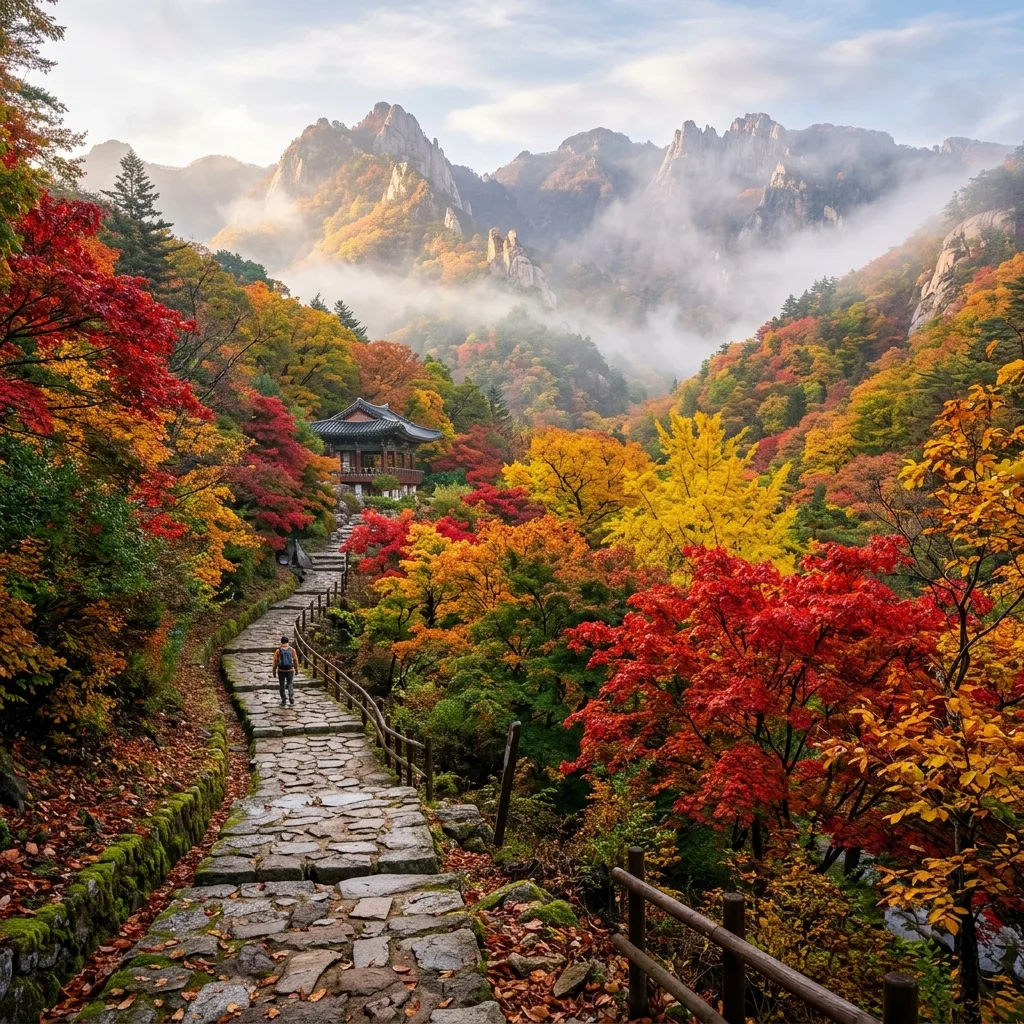
There is a specific, electric silence that hangs over the Korean peninsula just before the first frost. It’s the sound of millions of leaves—maple, ginkgo, and zelkova—holding their breath before they ignite into a final, fiery crescendo of crimson and gold. For a photographer, this isn’t just a change of season; it’s a high-stakes chase against time, weather, and the ever-present challenge of the morning mist.
South Korea’s autumn is legendary, but capturing it requires more than just showing up with a camera. It demands an understanding of the "North-to-South" progression, a mastery of polarizers to cut the glare on waxy maple leaves, and the tactical patience to wait out the busloads of tourists who descend upon the most iconic spots. Whether you’re a professional looking for the perfect telephoto compression shot of a mountain temple or an enthusiast searching for the most "Instagrammable" golden ginkgo lane in Seoul, this guide is your technical and logistical blueprint for a successful shoot.
1. Introduction: The Magic of a Korean Autumn
The ephemeral nature of Korea’s autumn foliage is what makes it so intoxicating. One week, the mountains are a deep, stoic green; the next, they look as though a painter has tipped a bucket of vermilion across the ridges. This "peak season" is a window that lasts barely ten days in any given location, making the timing of your visit the single most important factor in your photography success.
In this guide, we will go beyond the standard "Top 10" lists found on generic travel sites. We are focusing on the technical blueprints—the specific lenses, filters, and GPS-level positioning needed to capture these scenes. We’ll cover the legendary Naejangsan National Park, the royal elegance of Seoul’s palaces, and the rugged, early-season beauty of Seoraksan. More importantly, we’ll discuss how to stay ahead of the crowds and how to handle the unique lighting challenges of a Korean fall. We will dive deep into why a Circular Polarizer is your best friend and why your alarm clock should be set for 4:30 AM every day of your trip.
2. Timing the Peak: The 2026 Foliage Forecast
Timing a photography trip to Korea for foliage is like trying to catch lightning in a bottle. The colors follow a predictable North-to-South progression, moving down the peninsula at a rate of approximately 25 kilometers per day. This means that while the leaves in the northern mountains of Seoraksan might be falling by late October, the southern temples of Naejangsan are only just reaching their peak.
The 2026 Forecast Estimates
Based on historical data and early-season temperature drops, here are the anticipated peak windows for 2026. "Peak" is defined as the point when roughly 80% of the trees have changed color:
- Northern Region (Seoraksan, Odaesan): First foliage starts in late September. Peak: October 17 – October 25.
- Central Region & Seoul (Bukhansan, Palaces): First foliage starts mid-October. Peak: October 28 – November 10.
- Southern Region (Naejangsan, Jirisan, Gyeongju): First foliage starts late October. Peak: November 8 – November 15.
- Jeju Island (Hallasan): Peak: October 28 – October 30.
To plan your trip effectively, we highly recommend checking the Best Time to Visit South Korea: A Seasonal Weather Guide to understand how temperature shifts affect leaf intensity. Generally, a sharp drop in nighttime temperatures combined with sunny days leads to the most vibrant reds. Conversely, a warm, rainy October can result in "muted" colors where the leaves turn brown and fall early without hitting that brilliant crimson stage.
3. The "King of Maples": Naejangsan National Park
If there is one place that defines autumn in Korea, it is Naejangsan. Located in the southwest, this park is famous for its "Baby Maples" (dang-danpung)—a species with smaller, more delicate leaves that turn a deep, translucent red.
The Uhwajeong Pavilion: Mastering the Reflection
The most iconic shot in the park is the Uhwajeong Pavilion, a blue-roofed structure sitting in the middle of a serene lake.
- Technical Tip: To get a perfect mirror reflection, you must arrive before sunrise. Once the shuttle buses start running (around 8:00 AM), the vibrations and wind usually disturb the water surface.
- Gear: Use a Circular Polarizer (CPL). This is non-negotiable. It will remove the glare from the water surface and the waxy leaves, allowing the deep blue of the pavilion and the red of the maples to pop.
- Composition: Don't just shoot from the stone path. Move to the far edge of the lake and use a wide-angle lens (16-35mm) to use the overhanging maple branches as a natural "frame" for the pavilion. This adds depth and context to the shot.
The Maple Tree Tunnel
Between the park entrance and the Naejangsa Temple lies a 2.3km path lined with 108 maple trees.
- The Compression Shot: This is where your 70-200mm telephoto lens shines. By standing further back and zooming in, you "compress" the distance between the trees, making the "tunnel" look like a solid wall of fire.
- Anti-Crowd Strategy: Do not take the shuttle bus. Walk the path at 6:00 AM. By 10:00 AM, the path will be a sea of colorful hiking jackets, making "clean" shots nearly impossible. If you are stuck in a crowd, point your camera upward—the backlit canopy often looks like stained glass against the blue sky.
Baekyangsa Temple: Framing the Ssanggyeru Pavilion
While the main Naejangsan area is famous for its maple tunnel, the nearby Baekyangsa Temple (technically part of the same national park but a separate entrance) offers one of the most serene and high-contrast photography spots in Korea.
- The Shot: The Ssanggyeru Pavilion reflecting in the temple pond, with the massive limestone cliff of Baekhakbong towering in the background.
- The Timing: Like Uhwajeong, this spot is best at dawn. The morning light hitting the white limestone of Baekhakbong creates a dramatic backdrop for the red maples that frame the pavilion.
- Composition: Use a mid-range focal length (35-50mm) to capture both the pavilion and its reflection. If you have a tripod, use a long exposure (2-5 seconds) to smooth out any ripples in the pond, making the reflection look like glass.
Logistics for Naejangsan Photographers
To truly beat the crowds, you should stay in Jeongeup-si, the nearest city. From there, it's a 20-minute taxi ride to the park entrance. If you arrive at the gate by 6:00 AM, you can hike to the pavilion before the first shuttle bus even starts its engine. Avoid weekends at all costs—parking lots can fill up by 7:00 AM, and the traffic jam leading to the park can stretch for kilometers. If you must go on a weekend, prepare to park several kilometers away and take a local shuttle.
For more information on national park logistics, check out our guide to the Best National Parks in South Korea for Fall Foliage.
4. Seoul’s Urban Masterpieces: Palaces and Parks
You don’t need to hike a mountain to find world-class foliage. Seoul transforms into a photographer's playground in late October and early November.
Changdeokgung Secret Garden (Huwon)
The Secret Garden is arguably the most beautiful autumn spot in the capital. The combination of Joseon-dynasty architecture and 300-year-old trees is unparalleled.
- Best Spot: The Buyongji Pond. The reflection of the Juhamnu Pavilion in the pond, surrounded by orange zelkova and red maple, is the "hero shot."
- The Constraint: Access is by guided tour only, and tickets sell out in minutes. You must book online exactly 6 days in advance at 10:00 AM KST.
- Photography Tip: Since you are on a timed tour, you won't have time for a tripod. Increase your ISO slightly and use a fast prime (35mm f/1.8) to capture the details without motion blur. Look for "framing" opportunities through the open doors of the traditional pavilions.
For a broader look at the city's royal sites, see our Seoul's Five Grand Palaces Guide.
The Deoksugung Stone Wall Path
Located next to City Hall, this path is famous for its massive Ginkgo trees.
- Creative Angle: Wait for a "yellow rain" moment when the wind blows and the ginkgo leaves fall simultaneously. Use a fast shutter speed (1/1000s) to freeze the leaves in mid-air.
- Portraiture: This is the best place to use a Hanbok Rental in Korea. The contrast of a colorful Hanbok against the golden ginkgo wall is a classic Korean aesthetic. The soft, reflected light from the gray stone walls provides a natural "reflector" for portraits.
Seoul Forest: Ginkgo Tree Lane
For those seeking a more minimalist, "moody" shot, Seoul Forest offers a dense grid of ginkgo trees that creates a stunning vanishing point.
- Technical Tip: Use a 50mm or 85mm lens to create a beautiful bokeh effect with the golden leaves in the foreground and background. This isolates the subjects and creates a sense of depth that a wide-angle lens cannot achieve in such a dense forest.
Olympic Park: The "Lone Tree" and Cosmos Fields
Olympic Park is a vast space that offers a different kind of autumn beauty.
- The Lone Tree (Alone Tree): Situated in the middle of a massive green hill, this tree is a favorite for minimalist photography. In autumn, the surrounding grass turns a golden brown, and if you arrive early in the morning, you might catch a layer of fog sitting in the valley. It's a perfect exercise in "less is more."
- Wildflower Fields: The park also features massive fields of orange cosmos and pink muhly grass. These are perfect for low-angle shots using a wide aperture (f/2.8) to create a soft, dreamy foreground that leads the viewer's eye into the frame.
5. Mountain Vistas: Seoraksan and Beyond
Seoraksan is the first major mountain to peak, and its beauty is more rugged and dramatic than the southern parks.
Gwongeumseong Fortress
Taking the cable car up to Gwongeumseong provides a panoramic view of the "Dinosaur Ridge."
- Composition: Use a wide-angle lens to capture the scale of the granite peaks set against the multi-colored valley below. The best light is in the late afternoon when the sun hits the ridges at an angle, creating long shadows and highlighting the textures of the rock.
Biseondae Trail
This is a relatively flat hike that follows a crystal-clear mountain stream.
- The Waterfall Shot: Bring a Neutral Density (ND) filter. This will allow you to use a slow shutter speed (0.5 to 2 seconds) to blur the water while keeping the autumn leaves sharp. The contrast between the "silky" white water and the sharp red leaves is breathtaking. Look for rocks covered in fallen leaves to provide a strong foreground element.
Juwangsan National Park: Waterfalls and Dramatic Cliffs
Juwangsan is often overlooked by international tourists but is a favorite for local landscape photographers.
- The Juwang Valley: The hike through the valley features massive vertical cliffs that look like they belong in a Chinese ink wash painting.
- Juyeon Waterfall: This waterfall is tucked away in a narrow gorge. The combination of the deep shadows in the gorge and the bright, backlit maples above the falls creates a high-dynamic-range challenge.
- Technical Tip: Use Auto Exposure Bracketing (AEB) here. Take three or five shots at different exposures and merge them in post-processing (HDR) to ensure you capture the details in both the dark rocks and the vibrant leaves.
If you're planning on hitting the trails, make sure you're prepared with the right Essential Gear for Hiking in Korea and familiar with Hiking Etiquette in Korea.
6. Hidden Gems: Textures and Tunnels
While the big names get all the glory, some of the best photography happens in the "hidden" spots.
Asan Ginkgo Road
Located about 1.5 hours from Seoul, this is a 2km road lined with over 400 ginkgo trees.
- The Shot: A low-angle shot from the center of the road (it's pedestrian-only during peak season) looking toward the vanishing point.
- Pro Tip: Go on a weekday. On weekends, the road is so crowded you can't see the pavement. If the ground is covered in yellow leaves, use them as a "carpet" leading into your photo.
Jangtaesan Metasequoia Forest (Daejeon)
Metasequoia trees turn a unique rusty orange later than maples, usually in mid-to-late November.
- The Perspective: Jangtaesan has a "Sky-tower" and a suspension bridge that allows you to shoot the canopy from above. This top-down perspective is rare in foliage photography and creates stunning patterns. It’s a great place to experiment with geometric shapes and leading lines.
Suncheonman Wetland
Not all foliage is on trees. The Golden Reeds of Suncheonman are world-class.
- The S-Curve: Hike up to the Yongsan Observatory at sunset. You’ll capture the S-curve of the river flowing through the golden reed fields as the sun dips below the horizon. Use a tripod and a long exposure to capture the "glow" of the reeds. The light here is exceptionally soft and warm during the last 30 minutes of the day.
7. Professional Gear Guide for Autumn Foliage
Photography in the Korean autumn presents two main challenges: saturation management and dynamic range.
Lens Selection
- Wide-Angle (16-35mm): For the big palace courtyards and mountain vistas.
- Telephoto (70-200mm): Essential for "compressing" foliage tunnels and isolating single leaves or temple details.
- Fast Prime (35mm or 50mm): For low-light temple interiors and portraits where you want a blurry background.
The CPL Filter: Your Secret Weapon
We cannot emphasize this enough: Bring a Circular Polarizer. Autumn leaves in Korea often have a waxy coating that reflects the white sky, making them look dull or "shiny" in photos. A CPL cuts this reflection, revealing the actual pigment of the leaf. It also deepens the blue of the sky, providing a perfect complementary color to the orange and red leaves. Without a CPL, your photos will often look "washed out" even if the colors are vibrant to the naked eye.
Tripod Etiquette
In national parks, tripods are generally welcome. However, in Seoul’s palaces, they can be a gray area.
- Gyeongbokgung/Changdeokgung: Usually okay in the main courtyards, but often restricted in narrow paths or during special events.
- Tip: If you use a tripod, be quick and don't block the path. If a guard asks you to move, do so immediately and politely. Monopods are often a good middle-ground for stability without the large footprint.
Software & Post-Processing: Keeping it Natural
One of the biggest mistakes in autumn photography is over-saturating the reds and yellows in Lightroom or Photoshop.
- White Balance: Set your camera to "Cloudy" or manually set it to 6000K-6500K. This warms up the scene and emphasizes the autumn tones from the start.
- HSL Panel: Instead of cranking up Global Saturation, use the HSL (Hue, Saturation, Luminance) panel. Increase the Luminance of the oranges and yellows to make them "glow" from within, rather than just looking like flat, heavy color.
- Calibration: In Lightroom, try increasing the Saturation of the Red Primary and Blue Primary in the Calibration tab. This often yields a more "cinematic" and professional look than the standard saturation slider.
For more advice on what to bring, consult our South Korea Packing List: Essential Items for Every Season.
8. Practical Tips for the Traveling Photographer
Navigation and Logistics
Google Maps is notoriously unreliable for walking directions in Korea. We recommend using Essential Apps to Download Before Your Trip to South Korea like Naver Map or Kakao Map. They provide real-time bus and train data, which is crucial for reaching remote temples like Baekyangsa. Also, make sure you have a T-Money Card topped up for seamless transit.
Staying Ahead of the Crowd
The "6:00 AM Rule" is the difference between a portfolio-grade shot and a "snapshot with tourists." Most tour groups from Seoul don't arrive at the national parks until 10:30 AM. If you are already at the temple gate when it opens at sunrise, you have four hours of "pure" light and empty paths. This is especially true for Nami Island, which becomes impossibly crowded by midday.
Clothing: The Layering System
Autumn temperatures fluctuate wildly. You might start a hike at 5°C and end it at 20°C.
- Base Layer: Moisture-wicking (to prevent chills after sweating).
- Mid Layer: Light fleece or down vest.
- Outer Layer: Windbreaker or light jacket. Don't forget gloves—holding a cold metal tripod at 5:00 AM is miserable without them. Thermal leggings under your hiking pants are also highly recommended for long waits during sunrise shoots.
9. Conclusion: Capturing the Soul of the Season
Capturing the autumn foliage in South Korea is a test of both technical skill and logistical planning. It’s about more than just the "peak" dates; it’s about understanding the light, the gear, and the culture of the locations you are visiting. Whether you are framing the Uhwajeong Pavilion in the morning mist or chasing the golden hour at Suncheonman, the effort you put into preparation will be reflected in the depth and vibrancy of your images.
The peninsula's transformation is a reminder of the beauty in transience. For those few weeks, every corner of the country offers a masterpiece waiting to be captured. Respect the environment, follow the "Leave No Trace" principles, and remember that sometimes the best photo is the one you take with your eyes after the camera is back in the bag.
Final Checklist for Your Photography Trip:
- Check the forecast weekly starting in September.
- Book your Secret Garden tickets exactly 6 days in advance at 10 AM.
- Pack your CPL filter and a spare battery (cold weather drains them faster).
- Download Naver Map for accurate transit and walking paths.
- Arrive early. The best light and the fewest people are always found at dawn.
- Use a tripod for low-light morning shots but be mindful of crowds.
- Shoot in RAW to preserve the maximum amount of color data for editing.
For a complete plan to see all these spots, check out our 10-Day Autumn Itinerary for Foliage Lovers.