Best National Parks in South Korea for Fall Foliage
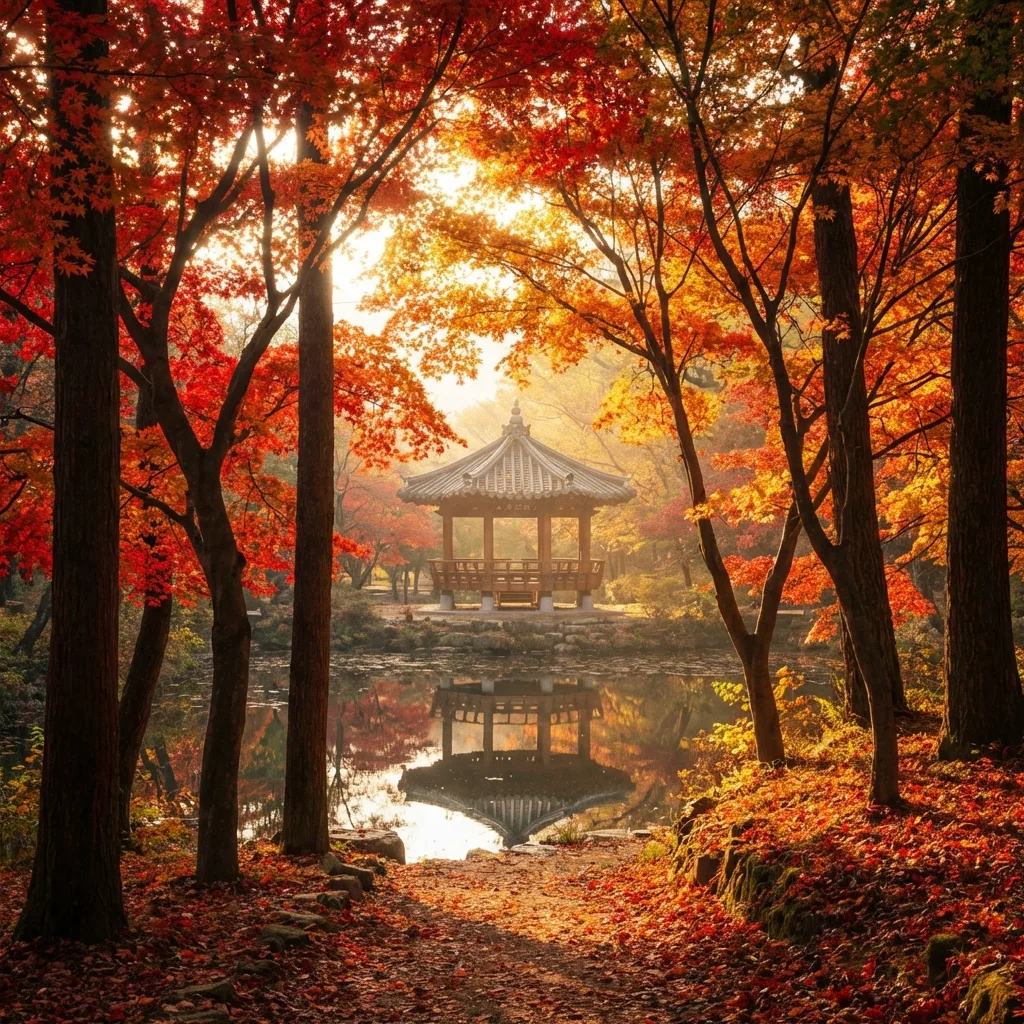
South Korea in autumn is a country on fire—not with flame, but with the explosive crimson, deep orange, and shimmering gold of millions of maple and ginkgo trees. As the humid summer air clears to make way for crisp, sunny days, the peninsula undergoes a transformation that attracts millions of photographers and nature lovers from around the globe.
This transformation is known locally as the "Autumn Wave." Starting in the northern mountains of Gangwon-do in late September, the colors travel southward like a slow-moving flood, finally reaching the southern provinces and Jeju Island by mid-November. If you’ve ever wanted to witness the world’s most vibrant autumn scenery, South Korea’s National Parks are your stage.
To truly experience the autumn season, you have to head into the mountains. In Korea, hiking is a national pastime, and during the fall foliage season, it becomes a pilgrimage. Whether you’re looking for rocky crags reflecting the sunset or quiet forest paths carpeted in fallen leaves, here is your guide to the best National Parks for catching the peak colors.
The "Autumn Wave": Understanding the Schedule
Timing is everything. If you arrive a week too early, you'll see mostly green; a week too late, and the branches will be bare.
The most important term to remember is "Peak Foliage." This is officially defined as the point when roughly 80% of the leaves on a mountain have changed color. This typically occurs about two weeks after the first sightings of autumn leaves.
2025 Forecast Timeline:
- Sept 30: Colors begin in Seoraksan (North).
- Oct 23: Peak Foliage in Seoraksan & Jirisan.
- Oct 30: Peak Foliage in Hallasan (Jeju).
- Nov 4: Peak Foliage in Bukhansan (Seoul).
- Nov 11: Peak Foliage in Naejangsan (South).
[!TIP] The Weekday Rule: To avoid the massive crowds that flock to the mountains, plan your trips for Tuesday, Wednesday, or Thursday. Arriving at the park entrance by 7:30 AM is highly recommended to secure parking or a spot on the shuttle buses.
The Northern Giant: Seoraksan National Park
Located in northeastern Gangwon-do, Seoraksan is the first major mountain to turn. It is often cited as the most beautiful mountain in Korea due to its jagged granite peaks and deep, dramatic valleys.
Best Trail: Cheonbuldong Valley
The "Valley of 1,000 Buddhas" is the crown jewel of Seoraksan. As you descend from the heights, the trail winds alongside a crystal-clear mountain stream, surrounded by sheer rock faces and a dizzying array of fiery red maples.
- The Cable Car Shortcut: If you aren't up for an 8-hour trek, take the Gwongeumseong Cable Car near the Sinheungsa Temple entrance. It whisks you to a ridge with 360-degree views of the "Dinosaur Ridge" and the East Sea in under 10 minutes.
The Queen of Maples: Naejangsan National Park
If Seoraksan is the king of the north, Naejangsan is the undisputed queen of the south. Located in North Jeolla Province, it is particularly famous for its rare species of "baby maple" trees, which have smaller, more delicate leaves that turn an incredibly deep, saturated red.
Highlight: The Maple Tunnel
A 500-meter paved path leads from the information center to Naejangsa Temple. This path is lined with hundreds of maple trees whose branches meet overhead, creating a literal tunnel of red and gold.
- The Uhwajeong Pavilion: For photographers, the blue-tiled roof of this pavilion reflecting in the still pond, surrounded by autumn colors, is the essential "K-Autumn" shot.
The Rocky Wonder: Daedunsan Provincial Park
While technically a Provincial Park rather than a National Park, Daedunsan cannot be ignored. It is famous for its verticality and spectacular suspension bridges.
The Geumgang Scenic Bridge
This 50-meter suspension bridge spans a deep gorge between two massive rock spires. Walking across it while the valley below is a sea of orange is a thrill like no other.
- The Cloud Staircase: For the brave, a near-vertical staircase leads to the very top of a rock spire. It’s one of the most famous (and terrifying) hiking photo ops in Korea.
The Urban Autumn: Bukhansan National Park
You don't have to leave the capital to see world-class foliage. Bukhansan is the most visited National Park in the world per unit area, and it sits right on the edge of Seoul.
Best Trail: Baegundae Peak
The climb to the 836-meter summit is strenuous, involving cables and steep granite slabs, but the reward is a view that captures the entire city of Seoul framed by a border of autumn gold.
- Accessibility: Take the subway to Bukhansan Ui Station, and you’re at the trailhead in 5 minutes.
The Southern Traverse: Jirisan National Park
Jirisan is the largest national park on the Korean mainland and the country's first designated National Park (1967). It spans the borders of three provinces—South Gyeonggsang, South Jeolla, and North Jeolla—and is home to the peninsula's second-highest peak, Cheonwangbong (1,915 m).
Why Jirisan in Autumn
While Seoraksan wins on drama and Naejangsan wins on color density, Jirisan wins on scale and immersion. The park is so vast that entire sections are virtually free of crowds even during peak foliage season. Its deep valleys—particularly Piagol Valley—are famous for their rare crimson maple species that produce a red so vivid it has been described as "bleeding into the sky." The valley has earned a reputation as one of the most photographed autumn destinations in Korea, yet remains blissfully uncrowded compared to Naejangsan.
Best Trail for Foliage
The Piagol Valley Trail (피아골) begins at Piagol Shelter and winds through an 8-kilometer river valley. The trail is relatively flat, making it accessible to most fitness levels. The combination of water reflections, overhanging maple branches, and the soft light filtering through the canopy makes this the best "slow walk" foliage trail in Korea.
- Access: Take a bus from Gurye Intercity Bus Terminal. A KTX from Seoul to Gurye station takes approximately 2.5 hours.
- Base Town: Gurye-gun has budget guesthouses and pension accommodations perfect for a two-day Jirisan visit.
Volcanic Gold: Hallasan National Park, Jeju Island
For those combining their Korean trip with a Jeju Island itinerary, Hallasan—Korea's highest mountain at 1,947 m—offers a completely unique autumn experience driven by altitude rather than latitude.
What Makes Hallasan Different
Unlike the maples of the mainland, Hallasan's foliage is defined by silver grass meadows (억새) and mountain ash trees that frame the volcanic crater lake, Baengnokdam. The upper slopes take on a sweeping silver-gold palette from mid-October, while the lower forests display the expected reds and oranges.
The Summit Trail
The Eorimok Trail (어리목) and Yeongsil Trail (영실) are the two primary autumn routes. The Yeongsil Trail is particularly celebrated—it passes through the Obaektori rock formations, a dramatic cluster of volcanic columns framing a panorama of the South Sea that is unlike anything on the mainland.
Important: Summit access to Baengnokdam requires a permit, and the quota fills within hours of opening. Apply through the Hallasan National Park reservation system at least three weeks in advance.
- Best Month: Mid-to-late October.
- Access from Jeju City: City bus No. 240 (Yeongsil) or No. 1100 from Jeju Intercity Bus Terminal.
Autumn Festivals Not to Miss
South Korea's autumn season is also a festival season. These events coincide with peak foliage and offer a deeper cultural layer to your nature trip:
| Festival | Location | Timing | Highlight |
|---|---|---|---|
| Naejangsan Maple Festival | Naejangsan NP | Late Oct | Night illumination of the maple tunnel |
| Gyeongju Cultural Festival | Gyeongju | Early Oct | Traditional performances amid Silla-era ruins in autumn color |
| Seoraksan Culture Festival | Sokcho City | Late Sept | Mountain market and folk performances at the park entrance |
| Jeju Olle Walking Festival | Jeju Island | Late Oct–Nov | Group walking on coastal trails with peak silver grass |
The Naejangsan Maple Festival's nighttime illumination is particularly extraordinary—the maple tunnel is lit with gentle warm lighting after 6 PM, transforming it into one of the most romantic and surreal scenes in Korea. This event typically draws large weekend crowds, so aim for a Thursday or Friday evening.
What to Pack for Autumn Mountain Hiking
Autumn hiking in Korea requires more preparation than a summer stroll.
Layering Is Non-Negotiable
Temperatures on the higher peaks (Seoraksan, Jirisan, Hallasan) can drop to 3–8°C at the summit even when valley temperatures sit at 18°C. The standard Korean hiker's system:
- Base Layer: Moisture-wicking synthetic or merino wool long-sleeve top.
- Mid Layer: Lightweight fleece or down jacket (packable).
- Outer Layer: A windproof shell or light rain jacket. Autumn weather can shift quickly.
Essential Gear
- Trekking Poles: Particularly important for the steep descents of Cheonbuldong Valley (Seoraksan) and Cheonwangbong (Jirisan).
- Gaiters: Late-season fallen leaves can hide wet rocks and uneven terrain.
- Headlamp: Many popular trails start before dawn to catch the golden hour light on the peaks. A headlamp is mandatory.
- Downloadable Maps: Download the Naver Map offline section for your target mountain before you leave the city. Signal on the upper ridges is unreliable.
What Korean Hikers Always Bring
Korean trail culture has a few non-negotiable items: a portable gas stove and ramyeon (instant noodles), to be cooked at the summit shelter; 막걸리 (makgeolli, rice wine) or barley tea in a thermos; and a large handkerchief for both mopping brow and doubling as a makeshift tray at mountain shelters.
Photography Guide: Capturing Korean Autumn
South Korea's autumn foliage is arguably the most photographed seasonal event in Northeast Asia. Here is how to capture images that go beyond the tourist postcard.
The Golden Hour Advantage
The most striking foliage photography occurs in the first 60–90 minutes after sunrise and the final 45 minutes before sunset. During these windows, the low-angle sunlight passes horizontally through the colored leaves, creating a backlit translucency that photography forums call the "leaf glow" effect. The midday sun, by contrast, creates harsh shadows and washes out the saturation of reds and oranges.
For Seoraksan: Sunrise is most effective on the western ridgeline. For Naejangsan's maple tunnel: The tunnel faces east, making morning light ideal. For Daedunsan's suspension bridge: The afternoon western light catches the gorge dramatically.
Gear Recommendations
- Polarizing Filter: Essential for cutting glare on the leaf surfaces and intensifying the blue of mountain streams. This single accessory improves foliage photos more than any camera upgrade.
- Tripod or Gorilla Pod: Necessary for the misty, low-light conditions that occur in the valleys after 4 PM. Many of the most atmospheric shots require exposures of 1/15s or longer.
- Wide-Angle Lens: For the "maple tunnel" shots at Naejangsan and the full panoramas from Bukhansan's Baegundae Peak.
- Telephoto Lens: For isolating individual maple branches against a blue sky—a composition that is deceptively simple and consistently powerful.
Composition Principles
The most enduring Korean autumn photographs tend to use water as a reflective element: a mountain stream, a temple pond, or even a rain puddle on a trail. The "Uhwajeong Pavilion reflection" at Naejangsan is the canonical example—a blue-roofed pavilion perfectly mirrored in a still pond, surrounded by fiery maples. Arrive before 9 AM to capture this without crowds obscuring the foreground.
Where to Stay: Base Camps Near Each Park
Choosing the right base town dramatically affects the quality of your foliage trip.
For Seoraksan: Sokcho City
Sokcho is the logical base—a mid-sized coastal city 15 minutes from the park entrance. Its eastern seafood market (청초수물회) is famous for raw fish bibimbap (물회), the perfect hearty breakfast before a day of hiking. Accommodation ranges from budget guesthouses near the terminal to mid-range hotels along the beach promenade.
Getting there: Direct bus from Seoul's Dong Seoul Bus Terminal (approximately 2.5 hours). No train access to Sokcho directly.
For Naejangsan: Jeongeup City
Jeongeup is the nearest city and is served by both KTX (from Seoul, 1 hour 20 minutes via the Honam line) and regular bus. The city is small and walkable, with several excellent pension options offering mountain views. Alternatively, many travelers do Naejangsan as a day trip from Jeonju (40 minutes by bus), combining it with Jeonju's famous hanok village.
For Bukhansan: Inside Seoul
No base town required—Bukhansan's trailheads are accessible directly from the Seoul subway. This makes it the easiest park to incorporate into a Seoul city itinerary without adding a travel day. The Ui-Sinseol Line (Bukhansan Ui Station) was built specifically to serve the park.
For Jirisan: Gurye or Hadong
Gurye-gun is the western gateway to Jirisan and the Piagol Valley. The town is small but has several well-reviewed jjimjilbangs—perfect for a post-hike recovery. Hadong (on the south side) is the green tea capital of Korea and worth an extra day to visit its tea plantations, which take on their own golden-autumn hue in October.
13. The Taste of Autumn: Persimmons and Pears
Autumn in Korea isn't just a visual experience; it’s a culinary one. The season coincides with Chuseok (Korean Thanksgiving), and two fruits dominate the landscape.
- Persimmons (Ggam, 감): As you travel through the countryside to reach the National Parks, you’ll see trees laden with bright orange fruit. Dried persimmons (gotgam) are a delicacy to carry on your hike—they are natural energy boosters packed with vitamins.
- Korean Pears (Bae, 배): These are massive, sphere-shaped fruits that are incredibly crisp and hydrating. Bringing a sliced pear in your pack for a summit snack is a classic Korean hiker move. It provides the perfect fluid replacement after a steep ascent.
14. A Hidden Treasure: Gayasan National Park
While Seoraksan and Naejangsan steal the headlines, Gayasan in South Gyeongsang Province offers a more spiritual autumn. It is home to Haeinsa Temple, a UNESCO World Heritage site that houses the Tripitaka Koreana (81,000 wooden printing blocks of Buddhist scriptures).
- The Red Leaves Bridge (Hongnyudong): The 4-kilometer path leading from the park entrance to Haeinsa Temple follows a stream that is so densely covered in red maples that the water is said to reflect the color. Walking this "Red stream" path is considered a form of moving meditation.
- Accessibility: It is best reached from the city of Daegu, which is a major KTX stop from both Seoul and Busan.
15. Post-Hike Recovery: The Healing Hot Springs
After pushing your legs up the "Cloud Staircase" of Daedunsan or the ridges of Jirisan, your body will need recovery. Korea’s Hot Spring (Oncheon) culture is the perfect companion to its hiking culture.
- Osaek Oncheon (Seoraksan): Located at the southern edge of Seoraksan, these springs are famous for their carbonated water and high mineral content. Soaking here after a hike through Cheonbuldong Valley is a literal life-saver for tired joints.
- Suanbo Oncheon: Located near the central mountains of Gyeonggi/Chungcheong, these are natural geothermal springs that have been used since the Goryeo dynasty. The water is alkalescent and incredibly soft on the skin—perfect for washing away the dust of the trail.
16. Conclusion
Autumn in South Korea is a fleeting masterpiece. It’s a time of transition, where the landscape puts on its finest clothes before the long sleep of winter. Whether you find yourself in the "Maple Tunnel" of Naejangsan or on the rocky spires of Seoraksan, the memory of these colors will stay with you long after the leaves have fallen. If you're visiting the capital, Hiking Bukhansan National Park offers stunning autumn views without leaving the Seoul metropolitan area. To fully embrace the season from top to bottom, following a dedicated 10-Day Autumn Foliage Itinerary helps you trace the changing leaves as they move south across the country. Whether you're chasing the red maples or just exploring the peninsula year-round, integrating nature hikes beautifully into your broader 10-Day South Korea itinerary ensures an unforgettable trip.