Chasing the Maple: A 10-Day Autumn Foliage Itinerary
If you ask a Korean for their favorite season, 9 out of 10 will say Autumn (Gaeul).
The oppressive humidity of summer vanishes, leaving behind crystal clear blue skies and mountains that look like they are on fire with red, orange, and gold leaves. It is arguably the most beautiful time to hike and explore the peninsula.
But like the Cherry Blossoms, the "Danpung" (Foliage) moves. It starts in the cold North and sweeps down to the warm South. To navigate this "Foliage Front," you need a plan.
Here is the perfect 10-day itinerary to follow the colors from the peaks of Seoraksan to the maples of the South.
The Strategy: North to South
Timing: The best window is generally Mid-October to Mid-November.
- Seoraksan (North): Peaks around Oct 15-25.
- Seoul (Central): Peaks around Oct 25 - Nov 5.
- Naejangsan (South): Peaks around Nov 5 - Nov 15.
Days 1-3: Seoraksan National Park (The First Spark)
Base: Sokcho City.
Seoraksan is usually the first place in Korea to turn red. The contrast between the stark white granite rocks and the fiery red maples is unforgettable.
- Gwongeumseong Fortress: Take the cable car (Note: No reservations, so arrive at 7:00 AM to avoid a 3-hour wait). The view from the top is a sea of jagged peaks.
- Ulsanbawi Rock Hike: A challenging hike (lots of stairs) but the payoff is a panoramic view of the East Sea and the autumn mountains.
- Sinheungsa Temple: For those who prefer a flat walk, the path to this temple is wide and lined with beautiful colors, guarded by a giant bronze Buddha.
Days 4-6: Seoul (The Golden City)
Base: Seoul.
By late October, the colors hit the capital. Seoul's autumn is defined by the Yellow Ginkgo.
- Changdeokgung Secret Garden: This is the most elegant autumn spot in Seoul. The royal pond reflects the red maples and ancient pavilions. Critical: You must book tickets online weeks in advance.
- Deoksugung Stone Wall Road: A romantic street lined almost exclusively with Ginkgo trees. Walking here in the fall is a favorite date activity for locals.
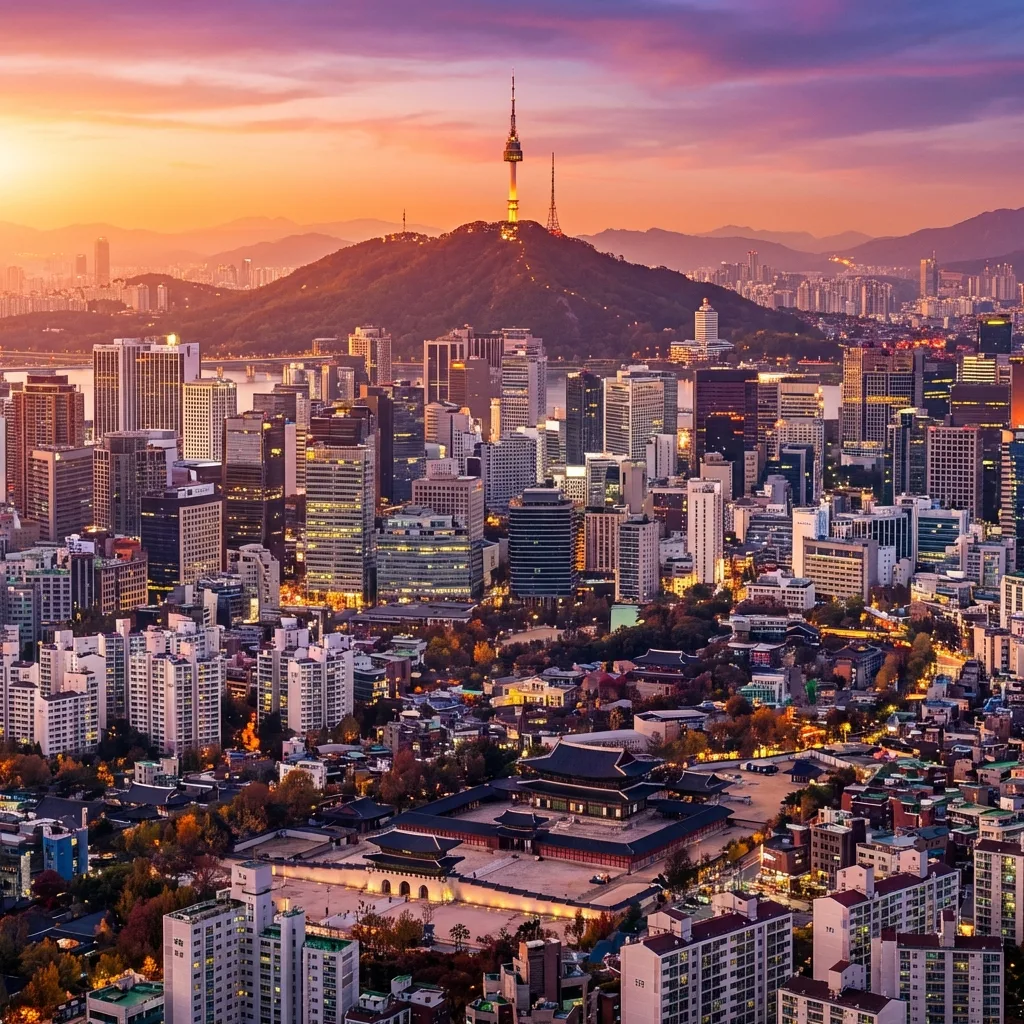
- Namsan Park: Take the bus or hike up to N Seoul Tower. The entire mountain turns into a patchwork quilt of warm colors.
Days 7-9: Naejangsan & Jeonju (The Grand Finale)
Transport: KTX to Jeongeup Station (from Seoul), then a local bus to the park.
If Seoraksan is rugged beauty, Naejangsan National Park is pure elegance. It is famous for its unique "Baby Maples," which have smaller leaves and a more intense, crimson red color than ordinary maples.
- The Maple Tunnel: The road leading from the ticket office to the temple is formed by trees arching over the path, creating a literal tunnel of red light. It is one of the most photographed spots in Korea.
- Uhwajeong Pavilion: A blue-roofed pavilion floating in the middle of a lake, surrounded by red trees. The reflection makes for a perfect postcard shot.
- Base Camp: Stay in Jeonju Hanok Village nearby. Eating Bibimbap in a traditional house while looking at a 400-year-old yellow Ginkgo tree at the local Hyanggyo (Confucian school) is the perfect way to end the day.
Day 10: Departure & Practical Tips
- Hiking Gear: You don't need professional gear, but comfortable sneakers with grip are essential. The trails can be slippery with fallen leaves.
- What to Wear: The temperature swing is huge. It can be 5°C in the morning and 18°C in the afternoon. Wear layers (T-shirt + Fleece + Light Down Jacket).
- Crowds: Autumn is the peak hiking season for Koreans. Weekends will be packed. If possible, plan your Seoraksan and Naejangsan visits for weekdays.
Getting Between Locations: The Transport Plan
The itinerary covers three distinct regions—Gangwon-do in the northeast, Seoul in the center, and North Jeolla province in the southwest. Here is the most efficient routing.
Seoul → Sokcho (Seoraksan Base): The fastest option is the express bus from Seoul Express Bus Terminal (고속버스터미널, Gangnam) directly to Sokcho Bus Terminal. Journey time is approximately 2.5–3 hours; buses depart every 30 minutes during peak travel periods. Buy tickets through the Kobus website or app in advance—autumn weekends sell out days ahead. Cost: approximately ₩25,000 one-way. A KTX option to Gangneung (opened for the 2018 Olympics) also works; Gangneung is 60km south of Sokcho and connects via local bus (1 hour, ₩4,000).
Sokcho → Seoul: Return by express bus. The return journey tends to be more crowded on Sundays—book tickets as soon as you book your outbound journey.
Seoul → Jeonju (Naejangsan/Jeonju Base): Take the KTX from Seoul Station or Yongsan Station to Jeongeup Station (the stop for Naejangsan). Journey time: approximately 1 hour 30 minutes. From Jeongeup, a local bus (#171 or #172) runs to Naejangsan National Park entrance (approximately 30 minutes, ₩1,600). Jeonju Hanok Village is 30 minutes north of Jeongeup by local bus or taxi.
Jeonju → Seoul (Return / Departure): KTX from Jeongeup or the nearby Jeonju KTX station back to Seoul takes 1.5–2 hours. Seats fill fast during November weekends—book both directions before your trip begins.
Within Sokcho: The city is compact and taxis are inexpensive. A taxi from Sokcho Bus Terminal to the Seoraksan Park entrance costs approximately ₩10,000–14,000. Buses also run from the terminal to the park, but taxis save significant time when you are racing against morning cable car queues.
Where to Stay: Accommodation by Base
Sokcho (Days 1–3): Sokcho is a proper city with a range of accommodation. For foliage travelers, staying near the Seoraksan entrance area reduces taxi time.
- Mid-range: Hanwha Resort Seorak (내설악 방면) — sits closest to the park; book 3–4 weeks ahead for October stays. Doubles from ₩120,000/night.
- Budget: Multiple guesthouses and pensions line the road leading to the park entrance. Expect to pay ₩60,000–90,000 for a private room.
- Sokcho City Center: Several newer business hotels (Benikea, Hotel The Scene) near the express bus terminal offer good value at ₩70,000–110,000/night and place you near Sokcho's famous Abai Village seafood market for dinner.
Seoul (Days 4–6): Base yourself near Jongno or Anguk for easy access to Changdeokgung and the Deoksugung road. Myeongdong is central but adds distance to the palace district.
- Mid-range: Hotel 28 Myeongdong, Lotte City Hotel Myeongdong — ₩120,000–180,000/night
- Budget: Itaewon and Mapo have some of the best-value guesthouses in Seoul: ₩50,000–90,000/night for private rooms
Jeonju Hanok Village (Days 7–9): Staying inside a traditional hanok guesthouse during peak foliage season is the experience-of-a-lifetime option. Hanok rooms typically include a floor-heated room with a futon mattress on polished wood floors.
- Hanok Guesthouses: Nong Ga Dunchon, Hakindang, Gyanggukdang — book 4–6 weeks in advance for November. Prices: ₩80,000–150,000/night for private rooms.
- Modern Option: Several hotels in central Jeonju (near the bus terminal) offer more predictable amenity levels at ₩70,000–120,000/night.
What to Eat: The Autumn Food Calendar
Korean autumn cuisine is as spectacular as the foliage. Each region on this itinerary has seasonal specialties worth planning meals around.
In Sokcho / Gangwon-do:
- Daege (대게, Snow Crab): Gangwon-do's east coast ports receive fresh crab from October onward. Sokcho's Abai Village seafood market has live crab restaurants; a full steamed crab meal for two costs ₩40,000–80,000.
- Ojingeo (오징어, Squid): The East Sea squid season peaks in autumn. Dried squid (마른오징어) sold along the Sokcho waterfront is a perfect trail snack.
- Gondeure Namul Bap: A rice bowl mixed with wild mountain greens, commonly served at restaurants near hiking trail entrances.
In Seoul:
- Ginkgo Nut Rice (은행밥): Street vendors near Changdeokgung and Deoksugung sell roasted ginkgo nuts (the same trees you'll be walking under) in paper cups. The earthy, bitter flavor is quintessentially Korean autumn.
- Hotteok (호떡): The warm brown-sugar-filled pancake vendor has returned—they disappear in summer and reappear in the first cold snap. Myeongdong street food lane is a reliable spot.
In Jeonju:
- Kongnamul Gukbap (콩나물국밥): Jeonju's signature hangover soup—a clear broth with bean sprouts, rice, and a raw egg that cooks in the hot bowl. The local specialty is eating it for breakfast before a morning hike.
- Bibimbap (비빔밥): Jeonju is the canonical home of bibimbap. Every restaurant claims their version is the most authentic; the best ones are found on the smaller lanes off the main Hanok Village tourist street, away from the signboards.
- Chueotang (추어탕, Loach Soup): A thick, warming autumn soup made from loach fish blended with soybean paste and perilla. Polarizing but deeply traditional.
Photography: Getting the Shot
Seoraksan:
- The cable car platform offers the widest panoramic view—arrive before 8 AM to photograph in the soft morning light before the haze builds.
- The path to Sinheungsa Temple is best at 7–8 AM when mist often rises from the valley floor, creating layers behind the red maples.
- Face east for sunrise shots from the Ulsanbawi ridge—the East Sea glitters between the peaks on clear mornings.
Seoul:
- Changdeokgung Secret Garden: The pond reflection of the Buyongjeong Pavilion is the canonical shot. Visit at the end of the garden tour, by which point crowds have dispersed from the earlier photo stops.
- Deoksugung Stone Wall Road: Peak golden-hour ginkgo color occurs 30–40 minutes before sunset in late October. Shoot facing west (toward Gwanghwamun direction) for a backlit golden-leaf tunnel effect.
Naejangsan:
- The Maple Tunnel: Best photographed from the center of the road looking toward the temple, lens pointed slightly upward to capture the archway of trees. Arrive before 8:30 AM on weekdays—by 9 AM the tunnel fills with visitors.
- Uhwajeong Pavilion: The reflection is clearest on still mornings with no wind. Hike past the main tunnel to reach this lake; most visitors turn back at the tunnel and miss this quieter, more beautiful spot.
Packing for Autumn Korea: The Layering System
Korean autumn makes extreme demands on your clothing flexibility—warm afternoons, cold mornings, and the possibility of sudden rain.
The Essential Layers:
- Base: Moisture-wicking long-sleeve shirt (merino wool or synthetic)
- Mid: Fleece jacket or light down vest (packable—fits in a day bag)
- Outer: Light waterproof shell jacket. Not a heavy rain jacket—a packable windshell that blocks light rain and wind is sufficient for October.
- Leggings or compression pants: For early morning hiking before temperatures rise.
Footwear: Trail runners with grip are sufficient for Seoraksan's main trails and Naejangsan's Maple Tunnel route. Only the Ulsanbawi summit requires more serious ankle support. Avoid cotton hiking socks—moisture-wicking wool or synthetic blends prevent blisters on wet-leaf trails.
Day Pack Essentials:
- Trekking poles (optional, but appreciated on long descents)
- Hand warmers (available at any Korean convenience store for ₩1,000)
- Portable phone charger (camera usage drains batteries in cold weather)
- Cash: ₩20,000–30,000 for trail food vendors, cable car, and small parkside restaurants that don't accept cards
Budget Breakdown: 10 Days of Autumn Korea
| Category | Estimated Cost (per person) |
|---|---|
| Transport (buses + KTX, all intercity) | ₩100,000–140,000 |
| Accommodation (10 nights, mid-range) | ₩800,000–1,200,000 |
| Park entry + cable cars | ₩50,000–80,000 |
| Meals (₩15,000–25,000/day avg.) | ₩150,000–250,000 |
| Snacks, coffee, street food | ₩50,000–100,000 |
| Total | ₩1,150,000–1,770,000 |
| (≈ USD $850–1,300) |
Optional Detours: If You Have Extra Time
The itinerary leaves some flexibility by design. Here are the best additions if your schedule allows.
Near Sokcho: Naksansa Temple (Day 2 afternoon) Located 20km south of Sokcho along the coast, Naksansa Temple perches on a cliff directly above the East Sea. The 16-meter-high white Haesugwaneumsang statue stands against the open ocean—one of the most striking visual juxtapositions in Korea. In autumn, the maple trees lining the temple approach road turn red while the sea remains impossibly blue. Take a local bus from Sokcho Bus Terminal (approximately 30 minutes, ₩1,800).
Near Seoul: Bukhansan National Park (Day 5 or 6 morning) Seoul contains an entire national park within its city limits. Bukhansan's Dobongsan ridge turns vivid red in late October and offers 3–4 hour hike circuits that start directly from Dobong Station on Line 1 and 7. The Mangwolsa Temple approach is especially colorful. For fit hikers, this is the single best urban foliage hike in Asia.
Near Jeonju: Seonamsa Temple (bonus day) If you can spare a day around the Jeonju/Naejangsan base, Seonamsa Temple in Suncheon (1.5 hours south by intercity bus) is one of Korea's most beautiful temple paths. The approach crosses a series of stone bridges under old deciduous trees that peak in late October. Less crowded than Naejangsan and architecturally superior.
Foliage Forecast: Reading the Danpung Report
Koreans take autumn foliage as seriously as cherry blossoms. The Korea Forest Service publishes weekly "단풍 예보" (danpung forecast) maps from early October showing real-time color progression across the peninsula.
How to Access It:
- Korea Forest Service website (forest.go.kr): Look for "단풍정보" (foliage information) in the seasonal services section. The site is Korean-language, but the map is visual and intuitive.
- Naver News: Search "단풍 절정" (peak foliage) + the current week's date for recent news articles containing actual forecast maps in plain images.
- Weather apps: Korean weather apps (AccuWeather KR, Naver Weather) begin showing foliage forecasts in the first week of October.
Using the forecast in the final week before your Seoraksan or Naejangsan visit allows you to fine-tune your arrival by 2–4 days either direction—often the difference between arriving at 70% color and full peak crimson.
Contingency: What If It Rains?
Autumn rain in Korea is common and can last 1–2 days. Here is how to adapt without losing the foliage experience.
For Seoraksan Rain Days: Skip the cable car (views will be obscured) and instead walk the flat, wide path to Sinheungsa Temple and the Heundeulbawi rock. The forest canopy provides reasonable cover, and the red-and-gold leaves are just as vivid when wet—sometimes more so.
For Seoul Rain Days: The Changdeokgung Secret Garden is fully covered by tree canopies and remains beautiful in rain. Alternatively, visit the National Folk Museum inside Gyeongbokgung's grounds, where indoor exhibitions explain autumn harvest traditions.
For Naejangsan Rain Days: The Maple Tunnel is extraordinary in light rain—the wet crimson leaves glow intensely. Rain typically also reduces crowds significantly. Bring a clear-cover umbrella rather than a solid-color one to photograph without obstructing your view.
Autumn is the season that teaches us how beautiful it is to let things go. Enjoy the show.
Korea's fall foliage rewards those who plan and those who wander equally — but the best experiences sit at the junction of both. Deepen the journey by pairing the leaf-peeping circuit with our guide to Korea's regional specialties, where autumn provincial cuisine is at its peak. For the full freedom to chase the foliage wherever it leads, our car rental and driving guide in Korea explains permits and navigation apps. And for nature lovers ready to go beyond the trail, our guide to the best regional destinations highlights where autumn is most spectacular.