Frozen Fun: The Ultimate Guide to Winter in South Korea

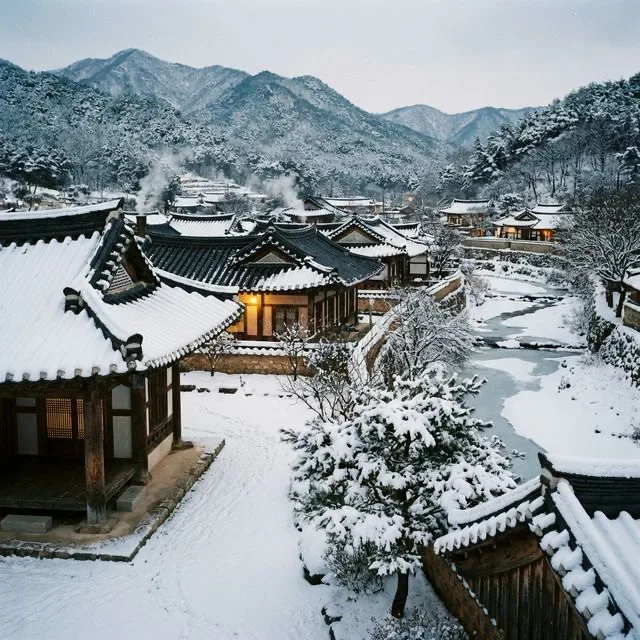
Korean winter (December - February) is famous for its "Kalbaram" (Knife Wind). It is dry, biting, and brutally cold, often dropping to -15°C (5°F) in Seoul.
But don't let the temperature scare you. Winter is one of the most unique times to visit. It's the season of pristine snow in the Taebaek Mountains, world-class skiing on Olympic slopes, and festivals that involve walking on frozen rivers.
Don't hibernate. Put on your "Long Padding" and head to Gangwon-do.
Surviving the Korean Winter
To survive a Korean winter, you need to dress like a local.
- The "Long Padding": Walk down any street in Seoul in January, and you will see 90% of people wearing a black, knee-length puffer coat. It looks like a sleeping bag with sleeves. Buy one or bring one.
- Hot Packs (Kairo): These are essential. You can buy them at any convenience store (CU, GS25, 7-Eleven) for 1,000 KRW. Keep one in each pocket to keep your hands from freezing.
- Heattech: Uniqlo is everywhere for a reason. Layer up.
The Temperature Reality: Month by Month
Understanding exactly what you're walking into helps you pack smarter and plan better.
December is Korea's transition month. Temperatures in Seoul hover between -3°C and 5°C (27°F to 41°F). The first proper snowfalls arrive, the mountains get their base layer, and the ski resorts open for the season, typically around late November or early December. The cold is present but manageable. This is also when Christmas markets and light festivals launch across the country. December is arguably the sweet spot — cold enough for winter atmosphere, not yet cold enough to be punishing.
January is the enemy. Full stop. Average temperatures in Seoul sit around -6°C (21°F), but wind chill regularly pushes the "feels like" temperature to -15°C or below. Gangwon-do, where the ski resorts and most winter festivals are located, sees temperatures 5 to 10 degrees colder than Seoul. In the Hwacheon valley — home to the ice fishing festival — it is not unusual to wake up to -20°C (-4°F). This is when the Knife Wind earns its name. The upside: snow is guaranteed, the ice is thick, and the festivals are in full swing. Layer accordingly. Budget for hot packs by the dozen.
February brings slow, tentative relief. Temperatures in Seoul begin climbing back toward 0°C to 4°C (32°F to 39°F) by the end of the month. The ski resorts are still excellent — often featuring the best snow conditions of the season as accumulated base depth peaks. The Hwacheon festival wraps up in early February. By mid-to-late February, the first whispers of spring begin, and the bitter edge of the Knife Wind starts to soften. For travelers who want winter atmosphere without January's extremes, the second half of February is worth considering.
Ondol: Why Indoors Feels Like Heaven
Here is one of the great pleasures of Korean winter that no guidebook prepares you for adequately: the moment you step inside any building — a guesthouse, a restaurant, a convenience store — you are instantly, blissfully warm. Korea has been heating homes with Ondol (underfloor heating) for over two thousand years. Modern apartments use hot water circulated through pipes embedded beneath the floor. The result is radiant heat that rises from the ground up, keeping your feet toasty and the ambient air at a very comfortable 22°C to 24°C (72°F to 75°F).
In traditional guesthouses (hanok stays) and budget goshiwons (micro-room hotels), you may encounter floor-level living: sleeping on a mat directly on the heated floor. This is not roughing it. This is one of the most satisfying sleeping experiences Korea offers.
In most Korean accommodations, the Ondol thermostat is a small digital panel on the wall near the door, usually labeled in Korean. The key buttons: the power symbol (전원, jeonwon), temperature up/down arrows, and sometimes a timer function. When in doubt, aim for the 22°C setting and adjust from there. One practical note: Korean apartments are heated so aggressively that many travelers find themselves sleeping in a t-shirt regardless of what is happening outside. Embrace it.
The Winter Food Survival Guide
Korean street food and winter are a partnership designed by the universe. The colder it gets, the better the food tastes. Here are the essential warming foods you need to know:
Hotteok (호떡) is a fried pancake filled with brown sugar, cinnamon, and crushed nuts. Street vendors fry them fresh on a griddle, press them flat with a round press, and hand them to you wrapped in a small paper cup. The inside is liquid molten sugar. Bite carefully. Cost: 1,000 to 2,000 KRW each.
Bungeoppang (붕어빵) is the iconic fish-shaped waffle filled with sweet red bean paste (or more recently, custard cream). The fish mold is purely decorative — the pastry tastes nothing like fish. Street vendors sell them from fish-shaped iron presses in sets of three for 1,000 KRW. They are the unofficial mascot of Korean winter. Finding a cart is a small seasonal joy.
Tteokbokki (떡볶이) — chewy rice cakes in a fiery red gochujang (chili paste) sauce — is an all-year food elevated in winter. The steam rising from the communal pot, the warmth of the sauce spreading through your chest: this is exactly what your body wants at 2°C.
Soondubu Jjigae (순두부찌개) is a silken tofu stew that arrives at your table still bubbling aggressively in an earthenware pot. Loaded with seafood or pork, laced with gochugaru (chili flakes), and topped with a raw egg cracked in at the last second — it is one of the most warming dishes in the Korean culinary canon. Any Korean restaurant serves it; budget roughly 9,000 to 13,000 KRW per bowl.
Seolleongtang (설렁탕) is an ox bone soup simmered for upwards of twelve hours until the broth turns a milky, collagen-rich white. It arrives almost plain — you season it yourself with salt and chopped green onions to taste. It is the opposite of flashy. It is deeply, quietly restorative. Seek it out after a full day of skiing or festival-going when your body needs rebuilding from the inside out.
1. Top 3 Ski Resorts (Gangwon-do)
Korea hosted the 2018 Winter Olympics for a reason. The mountains in Gangwon province are snow magnets.
Yongpyong Resort (The Legend)
- Best For: Serious skiers and K-Drama fans.
- The Vibe: This is the largest ski resort in Korea. It hosted the slalom events in the 2018 Olympics and was the filming location for the classic drama Winter Sonata.
- The Slopes: It has 28 slopes, including the daunting "Rainbow Paradise" (5.6km).
High1 Resort (The Quality)
- Best For: Powder hounds and luxury travelers.
- The Vibe: At 1,340m, High1 is higher than other resorts, meaning the snow is fluffier and lasts longer. It's also home to Kangwon Land, the only casino in the country open to Korean citizens (foreigners can enter too).
- The Slopes: 18 slopes known for being wide and beginner-friendly, despite the altitude.
Vivaldi Park (The Party)
- Best For: Day trippers and younger crowds.
- The Vibe: It stands only 1.5 hours from Seoul, making it the most accessible resort. Free shuttle buses from the city are common. It's famous for its Night Skiing (slopes open until 3 AM!) and the attached Ocean World water park (indoor zones open in winter).
- Read More: Seoul to Busan Transport Guide (Most resorts have shuttles from Seoul).
Ski Rental and Lessons for Beginners
None of the big resorts require you to bring your own gear. Equipment rental is easy, affordable, and built into the resort infrastructure.
A full rental package — skis (or snowboard), boots, poles, and helmet — costs approximately 40,000 to 55,000 KRW per day depending on the resort and whether you go for standard or premium equipment. Ski suits can be rented separately for another 10,000 to 20,000 KRW if you did not pack appropriately for the slopes. Lockers are widely available for around 2,000 to 5,000 KRW and are worth every won for storing your gear between runs.
Group ski lessons, typically 90 minutes to two hours, run around 50,000 to 80,000 KRW per person and are offered in both Korean and English (English lessons may need to be booked in advance at some resorts). Private instruction is available at premium pricing but is significantly more effective for true beginners. If you have never skied before, budget your first day almost entirely for lessons and gentle beginner slopes — most Korean resorts designate clear "initiation" zones at the base of the mountain.
A crucial insider note on weekday versus weekend pricing: Korean ski resorts operate on a dual-pricing model, and the difference is not trivial. Lift passes on weekends and public holidays can cost nearly double the weekday rate. At Vivaldi Park, for example, a weekday lift pass runs roughly 50,000 to 60,000 KRW while a Saturday pass can push 90,000 to 110,000 KRW. The slopes are also significantly more crowded on weekends, with lift queues stretching considerably longer. If your schedule allows, ski Monday through Thursday. The difference in both cost and experience is substantial.
Korean ski lift etiquette is fairly orderly but carries a few unwritten rules worth knowing. Queue in proper single lines at the lift base — cutting is frowned upon. On chairlifts with strangers, it is acceptable to share a lift without conversation. Keep the safety bar lowered once seated. At the top of a run, yield to skiers already in motion below you before pushing off. Most signage on the slopes includes English, and ski patrol is active and visible.
Getting to the Resorts
Getting from Seoul to the slopes is well-organized and genuinely easy.
Shuttle Buses are the most popular and affordable option. Most major resorts run direct shuttle services from central Seoul departure points, typically from Dong Seoul Bus Terminal or East Seoul (강변역, Gangbyeon Station) or directly from major hotels. Vivaldi Park runs some of the most frequent shuttles given its proximity. Round-trip shuttle costs range from 15,000 to 25,000 KRW depending on the resort. Book online in advance on weekends — they fill up.
KTX + Local Bus is the best option for Yongpyong and the Alpensia cluster in Pyeongchang. Take the KTX high-speed train from Seoul Station to Jinbu Station (Pyeongchang) in approximately 75 to 80 minutes. From Jinbu Station, resort shuttles and local buses cover the remaining distance to Yongpyong and Alpensia in 20 to 30 minutes. Total one-way cost including train and shuttle runs approximately 35,000 to 50,000 KRW depending on the KTX class.
Private Car or Taxi offers the most convenience, particularly for groups of three or more splitting costs. The drive from central Seoul to Vivaldi Park takes around 1.5 hours; to Yongpyong it is approximately 2.5 hours via the Yeongdong Expressway. Parking at the resorts is available but fills rapidly on weekends. Kakao Taxi operates nationally and can be used for pre-booked intercity rides, though pricing for longer journeys is significant.
2. Hwacheon Sancheoneo Ice Festival
CNN called this one of the "7 Wonders of Winter". It is essentially a massive party on a frozen river.
- When: Mid-January to Early February.
- Where: Hwacheon, Gangwon-do (One of the coldest places in Korea).
- The Event: A river freezes over with 40cm of thick ice. The organizers drill over 10,000 holes. You buy a ticket, grab a tiny fishing rod, drop a line, and wait.
- The Catch: You are fishing for Sancheoneo (Mountain Trout).
- The Ritual: Once you catch your fish (limit 3 per person), you take it to the nearby "Grill Center". They wrap it in foil and roast it for you instantly. There is nothing tastier than eating your own catch in sub-zero temperatures.
- For the Brave: The "Bare Hand Fishing" event involves changing into shorts and a t-shirt and jumping into a pool of icy water to catch fish by hand. (Note: Not for the faint of heart).
3. More Winter Festivals Around Korea
Hwacheon gets the international headlines, but Korea's winter festival calendar is genuinely rich. Here are four more events that deserve a place on your radar.
Taebaek Snow Festival
- When: Late January to early February.
- Where: Taebaek City, Gangwon-do (one of the highest-altitude cities in Korea).
- The Draw: Taebaek sits at over 650m elevation and reliably receives some of the heaviest snowfall in the country. The festival is built around that snowfall, literally — teams of artists spend weeks constructing enormous snow sculptures, some reaching several meters in height, depicting everything from Korean folk heroes to abstract geometric forms. There are also ice sledding tracks, snow tube runs, and sculpting competitions open to visitors. The sheer quantity of snow here, even compared to other Gangwon venues, is impressive.
Inje Icefish Festival and Bingok Ice Valley
- When: Late January to mid-February.
- Where: Inje County, Gangwon-do.
- The Draw: Inje hosts its own ice fishing festival on the Naerin River, smaller and more local in feel than Hwacheon's massive production — which many travelers prefer. But the true hidden gem nearby is the Bingok Ice Valley (빙하 계곡): a narrow gorge where the combination of cold air drainage and moisture creates natural ice formations of remarkable scale. Icicle curtains, frozen waterfalls, and thick ice flows fill the gorge from December through February. It is one of the most visually dramatic natural winter sites in Korea and remains almost entirely off the international tourist trail.
Nami Island in Winter
- When: December through February.
- Where: Nami Island (Namiseom), Gapyeong County.
- The Draw: Nami Island achieved global fame as the filming location for Winter Sonata, Korea's landmark 2002 romantic drama that launched the first wave of Korean Wave (Hallyu) tourism. In summer it is a pleasant enough garden island. In winter, blanketed in snow with the famous metasequoia-lined avenues turned skeletal and white, it becomes genuinely cinematic. The crowds are thinner than in the autumn foliage season, the atmosphere is hushed and wintry, and for fans of the drama, seeing it under snow is a pilgrimage of sorts. Take the ferry from Gapyeong Wharf (a short trip from Gapyeong Station on the ITX-Cheongchun line from Cheongnyangni Station in Seoul).
Ganghwa Ice Sledding Festival
- When: When conditions allow, typically late January to early February.
- Where: Ganghwa Island, Incheon (easily accessible from Seoul).
- The Draw: Ganghwa Island is the closest major winter festival destination to Seoul — roughly an hour by bus from Sinchon or Hapjeong. When the tidal flats and shallow inland waterways freeze sufficiently, the festival activates: traditional wooden ice sleds (Sseolle) on frozen fields, folk games, and street food markets. It is a grounded, traditional winter experience with none of the commercial scale of the bigger Gangwon festivals. Good for families and travelers who want winter culture without a long journey.
4. Other Winter Delights
Garden of Morning Calm (Light Festival)
In winter, the flowers die, so they cover the entire arboretum in millions of LED lights. It's a fairy tale forest come to life.
- Location: Gapyeong (Near Nami Island).
Jjimjilbang Escapes
When the cold gets too much, retreat to a Jjimjilbang (Korean Sauna). Soak in hot tubs, sweat in clay kilns, and drink iced Sikhye (rice punch). It's the ultimate way to thaw out.
- Read More: Korean Spa Guide
Seoul in Winter
Here is a perspective that most winter itineraries miss: Seoul itself is an excellent cold-weather destination. The city is not merely a transit hub to get through on your way to Gangwon-do. In winter, it offers something special.
The palaces under snow are among the most beautiful sights in Korea. Gyeongbokgung Palace — Seoul's largest and most impressive Joseon-era royal compound — transforms completely when covered in white. The grey stone walls, the vermillion-painted wooden pavilions, the pine trees bent low with snow load: it is a scene that photographs cannot adequately capture. Crowds are a fraction of what they are in spring and autumn, which means you can stand in the main courtyard, Geunjeongjeon, in something approaching quiet contemplation. Changdeokgung Palace, a UNESCO World Heritage Site, is equally striking in winter, particularly its Secret Garden (Huwon) — a series of ponds and pavilions hidden behind the main palace complex. Check the palace websites for winter hours, which are slightly reduced.
Bukchon Hanok Village under snow is one of Seoul's most photographed scenes for good reason. The preserved traditional tile-roofed houses (hanok) stacked up the hillside between Gyeongbokgung and Changdeokgung, dusted with overnight snow on a clear morning — this is the image. Arrive early (before 9 AM) to have the lanes to yourself and avoid the noise restrictions that apply during peak hours.
Ice skating rinks appear across the city each winter. Seoul Plaza, directly in front of City Hall, operates an outdoor rink from December through February with skate rental available on site. Lotte World in Jamsil operates both an indoor rink (year-round) and an outdoor extension in winter. Both are popular with locals and accessible by subway. Expect weekend crowds; weekday afternoons are far more relaxed.
Cheonggyecheon Stream — the restored urban waterway running through the heart of central Seoul — is a different experience in winter. The surrounding streets are lit for the season, the stream itself occasionally rims with thin ice at the edges, and the underground warmth radiating from the heated walkways alongside makes an evening stroll genuinely pleasant. It is an easy 30-minute walk from Gwanghwamun to the stream's start near City Hall.
Winter Food and Drink Culture: The Pojangmacha World
No account of Korean winter is complete without the Pojangmacha (포장마차): the orange-tented street food stalls that multiply as the temperature drops. These are not merely food vendors. They are a cultural institution — part dining room, part living room, part social lubricant. Under the low tent flaps, strangers sit elbow to elbow on plastic stools around narrow counters, eating and drinking in a warmth created partly by gas burners, partly by collective body heat.
The pojangmacha menu in winter is aggressive in the best way. Tteokbokki, eomuk (fishcake skewers bobbing in hot anchovy broth), and sundae (Korean blood sausage sliced and served with salt and chili paste) are standards. In the street food tent, eomuk broth is almost always free — a cup of the hot, savory liquid to warm your hands and your insides while you decide what to order.
The drink of choice at any self-respecting pojangmacha is Makgeolli (막걸리): unfiltered rice wine, slightly fizzy, mildly sweet, and served cold in a bowl or a tin kettle. Its alcohol content runs around 6 to 8%, and its tangy-creamy flavor cuts perfectly against the spice and salt of the food. Makgeolli is historically associated with farmers and laborers — it is the opposite of a status drink — which is precisely why Koreans love it. In winter, it pairs magnificently with a plate of pajeon (green onion pancake), a combination that food writers have called Korea's equivalent of wine and cheese.
And then there is the phenomenon of the vending machine hot coffee. Scattered across the country — at ski resort bases, outside convenience stores, in subway station corridors, on the approach roads to festivals — are small red and white vending machines dispensing cups of instant coffee mixed with sugar and powdered creamer for 200 to 300 KRW. This is not artisan coffee. It is not trying to be. When you are standing in -10°C wind and you wrap both hands around a small hot plastic cup of sweet instant coffee, it becomes, briefly, the best coffee you have ever had. Koreans will nod knowingly when you tell them this.
Winter in Korea challenges you, but the rewards — a silent snowy temple, a rush down an Olympic slope, or a warm fish bread (Bungeoppang) on a street corner — are worth the chill. To make the cold feel like a feature rather than a bug, plan your Jjimjilbang nights with our complete guide to Korean spas and saunas. If you're building a full winter trip, our 10-day South Korea itinerary shows how to balance ski days with temple visits and city nights. And when the season turns, our spring cherry blossom guide is the perfect next chapter to start planning.