Pocheon Art Valley and Rural Getaways from Seoul Under 2 Hours

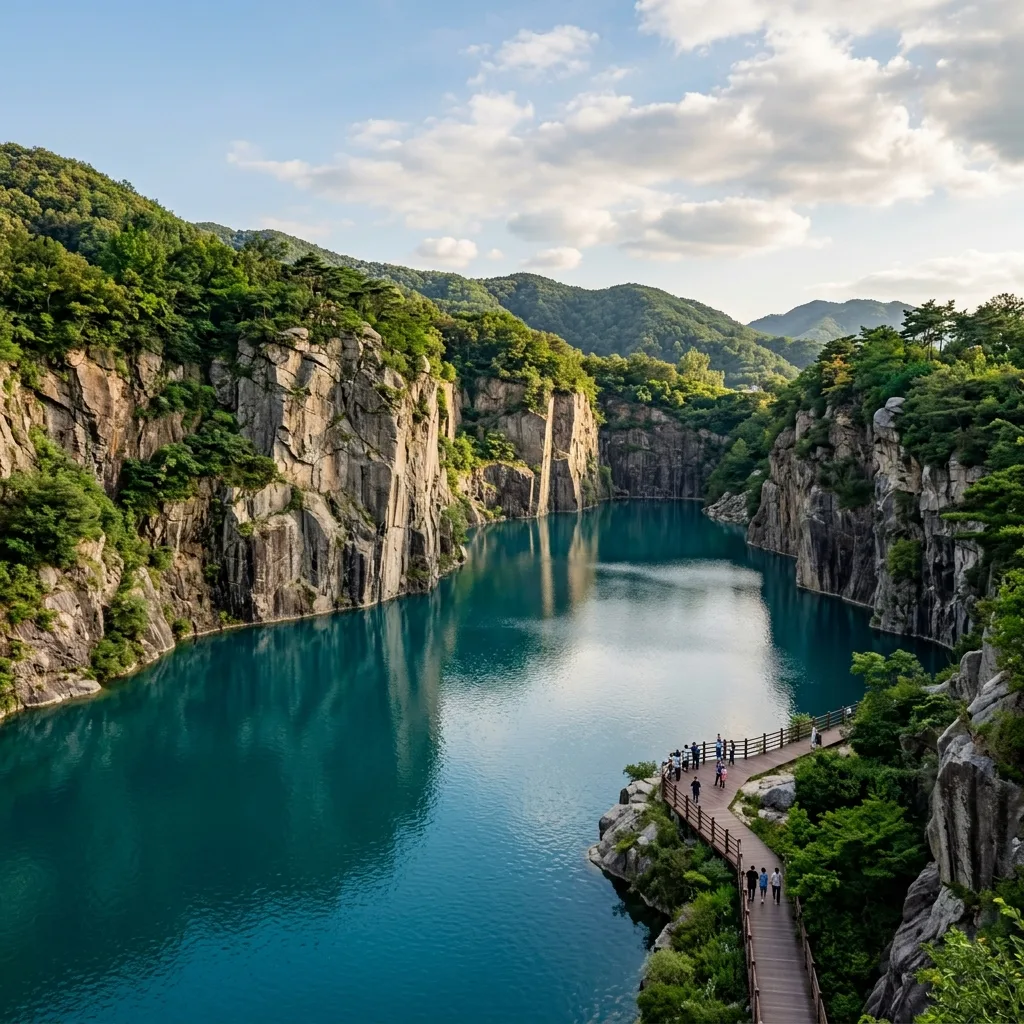
If you want a day trip from Seoul that feels like a reset button, Pocheon is one of the easiest places to aim for. It is close enough to fit into a single day, but different enough to feel like you left the city behind. Pocheon Art Valley gives you the dramatic quarry-lake scenery most people associate with western movie sets or remote mountain parks, while the surrounding countryside adds the slower rhythm travelers usually look for when they say they want "a rural getaway."
The real advantage is flexibility. You can make the trip about photos, scenery, food, or a slower drive through Gyeonggi-do farms and lakes. If you have already read our The Ultimate Guide to Public Transportation in Korea (2025 Edition), you know that Korea makes day trips easier than many first-time visitors expect. And if you are planning a wider Korea route, this also fits neatly into a longer trip like The Ultimate 10-Day South Korea Itinerary for First-Timers.
Introduction
Pocheon Art Valley is one of those places that solves a common Seoul-travel problem: you want nature, but you do not want to spend half the day getting there. You want something scenic, but you do not want the logistics of an overnight mountain trip. You want a rural atmosphere, but you still want a clear, manageable plan. This article is built around that exact gap.
For many travelers, the word "day trip" sounds simple until you start comparing options. Nami Island can be beautiful, but it is often crowded. The DMZ is fascinating, but it is a very specific kind of outing with limited timing and a more structured experience, as covered in DMZ Tour Guide: Visiting the Korean Demilitarized Zone from Seoul. Pocheon sits in a different lane. It is less about a tightly scripted tour and more about giving yourself a scenic base for a slower day.
This guide focuses on three things. First, what Pocheon Art Valley actually is and why it is worth the trip. Second, how to handle the practical side: hours, admission, transport, and the best way to plan your time. Third, how to turn the same outing into a fuller rural escape by pairing the valley with nearby countryside stops, local food, and an unhurried return to Seoul.
What Pocheon Art Valley Is
Pocheon Art Valley is a former quarry that has been transformed into a cultural and scenic complex. That origin story matters because it explains why the place feels different from a typical park or lake. The cliffs are steep, the shapes are industrial, and the water has that vivid, almost unreal color that people usually associate with carefully designed attractions. In reality, the setting is the result of a site that was repurposed rather than built from scratch.
The attraction works because it combines several layers of appeal. There is the natural view, of course, but also the sense of reclaimed space, the open walking areas, the observatory and performance facilities, and the general feeling that you are spending time in a place with a distinct identity. If you enjoy destinations that mix landscapes with culture, this is closer in spirit to a destination article like Top 15 Must-Visit Destinations in South Korea (Beyond Seoul) than to a simple lookout point.
Visitors usually come for the quarry-lake view first, but the site is also interesting as a case study in how Korea reuses land. That makes it appealing even if you are not usually the type to linger over landscape history. It is easy to enjoy as a photo stop, but it also rewards travelers who like a place to have a backstory.
Why It Works as a Rural Getaway
The strongest reason to choose Pocheon over a more famous day trip is balance. It is scenic without being overbuilt, popular without feeling like a theme park, and close enough to Seoul that you can leave after breakfast and still have a full afternoon of countryside time.
That combination matters for travelers who want a rural experience that still fits into a normal schedule. A lot of countryside places in Korea are memorable, but they can also be heavy on transfers. Pocheon is easier to commit to because it does not demand a complicated train connection or a full vacation day. If you want something less structured and more flexible than a sightseeing package, it sits in the sweet spot.
The area also gives you room to build your own pace. You can arrive early and start with the quarry views before lunch. You can arrive later, stay through sunset hours in the warmer season, and then have dinner somewhere nearby before heading back. You can also split the day between the attraction and a nearby cafe, lake, or farm restaurant, which is exactly the kind of slow travel rhythm people mean when they search for "rural getaways from Seoul."
Another reason it works well is crowd management. Like any popular scenic site near Seoul, weekends can be busy, but the layout is generous enough that the experience still feels calmer than many urban attractions. Weekdays are especially good if you want space for photos, quiet walking, or a more contemplative visit.
If you are building a broader Korea travel plan, this kind of trip fits into a "one major attraction plus two smaller stops" approach. That is often the smartest way to explore Gyeonggi-do. You are not trying to check off a dozen places in one day. You are choosing one anchor and letting the rest of the day breathe around it. For many travelers, that is more satisfying than racing from landmark to landmark.
Pocheon Art Valley and the Rural Getaway Pattern
The easiest way to understand Pocheon Art Valley is to think of it as the centerpiece of a rural day, not the whole day by itself. The valley gives you the visual payoff, but the wider Pocheon area gives you the rest of the experience: quieter roads, local restaurants, small cafes, and the feeling that the city has slipped away.
The pattern usually looks like this. You leave Seoul in the morning, reach the valley before the busiest part of the day, spend your time walking and taking photos, then add one nearby lunch stop and one slow final stop, such as a cafe, lake, or market. By the time you go back to Seoul, the day feels complete without being exhausting.
That is why Pocheon is useful for different kinds of travelers. Solo travelers get a straightforward plan. Couples get a low-pressure scenic date. Friend groups get a shared outing that does not require everyone to agree on a full itinerary. Families get enough open space to make the trip feel less confined than an indoor museum day.
If you like destinations that reward a little extra planning, Pocheon is also a good match for travelers who enjoy combining nature with food. Korea travel gets better when you stop treating meals as an afterthought. A countryside trip gives you the perfect excuse to build in a proper lunch, and that is where guides like A Foodie's Guide to South Korea: 10 Dishes & Markets You Can't Miss can help you think beyond convenience food.
For readers who are still refining entry and visa planning, it is also worth checking The Ultimate K-ETA Guide (2026 Updates): Do You Still Need It? before locking in nonrefundable transport or accommodation. It is not the most exciting part of trip planning, but it can affect how confidently you plan side trips around Seoul.
What Makes the Area Feel Different From Other Seoul Day Trips
Pocheon does not have the same polished tourist density that you get in places like central Seoul, Myeongdong, or the more package-oriented day-trip circuits. That is a strength if you want space and a more local feel. It is also why the area can feel more "rural" even though it is still relatively close to the capital region.
The scenery is not just pretty; it is textured. You see rock faces, water, tree lines, and engineered walkways all in one place. That mix gives the visit a visual rhythm that changes as you move. A lot of travelers remember the view from the main platform, but the more useful memory is how the whole site gradually opens up as you walk.
This matters because rural getaways are not only about distance. They are about tempo. Pocheon gives you a slower tempo without forcing you into a remote itinerary that starts to feel like logistics homework. If you are used to the convenience of Seoul but want something that feels distinctly outside the city, this is one of the simplest wins in Gyeonggi-do.
Nearby Rural Add-Ons
The smartest way to extend the day is to look for one nearby place that complements the valley rather than competes with it. A lake works because it keeps the natural theme going. A local barbecue or jeongol restaurant works because it gives the trip a proper meal anchor. A small cafe with a countryside view works because it creates a break between sightseeing and the return trip.
You do not need to overbuild this. In fact, the best Pocheon day trips are usually the most restrained ones. Two scenic stops and one meal are enough. If you push for too many add-ons, the trip starts to feel like a checklist and the rural mood disappears.
One useful way to think about the area is this: the valley is the destination, but the countryside is the atmosphere. If you get both, the day feels much richer than a simple attraction visit.
Practical Guide
Hours, Admission, and What Is Current Now
As of May 2026, published visitor information for Pocheon Art Valley lists the following hours and fees. In the March-to-October season, the site is generally open from 09:00 to 19:00 on Monday through Thursday, 09:00 to 22:00 on Friday, Saturday, and public holidays, and 09:00 to 20:00 on Sundays. In the November-to-February season, the usual hours are 09:00 to 18:00. Published listings also note that last admission is earlier than closing time, so do not arrive at the end of the day expecting full access.
Admission prices listed in current visitor sources are:
- Adults: 5,000 KRW
- Teenagers / soldiers: 3,000 KRW
- Children: 1,500 KRW
- Seniors 65+ and preschoolers: free
These numbers are reasonable by Korea sightseeing standards, especially for a site with this much visual payoff. The important part is not just the price but the value: Pocheon Art Valley is the kind of attraction where the setting does most of the work. You are paying for access to a distinctive landscape and a well-kept experience, not for a long list of indoor exhibitions.
One detail worth flagging is that published sources differ on the exact regular closure day. Some listings mention the first Tuesday of the month, while others mention the first Monday. That is exactly the kind of small rule that can change or be reported differently across platforms, so check the official site before you go if your trip depends on a specific date.
If you are planning to go during the warmer months, remember that the later evening hours on Fridays, Saturdays, and holidays can be useful. The valley looks different in softer light, and you do not have to rush as much if you want to linger. On the other hand, if you are there primarily for practical travel photography, earlier arrival usually gives you better control over lighting and crowd levels.
Official site and booking notes
The official website listed in current tourism sources is Korean-only, but it is still the place to confirm the most current operating details: artvalley.pcfac.or.kr. If you are comparing dates, operating hours, or special event closures, use the official site as the final check rather than relying on a third-party summary.
Pocheon Art Valley is not a place where booking is usually the main issue in the way it is for a performance or a timed ticket attraction. Most travelers just need to confirm that the site is open, then pay admission on arrival. If you are planning a larger organized outing or a special event, then it is worth checking the official site or a Korean booking platform for any seasonal programs. For a normal day visit, however, the main task is simply to go at the right time.
Monorail and on-site movement
One practical thing to know is that the site is built on a slope. That means your experience depends partly on how much walking you want to do. Some travelers are happy to walk the hill and enjoy the route. Others prefer a lighter physical load and want to minimize climbing. If you are the second type, study the on-site map before you arrive and decide how much of the terrain you want to cover.
Because of the sloped layout, comfortable shoes matter more than they would at a flat park. If you are visiting on a warm day, bring water. If you are traveling with older family members or anyone who does not love stairs, it is better to assume the site will feel more strenuous than the photos suggest.
How to Get There
There are three realistic ways to reach Pocheon Art Valley from Seoul: bus plus local transfer, a guided day tour, or driving. Which one is best depends on your style of travel.
If you are comfortable with public transportation, the standard approach is to head from Seoul into Pocheon and then finish the trip by local bus or taxi. This is the most economical method and the one that gives you the most control over your schedule. It also pairs well with the practical mindset behind The Ultimate Guide to Public Transportation in Korea (2025 Edition), especially if you already know how to navigate intercity terminals and local transfer points.
If you want less friction, a guided tour can be worthwhile, especially for first-time visitors who do not want to deal with transfer timing. That said, tours usually make the day less flexible. You get convenience in exchange for freedom. If the whole point is a quiet countryside escape, independent travel often feels better.
Driving is the easiest option for travelers who have a rental car or a local driver. It gives you the most freedom to add lunch stops, cafes, and nearby views. It also makes the trip feel more like a true rural circuit because you are not bound to transfer schedules. If you are visiting with family or carrying camera gear, that extra flexibility can matter a lot.
Whichever method you choose, the key planning insight is the same: leave Seoul early enough that the day does not feel compressed. A countryside trip is not only about where you go. It is about preserving enough time at the destination for the place to feel restorative.
Suggested Day-Trip Timing
Here is the most comfortable rhythm for a Pocheon day trip:
- Leave Seoul in the morning.
- Reach Pocheon Art Valley before the busiest part of the day.
- Spend one to two hours at the valley.
- Add lunch at a nearby restaurant.
- Add one final quiet stop, such as a cafe or lake.
- Return to Seoul before you are too tired to enjoy the ride back.
That structure works because it is simple. The day has a clear anchor, but it still feels open. You are not racing through a bunch of attractions just to justify the trip. You are giving the countryside enough time to be the point.
If you are traveling in spring or autumn, this timing becomes even better. Those are the seasons when Gyeonggi-do scenery is most forgiving and the weather is most suitable for outdoor wandering. Summer can be beautiful, but it is less comfortable if you arrive too late in the heat. Winter is fine too, as long as you are prepared for colder air and shorter daylight.
Tips & Common Mistakes
Do Not Treat It Like a Quick Photo Stop
The biggest mistake first-time visitors make is assuming Pocheon Art Valley is just a place to snap two pictures and leave. You can do that, but you will miss the point. The site is most rewarding when you slow down enough to notice the changes in angle, texture, and color as you move around it.
If you are only there for a single viewpoint, the trip may feel too short. If you let yourself walk, pause, and work through the site at a relaxed pace, the same visit feels much richer. That is especially true if you are pairing the valley with a countryside meal or cafe later in the day.
Check Timing Before You Leave Seoul
Do not assume the hours you remember from a blog post are still correct. Seasonal hours matter. So do holiday schedules. So do monthly closure days. This is one of those places where a five-minute check before departure saves you a frustrating same-day detour.
If you are building a broader Seoul-to-countryside route, this is a good habit to apply to other attractions too. A trip like A Photographer's Guide to Nami Island and Gapyeong also benefits from that kind of pre-check, because popular scenic places near Seoul can change their routines with the season.
Wear the Right Shoes
The site looks relaxed from a distance, but the slope can make it a more physical visit than expected. Wear comfortable shoes, not fashion-first footwear. If you are planning to take the monorail or avoid some of the harder walking, that still does not mean you should dress as if the ground were flat.
This is a common Korea-travel mistake in general. People optimize for photos and forget the terrain. You do not need hiking boots, but you do need shoes that can handle stairs, uneven paths, and a little bit of descent or climb.
Build In a Real Meal
Countryside trips improve dramatically when you stop thinking of lunch as a side issue. Pocheon is a much better day trip if you plan a proper meal around it. This is where local grilled meat, hot stew, handmade noodles, or a cafe-and-dessert break can make the whole outing feel more complete.
If you are traveling in a group, eating well also helps the trip feel less fragmented. Everyone gets a natural pause. Everyone gets to sit down. And the day becomes less about moving through an itinerary and more about actually enjoying time away from Seoul.
Do Not Overfill the Route
Another common mistake is trying to combine too many destinations into one Pocheon day. That often ruins the feeling you came for. A good rural day trip should feel spacious. If you keep stacking stops, you end up recreating city stress in the countryside.
One major attraction, one meal, and one extra stop is usually enough. If you are tempted to add a fourth or fifth place, ask whether the day would actually become better or just more crowded.
Match the Trip to the Weather
Because the valley is an outdoor scenic space, weather changes the experience a lot. Clear days are ideal for photography, but slightly softer light can also be beautiful if you want mood instead of dramatic contrast. On hot days, earlier starts are better. On colder days, shorter sightseeing windows are better.
In other words, do not force the same itinerary every season. One of the advantages of Pocheon is that it works as both a summer outing and a spring or autumn scenic day, but you need to adapt the pace to the weather.
FAQ
Is Pocheon Art Valley worth it for a half-day trip from Seoul?
Yes, if your goal is scenery and a calmer pace rather than packing in as many attractions as possible. A half-day visit works best when you are happy to focus on the valley itself and then return. If you want the full rural getaway feel, though, a full day is better because it gives you time for a meal and one extra stop.
How long should I spend at Pocheon Art Valley?
Most travelers will be comfortable with one to two hours at the site, depending on how much walking and photo time they want. If you are the kind of traveler who likes to sit, look, and move slowly, plan closer to two hours. If you are combining it with lunch or nearby countryside stops, the overall outing should be longer.
Is public transportation enough, or do I need a car?
Public transportation is enough if you are comfortable with a transfer and a little waiting. A car makes the day easier and more flexible, especially if you want to add cafes or rural stops without worrying about bus timing. If you are traveling with a small group, a car often becomes the simplest option.
What is the best season to visit?
Spring and autumn are the easiest recommendations because the temperatures are pleasant and the scenery is usually at its best. Summer works if you start early and want the longer evening hours in the warm season. Winter is fine too, but you should expect a shorter outdoor visit and dress accordingly.
Is Pocheon Art Valley good for photography?
Yes. The quarry walls, water, and changing angles make it one of the more photogenic places near Seoul. It is especially strong for wide landscape shots, reflective water scenes, and portraits with a dramatic background. If you are a photographer or even just someone who likes taking better-than-average travel photos, the site delivers.
Can I combine Pocheon Art Valley with other attractions in one day?
Absolutely. That is one of the best ways to visit. Just be selective. Pick one nearby lunch stop and one extra scenic or relaxing place rather than trying to cover half the county. If you are looking for a template for combining stops efficiently, a broader route like The Ultimate 10-Day South Korea Itinerary for First-Timers is a useful reminder that pacing matters more than quantity.
Conclusion
Pocheon Art Valley is a strong choice if you want a Seoul day trip that feels scenic, manageable, and genuinely different from the city. It is not only about the viewpoint. It is about the larger mood of the place: reclaimed land, open air, slower movement, and a landscape that rewards visitors who are willing to linger.
For travelers who want rural Korea without committing to an overnight trip, that combination is hard to beat. The valley gives you the visual anchor. The surrounding Pocheon countryside gives you the rest of the day. Together, they create one of the easiest near-Seoul escapes for travelers who want nature, photos, and breathing room.
If you are building a wider Korea itinerary, this is also the kind of trip that helps balance a busy schedule. Pair the city days with slower countryside time, and your whole trip feels more coherent. Korea is at its best when you let the rhythm change from one day to the next.
Use the current hours and admission information as your baseline, check the official site before departure, and keep the rest of the plan simple. That is usually all you need for a good Pocheon day: leave early, move slowly, eat well, and give yourself enough time to enjoy the rural side of Seoul's orbit instead of rushing straight through it.