Japanese Convenience Store Food Guide: Lawson vs 7-Eleven vs FamilyMart

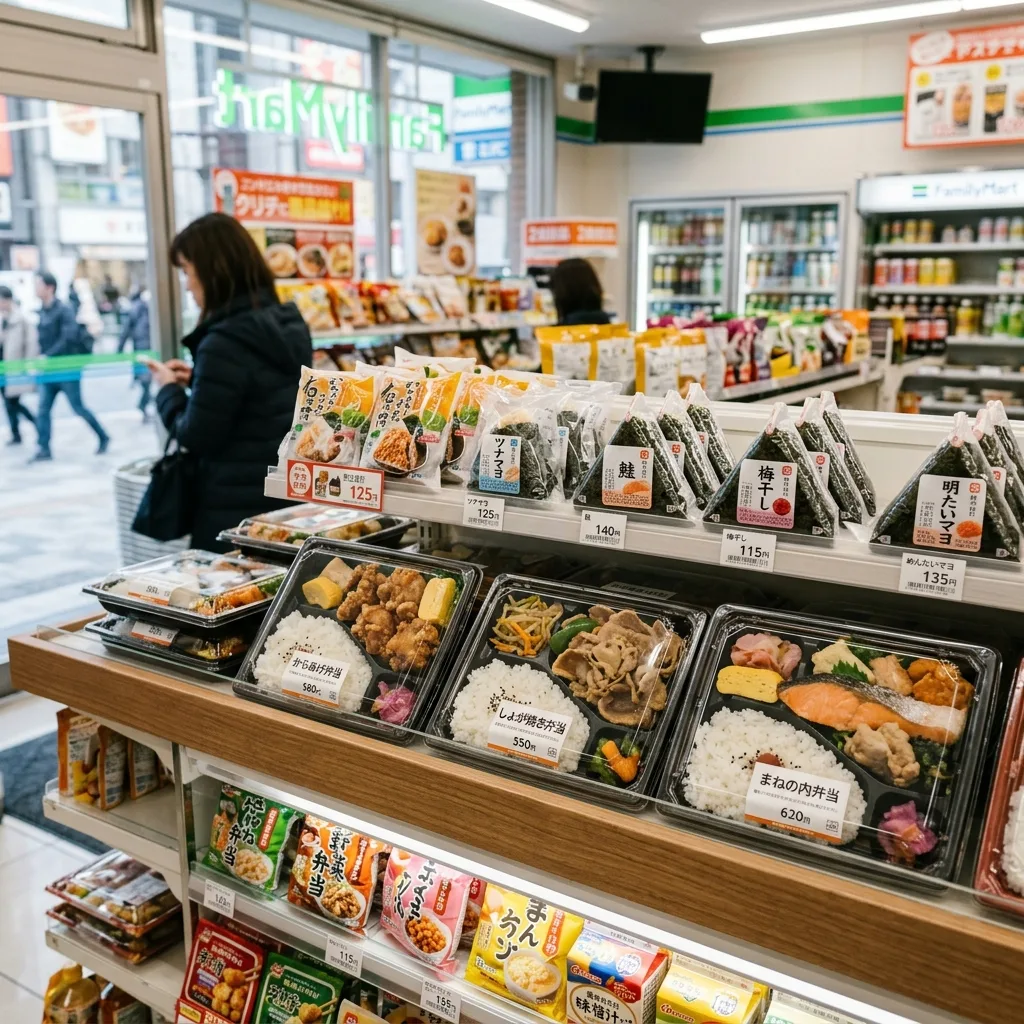
The first time a traveler realizes Japanese convenience stores are better than many restaurants, the trip changes shape. Suddenly, a quick stop for onigiri becomes dinner, a bento becomes lunch, and a coffee, a salad, a fried chicken piece, and a dessert from three different chains can feel more thoughtful than a full sit-down meal elsewhere. Lawson, 7-Eleven, and FamilyMart are not just places to grab water and tissues. They are one of the most reliable ways to eat well, cheaply, and quickly across Japan.
Why Japanese Convenience Store Food Is Better Than People Expect
If you are planning a trip to Japan, konbini food deserves a place in the itinerary, not just the emergency drawer. The best stores offer hot meals, fresh sandwiches, perfectly packed rice balls, seasonal sweets, and surprisingly good coffee at prices that make sense for travelers on any budget.
Japanese convenience stores are worth understanding because they solve three problems at once. First, they are fast, which matters when you are moving between trains, neighborhoods, or attractions. Second, they are predictable, so you can eat well without studying a menu for ten minutes. Third, they are everywhere, which means your eating strategy works whether you are in Tokyo, Kyoto, Osaka, Fukuoka, or a rural station town.
This matters even more if you are building a Japan trip around food. A broader food plan like our Japanese Food Guide: Ramen, Sushi, Yakitori & What to Eat and Where helps with sit-down meals, while this guide handles the in-between moments. In practice, the best Japan travelers combine both: one memorable restaurant meal, one konbini lunch, one snack break, and one late-night convenience store run every day.
The biggest mistake first-timers make is assuming all convenience stores are interchangeable. They are not. Lawson, 7-Eleven, and FamilyMart overlap heavily, but each chain has a personality. One tends to shine in desserts, another in hot snacks, another in all-around consistency. Once you know the differences, you can choose the store that best fits your appetite, schedule, and budget.
The real value of konbini food
Konbini food is especially useful for travelers who want to eat on the move without sacrificing quality. A good rice ball can function like a light meal. A bento can replace a casual lunch. A fried chicken item can bridge the gap between sightseeing and dinner. And a cup of store coffee can be strong enough to keep your train day moving.
The real advantage is not just price. It is control. You can eat exactly as much as you need, when you need it, without waiting for a table, splitting a bill, or committing to a full restaurant experience. If you are trying to see a lot in one day, that flexibility is worth as much as the food itself.
What makes Japanese convenience stores different
Outside Japan, convenience stores often mean packaged snacks, lottery tickets, and regret. In Japan, the category is much broader. The stores are designed for actual daily life: breakfast on the way to work, lunch between meetings, dinner when you are too tired to cook, and a dessert stop because the season has changed and the shelf now carries a limited-edition strawberry item.
That seasonal rotation is part of the charm. You might find roasted sweet potato bread in autumn, chilled noodle salads in summer, or chestnut desserts in early winter. If you only visit one branch in one city, you will not see everything, but you will still get a better sense of how Japanese daily eating works than most guidebooks can provide.
How to think about the three major chains
The easiest way to choose is to treat each chain as a rough specialist. Lawson often feels strongest for dessert and lighter meals. 7-Eleven is the all-purpose default, especially for reliable staples and broad branch coverage. FamilyMart often wins for fried snacks, late-night cravings, and the sort of food that feels slightly indulgent without becoming expensive.
That is not a hard rule. Store quality varies by location, and a branch near an office district or train hub can outperform a more ordinary one elsewhere. But as a traveler, having a default mental map helps you make faster decisions when you are hungry and do not want to overthink lunch.
Lawson vs. 7-Eleven vs. FamilyMart: What Each Store Does Best
There is no single “best” convenience store in Japan. The right answer depends on what you want to eat, what time of day it is, and whether you care more about desserts, hot snacks, or dependable basics. Think of the three chains as a small menu of strategies rather than a competition with one winner.
Lawson: the strongest for desserts and lighter eating
Lawson is often the first chain travelers remember because it tends to feel polished and a little more curated. Its bread shelves, sweet items, and lighter meal options are especially appealing when you want something that feels clean rather than heavy.
One reason Lawson stands out is its dessert game. You will often see puddings, roll cakes, cream-filled buns, chilled sweets, and collaboration items that feel better than their convenience-store label suggests. If you like finishing dinner with something small and sweet, Lawson usually gives you more reasons to linger.
Lawson also tends to do well with lighter lunch combinations. A rice ball plus a salad plus a coffee can make a compact and sensible meal. For travelers who want to avoid the fried-food spiral but still eat cheaply, that balance matters.
Where Lawson can feel less dominant is in pure “I am starving right now” energy. It absolutely has hot snacks and hearty bentos, but it is not always the first place I would choose if I wanted the most aggressive fried-chicken or the biggest variety of grab-and-go comfort food. It is more likely to feel refined than chaotic.
7-Eleven: the most dependable all-rounder
If you only remember one chain, remember 7-Eleven. It is the most consistent all-rounder and often the easiest store to find near major stations, neighborhoods, and transit corridors. That alone makes it the safest default choice for travelers.
7-Eleven tends to be strong in the basics. Onigiri is usually reliable. Bento selection is broad. Sandwiches are familiar and easy to understand. Noodles, soups, and packaged snacks are straightforward. If you are exhausted after a day of sightseeing and want a no-drama meal, 7-Eleven is the chain most likely to give you exactly that.
Another advantage is branch density. On a long trip, the closest store is often the one that matters most. When you are checking into a hotel late, catching an early train, or looking for a quick breakfast before a day trip, 7-Eleven’s footprint often makes it the easiest emergency option.
7-Eleven is also especially useful for travelers who are already using Japanese transit heavily. If you are basing your route on rail lines and station neighborhoods, as in our Getting Around Tokyo: Trains, IC Cards & Navigation Apps guide, 7-Eleven is usually the branch you can count on to be close to your platforms and exits.
FamilyMart: the late-night comfort-food champion
FamilyMart often wins travelers over because it feels the most snack-forward. It can be an excellent stop for fried items, bakery-style snacks, and the kind of food that is best eaten immediately after purchase.
The chain’s reputation often rests on its fried chicken item, which has become almost a travel ritual for many visitors. Pair it with coffee, tea, or a cold drink and it becomes an easy, satisfying stop between activities. FamilyMart can also be very good for packaged sweets and limited-run items that feel a little less standard than the basics.
FamilyMart is especially useful when you want a small treat rather than a full meal. Think “I do not need dinner yet, but I need something warm, salty, and immediate.” That is where the chain performs best.
Which store should you choose first?
If you are standing in front of all three and do not know where to go, use this rule of thumb:
- Choose 7-Eleven if you want the safest all-rounder.
- Choose Lawson if you want sweets or a lighter, cleaner-feeling meal.
- Choose FamilyMart if you want fried snacks or a quick comfort-food hit.
The choice is rarely life-changing, but it does affect how the meal feels. Over a week in Japan, those small differences add up. The traveler who learns to alternate chains based on mood ends up eating better than the traveler who always enters the first store in sight.
What the three chains have in common
Despite their differences, the big three share a lot. All three usually sell onigiri, sandwiches, bento boxes, drinks, coffee, salads, instant noodles, sweets, and late-night snacks. All three are designed for speed. All three are reliable enough that you can use them without planning. And all three are part of everyday Japanese life, which is why using them well makes you feel more plugged into the country rather than outside it.
What to Buy and How to Eat It Well
Once you know the chains, the next step is learning what to buy. The best convenience-store meals are usually built from a small combination of items rather than a single perfect product. That is what makes konbini food so flexible: you can assemble breakfast, lunch, dinner, or a snack run from the same shelf ecosystem.
Onigiri: the first item every traveler should understand
Onigiri is the cornerstone of Japanese convenience-store eating. These rice balls are usually wrapped in seaweed and filled with tuna mayo, salmon, pickled plum, grilled cod roe, or other fillings. They are cheap, easy to carry, and surprisingly satisfying.
The main thing to know is that onigiri packaging can look slightly intimidating the first time. There is usually a plastic pull-tab system that separates the seaweed from the rice until you are ready to eat. That design keeps the nori crisp instead of soggy. Once you learn the peel-and-pull motion, the whole process becomes second nature.
For travelers, onigiri works best when paired with a drink and maybe a second item. Two onigiri can make a full breakfast. One onigiri plus a salad can make a light lunch. One onigiri plus a hot snack can stretch into a more substantial meal if you are moving fast.
Bento boxes: the lunch solution
Bento boxes are one of the most efficient ways to eat a full meal in Japan without going to a restaurant. You will usually find rice, protein, vegetables, and side dishes in a compartmentalized tray.
The range is wide. Some bentos are humble and practical, while others are surprisingly good for the price. If you are trying to avoid fast food but do not want to sit down at an unfamiliar restaurant, a bento is often the easiest compromise.
The best time to buy a bento is usually earlier in the day, when stock is fresher and selection is larger. If you buy late at night, the choice can be narrower. That said, even a late bento is often perfectly serviceable if your alternative is a train platform snack and a granola bar from your luggage.
Sandwiches and bread items
Convenience-store sandwiches in Japan are famous for a reason. The soft white bread, egg salad fillings, fruit sandwiches, and cut crusts can feel absurdly elegant for something bought in a station shop. Egg salad is the classic default, but you will also find ham, tonkatsu, tuna, and seasonal options.
Bread items can be a smart breakfast choice because they are fast and easy to eat on the go. If you are leaving early for a museum, castle, shrine, or day trip, a sandwich plus coffee plus a banana or yogurt drink can make a perfectly sensible start to the day.
Hot snacks: fried chicken, croquettes, and more
This is where convenience stores become emotionally dangerous, because the hot-case section is built to tempt you into buying “just one more thing.” Fried chicken pieces, croquettes, sausages, hash browns, and other hot items are available at many branches.
The practical advice is simple: buy hot snacks when you are ready to eat immediately. They are at their best in the first few minutes after purchase. If you are planning to carry them around for half an hour, they will lose the thing that made them appealing in the first place.
FamilyMart often gets the most praise in this category, but Lawson and 7-Eleven have strong options too. The real trick is not the brand; it is the timing. Hot convenience-store food is best when it is still hot.
Coffee, tea, and drinks
Do not overlook the drinks section. Japan’s convenience-store coffee culture is excellent for travelers because you can get a decent cup fast without overpaying. Iced coffee in summer is common, while hot coffee and tea make sense in the cooler months.
Bottled tea, milk coffee, sports drinks, and fruit beverages are also useful if you are navigating long train days or humid weather. If you are trying to stay hydrated while walking between neighborhoods, a konbini drink run can be as important as the meal itself.
Desserts and seasonal snacks
If you like sweets, Japanese convenience stores are dangerous in the best possible way. Puddings, cheesecakes, mochi desserts, cream rolls, seasonal fruit sweets, and flavored ice cream all show up regularly.
This is where Lawson often shines, although the exact winners rotate with the season. Some of the best convenience-store memories travelers have are not about lunch at all. They are about buying a chilled dessert after a long day of walking and eating it on the way back to the hotel.
How to build a balanced konbini meal
If you want a reliable formula, use this:
- One starch: onigiri, bread, or bento rice
- One protein: fried chicken, egg salad, tuna, grilled meat, or tofu
- One fresh or chilled item: salad, fruit cup, yogurt, or drink
- One small treat: pudding, cake, chocolate, or seasonal sweet
That formula keeps the meal from feeling random. It also helps you avoid buying three carb-heavy items and calling it dinner. A balanced konbini stop can be healthier, cheaper, and more satisfying than a badly chosen restaurant meal.
Practical Guide
Japanese convenience stores are easy to use, but there are a few logistics worth knowing if you want the experience to be smooth instead of awkward. This section covers hours, pricing, branch selection, and the small rules that make konbini visits feel normal instead of confusing.
Hours and what stays open
Most major convenience-store branches in Japan are open long hours, and many are open 24/7. That is one of the reasons travelers love them. You can rely on them before sunrise, after dinner, and during those strange gaps in your itinerary when normal restaurants have already closed.
That said, not every branch is equally stocked at all hours. Early-morning breakfast runs and late-night emergency visits are both possible, but the selection may differ. A branch near a major station or office district is usually better stocked than a small residential branch deep inside a neighborhood.
If you are traveling during a holiday period, large train stations, airports, and urban centers are the safest places to find the broadest range of items. Rural branches can still be excellent, but the selection is often simpler.
Price ranges you can expect
Exact prices vary by location and product, but the general pattern is easy to understand:
- Onigiri: usually around the low hundreds of yen
- Sandwiches and bread items: still inexpensive enough for budget travel
- Bento boxes: often a mid-hundreds-to-low-thousands-yen purchase
- Hot snacks: usually cheap enough to add impulsively
- Coffee and drinks: enough to feel like a fair everyday buy, not a luxury
- Desserts: affordable compared with dessert cafés, especially for quick snacks
For travelers, the important point is not the exact number but the relationship between quality and price. The food often tastes like something you would expect to pay more for in a Western convenience setting. That is why konbini meals feel like such a strong value proposition.
How to find the best branch
Not all branches are equal. If you want the best food selection, look for stores near:
- Major train stations
- Business districts
- Tourist corridors
- Airports
- Large office towers or shopping complexes
These locations usually have better turnover and broader stock. A branch with lots of commuters tends to refresh inventory more often, which matters for fresh items, sandwiches, and bentos.
If you are already following a city guide like our Ultimate Tokyo Travel Guide 2026: Everything First-Timers Need to Know, notice how often the best sights and the best food are both clustered around the same transit nodes. That is not an accident. Japan’s urban design makes convenience-store eating part of the daily movement pattern.
How to pay
Payment is usually straightforward. Most branches accept cash and card, and many support contactless payment or transit IC cards. For travelers, the easiest strategy is to keep one card or payment method ready, especially when lines are moving quickly and you do not want to fumble at the register.
If you are using a transit IC card for trains and buses, the same card can sometimes be convenient for small convenience-store purchases as well. That keeps your travel routine compact: one card for transit, one card for snacks, one less thing to think about.
Etiquette and small customs
Japanese convenience stores are casual, but a little etiquette still helps:
- Do not eat messy food in the middle of a crowded aisle.
- Carry items to the designated space if the branch has tables or a standing counter.
- Speak softly near the register and keep the line moving.
- Dispose of trash where allowed, since many neighborhoods do not have public bins.
These are tiny habits, but they matter. A smooth konbini visit is partly about speed and partly about not creating friction for everyone else in line.
Booking links and reservations
There are no reservations or booking links needed for convenience-store food. That is part of the appeal. The whole system is designed for spontaneous use. You walk in, choose, pay, and leave with something edible. If your day is full of museums, temples, neighborhoods, or trains, that simplicity is exactly what you want.
Tips & Common Mistakes
Even though convenience stores are easy to use, travelers still make predictable mistakes. Avoiding them makes your food experience better, cheaper, and less wasteful.
Do not assume the first item is the best item
Many first-time visitors buy the first onigiri they see, or the first sandwich, or the first bento, and never look at the rest of the shelf. That works in a pinch, but it means you miss seasonal items, better fillings, or a fresher branch rotation.
Spend ten extra seconds scanning the shelf. Konbini food is best when you choose deliberately, not when you treat the shelf like a vending machine.
Do not overbuy because the prices feel low
This is one of the most common traveler mistakes. Because each item looks cheap, it is easy to buy too many things and end up with a random pile of food that does not form a coherent meal.
The fix is simple: decide on a meal structure before you pick up anything. Breakfast might be one sandwich, one drink, and one fruit. Lunch might be one bento and one dessert. Snack might be one hot item and one coffee. If you keep the decision small, the result is much better.
Hot food should be eaten quickly
Fried items are best when fresh. If you are shopping for later, choose packaged items or chilled items instead. This is especially true if you are heading back to a hotel room, waiting for a train, or trying to stretch a snack across an hour of walking.
Balance konbini meals with one or two proper restaurants
The smartest trip rhythm is not “restaurants only” or “convenience stores only.” It is both. Konbini food is practical and reliable, but it should support your trip rather than dominate it.
If you are spending several days in Tokyo, for example, a day of subway hopping and neighborhood wandering might be fueled by convenience-store meals, while another day might center on a proper ramen shop or sushi counter. That balance keeps the trip from feeling repetitive.
Match the store to the time of day
Morning: choose the branch with the freshest pastries, sandwiches, and coffee.
Afternoon: choose the branch with broader lunch stock and bentos.
Late night: choose the branch closest to your hotel or station, because function matters more than variety.
This sounds obvious, but it is the simplest way to get better results from all three chains.
Remember that branch quality is local
Even within the same chain, one branch can be excellent and another can feel underwhelming. A convenience store next to a major train station may have fresher stock, more seating, and a better selection than the same chain’s branch in a quiet residential block.
That is why the chain comparisons in this article should be treated as a starting point, not a hard law. Use the chain as a guide, but trust the branch in front of you if the shelves look better.
Frequently Asked Questions
Is convenience-store food in Japan actually good?
Yes, especially by convenience-store standards elsewhere. It is not trying to be fine dining, but it is usually fresh, practical, and much better than travelers expect. The strongest items are usually onigiri, bentos, hot snacks, coffee, and seasonal sweets.
Which store is best for first-time travelers?
If you only want one answer, choose 7-Eleven. It is the most dependable all-rounder and the easiest to find near major transit hubs. If you want a little more personality, Lawson is often better for desserts and FamilyMart is often better for fried snacks.
Can I eat konbini food for most of my trip?
You can, but I would not make it your only food strategy. It is smart to mix convenience-store meals with restaurant meals so you get both efficiency and the deeper food experiences that make Japan memorable. Konbini food is the best support system, not the whole story.
Is it cheaper than eating at restaurants?
Usually, yes. It is one of the easiest ways to control your food budget without feeling like you are sacrificing quality. That makes it especially useful if you are trying to keep transportation, sightseeing, and meals all under control at once.
What should I buy if it is my first time?
Start with one onigiri, one drink, and one sweet or hot snack. That gives you a low-risk introduction to the system. If you like it, move on to bento boxes, sandwiches, and seasonal desserts on later stops.
Are convenience stores useful outside Tokyo?
Absolutely. They are useful in every major city and still very helpful in smaller towns. In fact, in some places they are even more important because they may be the easiest reliable food option near a station or hotel.
Conclusion
Japanese convenience-store food is one of the easiest travel wins in the country. It saves time, stretches your budget, and gives you a surprisingly deep look at everyday Japanese eating habits. Once you understand the differences between Lawson, 7-Eleven, and FamilyMart, you stop seeing konbini as backup food and start seeing them as a flexible part of the trip itself.
If you remember only three things, remember these: 7-Eleven is the safest all-rounder, Lawson is often strongest for sweets and lighter meals, and FamilyMart is a strong choice for hot snacks and comfort food. From there, the rest is just learning how to build a meal that fits your day.
For first-time visitors, the best approach is simple. Use convenience stores for breakfast, transit snacks, quick lunches, and late-night cravings. Use restaurants for the meals you want to remember. And let the two systems support each other instead of competing. That is how you eat well in Japan without overcomplicating anything.
If you are mapping out the wider trip, pair this guide with Getting Around Tokyo: Trains, IC Cards & Navigation Apps and Ultimate Tokyo Travel Guide 2026: Everything First-Timers Need to Know so the food plan and the transit plan work together. Once those basics are handled, you can spend less time figuring out logistics and more time enjoying the trip.