Religious Sites in China: Buddhist, Taoist & Confucian Temple Visits

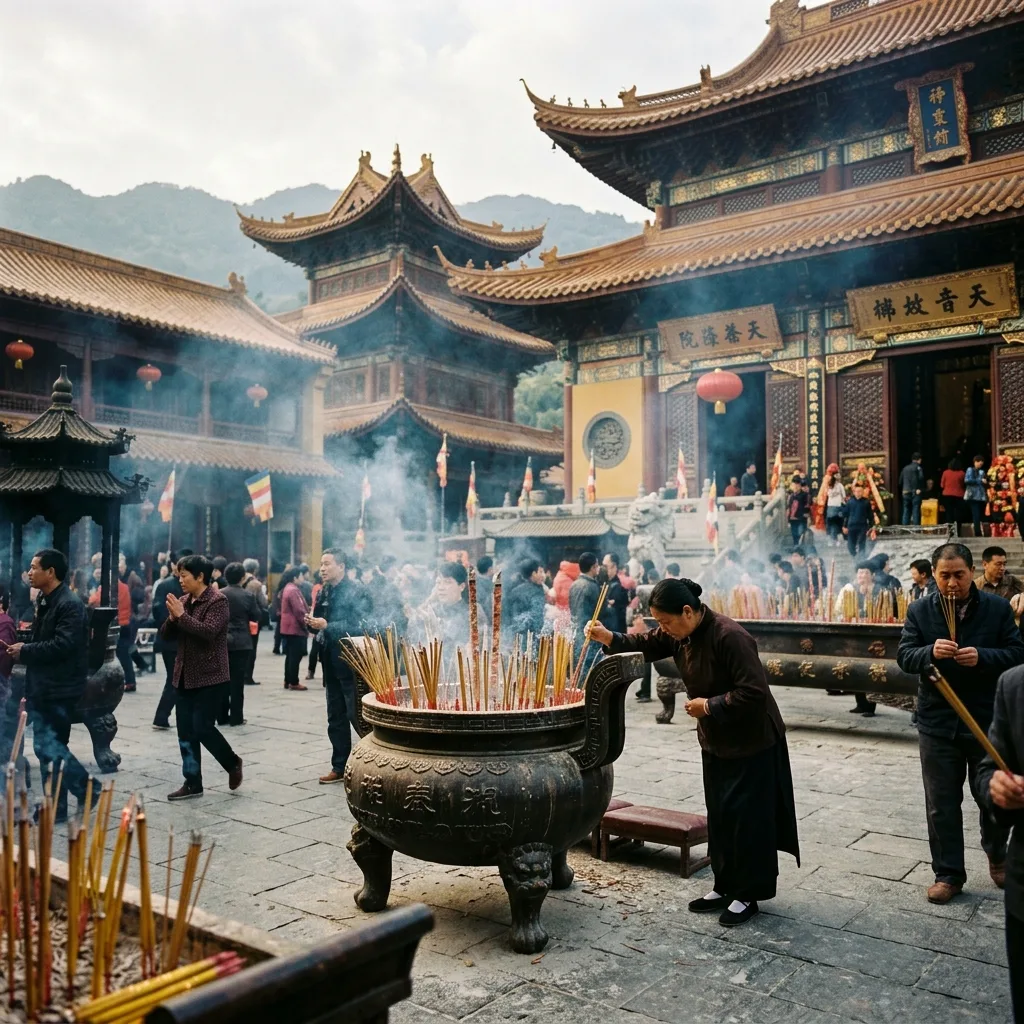
If you have ever stood outside a Chinese temple and wondered whether you were looking at Buddhism, Taoism, or Confucianism, you are not alone. The labels on maps are often vague, the architecture can feel similar at first glance, and the rules for entering, photographing, paying, and praying are easy to misread. This guide gives you a clear framework so you can visit with confidence, whether you are planning a full temple day in Beijing or adding one sacred site to a larger China itinerary.
Introduction
China's religious sites are not museum pieces frozen in time. They are living places of worship, memory, and civic identity. Some are active monasteries with incense clouds and chanting monks. Others are historic ritual complexes where emperors once sacrificed to heaven. A few are semi-secular heritage sites that still preserve a Confucian atmosphere of scholarship and etiquette. For travelers, that means the best visits happen when you understand the purpose of the site before you arrive.
This article is designed to solve a practical problem: how to visit Buddhist, Taoist, and Confucian sites in China without wasting time, making etiquette mistakes, or overpaying for convenience. It also gives you a realistic way to combine temple visits with transport, cashless payment, and city planning. If you are already preparing for China basics like money and connectivity, you may also want to review our Currency in China: Where to Exchange, Use Cards & Avoid Scams guide and our China SIM Card Guide 2026: eSIM, Local Cards & Roaming Options before you go.
The good news is that temple travel in China is usually manageable for first-time visitors. Major sites in Beijing, Shanghai, Xi'an, Hangzhou, and Chengdu are well connected by subway, ride-hailing, and hotel transfers. The harder part is interpreting what you are seeing. Once you can spot a Buddhist hall, a Taoist altar, or a Confucian academy, the whole experience becomes more meaningful and much less intimidating.
Hook angle: a problem this article solves for the traveler
The main problem this article solves is confusion. Many travelers want to visit Chinese temples but do not know which sites are active, which are historic, which are ticketed, and which etiquette rules matter most. That lack of context leads to rushed visits, awkward behavior, and missed details that make the site memorable.
Preview of what the reader will learn
You will learn how Buddhist, Taoist, and Confucian sites differ, how to tell what kind of temple you are standing in, how to visit responsibly, what current Beijing hours and prices look like in 2026, and how to build a practical half-day or full-day temple route.
What Buddhist, Taoist, and Confucian Sites Actually Mean
Buddhist temples focus on devotion and merit, Taoist sites emphasize harmony with nature and ritual practice, while Confucian sites preserve scholarship, ceremony, and social order. In China, the architecture may overlap, but the meaning of each place changes the way you should enter, move, and behave.
One of the biggest mistakes travelers make is assuming that all sacred buildings in China are essentially the same. They are not. Even when the rooflines, courtyards, and incense burners look similar, the traditions underneath them are different.
Buddhist sites are usually the easiest for travelers to recognize because they often have statues of the Buddha or bodhisattvas in the main hall, donation boxes for incense, and a devotional rhythm that feels familiar to visitors who have seen temples elsewhere in Asia. In mainland China, many famous Buddhist temples are also historic cultural sites, so you are often seeing both a religious space and an architectural archive at the same time.
Taoist sites tend to feel more tied to landscape, cosmology, and ritual balance. You may see altars dedicated to deities, protective talismans, spirit tablets, and references to longevity or the five elements. Taoist temples can feel less visually uniform than Buddhist monasteries, and many travelers find them harder to decode on a first visit. That is normal. The point is not to identify every deity immediately, but to understand the temple's function: prayer, protection, healing, divination, and harmony with the natural order.
Confucian sites are different again. They are often quieter, more formal, and more educational in tone. Instead of incense and worship crowds, you may find stone stele, halls honoring scholars, courtyards for ritual, and a strong emphasis on order and ceremony. Confucian spaces were historically tied to examinations and state learning, so the mood is less about personal salvation and more about social virtue, memory, and authority.
If you are visiting Beijing, the contrast is especially useful because you can see all three traditions in one city with minimal transit friction. A day that includes Yonghe Temple for Buddhism, Temple of Heaven for imperial ritual, and the Confucius Temple and Guozijian for Confucian learning gives you a compact overview of how Chinese sacred architecture changed across different traditions and eras.
Why the distinctions matter to travelers
These distinctions are not academic trivia. They affect how you plan your route, what you wear, whether you buy incense, where you take photos, and how long you should spend at each stop. A Buddhist monastery may reward slow wandering and quiet observation. A Confucian museum-temple may be better approached with a guidebook mindset. A Taoist site often makes the most sense if you arrive ready to read plaques and symbols rather than expecting a single "main shrine" experience.
They also help you decide what kind of trip you want. If you want a visually rich, incense-filled pilgrimage atmosphere, choose Buddhist sites. If you want metaphysical symbolism and a more distinctly Chinese cosmological feel, prioritize Taoist sites. If you want a sense of imperial education, civil service, and scholarly tradition, make room for Confucian sites. Many first-time travelers only realize this after their first visit, which is why a little pre-reading pays off.
A quick visual cheat sheet
In practical terms, look for these clues:
- Buddhist: statues of the Buddha or bodhisattvas, incense burners, chanting halls, monastic order, merit language.
- Taoist: references to immortals, deities, talismans, alchemy, longevity, mountain or cosmos symbolism.
- Confucian: ancestral or scholarly halls, tablets, academic references, official ritual language, formal courtyards.
The architecture itself can still overlap. Chinese temple design often uses axial layouts, red walls, carved beams, tiled roofs, and guardian animals across traditions. That overlap is what confuses many visitors. The building language is shared, but the ritual vocabulary is not.
How to Read a Temple Complex Like a Traveler
A useful way to approach Chinese temple travel is to think in layers. The first layer is the site as architecture. The second is the site as ritual space. The third is the site as a lived neighborhood landmark. When you can read all three, you stop treating the temple as a checklist stop and start understanding why people still come here.
The first thing to notice is the approach. Many major temples are entered through one or more gatehouses, often aligned on a central axis. That is not just aesthetic symmetry. It creates a gradual transition from the street into a controlled sacred environment. Courtyards slow you down. Walls block noise. Repeated gates create a sense of movement into a separate world. If you have visited places like Beijing Hutong Experience: How to Explore the Old Alleyways, you will recognize that temples and hutongs often sit in the same urban logic: compressed space, layered history, and a strong sense of enclosure.
The second thing to notice is the object hierarchy. In many Buddhist temples, the central hall matters more than the side halls, but the side halls are often where local devotion becomes visible. In Taoist sites, altars and side shrines may be just as important as the main ceremonial room. In Confucian spaces, tablets, plaques, stele, and ceremonial courtyards can matter more than a single dramatic statue. In other words, not every site is built around one obvious centerpiece.
The third layer is behavior. You do not need to imitate worshippers, but you should avoid obstructing them. Do not step directly into prayer flow paths. Do not talk loudly in inner halls. Do not assume that a photo-friendly angle is more important than someone's ritual moment. This is one of the easiest ways to earn quiet disapproval without meaning to.
The fourth layer is the surrounding city. Temples in China are rarely isolated in the way some hilltop shrines are. They are often embedded in daily city life, near markets, parks, subway stations, schools, or residential lanes. That makes them ideal for pairing with a broader walking route. A temple visit can be part of a hutong exploration, a food stop, or an afternoon park walk. In Beijing, for example, a temple circuit pairs naturally with a lunch break in a traditional lane district or a late afternoon stroll through imperial parkland such as the Summer Palace Beijing: Imperial Garden History & Practical Visit Tips.
What the incense means
Incense is one of the easiest features to misunderstand. For many visitors, smoke equals atmosphere. For practitioners, it often represents offering, purification, and communication. If a temple is busy with incense burners, remember that the site is not a themed set. Wait your turn, observe how local worshippers behave, and avoid treating the incense as a prop.
What the plaques and inscriptions mean
Temple plaques often carry the site's historical name, imperial endorsement, or moral slogan. A Confucian temple may foreground scholarship and civil virtue. A Buddhist site may emphasize compassion, wisdom, or enlightenment. A Taoist temple may invoke harmony, longevity, or cosmic order. Even if you cannot read Chinese, looking at where inscriptions are placed helps you understand which values the site wants to project.
How much time to budget
For a first visit, plan 45 to 90 minutes for a medium-sized temple and two to three hours for a major complex with museums or multiple courtyards. If you want to study architecture, photography, or ritual behavior carefully, stretch that to half a day. Temple visits are not usually the kind of attraction you rush through. The value comes from noticing repetition, rhythm, and detail.
A Practical Beijing Comparison
Beijing is the easiest city in China for first-time temple visitors because it gives you a clean comparison set. You can move between Buddhist, Taoist-adjacent, and Confucian spaces with relatively little transit stress. You also get official city-government visitor pages with clear opening times and ticket information, which is useful when you need current numbers rather than vague recommendations.
Yonghe Temple: the easiest Buddhist reference point
Yonghe Temple, often called the Lama Temple in English, is the standard first stop for travelers trying to understand Tibetan Buddhist architecture in Beijing. It is one of the largest and best-known Buddhist temples in the city, and it is a practical place to observe how devotion, imperial history, and living religion overlap.
For visitors, the main takeaway is not just the statues and gilded halls. It is the atmosphere. You are likely to see worshippers, tourists, and local residents sharing the same space. That is a useful reminder that sacred travel in China often combines heritage tourism with active practice.
Current official Beijing government information lists seasonal hours of 9:00 to 17:00 in the warm season and 9:00 to 16:30 in the cold season, with last ticketing earlier than closing time. The published ticket price is 25 RMB for adults and 12 RMB for discounted entry. The site is also managed with real-name ticketing and official advance booking, which means your passport is more important than your wallet at the entrance.
If you are coming from elsewhere in the city, treat Yonghe Temple as a straightforward half-day stop. It works well before lunch or after a hutong walk. If you care about neighborhood texture, combine it with nearby lanes and tea stops rather than trying to turn it into a fast in-and-out photo op.
Temple of Heaven: imperial ritual at scale
The Temple of Heaven is not a monastery in the narrow sense. It is a ritual complex where emperors of the Ming and Qing dynasties performed sacrifices to Heaven and prayed for good harvests. That makes it one of the most important places in Chinese ritual history, and one of the easiest places for travelers to understand the scale of imperial religion.
The Temple of Heaven is especially valuable because it shows how sacred space could belong to the state as well as to clergy. The geometry is deliberate. The symbolism is precise. The whole site is an exercise in cosmology, not just decoration. Even if you come mainly for the architecture, the historical logic will keep you interested.
Current official visitor information lists the park opening from 6:00 to 22:00 in peak season and 6:30 to 22:00 in off-season, while the inner special sites open from 8:00 to 18:00 in peak season and 8:00 to 17:00 in off-season. The main admission ticket is 15 RMB in peak season and 10 RMB in off-season. The full-site combined ticket is 34 RMB in peak season and 28 RMB in off-season. Some special areas carry separate prices, including 20 RMB for the prayer hall, echo wall, and altar area, and 10 RMB for the sacrificial music administration.
That structure matters because many visitors only buy the park entrance and then wonder why certain halls are closed or require a separate ticket. Read the signs carefully. Also note that some special sites are closed on Mondays except during holidays. That detail is easy to miss if you plan a Monday-only visit.
Confucius Temple and Guozijian: scholarship as sacred culture
The Confucius Temple and Guozijian in Beijing are a different kind of stop altogether. Here, the atmosphere is formal rather than devotional. The site speaks to education, ritual order, and the historical prestige of scholarly learning. For travelers, it is one of the best places in the city to understand how Confucianism shaped the administrative culture of imperial China.
The official Beijing government page lists opening hours from 9:00 to 17:00 with ticket sales ending at 16:30, and the site is closed on Mondays except holidays. The adult ticket is 30 RMB, with a 15 RMB student price for eligible full-time students.
What makes this site especially useful for visitors is how clearly it demonstrates the old link between ceremony and bureaucracy. The temple is not just about philosophy. It is about the political and social machinery that turned learning into status. If you are interested in how Chinese cities organized elite life, this is one of the clearest stops you can make.
Why Beijing is the best comparison city
Beijing's value is comparative clarity. You can visit a Buddhist temple in the morning, a ritual complex at midday, and a Confucian site in the afternoon without leaving the city center. That helps you see how religious architecture and imperial symbolism differ without needing a long overland trip.
It also helps that the city has strong official visitor infrastructure. Street signage, subway access, and government tourism pages reduce friction. If you are not fluent in Chinese, this matters. A city with high visitor support makes the learning curve much less steep, especially when you are still adjusting to payment and connectivity realities on a China trip.
Practical Guide
Hours, admission, and booking at a glance
Here is a practical snapshot of the Beijing sites covered above.
| Site | Current hours | Admission | Booking note |
|---|---|---|---|
| Yonghe Temple | 9:00-17:00 peak season, 9:00-16:30 off-season | 25 RMB adult, 12 RMB reduced | Real-name booking through the official system is used for visitors |
| Temple of Heaven Park | 6:00-22:00 peak season, 6:30-22:00 off-season; special sites have shorter hours | 15 RMB peak / 10 RMB off-season; combined ticket 34 RMB / 28 RMB; special sites priced separately | Foreign visitors can reserve through the official WeChat platform with passport details |
| Confucius Temple and Guozijian | 9:00-17:00, ticket sales to 16:30 | 30 RMB adult, 15 RMB student | Closed Mondays except holidays |
These are the kinds of numbers that matter when you are planning a packed city day. They also show why you should not assume temple hours match park hours. In China, one site can have a broad public opening window while specific halls inside it close earlier or require separate tickets.
How to get there
In major Chinese cities, subway access is usually the most reliable starting point. Beijing is especially convenient because the main cultural sites are tied to widely used metro stations, and official tourism pages often list the best exits. If you are comfortable navigating subways, your trip becomes much easier.
For temple travel in Beijing, I would usually recommend this order of operations:
- Choose one anchor site and one nearby secondary stop.
- Check the latest official opening hours the night before.
- Confirm whether the site needs real-name booking.
- Leave buffer time for security checks and ticket scans.
- Avoid overpacking the day with three far-apart sites.
That last point matters more than most guides admit. Temple visits are mentally dense. If you try to string together too many sacred sites in a single day, they start to blur together. It is better to visit fewer places and understand them well.
Booking links and reservation channels
For Beijing's major ticketed heritage sites, official booking channels often live inside WeChat rather than on an English-language sales page. That is normal in China. If you have already set up mobile access, the process is usually straightforward. If not, this is another reason to prepare your phone before arrival and to read our China SIM Card Guide 2026: eSIM, Local Cards & Roaming Options before your trip.
What to expect:
- Yonghe Temple: real-name booking is the norm, and the official system controls entry.
- Temple of Heaven: foreign visitors can reserve and buy through the official WeChat platform using passport details.
- Confucius Temple and Guozijian: check the ticket window and holiday closure rules before you go, especially if you are planning a Monday visit.
If your trip is built around convenience, ask your hotel concierge or a local guide to verify the booking method the day before. This is especially useful when your itinerary depends on a single morning entry slot.
What to wear and carry
You do not need formal clothing, but you should avoid anything that looks beach casual or party casual. Aim for modest, clean, and comfortable. Temperatures can be hot in summer and cold in winter, and temple courtyards often mean more walking and standing than you expect.
Bring:
- Comfortable shoes
- A small bottle of water
- Your passport
- A charged phone
- A payment app or some RMB cash for small purchases
- A power bank if you plan to photograph and navigate all day
Cash is still useful, even in a mobile-first environment. If you need a reminder of why, our Currency in China: Where to Exchange, Use Cards & Avoid Scams article walks through the practical payment realities that still catch travelers off guard.
Best time of day to visit
Morning is usually the best choice. Crowds are lighter, temperatures are lower, and the site feels calmer. In Buddhist temples, early visits also tend to be more respectful because you are less likely to interrupt worshippers or group tours. For imperial or Confucian sites, morning light improves photos and makes courtyards feel less crowded.
If you are a photographer, late afternoon can also work well because side light reveals roof texture and carved details. Just remember that closing times can be earlier than you expect, especially at ticketed sites with separate last-entry cutoffs.
Tips & Common Mistakes
The biggest mistake travelers make is treating every temple visit like a sightseeing checkbox. That leads to thin photos, thin memory, and awkward behavior. Instead, slow down enough to notice what kind of site you are entering and what the people inside are doing.
Common mistakes to avoid
- Entering without checking whether the site is active, ticketed, or museum-like.
- Confusing a historical ritual complex with a functioning monastery.
- Assuming all halls are open at the same time.
- Taking loud calls or group chatter into inner courtyards.
- Staging photos directly in front of worshippers.
- Ignoring Monday closures and holiday changes.
- Showing up without passport details when the site requires real-name booking.
Etiquette that matters
If you remember only a few rules, make them these:
- Keep your voice low in prayer areas.
- Do not touch statues, offerings, or ritual objects unless signage says you can.
- Walk around worshippers rather than through their ritual path.
- Ask before photographing monks, worshippers, or staff.
- Be discreet with food and drinks inside sacred spaces.
At Buddhist sites in particular, the rhythm of prayer is part of the experience. At Confucian sites, the rhythm is more about order and display. At Taoist sites, the feeling may be more esoteric or symbolic. Your behavior should adapt to the site's mood.
How to combine temple visits with the rest of your trip
Temple visits fit well into a city day built around historical neighborhoods, tea stops, or park walks. In Beijing, a temple route pairs well with hutongs, old courtyards, and imperial parks. In Shanghai, sacred sites often fit best alongside a heritage district or museum day. In Xi'an, a temple stop can be combined with city wall exploration or food streets.
If you are building a wider China itinerary, think of temple visits as anchors rather than add-ons. They create a slower pace inside cities that can otherwise feel fast and overwhelming. That is part of their value.
Why mobile connectivity still matters here
Temple travel in 2026 is still tied to your phone. You may need it for booking, scanning QR codes, reading translated signage, ordering a taxi, or checking whether a site has shifted hours. If your connectivity is unstable, the whole day becomes more annoying than it should be. That is another reason to set up a China SIM or eSIM ahead of time and keep a backup plan in case one app fails.
FAQ
Is it okay to visit Chinese temples if I am not religious?
Yes. Most major sites welcome visitors who are there for history, architecture, or cultural interest. The main expectation is respect. Keep your voice down, follow signage, and avoid disrupting worshippers.
Do I need to buy incense or make an offering?
No. You can visit as a respectful observer. If you want to participate in a traditional way, follow local guidance at the site. Do not feel pressured to copy behavior you do not understand.
What is the best temple type for first-time visitors?
If you only have time for one, a well-known Buddhist temple in a major city is usually the easiest starting point. It gives you the clearest visual cues and the most obvious etiquette rules. In Beijing, Yonghe Temple is a strong first choice.
Are all temples in China still active religious sites?
No. Some are active places of worship, some are heritage museums, and some are hybrid sites that function as both. Always check whether the site is operating as a religious space, a museum, or both before you visit.
Can I visit on a tight budget?
Yes. Many major sites have modest admission prices, and some smaller temples or local shrines are free or low-cost. If budget is important, combine one paid site with a neighborhood walk so you still get cultural depth without spending much.
Conclusion
Visiting Buddhist, Taoist, and Confucian sites in China becomes much easier once you understand what each tradition is trying to do. Buddhist temples focus on devotion and merit. Taoist sites emphasize harmony, ritual, and cosmology. Confucian spaces preserve scholarship, ceremony, and social order. Once you know that, the architecture starts to make sense instead of feeling interchangeable.
For practical travel, Beijing is the best place to learn the difference. You can compare Yonghe Temple, the Temple of Heaven, and the Confucius Temple and Guozijian with current hours, clear pricing, and workable transit. If you plan ahead, carry the right payment tools, and respect the site's mood, you will get a much richer visit than the average checklist tourist.
The larger lesson is simple: temple travel in China rewards preparation, not speed. Check opening hours, confirm booking rules, bring your passport, keep a little cash on hand, and leave room in the day for silence. That is usually when the sites reveal their real value.