Chuseok and Seollal: How to Travel During Korean Holidays

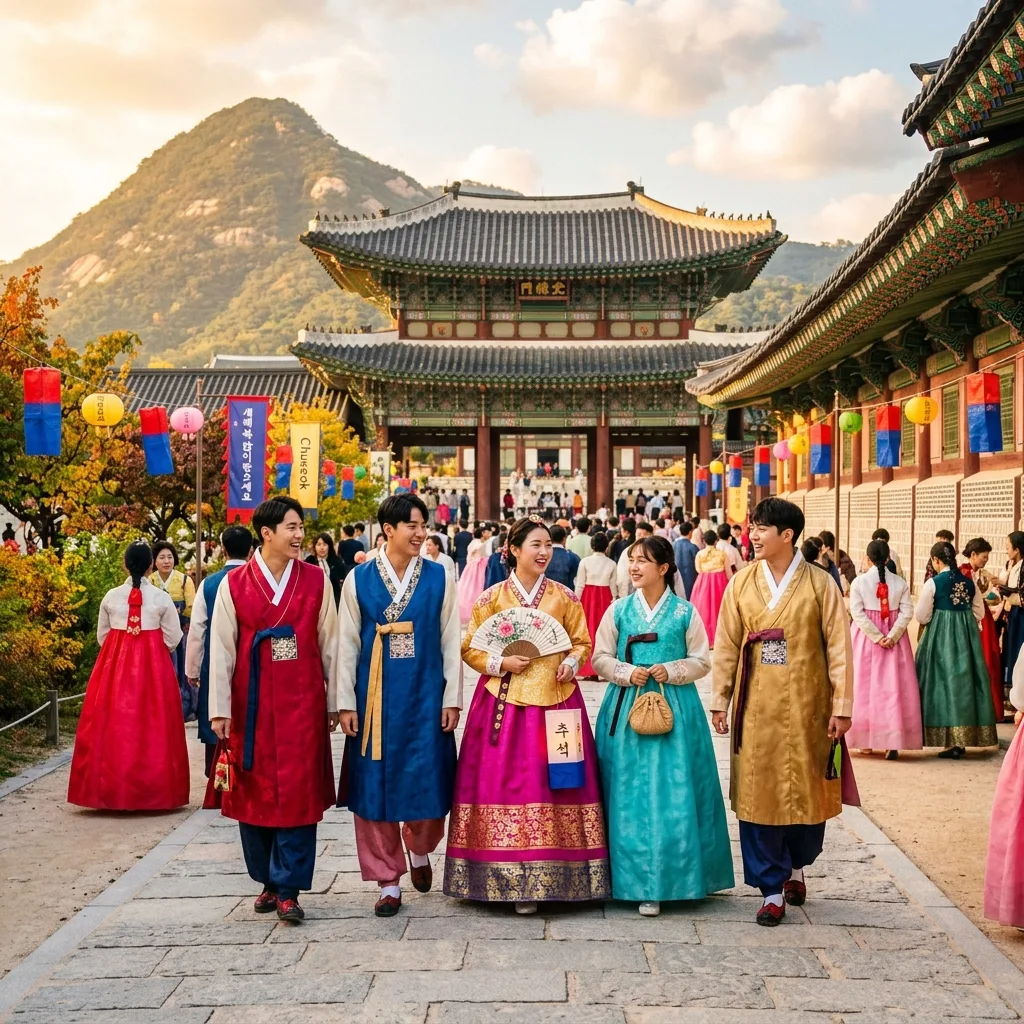
You booked your flights months in advance, mapped out every neighborhood, and built a perfectly balanced itinerary — then you realized your trip falls smack in the middle of Chuseok. Half the internet tells you Korea shuts down. The other half says it's a magical, bucket-list experience. Both are right, and neither tells you what to actually do. This guide does.
Korea's two biggest holidays — Seollal (설날, Lunar New Year) and Chuseok (추석, Korean Thanksgiving) — reshape the entire country for about a week each. Tens of millions of people travel home simultaneously, trains sell out in minutes, independent restaurants go dark, and Seoul becomes eerily quiet. For a foreign traveler who plans ahead, this is actually one of the best times to visit. For one who doesn't, it can be a logistical nightmare. Here's everything you need to know.
Holiday Calendar: Exact Dates for 2025 and 2026
Seollal and Chuseok follow the lunar calendar, so the Gregorian dates shift every year. Book your accommodation and train tickets as early as possible once these dates are confirmed — the window closes faster than you think.
The exact holiday periods for the next two years are:
Seollal (Korean Lunar New Year)
- Seollal 2025: January 28–30, 2025
- Seollal 2026: February 16–18, 2026
Chuseok (Korean Thanksgiving)
- Chuseok 2025: October 5–7, 2025. With National Foundation Day on October 3 and Hangeul Day on October 9, many workplaces had a near-continuous break from October 3–9 — a seven-day stretch that made 2025 one of the busiest internal travel periods in recent memory.
- Chuseok 2026: September 24–26, 2026
The official public holiday is always three days: the eve of the holiday, the holiday itself, and the day after. When these overlap with weekends or other national holidays, the government adds substitute holidays. This is how Korea occasionally produces legendary extended breaks that flood international flight routes weeks before they arrive.
The Golden Rule: Arrive Two Days Before
If your trip overlaps with a holiday period, aim to arrive at least two days before the main holiday day. That's when the mass migration peaks — transport is at maximum capacity, accommodation prices spike, and restaurants begin closing early. Getting in on Day Minus Two means you're already settled when everything shifts. Departing? Aim for the day after the holiday officially ends. The return rush is just as intense as the outbound one, and the highways can be gridlocked well into the evening.
Mastering the Logistics: How to Get Around
This is where most travelers hit trouble. Korea's transport infrastructure is world-class, but holiday demand overwhelms it in ways you genuinely have to plan around. This is where tools like Mastering the T-Money Card: Your Key to Korea's Transit (and More) become invaluable for seamless travel.
Train Tickets: The High-Stakes Korail and SRT Pre-Sale
KTX (operated by Korail) and SRT (the private competitor) are the two fastest ways to travel between cities. During Chuseok and Seollal, they are also the most fiercely contested tickets in the country.
For step-by-step guidance on the booking system, seat classes, the Korail Pass for foreigners, and how to navigate cancellation policies, Mastering the KTX: How to Book High-Speed Trains in Korea has the complete breakdown. For holiday travel specifically, here's what changes:
- Pre-sale opens 30 days in advance for both Korail and SRT. Korail's pre-sale typically goes live at 9:00 AM KST on a single announced date. The entire inventory for the holiday window opens simultaneously — demand is so concentrated that the booking website often crashes within minutes of launch.
- Create your account before pre-sale day. Registration on Korail and SRT requires a phone number verification step that can take time. Do not attempt to register on the morning of the pre-sale.
- Cancellation releases are real. If you miss the pre-sale, check back regularly in the 3–5 days before the holiday. Families cancel or change plans, and tickets cycle back into availability.
- Counter-direction routes are easier. Trains running against the main flow — Seoul-bound trains during the outbound rush, or Busan-bound trains during the return rush — have significantly more seats available. If you can structure your itinerary to move counter to the crowd, you'll have an easier time.
Standard KTX fares for the Seoul–Busan route are approximately ₩59,800 for second class and ₩83,700 for first class. Prices do not change for the holiday — only availability does.
Intercity Buses: The Underused Alternative
Express buses (고속버스) are a genuine backup when trains are sold out. The intercity bus terminal network covers destinations KTX doesn't reach and often maintains capacity during holidays that trains cannot match. Seoul's main terminals are Express Bus Terminal in Gangnam (Subway Line 3/7/9) and Dong Seoul Terminal in Gangdong (Subway Line 2).
The trade-off: buses take significantly longer. Seoul to Busan is 4+ hours versus 2.5 hours by KTX, and holiday highway traffic can extend that to 5–6 hours on the main travel days. For destinations within two hours and for travelers with time flexibility, this is a solid option. Book via the Kobus website or app; seats can be reserved up to one week in advance.
Domestic Flights: The Forgotten Option
For Jeju Island, Busan, and Gwangju, domestic flights from Gimpo Airport (Seoul's secondary airport, connected directly to Subway Line 5 and 9) are often overlooked. During holidays, flight inventory holds up better than train seats. Budget carriers — Jin Air, Air Seoul, T'way Air — run Gimpo routes at fares that are sometimes competitive with last-minute KTX prices.
Book early: Jeju routes fill the fastest, as the island is a popular domestic holiday escape.
Open or Closed? What to Expect in Major Cities
This is where most travel advice is frustratingly vague. Here is the realistic, specific picture.
What Stays Open
Major cultural sites: Seoul's five grand palaces — Gyeongbokgung, Changdeokgung, Deoksugung, Gyeonghuigung, and Changgyeonggung — are not only open during Chuseok and Seollal but offer free admission on the main holiday day. The National Folk Museum of Korea (inside Gyeongbokgung grounds) and the National Museum of Korea both operate during the holidays, often with special programming. For a complete guide to each palace — what makes each unique, how to navigate the grounds, and which combination to visit if time is limited, as well as a more comprehensive overview of planning your visit to the capital, including neighborhoods and attractions beyond the palaces, consult The Ultimate Seoul Travel Guide: Where to Stay & What to See.
Major theme parks: Everland (Yongin) and Lotte World (Jamsil) operate during the holidays with extended hours and special seasonal programs. Expect crowds — these parks attract domestic families — but guaranteed food, entertainment, and transport.
Chain restaurants and department store food halls: Franchise restaurants generally operate on reduced hours rather than closing. Department store food halls — Shinsegae, Lotte, Hyundai — are typically open and represent your best option for a proper sit-down meal when the neighborhood around your accommodation goes quiet.
Convenience stores: CU, GS25, 7-Eleven, and Emart24 operate 24 hours, every day of the year. Korean convenience store food — kimbap, instant ramen stations, hot sandwiches, onigiri, dosirak (bento boxes) — is genuinely good. During the holidays, stores stock extra inventory and expand their hot food stations. Plan to rely on them more than usual; it won't be a hardship.
What Closes
Independent restaurants and cafes run by single families or small teams will often close for the entire holiday period — sometimes as many as five days. Traditional Korean restaurants (한식집) are especially likely to go dark, as owners travel home for ancestral rites. Local markets (재래시장), including Namdaemun and Gwangjang, typically have reduced hours or full closure on the main holiday day.
Small retail boutiques, independent specialty shops, and neighborhood barbershops follow the same unpredictable pattern. If something specific matters to your trip — a particular restaurant, market stall, or shop — check Naver Maps for holiday hours or call ahead.
The Neighborhood Factor
Not all of Seoul behaves the same way during holidays. Two neighborhoods maintain relatively higher activity than the rest of the city:
Itaewon (and the adjacent Haebangchon and Gyeongnidan corridors): The heavy international presence means many restaurants and bars here cater to expats and foreign visitors who don't observe the holiday. You'll find a higher proportion of open businesses here than anywhere else in Seoul.
Hongdae: The university district's nightlife economy doesn't fully shut down even during national holidays. Bars, late-night eateries, and venues catering to younger crowds tend to remain open, though hours may shorten.
Experience the Traditions — Often for Free
This is the piece most itineraries miss: the holidays themselves are experiences worth building around, not just logistics obstacles to navigate.
Palace Events: Traditional Games and Free Entry
During Chuseok and Seollal, the Cultural Heritage Administration organizes programs at Seoul's royal palaces that are unlike anything available during normal travel periods.
Folk games: Tuho (arrow throwing), yutnori (traditional board game played with wooden sticks), neolttwigi (Korean seesaw), and jegichagi (shuttlecock kicking) are set up in palace courtyards and open for visitors to try. These are participatory, not just for observation.
Hanbok rental: Shops cluster around Gyeongbokgung's main entrance and on the alley running parallel to the east palace wall. Wearing hanbok earns you free admission to all five Seoul palaces year-round — during the holidays, hanbok-wearing visitors also get priority for certain folk game stations and photo spots.
Ancestral rite demonstrations: Changdeokgung and the Jongmyo Shrine area host demonstrations of Confucian jesa (ancestral rites), giving visitors a rare public window into ceremonies that are otherwise entirely private. The atmosphere is formal and quiet — a striking contrast to the festive games happening simultaneously at Gyeongbokgung.
Namsangol Hanok Village
Located near Myeongdong in central Seoul, Namsangol Hanok Village transforms into a hub of holiday activity during Seollal and Chuseok. Programs typically include:
- Food preparation demonstrations: songpyeon (half-moon rice cake) making during Chuseok, tteokguk (rice cake soup) preparation during Seollal
- Folk performances: samulnori percussion ensemble, talchum (mask dance), folk song
- Traditional craft booths: hanji (Korean paper) making, pottery, and weaving
Admission to the village is always free. Special holiday programs generally run throughout the three-day official holiday period, with the heaviest programming on the main day.
Folk Villages: Day Trips Worth the Journey
If you're based in Seoul and want to see holiday traditions at a grander scale:
Korean Folk Village (한국민속촌) in Yongin, about 40 minutes from Seoul by intercity bus, reconstructs Joseon-era village life across 260+ traditional buildings. During Chuseok specifically, the village stages elaborate harvest celebration programs: agricultural folk performances, equestrian shows, and seasonal food stalls. This is one of the most cinematic settings in Korea, and the holiday context makes it significantly more vivid than a standard visit.
Suwon Hwaseong Fortress: The UNESCO-listed fortress hosts markets and performances during major holidays. The fortress walls are free to walk; the Hwaseong Haenggung palace complex inside charges a small entry fee. Suwon is 30 minutes from Seoul Station by commuter rail.
Where to Eat When Everything Is Shut
Food planning during Korean holidays requires more thought than at any other time of year. Here is the reliability hierarchy.
Hotel Restaurants and Buffets
If your accommodation includes an in-house restaurant, it will almost certainly be open during the holidays. Mid-range to luxury hotels (Lotte, Westin, Hyatt, Shilla) run their restaurants on holiday hours and often set special holiday menus featuring seasonal Korean dishes: japchae, galbi, songpyeon during Chuseok; tteokguk and jeon (Korean pancakes) during Seollal.
Some hotels open their buffets to non-guests during the holiday period to capture the dining gap. Calling ahead to confirm and to make a reservation is always worthwhile.
Department Store Food Halls
Korea's department store basement food halls (지하 식품관) are some of the country's best dining environments regardless of holiday status. Most operate during the holiday period, though specific closing days vary:
- Shinsegae (Myeongdong, Gangnam): Typically closes for one day mid-holiday; check the specific branch on Naver Maps
- Lotte (Myeongdong, Jamsil): Similar schedule; confirm on Naver Maps or the Lotte app
- Hyundai (Apgujeong, COEX, Yeouido): Individual branch hours vary more; check each one
The food halls offer everything from freshly grilled meats to Japanese ramen, Korean bibimbap, Italian pasta, and high-end patisserie — a reliable fallback when the neighborhood around your hotel has gone quiet.
Itaewon and Hongdae
As noted above, these two districts maintain higher activity than the rest of Seoul. In Itaewon specifically: Indian, Middle Eastern, and international cuisine restaurants tend to stay open; Western-style brunch spots catering to expats operate through the holiday; Korean barbecue chains run with reduced staff but remain available.
For the street food side of Seoul — which vendors are year-round versus seasonal, and which markets are worth visiting even during reduced holiday hours — A Foodie's Guide to Seoul: Top 15 Must-Try Street Foods has the practical breakdown by neighborhood and food type.
Convenience Stores, Elevated
It's worth saying plainly: Korean convenience store food during the holidays is a feature, not a fallback. Stores stock extra inventory, expand their hot food counters, and often add holiday-specific items — honey rice cakes, sesame ball buns, special dosirak sets. A GS25 dosirak (bento box) with rice, banchan, and a main protein is a fast, cheap, and genuinely satisfying meal. The 24-hour availability makes them the most dependable option in your arsenal, and leaning into them removes the stress of meal planning on unpredictable days. For a deeper dive into the broader culinary landscape of the country, even beyond the holidays, check out A Foodie's Guide to South Korea: 10 Dishes & Markets You Can't Miss.
Should You Travel During the Holidays?
The answer depends on what you want from a Korea trip.
Travel during the holidays if you want:
- A quieter Seoul — the tourist crowds thin substantially as domestic travelers leave the city for their hometowns
- Authentic cultural experiences you cannot access at other times: traditional games at the palaces, ancestral rite demonstrations, seasonal holiday foods made fresh
- Free palace admission on the main holiday day
- A more contemplative, less tourist-facing version of Korean daily life
Avoid the holiday period if you need:
- Transport flexibility — last-minute KTX seats do not exist during peak travel days
- A guaranteed dining experience at a specific restaurant type
- Access to local markets and neighborhood dining scenes
- An energetic, bustling city atmosphere — Seoul during the holidays can feel startlingly empty in ways that unnerve some first-time visitors
The travelers who struggle during Korean holidays are those who didn't account for the logistics. The ones who thrive are those who planned transport three to four weeks ahead, researched which attractions would be open, and showed up genuinely curious about the traditions.
If that sounds like you, Chuseok and Seollal are two of the most memorable times to be in Korea. The quiet isn't emptiness — it's the country breathing out, holding something close, and doing so in ways that are rarely visible to visitors at any other time of year. Lean into it.
Ready to plan a full Korean itinerary? The Ultimate 14-Day South Korea Grand Tour covers a complete route from Seoul to Jeju that works in every season.