Capturing Korean Architecture: Hanok Villages to Modern Skylines

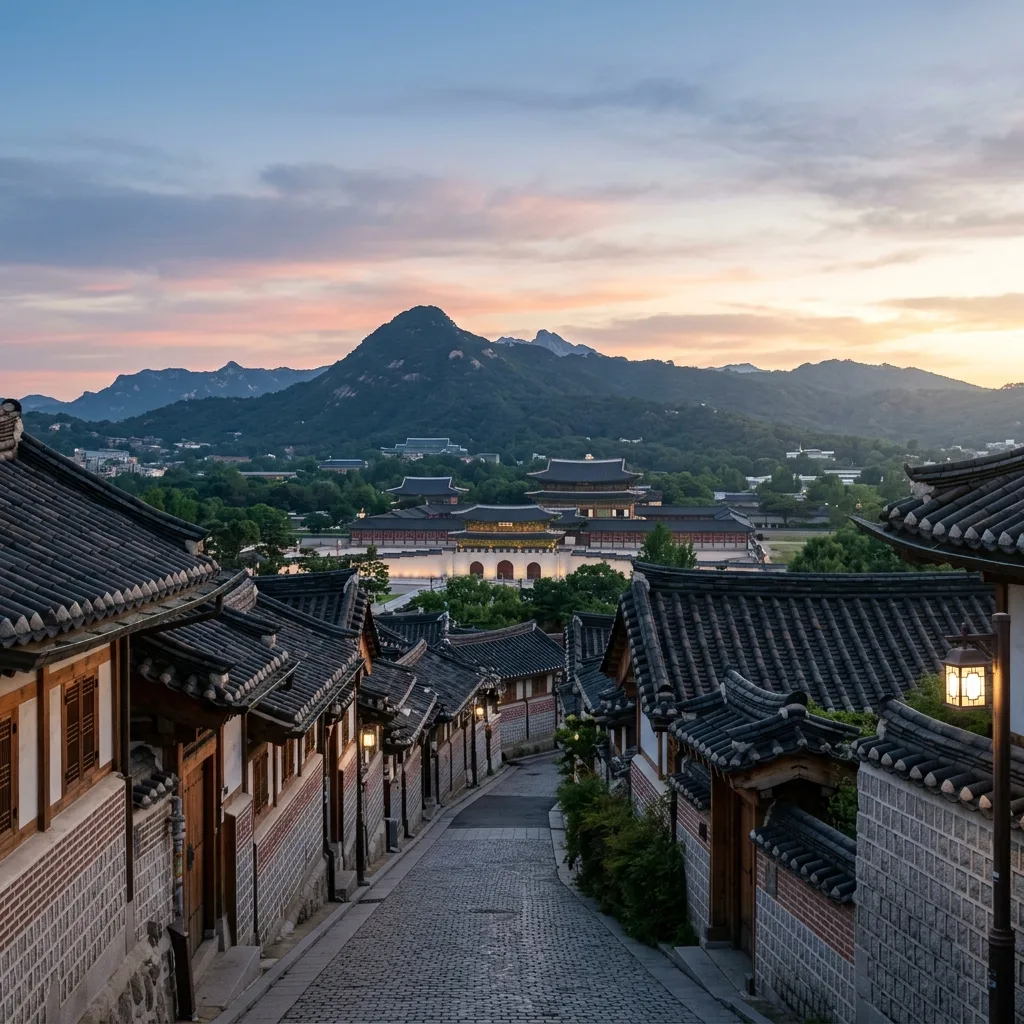
South Korea, a land where ancient traditions gracefully intertwine with dazzling modernity, offers an unparalleled visual feast for photographers. From the intricate eaves of centuries-old hanok villages to the gleaming, futuristic spires that pierce the Seoul skyline, the architectural landscape is a study in captivating contrasts. This guide will take you on a journey through the lens, revealing the best spots and techniques to capture the soul of Korean architecture, both old and new.
Introduction
Beyond the global phenomenon of K-Pop and the culinary delights of kimchi, South Korea unveils a profound and captivating architectural narrative that serves as an unparalleled visual feast for photographers. This dynamic nation, a harmonious blend of ancient traditions and dazzling modernity, presents a unique canvas for capturing compelling imagery. Imagine framing a gracefully curved traditional wooden Hanok, with its centuries-old charm, directly against a backdrop of glistening glass-and-steel skyscrapers that define Seoul's hyper-futuristic skyline. Or, envision the serene beauty of a Buddhist temple, its vibrant dancheong colors gleaming, nestled quietly amidst the bustling urban sprawl of a vibrant metropolis. The architectural landscape of Korea is a study in captivating contrasts, offering endless opportunities for a discerning eye.
This comprehensive guide is meticulously designed to equip you, the architectural photographer or curious traveler with a camera, with the essential knowledge and insights needed to truly capture the soul of Korean architecture. We'll delve deep into the most iconic locations, from the historic alleys of Bukchon to the innovative contours of the Dongdaemun Design Plaza. More than just a list of spots, we'll explore nuanced technical photography tips tailored specifically for both the intricate details of traditional structures and the sweeping grandeur of modern designs. Crucially, we'll also cover essential cultural etiquette, ensuring your photographic journey is not only rewarding but also respectful of the communities and heritage you encounter. Whether you're a seasoned professional seeking fresh perspectives or an enthusiastic amateur eager to document your travels, prepare to discover South Korea's stunning built environment through a unique and deeply appreciative lens, creating visual narratives that transcend mere snapshots and truly tell a story.
The Soul of Tradition: Photographing Hanok Villages
Stepping into a Hanok village is like stepping back in time. These traditional Korean houses, with their elegant curved roofs, wooden beams, and serene courtyards, embody centuries of history and a profound connection to nature. Capturing their essence requires patience, an understanding of light, and a deep respect for the communities that often reside within them.
Bukchon Hanok Village (Seoul)
Nestled between Gyeongbokgung and Changdeokgung Palaces, Bukchon Hanok Village is arguably the most famous and picturesque. Its narrow, winding alleys and meticulously preserved homes offer endless photographic opportunities.
- Finding the "Gahoe-dong Alley" shot: The most iconic view is from the top of Gahoe-dong, looking down on a sea of tiled roofs with Namsan Tower in the distance. Arrive early, ideally at sunrise, to avoid the throngs of tourists and parked cars that can mar your composition. This early start not only guarantees cleaner shots but also bathes the village in soft, golden light, enhancing the texture of the wooden structures.
- Perspectives: Experiment with different viewpoints. While the classic downhill shot is a must, also turn your camera upwards to capture the intricate rooflines and eaves (cheoma), or focus on smaller details like ornate gates and potted plants.
- Old vs. New: From certain vantage points, you can artfully frame the traditional Hanoks against the modern skyscrapers of downtown Seoul, creating a powerful "old meets new" contrast that tells a compelling story of South Korea's rapid development. Remember that Bukchon is a residential area, and strict visiting hours (10 AM – 5 PM Monday-Saturday) are enforced, with Sundays often closed to visitors to ensure residents' privacy.
Namsangol Hanok Village
Unlike Bukchon, Namsangol Hanok Village is a collection of five reconstructed traditional Korean houses from different social classes and regions, relocated and restored to the northern foot of Namsan Mountain.
- The "Old meets New" contrast (Hanok vs. N Seoul Tower): Namsangol offers a fantastic opportunity to frame the traditional architecture directly against the prominent N Seoul Tower. This contrast is often cleaner than in Bukchon due to the village's more controlled environment.
- Clean Compositions without Residential Restrictions: Since it's a living museum rather than an active residential area, photographers have more freedom to set up shots without concerns about disturbing residents. This makes it ideal for practicing compositions and techniques. Look for reflections in the small ponds or capture cultural performances often held on site.
Eunpyeong Hanok Village
A hidden gem located at the foot of Bukhansan Mountain in northwestern Seoul, Eunpyeong Hanok Village offers a more tranquil and expansive setting compared to Bukchon.
- Using Bukhansan Mountain as a backdrop: The dramatic peaks of Bukhansan provide a stunning natural backdrop, giving your Hanok shots a different dimension. The interplay of traditional architecture with the rugged mountains creates a uniquely Korean landscape.
- Modern Hanok Architecture and Wider Streetscapes: Eunpyeong features more recently built Hanoks, often with subtle modern touches. The wider streets and open spaces here allow for broader architectural shots and fewer issues with overcrowding, making it a favorite for those seeking peace and quiet. Access is free, and it's less crowded, offering excellent opportunities for unobstructed views.
Jeonju Hanok Village
Located outside Seoul, Jeonju Hanok Village is one of the largest and best-preserved traditional villages in South Korea, boasting over 800 Hanok houses. It's a must-visit for any architectural photographer seeking an immersive experience.
- Capturing the "Sea of Roofs" from Omokdae: The panoramic view from Omokdae viewpoint is legendary, presenting a breathtaking "sea of roofs" that stretches across the landscape. This is the quintessential shot of Jeonju.
- The Scale and Density of Traditional Architecture: Jeonju's sheer size and density of Hanoks allow for expansive, sweeping shots that capture the grandeur of traditional Korean urban planning. Spend time wandering the alleys, focusing on intricate details, and observing local life. The village is particularly vibrant in the early morning or late afternoon.
Technical Tips for Hanok Photography
Capturing the nuanced beauty of Hanok architecture requires a thoughtful approach to composition and detail. These tips will help you highlight the unique elements of traditional Korean homes.
- Capturing the "Beauty of the Curve" (Beoseon-ko): The graceful, upturned eaves of a Hanok roof, known as Beoseon-ko (resembling the tip of a traditional Korean sock), are a hallmark of its design. Use a wide-angle lens to emphasize their sweeping lines, or a telephoto lens to isolate them against the sky or a distant backdrop. Experiment with low-angle shots to accentuate their elegant lift.
- Focus on Dancheong (Intricate paintwork) – macro and telephoto shots: Many traditional palaces and some Hanoks feature Dancheong, the vibrant, intricate five-color paintwork on wooden components. This colorful artistry tells stories and protects the wood. Use a macro lens or a telephoto zoom to capture the stunning patterns and rich colors in detail. Look for well-preserved examples in palaces like Gyeongbokgung, or even in the more ornate Hanoks.
- Framing through portals (Borrowed scenery / Chagyeong): Chagyeong (borrowed scenery) is a traditional Asian landscaping technique where the surrounding landscape is integrated into the design of a garden or view from a building. Apply this concept to your photography by using windows, gates, or other architectural elements as frames for your Hanok shots. This adds depth, context, and a sense of discovery to your images.
- Lighting: The warmth of golden hour on wood and tile: Hanoks are primarily built from natural materials like wood and clay tiles. The soft, warm light of golden hour (shortly after sunrise or before sunset) beautifully enhances these textures, bringing out the rich tones of the wood and the subtle variations in the tile work. Overcast days can also provide soft, diffused light ideal for capturing details without harsh shadows.
The Future is Now: Modern Skylines and Futurism
From the serene tranquility of Hanok villages, we transition to the pulsating energy of South Korea's modern architectural marvels. The country's rapid development has given rise to some of the world's most innovative and visually striking urban landscapes, offering a stark yet harmonious contrast to its traditional roots.
Lotte World Tower (Seoul)
Standing as a shimmering beacon over Seoul, the Lotte World Tower is the tallest building in South Korea and the sixth tallest in the world. Its sleek, tapered design is an engineering marvel and a photographer's delight.
- Vantage points: For a grand, sweeping shot that captures the tower's immense scale within the Seoul cityscape, head to Ttukseom Hangang Park or Olympic Park. These locations offer a good distance, allowing for wide-angle compositions that include the Han River and surrounding urban sprawl.
- Capturing the world's 6th tallest building in the cityscape: Experiment with different times of day. Sunrise or sunset can cast dramatic light on its glass facade, while night shots with surrounding city lights create a futuristic spectacle. Don't forget to look for reflections in nearby bodies of water or glass buildings. While going up to Seoul Sky offers stunning panoramic views, for capturing the exterior of the tower itself within the city context, ground-level and slightly elevated viewpoints are key.
Dongdaemun Design Plaza (DDP)
Designed by the legendary Zaha Hadid, the Dongdaemun Design Plaza (DDP) is an architectural icon that defies conventional forms. Its fluid, curvilinear structure and metallic skin make it a compelling subject, especially for those interested in abstract and futuristic photography.
- Zaha Hadid's masterpiece: Flowing curves and aluminum skin: The DDP's exterior is a continuous, flowing surface made of over 45,000 aluminum panels, each uniquely shaped. Focus on these organic lines and the interplay of light and shadow on its metallic surface.
- Night photography: Using long exposures for a "spaceship" feel: The DDP truly comes alive at night when its facade is illuminated. Long exposure photography can transform the moving lights of cars and people around it into ethereal streaks, enhancing its "spaceship" or alien structure appearance. Its exterior is accessible 24/7, providing ample opportunity for stunning night shots.
- Interior abstract shots: Don't neglect the interior. The DDP's inner spaces feature equally dynamic curves, ramps, and voids, offering fantastic opportunities for abstract architectural photography, playing with leading lines and negative space.
Songdo International Business District (Incheon)
A testament to South Korea's forward-thinking vision, Songdo is a master-planned "smart city" built almost entirely on reclaimed land near Incheon International Airport. Its modern infrastructure and distinctive buildings offer a unique photographic experience.
- Futuristic bridges and the Tri-bowl building: Songdo is crisscrossed by sleek, modern bridges that make for excellent leading lines in your compositions. The iconic Tri-bowl, a unique triple-domed cultural complex seemingly floating on water, is a must-photograph. Its reflective surfaces and striking form are particularly compelling at blue hour.
- Smart city aesthetics and symmetrical compositions: Look for the planned symmetry in Songdo's urban design. Its wide boulevards, meticulously landscaped parks, and modern high-rises lend themselves well to clean, symmetrical, and minimalist compositions.
Busan Marine City
Often referred to as the "Manhattan of Korea," Busan's Marine City is a dazzling waterfront district boasting an impressive cluster of ultra-modern skyscrapers that rise dramatically from the sea.
- The "Manhattan of Korea": The density and height of the residential towers, combined with their waterside location, create a skyline reminiscent of New York City. This is a prime location for capturing urban grandeur. Reflection shots from Dongbaekseom Island tide pools: For some of the most iconic shots, especially during sunset or blue hour, position yourself on Dongbaekseom Island. The tide pools and wet sand at low tide can create stunning reflections of the towering buildings, doubling their visual impact and adding a magical quality to your photographs.
Technical Tips for Modern Architecture
Photographing modern skyscrapers and futuristic structures presents a different set of challenges and opportunities than traditional Hanoks. Here's how to make the most of the contemporary urban landscape.
- Mastering the Blue Hour: Balancing artificial and natural light: The period just after sunset or before sunrise, known as blue hour, is arguably the best time to photograph modern cityscapes. The deep blue of the sky perfectly complements the warm glow of artificial lights from buildings, creating a dramatic and captivating atmosphere. This also helps balance the extreme dynamic range often present in urban night scenes.
- Long exposures and ND filters for smooth water and sky: When photographing urban waterfronts (like Busan Marine City or the Han River in Seoul) or even busy streets, long exposures can transform moving elements into ethereal blurs. Use a Neutral Density (ND) filter to extend your exposure times during daylight hours, creating silky smooth water surfaces or streaky clouds, which can add a sense of motion and serenity to your modern architectural shots.
- Using leading lines: Overpasses, bridges, and escalators: Modern urban environments are full of strong leading lines. Overpasses, pedestrian bridges, escalators, and even the geometric patterns of building facades can draw the viewer's eye towards your main subject or create dynamic compositions. Look for these elements to add depth and interest.
- Abstracting the city: Focusing on textures, glass, and geometric patterns: Don't always aim for the grand, sweeping cityscape. Sometimes, the most compelling modern architectural photographs are abstracts. Focus on the intricate details of glass facades, the reflections in windows, the repeating geometric patterns of modern structures, or the interplay of light and shadow on textured surfaces. A telephoto lens can be particularly useful for isolating these abstract elements.
Where Eras Collide: The "Old Meets New" Aesthetic
Perhaps the most visually compelling aspect of Korean architectural photography is the seamless, yet striking, coexistence of its ancient past and its ultra-modern present. This "old meets new" aesthetic creates powerful narratives and unique compositional opportunities.
Gyeongbokgung Palace vs. Gwanghwamun Skyscrapers
Gyeongbokgung Palace, the grandest of Seoul's Five Grand Palaces, is a magnificent example of Joseon Dynasty architecture. Its traditional wooden structures and intricate details stand in stark contrast to the towering skyscrapers that now define the Gwanghwamun area.
- Framing the throne hall with modern high-rises: From within the palace grounds, strategically compose your shots so that the majestic Geunjeongjeon (the main throne hall) or other traditional buildings are framed against the backdrop of the modern glass and steel towers. This juxtaposition visually encapsulates South Korea's journey through time. Gyeongbokgung Palace is closed on Tuesdays.
Jogyesa Temple
Located in downtown Seoul, Jogyesa Temple is the chief temple of the Jogye Order of Korean Buddhism. It's a vibrant oasis of tradition amidst the concrete jungle.
- Vibrant lanterns surrounded by the central business district: During significant Buddhist festivals, the temple courtyard is adorned with countless colorful lanterns, creating an incredibly photogenic scene. Capture the ancient temple's ornate architecture and the vibrant lanterns, juxtaposed with the modern office buildings that loom just beyond its walls. This contrast is particularly striking at dusk.
Namsan Park Viewpoints
Namsan Park, home to N Seoul Tower, offers various viewpoints that provide sweeping panoramas of Seoul, where the ancient city walls meet the sprawling modern metropolis.
- Compressing the city wall with the sprawling modern skyline using a telephoto lens: Utilize a telephoto lens (e.g., 70-200mm) from strategic points in Namsan Park to compress the perspective. This allows you to bring the historic Seoul City Wall (Hanyangdoseong) into close proximity with the distant modern skyscrapers, creating a powerful visual commentary on the city's layered history. Look for paths along the fortress walls for unique leading lines.
Essential Gear for the Korean Architectural Photographer
Having the right tools can make a significant difference in how effectively you capture the diverse architectural landscape of South Korea. Here's a breakdown of essential gear and why it's crucial.
- Wide-angle lenses (14mm-24mm) for tight alleys and massive cityscapes: A wide-angle lens is indispensable. In the narrow alleys of Hanok villages, it allows you to capture the full scope of a traditional home or a street scene without backing into a wall. For modern cityscapes, it's perfect for encompassing towering skyscrapers and expansive urban panoramas. Lenses in the 14mm to 24mm range (full-frame equivalent) are ideal.
- Telephoto lenses (70mm-200mm) for compression and detail: While wide-angle lenses capture the grand scene, a telephoto lens is equally important for isolating details, compressing perspective, and achieving abstract compositions. Use it to highlight intricate Dancheong patterns, isolate a Hanok roof against a mountain, or compress the layers of Seoul's skyline from a distance (as discussed with Namsan Park viewpoints). A 70-200mm lens is a versatile choice.
- The necessity of a sturdy tripod for night and blue hour shots: For sharp, noise-free images during long exposures at blue hour or night (especially for modern skylines and DDP), a sturdy tripod is non-negotiable. It allows for lower ISO settings and longer shutter speeds, essential for capturing the delicate balance of ambient and artificial light.
- Recommended filters: CPL for glare and ND for long exposures:
- Circular Polarizer (CPL) filter: This filter is excellent for reducing reflections and glare from glass facades (common in modern architecture) and water surfaces, enhancing color saturation in the sky, and revealing details beneath the surface of water.
- Neutral Density (ND) filters: As mentioned earlier, ND filters are crucial for extending shutter speeds in bright conditions, allowing you to create smooth water, streaky clouds, or ghosting effects for moving people, which can add a dynamic element to your architectural photography.
Practical Considerations and Etiquette
Beyond gear and technical skills, a successful architectural photography trip to South Korea requires an understanding of practical considerations and cultural etiquette. Respectful photography not only ensures a more pleasant experience for everyone but also allows you to capture more authentic images.
- Respecting Residents: Many Hanok villages, particularly Bukchon and Seochon, are active residential areas. Always be mindful of noise levels, especially early in the morning or late at night. Avoid lingering directly in private homes, and never attempt to photograph inside a private residence without explicit permission. Look for "Quiet Zone" signs and adhere to them strictly.
- Visiting Hours: Be aware of specific visiting hours for certain locations. For instance, parts of Bukchon Hanok Village have restricted entry times (e.g., 10 AM – 5 PM Monday-Saturday, closed Sundays), and palaces like Gyeongbokgung are closed on Tuesdays. Planning your visits according to these schedules will save you time and prevent disappointment.
- Permits and Regulations:
- Tripod Usage: While generally permitted in outdoor public spaces, some popular sites (like inside palaces or temples, especially during peak hours) may restrict or discourage tripod use to avoid obstructing traffic or damaging historical grounds. Always look for signage or inquire with staff.
- Drone Laws: South Korea has strict drone regulations, particularly in urban areas and near military installations (which are numerous). Operating a drone without proper permits and clearances can lead to significant fines and legal issues. Assume drones are not permitted unless you have explicit, verified permission.
- Commercial Photography: If your photography is for commercial purposes, even if you're a single individual, you may require specific permits at certain locations. When in doubt, it's always best to inquire.
- Seasonal Best Times:
- Spring (late March to April): Cherry blossom season provides a stunning, delicate backdrop to both traditional and modern architecture, particularly beautiful around palaces and along the Han River.
- Autumn (October to November): The vibrant fall foliage offers a spectacular contrast against the muted tones of Hanok villages and the stark lines of modern buildings. Bukhansan National Park and its surrounding Hanok villages become especially picturesque.
- Winter (December to February): Snow-covered Hanok roofs create a serene and unique atmosphere, offering beautiful minimalist compositions. Modern cityscapes can also look dramatic under a blanket of snow.
- Summer (June to August): While often humid, the lush greenery can provide a vibrant frame. Consider focusing on coastal architecture or evening photography to avoid the midday heat.
Conclusion
In summation, South Korea stands as an undeniable paradise for any photographer drawn to the built environment. It is a land where the profound echoes of a rich, millennia-old past do not merely coexist but gracefully intersect and even merge with the bold, often groundbreaking statements of a futuristic present. This journey, from the serene, undulating lines of ancient Hanok villages to the imposing, almost ethereal glass-clad towers that define its bustling metropolises, showcases a nation's architecture telling a compelling story of resilience, continuous innovation, and enduring beauty.
By thoroughly understanding the unique characteristics inherent in both traditional and cutting-edge modern structures, and by diligently applying the tailored technical tips we've discussed – from mastering the golden hour's glow on wood to harnessing the blue hour's magic on steel – you are empowered to move beyond producing simple travel snapshots. Instead, you can craft powerful, evocative visual narratives that truly capture the spirit of Korea. This guide has aimed to furnish you with the essential knowledge, practical strategies, and profound inspiration necessary to embark on and excel in your own photographic journey through Korea's extraordinary and ever-evolving built environment. Embrace the profound contrasts that define this country, seek out the myriad hidden details that reveal its character, and allow your lens to articulate the dynamic, evolving soul of this truly remarkable nation, leaving you with a portfolio as rich and diverse as Korea itself.