Day Trips from Beijing: Ming Tombs, Shidu Canyon & Beyond

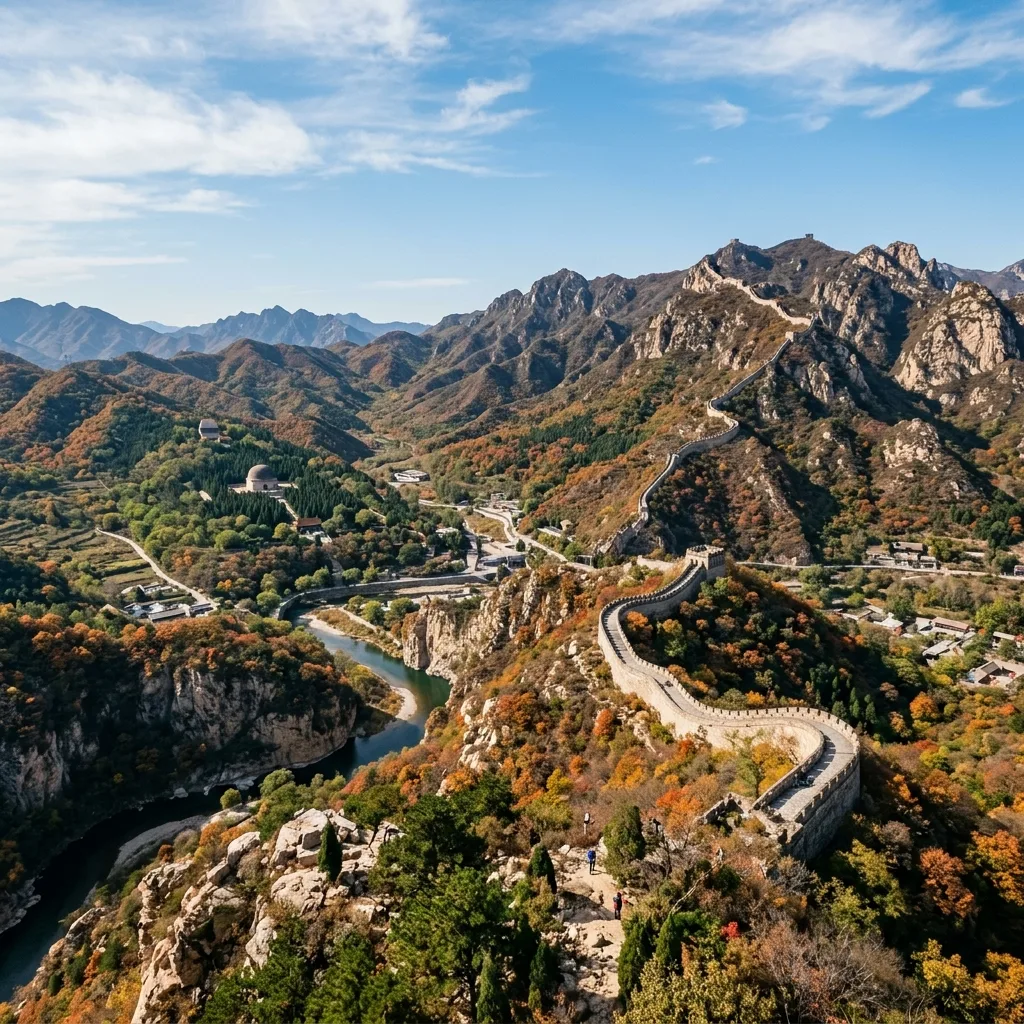
Beijing is one of the great megacities of the world — but after two or three days of palaces, hutongs, and duck dinners, the urge to escape hits hard. The good news: within a two-hour radius of Tiananmen Square you have Ming dynasty burial grounds, a karst river canyon that looks nothing like any other Beijing landscape, and sections of the Great Wall that put Badaling to shame. This guide covers the best day trips from Beijing, with verified 2026 prices, transport options, and the honest advice most itinerary posts leave out.
Why Beijing Day Trips Are Worth Planning Carefully
Most travelers arrive in Beijing with a list: Forbidden City, Temple of Heaven, Summer Palace, Great Wall. They check the boxes, buy a tour bus ticket, and go home having seen Badaling on a smoggy Saturday alongside ten thousand other tourists. That is a shame, because the day-trip landscape around Beijing is genuinely varied and, outside of a few key spots, relatively uncrowded.
The difference between a mediocre day trip and a great one usually comes down to three choices: where you go, how you get there, and when you leave. Aim for weekdays whenever possible. Get moving before 8 AM. And choose destinations that aren't already on every group tour itinerary. The options below reward all three of those habits.
If you are still building your Beijing itinerary from scratch, start with the Ultimate Beijing Travel Guide: Great Wall, Forbidden City & More before diving into day trips.
The Ming Tombs (Ming Shisan Ling)
The Ming Tombs are Beijing's most underrated major attraction — a sprawling UNESCO World Heritage Site that most visitors treat as an afterthought on the way to or from the Great Wall. That is a mistake. The complex holds thirteen imperial tombs spread across a valley north of the city, and while only four are currently open to the public, each one offers a different window into Ming dynasty funerary culture and imperial ambition.
What to See
Changling (长陵) is the largest and most impressive: the burial place of the Yongle Emperor, who also ordered the construction of the Forbidden City. The ceremonial hall — Ling'en Dian — is one of the largest surviving wooden structures in China, supported by thirty-two massive nanmu wood columns. Entry is CNY 45 in peak season (April–October) and CNY 30 in low season.
Dingling (定陵) is the only tomb where excavation has revealed the underground burial chamber itself. You descend into the marble vault beneath the earthen mound and walk through the antechambers where the Wanli Emperor and his two empresses lay buried. It is darker and more claustrophobic than the aboveground halls — which makes it more atmospheric. Entry is CNY 65 peak / CNY 45 low season.
Zhaoling (昭陵) and the Sacred Way (Shenlu) round out the open sites. The Sacred Way is particularly worthwhile: a 7-kilometer ceremonial road lined with stone animals and officials that served as the processional approach to the entire tomb complex. Entry CNY 30 peak / CNY 20 low season.
Practical Details for the Ming Tombs
| Site | Peak Season (Apr–Oct) | Low Season (Nov–Mar) | Hours |
|---|---|---|---|
| Sacred Way | CNY 30 | CNY 20 | 08:00–17:30 |
| Changling | CNY 45 | CNY 30 | 08:00–17:30 |
| Dingling | CNY 65 | CNY 45 | 08:00–17:30 |
| Zhaoling | CNY 30 | CNY 20 | 08:00–17:00 |
No advance reservation is required — tickets are purchased on-site. Budget two to three hours if you plan to see Changling and Dingling together.
Getting to the Ming Tombs
The Ming Tombs are about 50 km north of central Beijing in Changping District. Public transport is feasible but slow. The most practical option:
- Subway + Bus: Take Line 8 to Zhuxinzhuang, transfer to the Changping Line to Changping North, then take bus 314 or a local minibus toward the tomb complex. Allow 1.5–2 hours each way.
- Taxi or DiDi: Around CNY 150–200 from central Beijing one-way, faster and worth considering if you are combining the Tombs with Mutianyu Great Wall on the same day (the sites are about 25 km apart).
- Organized day tour: Klook and Viator both offer combined Ming Tombs + Great Wall tours departing from central Beijing; these bundle transport and can save significant time if you are short on days.
Pro tip: Visit Changling first (it opens at 08:00 and gets crowded by mid-morning), then walk or take a short taxi to Dingling before lunch.
Shidu Canyon (十渡)
If you have already done the Great Wall, the Forbidden City, and the hutongs, Shidu is the day trip that will surprise you most. The name means "ten ferries" — a reference to the ten river crossings travelers once had to make to navigate this stretch of the Juma River valley. Today the road is paved and the ferries are tourist rafts, but the landscape itself is genuinely striking: limestone karst peaks rising from a braided river bed, green even in early spring, with hiking trails threading between bamboo groves and small villages.
The Landscape and What to Do
Shidu Scenic Area runs for roughly 20 km along the Juma River in Fangshan District, on Beijing's southwestern edge. The scenery is unlike anything else in the Beijing day-trip circuit — more reminiscent of Guilin or Zhangjiajie than the northern plains the capital sits on.
Key activities:
- Bamboo raft drifting: Float down the Juma River on a traditional raft. Prices vary by operator (roughly CNY 80–120 per person for a 30–40 minute drift). This is best in late spring and summer when water levels are higher.
- Hiking: Trails along the valley walls offer elevated views of the river and karst formations. The terrain is moderate; hiking boots are recommended, especially after rain when paths get muddy.
- Shidu Shiyan Glass Skywalk: A glass-floored walkway cantilevered over the canyon rim. Standard glass-bridge-in-China content, but if you haven't done one yet, this is a solid introduction.
- Bungee jumping and ziplines: Available at several operators along the river. Prices and availability fluctuate — check on arrival.
Practical Details for Shidu Canyon
Shidu Scenic Area has free entry to the valley itself, but individual attractions (raft rides, glass skywalk, activity operators) charge separately. The area is open seasonally from roughly early March to late October; some facilities close in winter.
Operating hours are typically 08:00–18:00 during peak season, but individual attractions set their own schedules.
Getting to Shidu Canyon
Shidu is about 100 km southwest of central Beijing — roughly 1.5–2 hours by car. By train it is straightforward:
- Train: Take the S-series (suburban train) from Beijing West Railway Station (北京西站) on Line S6 toward Shidu Station. Journey time is about 1 hour 20 minutes. Trains run multiple times daily. This is the most reliable and affordable option (around CNY 20–30 each way).
- Self-drive or DiDi: Allows flexibility to stop at viewpoints along the way. Parking is available near the main attraction clusters.
Best months to visit: Late April through June (spring greenery, manageable heat) and September through early October (fall color beginning). July and August are peak season — crowded on weekends and hotter than comfortable for hiking.
Mutianyu Great Wall
For a full breakdown of the different Great Wall sections accessible from Beijing, see Great Wall of China Sections Compared: Mutianyu vs Badaling vs Jinshanling. The short version: Mutianyu is the best balance of accessibility, scenic quality, and crowd levels for most independent travelers.
The wall here runs along a ridgeline covered in dense forest. Towers are well-restored, the grade is steep enough to feel genuinely challenging in places, and on weekday mornings in shoulder season you can walk long stretches in near-solitude. The cable car removes the hardest climb so you can save energy for walking the ridge itself.
2026 Pricing and Hours
A combined ticket including entrance fee, cable car (gondola) up, and toboggan or chairlift down is CNY 200 for adults. Children under 1.2 m enter free. The toboggan (a metal luge track down the hillside) is worth doing once for the experience; the chairlift is calmer and gives better views.
Hours: roughly 08:00–17:30 in peak season (April–October), 08:30–17:00 in low season. Note that from April 30 to May 4, 2026, Mutianyu is running a "Day & Night" event with evening illuminations from 18:30–21:00 — a unique experience if your dates align.
Book through Klook's Mutianyu Great Wall page to lock in the price and skip the on-site queue.
Getting to Mutianyu Great Wall
Mutianyu is 73 km northeast of central Beijing, typically 1.5–2 hours depending on traffic.
- Klook shuttle bus: Departs from selected central Beijing hotels, drops you at the gate. The easiest option and included in some ticket bundles.
- Bus 916 + local bus: Take bus 916 from Dongzhimen to Huairou North Street, then local bus H23 to Mutianyu. Budget around 2 hours and CNY 30–40 total. Requires some navigation — not hard, but not automatic.
- DiDi/taxi: Around CNY 200–250 from the city center one-way. Splitting with one or two other travelers makes this cost-effective.
Arrive before 09:30 on weekends. By 10:30 the cable car queue can stretch to 40+ minutes.
Honoring the Beaten Path: Badaling and Jinshanling
Not every traveler has the flexibility to optimize. If you are on a group tour, Badaling will likely be on the itinerary — accept it, go early, and walk past the first two or three towers to where the crowds thin out. Jinshanling, further from the city, is the choice if you want genuine solitude and are comfortable with rougher terrain; some sections are unrestored.
For detailed transport directions to both, see Beijing to the Great Wall: Best Ways to Get There Without a Tour.
Chuandixia Village (川底下)
Chuandixia (sometimes romanized Cuandixia) is a preserved Ming and Qing dynasty village about 90 km west of Beijing in Mentougou District. Around 70 traditional courtyard compounds sit on terraced hillsides above a dry river valley — most of them dating from the 17th and 18th centuries. The village was essentially abandoned by younger generations and has survived intact largely because of that neglect.
This is not a theme park or a reconstructed attraction. Families still live here, running small guesthouses and selling homemade walnut products and tofu. The architecture is the real thing: stone walls, carved lintels, and rooflines typical of northern Chinese vernacular building.
Admission: CNY 35 per person. Hours: 08:00–17:30.
Getting there: Take Subway Line 1 to Pingguoyuan, then bus 929 branch line toward Zhaitang — journey time is 2–2.5 hours total. A private car or DiDi takes about 1.5 hours depending on traffic on the western ring roads.
Best season: Autumn (mid-September through October), when the hillsides turn gold and the village vendors are in full swing before closing for winter.
Practical Guide: Planning Your Beijing Day Trips
Choosing the Right Day
| Destination | Ideal Days | Avoid |
|---|---|---|
| Ming Tombs | Weekday, any season | Golden Week crowds |
| Shidu Canyon | Weekday Apr–Jun, Sep–Oct | Weekends Jul–Aug |
| Mutianyu Great Wall | Weekday, arrive before 9:30 AM | Weekend 10 AM+ arrivals |
| Chuandixia | Any day (very low baseline crowds) | Winter (Nov–Mar, many facilities closed) |
General Transport Tips
- DiDi works everywhere: The app functions in English with an international card. For destinations not well-served by public transport, it is often the cleanest solution.
- Start early: Most day-trip destinations are 1.5–2 hours from central Beijing. An 07:00–08:00 departure means you arrive before crowds peak and have a full afternoon.
- Combine strategically: The Ming Tombs and Mutianyu Great Wall are about 25 km apart — a DiDi between them takes 30–40 minutes and makes an efficient combination if you start by 08:30.
- Check Golden Week dates: China's national holidays (especially May 1–5 and October 1–7) turn popular destinations into sea-of-people events. Either embrace it or avoid popular sites entirely during these windows.
What to Carry
- Cash (CNY): Many rural ticketing counters and small operators don't accept cards or WeChat Pay from foreign cards reliably.
- Water: Buy before you leave the city. Prices at tourist sites can be three to four times the convenience store rate.
- Sunscreen and a hat: The Beijing sun at altitude (particularly on the wall and at Shidu) is stronger than it feels.
- Portable battery: Navigation apps drain phones quickly, especially if you're using a local SIM or roaming.
Tips and Common Mistakes
Don't combine too many sites: The instinct to maximize a day trip by visiting Ming Tombs + Great Wall + lunch at a hutong restaurant sounds doable on a map but brutal in practice. Beijing traffic is unpredictable and sites take longer than expected. Two destinations maximum per day, ideally only one.
The cable car at Mutianyu is worth it: Some travelers try to hike up the access road to save CNY 80. In peak-season heat, this is a bad trade. The cable car gondola is fast, the views on the way up are excellent, and you preserve energy for the ridge walk.
Shidu requires seasonal awareness: The river is the point. Visit in July–August and water levels may be low enough to make raft rides unavailable, or the summer heat makes hiking miserable. Target late April–June or September.
At the Ming Tombs, Changling ≠ Dingling: Many visitors arrive thinking the Ming Tombs are a single site and spend all their time at Changling (the most photogenic exterior) without realizing that Dingling's underground chamber is a 10-minute shuttle ride away and architecturally far more interesting. See both.
Chuandixia is quiet for a reason: The journey is long, the village is small, and there's not much to do in the conventional tourist sense. It rewards travelers who enjoy architecture, slow walks, and genuine local atmosphere. If you need structured activities, go elsewhere.
FAQ
How many day trips can I fit into a Beijing trip? Most visitors allocate 4–6 days to Beijing. Realistically, one to two day trips fit naturally without feeling rushed — especially since in-city attractions like the Summer Palace and Temple of Heaven also require significant time. If you are staying 7+ days, adding Shidu or Chuandixia makes sense.
Is the Ming Tombs worth it if I have limited time? Yes, but prioritize Dingling (the underground chamber) over Changling if you only have time for one. Changling's hall is impressive architecturally but the Dingling experience — descending into the actual burial vault — is rare and memorable.
Can I visit the Ming Tombs and the Great Wall in one day? Yes, if you start early. The Ming Tombs (Changping) and Mutianyu are about 25–30 km apart. Arrive at the Tombs by 08:30, spend two hours, then DiDi to Mutianyu for lunch and an afternoon walk. You'll be back in the city by 18:00–19:00.
Is Shidu appropriate for children? Yes, with caveats. The raft rides and open valley are easy and fun for kids. The glass skywalk and bungee options cater to older children and adults. Hiking trails vary in difficulty. The S-train journey is comfortable.
Do I need to book day trips in advance? Not usually, except for organized tours or specific shuttle services (like Klook's Mutianyu shuttle). Most individual sites sell tickets at the gate. During Golden Week, consider pre-booking heavily visited spots.
Conclusion
The best version of a Beijing trip isn't just the Forbidden City and a Great Wall selfie — it's a mix of the iconic and the overlooked. Mutianyu rewards early risers with the most photogenic stretch of wall in northern China. The Ming Tombs underground burial chamber is one of the few places in Beijing where you can feel genuinely connected to the scale of imperial history. Shidu will make you forget you're two hours from one of the world's largest cities.
Start with whichever destination aligns with your interests, go early, keep it to one or two stops per day, and check the seasonal notes before you book. The logistics aren't complicated — Beijing's day-trip infrastructure is well-developed, DiDi is reliable, and even the public-transport routes are manageable with a bit of preparation.
For food inspiration once you're back in the city, the Beijing Food Guide: Peking Duck, Jianbing & Night Market Snacks has the evening sorted.