Seasonal Korean Street Food: What to Look for Each Month

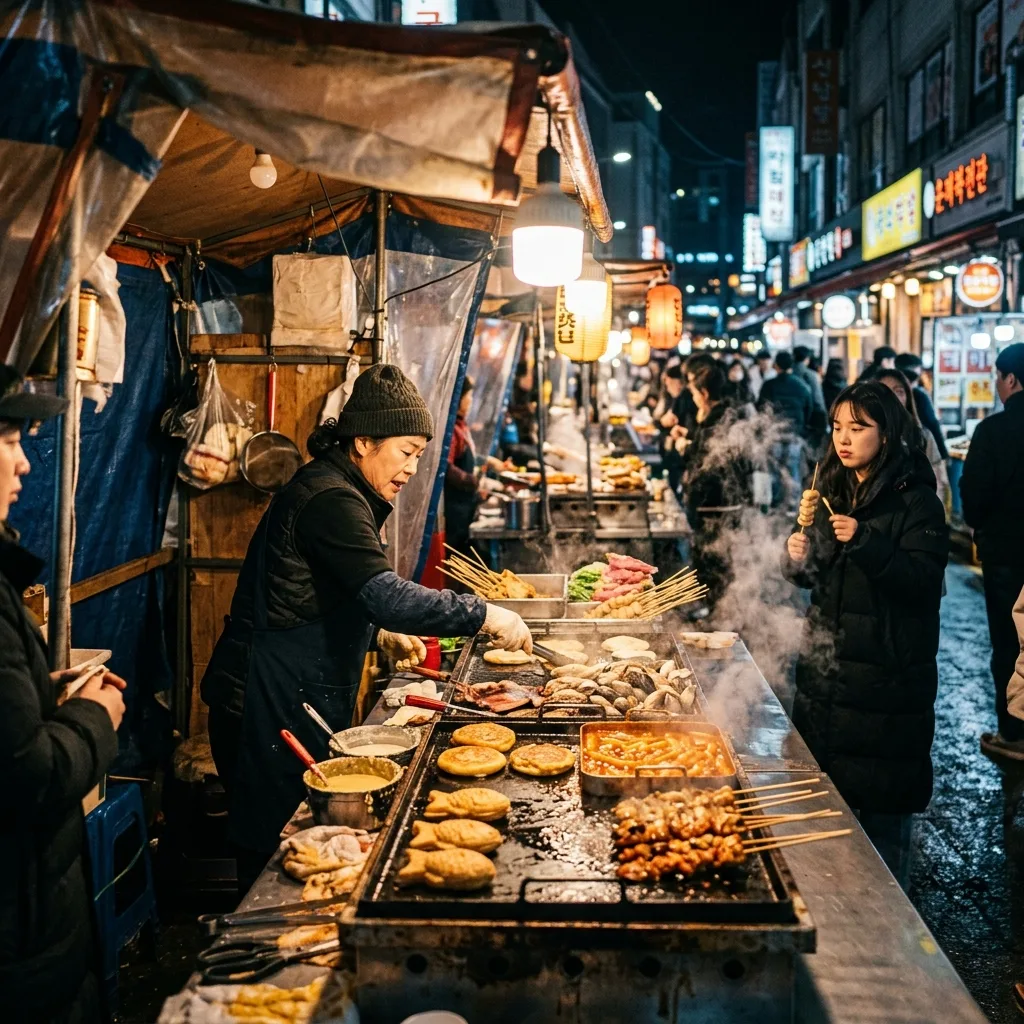
Korea's street food scene doesn't stand still. Walk through the same market in February and again in August, and you'll find completely different vendors, completely different smells, and a completely different mood. Unlike tourist menus that cycle the same dishes year-round, the stalls run by locals shift with the calendar — and if you know what to look for each month, you'll always eat the freshest, most seasonal thing Korea has to offer.
This guide breaks down Korean street food season by season, month by month, so you can plan your eating around the calendar — not just around whatever happens to be in front of you.
Why Korean Street Food Is So Seasonal
Korean food culture is deeply rooted in the agricultural calendar. The concept of jeol-sik (절식) — seasonal foods tied to traditional holidays and climate — has shaped what vendors sell and when they sell it for centuries. Even today, street food isn't just about convenience; it reflects what's ripe, what's warming, and what's being celebrated.
Summer heat makes rich broths unbearable. Winter cold makes cold noodles unappealing. Harvest time brings chestnuts and sweet potatoes to every corner stall. This isn't just tradition for tradition's sake — it's practical, delicious, and the reason Korean street food tastes better when you eat the right thing at the right time.
Understanding this seasonality also helps you avoid disappointment. Many first-time visitors arrive in summer expecting hotteok or bungeoppang and find they're nowhere to be found. Others visit in January and miss out on the summer bingsu experience entirely. Timing your visit around specific foods — or adjusting your expectations when you arrive — makes for a much richer eating experience.
For a broader introduction to everything the street food scene offers, The Ultimate Korean Street Food Guide: Tteokbokki to Tornado Potato is a good place to start before diving into the seasonal layer.
Spring Street Food (March–May)
What the Spring Season Feels Like
Spring in Korea arrives in waves. March is still cold enough for warm snacks, April bursts with cherry blossoms and outdoor festivals, and May settles into perfect weather for eating outside. The shift is reflected immediately in street food — vendors who spent winter selling hotteok start swapping in lighter, more fragrant options.
Hwajeon (화전) — Flower Pancakes
Hwajeon are the most iconic spring street food in Korea, and they have a long history tied to the traditional flower festival Samjinnal (March 3rd on the lunar calendar). These small pan-fried rice cakes are pressed with edible flowers — typically azalea petals, chrysanthemums, or forsythia — creating sticky, subtly sweet bites that are as beautiful as they are delicious.
You'll find hwajeon at traditional markets and festival stalls throughout April, especially during cherry blossom season. They're not made year-round, so if you see them, don't pass them up. The petals aren't just decorative — they add a faint floral bitterness that balances the glutinous rice base.
Where to find them: Jeonju Hanok Village and Insadong in Seoul are the most reliable spots. Traditional market festivals throughout Korea also feature them during April and early May.
Japchae and Tteokbokki at Spring Festivals
Spring also brings outdoor jang-teo (장터, traditional market festivals) to every region in Korea, and the food stalls at these events lean heavily into crowd favorites. Tteokbokki (spicy rice cakes) is present year-round, but spring festival versions often use freshly harvested rice, which gives them a softer, chewier texture. Japchae (stir-fried glass noodles) is another spring staple — lighter than winter options and often served at room temperature.
Ssukttok (쑥떡) — Mugwort Rice Cake
Ssuk (mugwort) emerges in early spring, and Koreans use it immediately. Ssukttok is a green-tinted rice cake with an earthy, slightly bitter flavor that many people describe as "the taste of spring." You'll see it at traditional market stalls starting in late March. The bright green color and herbal aroma make it unmistakable — and it pairs surprisingly well with a cup of barley tea.
Strawberries and Cream
Korean spring strawberries (딸기) are legendary — sweet, enormous, and briefly available. Street stalls along festival routes sell them plain, chocolate-dipped, or piled onto shaved ice in what might be the first sign that bingsu season is approaching. The strawberry season peaks in April, and smart vendors sell them as standalone fruit or fold them into tteok fillings and bingsu toppings.
Summer Street Food (June–August)
What the Summer Season Feels Like
Korean summers are hot and humid — genuinely, oppressively hot in July and August. Street food culture responds accordingly. Anything warm or rich takes a back seat. Cold, sweet, and icy move to the front. The most beloved summer street foods are built around one concept: relief.
Bingsu (빙수) — Shaved Ice Dessert
Bingsu is the undisputed king of Korean summer food, and calling it "shaved ice" undersells it considerably. The traditional patbingsu version layers finely shaved milk ice over sweet red bean paste, rice cakes, condensed milk, and fruit. Modern versions go further — matcha, black sesame, mango, strawberry, cookies and cream — and many cafes dedicate their entire summer menu to bingsu variations.
Street vendors sell more modest versions for around ₩3,000–₩5,000, while cafe-style bingsu can run ₩12,000–₩18,000 for an elaborate bowl meant for two. Both are worth experiencing. The street version is faster and more nostalgic; the cafe version is an event.
Best time: July and August. Many vendors don't start until late June and pack up in mid-September.
Where to eat it: Insa-dong, Hongdae, and any neighborhood market. Gwangjang Market in Seoul also has vendors. For a full breakdown of the market experience, Myeongdong Street Food: What to Eat and Where to Find It covers the Myeongdong vendors specifically.
Oksusu (옥수수) — Grilled Corn on the Cob
Summer corn in Korea is treated seriously. Vendors grill cobs over open charcoal and brush them with a soy-butter glaze — simple but deeply satisfying. The corn itself tends to be a starchier, chewier variety than Western sweet corn, which makes it more filling and better at holding the glaze.
Expect to pay around ₩2,000–₩3,000 per cob at markets and street stalls. This is a snack best eaten while walking.
Watermelon (수박)
Cut watermelon triangles are everywhere in summer — sold from carts, market stalls, and convenience store entrances. A single large triangle typically costs ₩2,000–₩3,000. It's not fancy street food, but it's genuinely refreshing and part of the summer rhythm.
Naengmyeon Stall Noodles (냉면)
While naengmyeon is typically a restaurant dish, summer festivals and market stalls often set up quick-serve versions. The buckwheat noodles arrive in an ice-cold broth, sometimes topped with sliced beef, cucumber, and half a boiled egg. It's tangy, cold, and perfect for a hot day. Prices at stall versions run ₩6,000–₩8,000.
Haetsal Chicken (Grilled Street Skewers)
Summer markets are full of kkochi — grilled skewers of marinated chicken, pork belly, and vegetables. Vendors fan open charcoal grills, and the smoke is part of the experience. Prices are ₩1,000–₩2,000 per skewer. This is summer street food that overlaps into the fall — grilling weather in Korea extends through October.
Autumn Street Food (September–November)
What the Autumn Season Feels Like
September in Korea brings relief — the humidity breaks, temperatures drop to comfortable levels, and the food shifts back toward warmth. Autumn is many people's favorite season for eating in Korea: the produce is exceptional, the festivals are numerous, and the street food starts getting heartier.
Gun Bam (군밤) — Roasted Chestnuts
Gun bam is the defining smell of Korean autumn. Vendors set up enormous rotating drums over charcoal fires, filling the air with a nutty, caramel sweetness that travels a full city block. Chestnuts are harvested in September and October, and stalls appear almost overnight at subway exits, market entrances, and pedestrian streets.
A paper bag of 10–12 roasted chestnuts costs ₩3,000–₩5,000 depending on size and location. Peel them while they're hot — the skin comes off easily and the interior is dense, slightly sweet, and earthy. This is one of the most quintessentially Korean autumn experiences you can have for the price of a coffee.
Godeungeo (고등어) and Seasonal Seafood
The West Sea and South Sea coasts see peak harvests in autumn. At coastal markets and even in Seoul's Noryangjin Fish Market area, you'll find vendors grilling mackerel (godeungeo), dried squid, and cuttlefish over open flames. The mackerel in particular — rubbed with coarse salt and grilled until the skin crisps — is worth seeking out in October, when it's fattest.
Gun Goguma (군고구마) — Roasted Sweet Potato
Sweet potatoes harvested in autumn appear at street stalls in two forms: baked in old oil drums (gun goguma) or sold as sliced, pan-fried snacks. The drum-roasted version has a caramelized, jammy interior that bears almost no resemblance to boiled sweet potato. It's filling, warming, and extremely cheap — ₩2,000–₩4,000 for a medium sweet potato.
Sweet potato stalls often appear alongside chestnut vendors in late October and November, doubling as an early preview of winter street food.
Japchae and Holiday Foods (Chuseok)
Korea's harvest festival Chuseok (추석), which typically falls in September or October, brings songpyeon (half-moon rice cakes filled with sesame or red bean) to market stalls and gift shops everywhere. These are made at home traditionally but increasingly sold as street-side snacks during the holiday period. They're mildly sweet and chewy — worth trying if you're visiting during Chuseok.
Winter Street Food (December–February)
What the Winter Season Feels Like
Korean winters are cold and dry, with temperatures in Seoul frequently dropping below freezing from December through February. This is when street food becomes more than a snack — it's warmth, comfort, and a reason to slow down. The winter street food lineup is arguably the most beloved of any season, and many visitors time their trips specifically to experience it.
Hotteok (호떡) — Sweet Filled Pancakes
Hotteok is the quintessential Korean winter street food. A yeast-leavened dough ball stuffed with a mixture of brown sugar, cinnamon, and chopped peanuts is pressed flat and cooked in a greased pan until the outside is golden and crisp. The filling melts into a caramel-like syrup that oozes when you bite in — be careful, it's genuinely hot.
Classic hotteok costs ₩1,500–₩2,000 at most stalls. Some vendors now offer variations with glass noodle filling (japchae hotteok) or seed mixtures, but the original remains the best. Lines form quickly at popular stalls, especially on cold weekdays.
Best locations: Insadong, Namdaemun Market, Myeongdong, and virtually any outdoor market from November through March.
Bungeoppang (붕어빵) — Fish-Shaped Bread
Bungeoppang — fish-shaped waffles filled with sweet red bean paste — are winter street food icons. The cast-iron molds give them their distinctive carp (bungeo) shape. They come out of the mold puffed, golden, and slightly crispy on the outside, with a warm, thick bean paste center.
A set of 2–3 bungeoppang typically costs ₩1,000. This is genuinely one of the best-value street foods in Korea. Modern variations include custard cream filling or chocolate, but the traditional red bean version has the longest lines. Look for stalls near subway exits in residential neighborhoods, where they're popular with commuters heading home in the evening.
Odeng / Eomuk (오뎅/어묵) — Fish Cake Skewers in Hot Broth
Odeng stalls are winter fixtures at traditional markets. Long rectangular fish cakes are skewered on sticks and dunked into a simmering savory broth made with kelp and radish. You pull your skewer from the broth and eat the fish cake while it's still hot; vendors often offer free cups of the broth to drink alongside.
This is one of the cheapest street foods in Korea — ₩500–₩1,000 per skewer — and one of the most warming. Gwangjang Market and Namdaemun Market both have long rows of odeng stalls that are especially atmospheric on cold nights.
Gyeran Ppang (계란빵) — Egg Bread
Gyeran ppang looks exactly like what it is: a small, slightly sweet bread loaf baked around a whole egg. The egg steams inside the bread as it cooks, creating a savory pocket inside a sweet exterior. It's dense, filling, and usually costs ₩1,500–₩2,000.
This is comfort food for Korean commuters — grab one from a stall near a subway exit, eat it while walking, and feel immediately warmer.
Tteokbokki in Winter (떡볶이)
Tteokbokki is available year-round, but there's something specifically satisfying about a cup of spicy rice cakes in the cold. Winter versions often feel spicier — your perception of heat increases when you're already cold — and vendors sometimes add extra fish cake and boiled eggs to pad out the portion. Pair it with odeng broth from a neighboring stall for a full winter meal under ₩5,000.
Practical Guide: Finding Seasonal Street Food
Traditional Markets (전통시장)
Traditional markets — jeontongsijang — are the most reliable places to find seasonal street food across Korea. Unlike tourist-focused areas where vendors serve whatever sells year-round, traditional markets run on local demand and follow seasonal rhythms closely.
Key markets to visit:
- Gwangjang Market (Seoul) — one of the oldest, best for raw bindaetteok, mayak gimbap, and seasonal specials
- Namdaemun Market (Seoul) — enormous and chaotic; excellent for winter street food
- Gukje Market (Busan) — southern flavor profiles and great seafood stalls
- Jeonju Central Market — best in spring for hwajeon and traditional hanok food culture
For a deeper dive into the market experience, A Foodie's Guide to Seoul: Top 15 Must-Try Street Foods covers the Seoul market circuit in detail.
What to Pay
Street food prices in Korea are genuinely affordable, but they've crept up since the pandemic. General benchmarks for 2026:
- Simple snacks (bungeoppang, odeng): ₩500–₩2,000
- Medium snacks (hotteok, gyeran ppang, roasted chestnuts): ₩2,000–₩4,000
- Full portions (tteokbokki, bingsu at a stall): ₩3,000–₩6,000
- Cafe-style desserts (elaborate bingsu): ₩12,000–₩18,000
Getting There
Seoul's traditional markets are all reachable by subway:
- Gwangjang Market: Exit 1, Jongno 5-ga Station (Line 1)
- Namdaemun Market: Exit 5, Hoehyeon Station (Line 4)
- Myeongdong street stalls: Exit 5 or 8, Myeongdong Station (Line 4)
- Insadong: Exit 6, Anguk Station (Line 3)
Tips and Common Mistakes
Follow the smoke, not the sign. The best street food vendors often don't have English signs. Look for smoke, crowds, and the smell of charcoal or frying oil. If a vendor has a queue, join it.
Don't arrive at noon. Many street food stalls in Korea are afternoon and evening operations. Traditional markets are busiest between 2–8 PM. Morning arrivals may find vendors still setting up.
Season-check before you go. Nothing is more disappointing than visiting in July hoping for roasted chestnuts or bungeoppang. Check which season you're visiting and adjust expectations. The seasonal rotation is sharp — hotteok stalls genuinely disappear in summer.
Carry cash in small denominations. Most street food vendors are cash-only, and many won't break ₩50,000 notes for a ₩2,000 purchase. Keep plenty of ₩1,000 and ₩5,000 bills.
Pair foods intentionally. Spicy tteokbokki and odeng broth is a classic pairing. Hotteok and canned coffee is another. Watching what locals eat together gives you context that no menu provides.
Ask about the ingredient if you're unsure. Koreans are generally happy to explain their food to curious visitors. Point and ask — "igeo mwo-eyo?" ("what is this?") will almost always get you a friendly answer and possibly a free sample.
FAQ
Is Korean street food safe to eat?
Yes. Korea has strong food hygiene standards, and traditional markets are inspected regularly. The golden rule applies anywhere in the world: stalls with high turnover and visible cooking are safer than anything sitting under a heat lamp for unknown hours. Food that is cooked fresh in front of you is almost always fine.
What is the best season to visit Korea for street food?
Winter (November–February) is consistently ranked as the best season by food-focused travelers. The combination of hotteok, bungeoppang, roasted sweet potatoes, chestnuts, and odeng creates a street food atmosphere that is unique and deeply memorable. Autumn is a close second for produce quality and comfortable eating temperatures.
Can I eat Korean street food with dietary restrictions?
Vegetarian travelers will find limited but workable options — tteokbokki without fish cake, ssukttok, roasted corn, chestnuts, and sweet potatoes are naturally plant-based. Vegan options are more limited because many broths use fish stock. Gluten-free eating is difficult at traditional street stalls, as soy sauce and flour are common ingredients.
Do street vendors speak English?
Most traditional market vendors speak little to no English. A smile, pointing, and holding up fingers for quantity is usually enough. Having a translation app ready helps for complex questions. Major tourist areas like Myeongdong have more English-speaking vendors.
What time do street food stalls open?
Most traditional market stalls begin around noon and run until 8–9 PM. Some famous spots, like the mayak gimbap vendors at Gwangjang Market, open earlier. Evening markets and night market festivals operate from around 6 PM onward.
Conclusion
Korean street food is one of the best arguments for eating like a local, and the seasonal dimension is what makes it endlessly rewarding to return to. Spring brings floral rice cakes and festival energy. Summer cools you down with shaved ice and chilled noodles. Autumn smells like roasting chestnuts and caramelizing sweet potatoes. Winter wraps everything in warmth with bungeoppang, hotteok, and steaming fish cake broth.
The best approach is simple: arrive knowing what's in season, find the nearest traditional market, and walk until something smells too good to pass up. Korea's street food will take care of the rest.
To continue building your Korea food knowledge, A Foodie's Guide to South Korea: 10 Dishes & Markets You Can't Miss covers the full range of must-eat experiences beyond the streets, and From Royal Court to Rosé Sauce: The Wild Evolution of Korean Food gives the cultural context behind why Korean food is the way it is.