Boryeong Mud Festival: The Ultimate Survival Guide

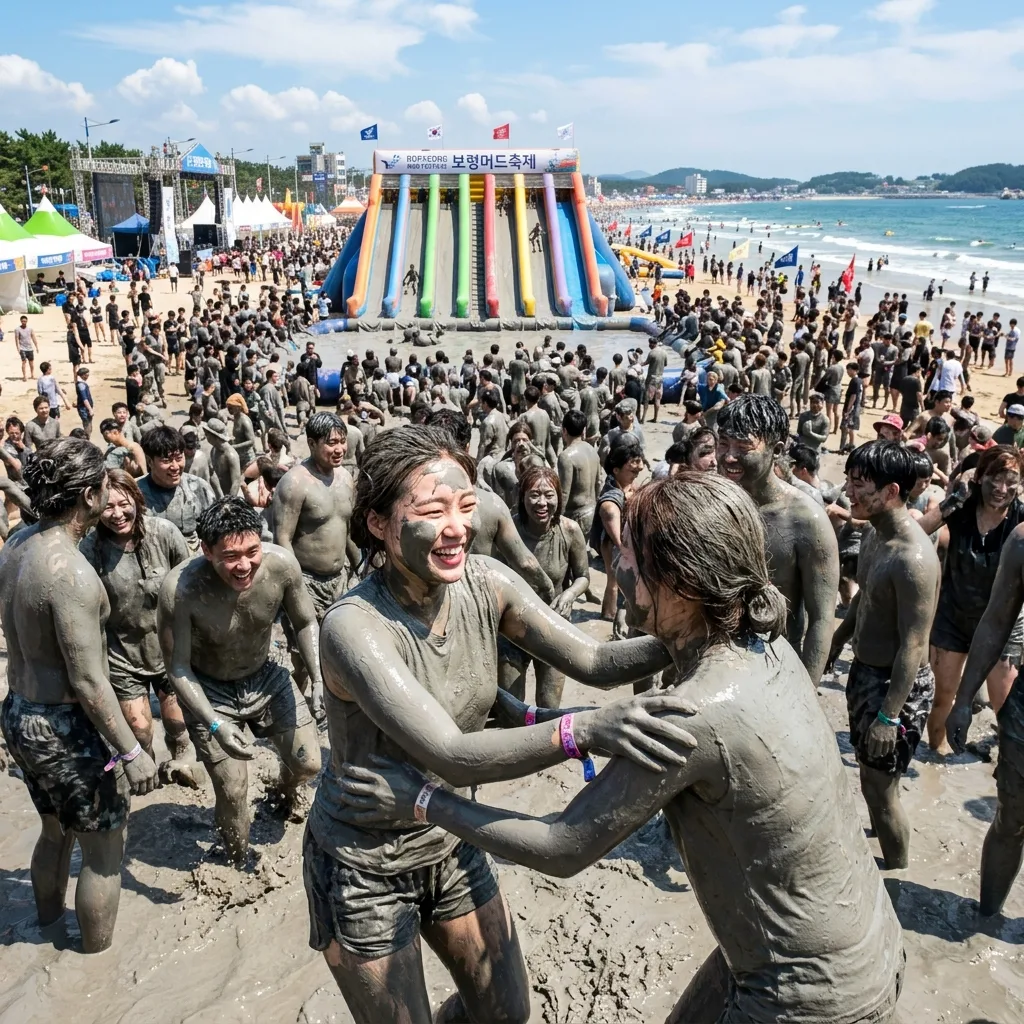
Imagine a world where thousands of people from every corner of the globe descend upon a pristine beach in South Korea, not to swim in the crystal-clear waters, but to dive headfirst into massive pits of grey, mineral-rich mud. This is the Boryeong Mud Festival—a chaotic, exhilarating, and undeniably messy celebration that has become South Korea's most famous international event. Whether you’re sliding down giant inflatable mud-slides, wrestling in the pits, or dancing to K-pop and EDM as the sun sets over the West Sea, it’s an experience that defies logic and embraces pure, unadulterated joy. But don’t let the playful atmosphere fool you; without a plan, you can quickly find yourself stranded with ruined electronics, stained skin, and no way to get back to Seoul. This is the ultimate survival guide to navigating the 2026 Boryeong Mud Festival like a seasoned pro.
1. What is the Boryeong Mud Festival?
The Boryeong Mud Festival (보령머드축제) began in 1998 as a clever marketing campaign for Boryeong’s mineral-rich mud, which is used in high-end cosmetics. What started as a local promotion has exploded into a global phenomenon, attracting over 2 million visitors annually. The mud itself is hauled from the nearby mudflats of Daecheon and processed to remove impurities, leaving behind a nutrient-dense sludge that is supposedly great for your skin—though most people are there for the adrenaline, not the exfoliation.
The festival takes place at Daecheon Beach in Boryeong, a coastal city about 2.5 hours south of Seoul. For 2026, the festival is scheduled to run from July 24 (Friday) to August 9 (Sunday), spanning 17 days of mud-soaked mayhem. This year marks the 29th anniversary of the festival, and the city is pulling out all the stops to make it the biggest one yet, with more international DJ lineups and expanded "Color Mud" zones.
The Science Behind the Sludge
Why mud? Boryeong’s mud is unique because of its high concentration of minerals, including germanium and bentonite. These elements are known for their ability to absorb impurities from the skin and provide a natural glow. During the festival, the mud is trucked in from the Boryeong mudflats, purified, and then mixed into the various pits and slides. It’s not just "dirt"; it’s a high-grade cosmetic product that just happens to be fun to play in. Many locals swear by its anti-aging properties, which is why you’ll see people of all ages—not just rowdy tourists—smearing it on their faces.
2. 2026 Schedule & Critical Logistics
Planning your visit around the right dates and times is the difference between a smooth trip and a logistical nightmare.
The Dates
The 29th annual Boryeong Mud Festival will peak on the weekends. If you want the most energy, the best concerts, and the biggest crowds, aim for the second weekend (July 31 – August 2). If you prefer slightly shorter lines for the mud slides, try to visit during the weekdays.
Pro Tip: If you can, visit during the "Grand Opening" weekend (July 24-26) to see the spectacular fireworks display and the official opening ceremony, which often features top-tier K-pop idols.
Operating Hours & The Infamous "Mud Break"
- Morning Session: 10:00 AM – 1:30 PM
- The Mud Break: 1:30 PM – 2:30 PM (MANDATORY)
- Afternoon Session: 2:30 PM – 6:00 PM
- Night Events: 8:00 PM – 10:00 PM (Concert and fireworks)
Critical Tip: At 1:30 PM, the "Mud Zone" (the gated area with the slides and pits) closes completely for cleaning and safety checks. If you arrive at 1:15 PM, you’ll pay for a ticket only to be kicked out 15 minutes later. Use this hour to grab lunch at the many seafood restaurants lining the boardwalk. This is also the time when the public showers are slightly less crowded, so if you’re doing a half-day trip, this is your window to get clean.
3. Tickets: Mastering the Gate
The festival is divided into two main zones: the General Zone (for adults and teens) and the Family Zone (for children and families).
Pricing (Estimated for 2026)
- Weekday (Mon-Thu): ~₩10,000 ($8 USD)
- Weekend (Fri-Sun): ~₩14,000 ($11 USD)
- Family Zone: ~₩9,000 - ₩11,000.
- Combo Tickets: Look for special tour packages on Klook or Trazy that include round-trip transport from Seoul and your entry ticket. Often, these aren't much more expensive than doing it yourself and save you the stress of booking trains.
The 70/30 Rule
The organizers usually allocate 30% of tickets for online pre-booking and 70% for on-site sales. While pre-booking is safer, the official website can be difficult to navigate for foreigners. If you are buying on-site during a weekend, arrive at the ticket booth by 9:15 AM. On peak Saturdays, the "Sold Out" sign often goes up before noon.
4. Survival Tip #1: The "Ruined Clothes" Wardrobe
Don't wear your favorite designer swimsuits or that trendy "Seoul Aesthetic" outfit you just bought in Hongdae. The mud at Boryeong is fine-grained and mineral-heavy; once it gets into the fibers of your clothes, it stays there.
The Uniform
- Attire: Wear an old t-shirt and shorts that you are willing to throw away at the end of the day. Many people wear their swimwear underneath their old clothes for convenience. Dark colors are best; white shirts will become a permanent, translucent grey within five minutes.
- Footwear: The sand at Daecheon Beach gets incredibly hot in the July sun, and the mud zones can be slippery. Water shoes with a rubber grip are the gold standard. Flip-flops will get sucked into the mud pits like quicksand and be lost forever. If you don't have water shoes, go barefoot in the mud pits but wear your sandals on the boardwalk.
- Goggles: If you plan on doing the "Mud Prison" or the steeper slides, a pair of cheap swimming goggles will save your eyes. Getting mud in your eyes is the number one way to end your festival experience early due to irritation and temporary "mud-blindness."
While you're planning your wardrobe, don't forget that you're still on a beach in the height of the Korean summer. How to Travel South Korea on a Budget: $35/Day Survival Guide (2025) often emphasizes saving money on gear, and this is one place where "cheap and disposable" is the better strategy.
5. Survival Tip #2: Protecting Your Tech & Valuables
You will be wet, you will be muddy, and you will likely be shoved into a pit of sludge at some point.
Technology Protection
- Waterproof Phone Pouches: These are non-negotiable. You’ll see them sold everywhere at the beach for ₩10,000, but they are often of poor quality. Buy a high-quality one in Seoul beforehand and test it in your hotel sink with a piece of paper inside before you trust it with your iPhone 15.
- Photography Tip: Clean your camera lens area frequently. A tiny smear of mud on the plastic pouch will turn your once-in-a-lifetime photos into a blurry, grey mess.
- Action Cameras: If you have a GoPro, this is the time to use it. Just make sure it’s securely tethered to your wrist or chest. Head mounts often get knocked off in the "Mud Wrestling" pit.
Valuables & Money
- Lockers: There are lockers located near the main entrance and the shower facilities. They cost between ₩2,000 and ₩5,000. Bring small ₩1,000 bills as the machines rarely take large notes or cards.
- The Cash Rule: While Korea is largely a cashless society, the small shower stalls and some locker areas still prefer cash. Keep ₩20,000 in small bills inside your waterproof pouch. 7 Essential Apps for Traveling in South Korea (2025 Edition) like Naver Maps are useful for finding your way back to the station, but they won't help if your phone is a brick.
6. Survival Tip #3: Mastering the Journey from Seoul
Getting to Boryeong is easy; getting back is the hard part.
Option A: The Train (Janghang Line)
This is the most comfortable and reliable way to travel. You can take the Mugunghwa or Saemaeul trains from Yongsan Station or Yeongdeungpo Station to Daecheon Station.
- Duration: ~2.5 to 3 hours.
- The Strategy: Train tickets for festival weekends sell out 2-4 weeks in advance. Use the Korail app or website to book your return ticket the moment they go on sale (30 days prior). If you miss the train, you’re looking at a very long, uncomfortable bus ride in the dark.
Option B: Express Bus
Buses run frequently from the Seoul Central City Bus Terminal (Express Bus Terminal Station) to Boryeong.
- Duration: ~2.5 hours (can be 4+ hours with weekend traffic).
- The Advantage: Buses are more frequent than trains, but traffic on the West Coast Highway can be brutal on Saturday mornings and Sunday evenings.
Local Transport
Once you arrive at Daecheon Station or Boryeong Bus Terminal, look for the local buses (numbers 100 or 101). They run every 10-15 minutes and take you directly to Daecheon Beach for about ₩1,500. Mastering the T-Money Card: Your Key to Korea's Transit (and More) is essential here, as you can just tap and go. The Ultimate Guide to Public Transportation in Korea (2025 Edition) provides more tips on navigating the bus system if you get lost.
7. The Main Event: Top 5 Mud Activities
If you’ve paid for your ticket, don’t just stand there—get in! Here are the must-do activities in the General Zone:
- The Mud Prison: Usually the first stop for newcomers. You are locked in a cage while staff and other participants douse you in mud. It’s the official "initiation" and ensures no one stays clean for long.
- Giant Mud Slide: The most popular attraction. The lines can be long, so head here immediately at 10:00 AM or 2:30 PM. It’s fast, exhilarating, and ends with a spectacular splash into a mud pool.
- Mud Wrestling: Inflatable pits where you can challenge your friends (or strangers) to a wrestling match. It’s surprisingly tiring but incredibly fun.
- The Mud Fountain: A large area where mud is continuously sprayed into the air. This is the prime spot for group photos and dancing.
- Color Mud Zone: If the grey mud isn't enough for you, head to the "Color Mud" body painting area where you can decorate yourself in vibrant blues, pinks, and greens.
8. Survival Tip #4: The Clean-up & Exit Strategy
By 5:30 PM, the Mud Zone begins to wind down, and the mass exodus begins.
- The Shower Struggle: There are public shower facilities near the beach. They are basic, often have cold water only, and cost ~₩3,000. The lines at 6:00 PM are legendary—expect to wait 45 minutes just to get a 3-minute rinse.
- The Pro Hack: Leave the mud zone at 4:30 PM or 5:00 PM. You'll miss the final 30 minutes of mud, but you'll save yourself an hour of standing in a crowded line while covered in drying, itchy mud.
- The Ocean Rinse: Many people head straight into the West Sea to get the first layer of mud off. This is a great idea, but remember: do not use soap in the ocean. It’s bad for the environment and won’t get the mud out of your pores anyway. Use the ocean for the bulk, then head to the showers for the detail work.
- Plastic Bags: Bring two heavy-duty trash bags for your wet/muddy clothes. You do not want to put those back in your backpack or carry them on a 3-hour train ride uncovered.
9. Food & Nightlife: Fueling the Party
After you've showered and regained your human form, it's time to eat.
What to Eat at Daecheon Beach
- Grilled Clams (Jo-gae-gui): This is the quintessential Boryeong experience. The boardwalk is lined with restaurants offering "Unlimited Grilled Clams." It’s a social meal where you grill a variety of shellfish over an open flame. Expect to pay about ₩30,000 - ₩40,000 per person.
- Kalguksu (Noodle Soup): If you're on a budget, look for restaurants serving Bajirak Kalguksu (Clam Noodle Soup). It’s warm, filling, and much cheaper than a full clam feast.
- Street Food: During the festival, stalls pop up everywhere selling skewers, fried chicken, and ice-cold beer. A Foodie's Guide to South Korea: 10 Dishes & Markets You Can't Miss can help you identify the best local treats.
Nightlife & Concerts
The party doesn't end when the mud pits close. The main stage on the beach hosts nightly events during the peak weekends.
- EDM & K-Pop Parties: High-energy performances that turn the beach into a massive open-air club. South Korea's Best Music Festivals: From EDM to K-Pop ranks Boryeong's nightlife as one of the most unique "party vibes" in the country.
- Beach Fireworks: Usually occurring on the opening and closing weekends, these are world-class displays that light up the entire West Sea.
10. Where to Stay: Beating the Peak Prices
Daecheon Beach is a prime vacation spot even without the festival. During the Mud Festival, hotel prices triple, and "minbak" (guesthouses) can charge ₩200,000 for a room that usually costs ₩50,000.
- Stay in Boryeong City: Hotels in the city center (near the bus terminal) are often cheaper than those on the beach and are only a 15-minute bus ride away. Look for "Business Hotels" which are clean and affordable.
- Jimjilbang (Sauna): For the true budget warrior, there are several large saunas in Boryeong. You can pay ₩15,000 to sleep on the floor. Be warned: during festival weekends, these will be packed with hundreds of other people.
- Day Trip from Seoul: It’s entirely possible to do the Mud Festival as a day trip. Take the 8:00 AM train down and the 8:00 PM train back. You’ll be exhausted, but you’ll save a fortune on hotels.
If you’re planning a larger trip, you might be deciding between different coastal cities. Exploring Busan: A Complete Guide to South Korea's Coastal Gem is a great comparison, though Busan lacks the specific "mud chaos" of Boryeong.
11. Solo Traveler's Strategy
The Boryeong Mud Festival is perhaps the most social event in Korea for expats and travelers. If you’re traveling solo, don’t worry—you won't be alone for long.
- Find "Mud Mates": Check the "Mudfest" threads on r/koreatravel or Facebook groups like "Every Expat in Korea" to find groups to join. Many people organize group bus tours specifically for solo travelers.
- Safety: Boryeong is very safe, but as with any large crowd, keep your wits about you. Stick to the well-lit boardwalk at night and keep your phone secured in its pouch.
- The "Mud Prison" Shortcut: If you're solo, the "Mud Prison" is the best place to make friends. Everyone is in the same boat (or cage), and the shared experience of being doused in mud is a great icebreaker.
12. Beyond the Mud: Nearby Attractions
If you have an extra day, Boryeong has more to offer than just sludge.
- Muchangpo Beach: Located just south of Daecheon, this beach is famous for the "Moses Miracle," where a sea path opens up during low tide, allowing you to walk to a nearby island. Check the tide tables before you go!
- Oeyeondo Island: A beautiful, remote island accessible by ferry from Boryeong Port. It’s perfect for hiking and getting away from the festival crowds.
- Gaehwa Art Park: A quirky and beautiful park featuring sculptures, a greenhouse, and a cafe. It’s a great "clean" activity for the morning before the mud pits open.
13. Comparison: Mud Festival vs. Waterbomb vs. S2O
South Korea loves its summer festivals. How does Boryeong stack up?
| Festival | Main Element | Vibe | Best For |
|---|---|---|---|
| Boryeong Mud | Mud & Beach | Chaotic, International, Messy | Everyone, Solo Travelers |
| Waterbomb | Water Guns | Trendy, K-Pop/K-HipHop heavy | Gen Z, Music Lovers |
| S2O Korea | Water Cannon | EDM, High-Energy Dance | Rave Fans |
Boryeong is the most "all-ages" and "international" of the bunch. While Waterbomb is very focused on the artists and looking "cool," Boryeong is about letting go of your ego and getting as dirty as possible.
14. Conclusion: Is it Worth the Chaos?
The Boryeong Mud Festival is a beautiful, messy contradiction. It’s a place where you can be a child again, where language barriers disappear under layers of grey sludge, and where the only goal is to have as much fun as humanly possible. Whether you’re coming from Top 15 Must-Visit Destinations in South Korea (Beyond Seoul) or stopping by on your way to a Jeju Island Itinerary: The Ultimate Road Trip Guide, Boryeong is a summer rite of passage that you will never forget.
So, are you ready to get dirty? Grab your oldest t-shirt, book that train ticket, and we'll see you in the mud!
Frequently Asked Questions
Is the mud safe for sensitive skin? Generally, yes. The mud is processed and tested for safety. However, if you have open wounds or severe skin allergies, it's best to avoid the deep pits. Always rinse off thoroughly and apply moisturizer after the festival.
Can children participate? Yes! The Family Zone is specifically designed for children, with smaller slides and a safer environment. It is located a short walk away from the main General Zone to keep the rowdier activities separate.
What happens if it rains? The Boryeong Mud Festival is one of the few events that is arguably better in the rain. Unless there is a severe typhoon warning, the festival goes on. You’re going to get wet and muddy anyway!
Is there an age limit for the General Zone? The General Zone is for those aged 13 and up. Younger children must use the Family Zone for safety reasons.
What should I do about my contact lenses? If you must wear them, wear goggles. Mud in your eyes with contact lenses is a recipe for an infection. Better yet, wear old glasses with a strap or just go "blind" for the slides!
Is there a place to charge my phone? Some of the larger cafes near the beach have charging stations, but they are often full. It's better to bring a fully charged power bank (kept in your locker) or a small one in your waterproof pouch.
What is the best way to avoid the crowds? Visit on a Tuesday or Wednesday. You’ll have 50% shorter lines for the big slides and a much easier time finding a locker.
Are there ATMs nearby? Yes, there are several ATMs along the boardwalk and near the entrance. However, they often run out of cash on busy Saturdays, so bring what you need from Seoul. Cultural Etiquette in South Korea: 7 Rules to Avoid Awkward Moments can also help you navigate other social situations while visiting rural areas.