10 Unique Local Festivals You Didn't Know Existed in South Korea
Imagine standing on a darkened riverbank in the heart of the Korean countryside, the only light coming from thousands of tiny, pulsating emerald orbs dancing in the humid night air. Or picture yourself standing at the edge of the ocean, watching as the tide retreats to reveal a hidden 2.8-kilometer path of sand and pebbles, allowing you to literally walk on the seafloor to a distant island. Most travelers to South Korea never make it past the neon-lit streets of Myeongdong or the seaside skyscrapers of Haeundae. While The Ultimate Seoul Travel Guide: Where to Stay & What to See and Exploring Busan: A Complete Guide to South Korea's Coastal Gem are essential stops, the true "heart" of the peninsula beats in its provinces—specifically during the local festivals (chukje) that celebrate everything from mythical sea paths to traditional bullfighting.
If you’re planning a trip to South Korea in 2026, stepping out of the metropolitan bubble and into the regional Gun (counties) is the best way to witness a side of Korean culture that is raw, quirky, and deeply communal. Whether you're catching grasshoppers in a golden rice field or pulling a 40-ton rope with hundreds of strangers, these local festivals offer more than just a photo op—they offer immersion. Here are 10 unique local festivals you probably didn't know existed, but absolutely should add to your 2026 bucket list.
1. Muju Firefly Festival: A Night of Natural Magic
2026 Predicted Dates: September 4–12
In an era of light pollution and urbanization, fireflies have become a rare sight in many parts of the world. However, in the pristine mountains of Muju County, these "messengers of the night" are celebrated as natural monuments. The Muju Firefly Festival is Korea’s premier eco-themed event celebrating fireflies and nature, dedicated to the conservation of the Luciola lateralis and Luciola cruciata species.
The Experience: Firefly Exploration
The highlight of the festival is the Firefly Exploration Tour. Unlike a typical zoo or aquarium, this event takes you into the natural habitats of the fireflies. Groups board shuttle buses after sunset and are led by local guides into the forested riverbanks. As the artificial lights fade, the forest begins to glow. It is a quiet, meditative experience that reminds you of Korea’s commitment to ecological restoration. The climate during this period is mild, with temperatures around 15-25°C (59-77°F), making it suitable for outdoor activities.
Don't Miss: Nakwanori
While the fireflies are the biological stars, the Nakwanori (Traditional Falling Fire Fireworks) is the cultural masterpiece. Originating from the Anseong-myeon area of Muju, this display involves hundreds of hand-rolled mulberry paper bundles filled with charcoal and salt. These bundles are strung across the Namdaecheon River and set ablaze. As the charcoal burns, it emits a unique "cracking" sound and sends showers of orange sparks cascading into the water. It is far more poetic and grounded than modern pyrotechnics.
Logistics: Entry tickets for the festival are estimated to be around 15,000 to 20,000 KRW, granting access to most festival activities. It is recommended to purchase tickets in advance. Booking for the Firefly Exploration Tour usually requires an online reservation via the official website (firefly.or.kr). In recent years, they have improved English support, but it's still best to have a local friend or a service like Goh Travel Korea help you secure a spot as they sell out within minutes.
2. Jindo Miracle Sea Road Festival: Walking on the Ocean Floor
2026 Confirmed Dates: April 17–20
Often compared to the biblical parting of the Red Sea, the Jindo Miracle Sea Road is a natural phenomenon caused by extreme tidal fluctuations. Once or twice a year, the sea "parts" between the main Jindo Island and the smaller Modo Island, revealing a path nearly 3 kilometers long and 40 meters wide.
The Legend of Grandma Bbong
According to local folklore, the village of Hoedong was once plagued by tigers. The villagers fled to Modo Island but accidentally left behind an elderly woman named Grandma Bbong. She prayed daily to the Sea God of the Dragon King to reunite her with her family. One night, the god appeared in her dream and told her that a rainbow would appear on the sea the next day. True to the promise, the sea parted, and her family was able to cross back to save her. She passed away happily after being reunited with her family. To honor her, villagers continue to hold memorial services, and a large statue of Grandma Bbong with a tiger stands near the sea road.
How to Join the Crossing
The festival is a race against the clock. The path is only accessible for about an hour each day during the festival period. You’ll see thousands of people—locals and tourists alike—donning bright yellow rubber boots and walking onto the seafloor to harvest seaweed and abalone.
Logistics: Jindo is far from Seoul. To reach it, it's best to take the Mastering the KTX: How to Book High-Speed Trains in Korea to Mokpo and then a local bus. The tide times for 2026 are already predicted: Friday, April 17 at 17:20; Saturday, April 18 at 18:00; Sunday, April 19 at 18:30; and Monday, April 20 at 19:10. Plan your travel accordingly!
3. Wanju Wild Food Festival: For the Adventurous Foodie
2026 Predicted Dates: September 25–27
If you think you’ve seen everything A Foodie's Guide to Seoul: Top 15 Must-Try Street Foods has to offer, the Wanju Wild Food Festival will challenge your palate. Held in the lush Gosan Recreational Forest, this festival celebrates "wild" and "nostalgic" foods—things that Koreans used to eat during leaner times or foraged from the mountains.
"Wild" Eating
Expect to see roasted grasshoppers, mountain herbs you've never heard of, and even deep-fried insects. The festival has included activities such as children catching grasshoppers in the fields. For the less adventurous, there are plenty of delicious local specialties, but the real fun lies in the traditional cooking methods.
Gamja Samgut (Pit Cooking)
One of the most popular events is the Gamja Samgut. This is a traditional method of cooking potatoes, sweet potatoes, and eggs in a large pit dug into the ground. Stones are heated to extreme temperatures, water is poured over them to create steam, and the food is buried and cooked under the earth. The result is an earthy, smoky flavor that you simply cannot replicate in a modern oven. This event is often accompanied by vibrant farmers' music, creating a festive atmosphere.
Pro Tip: This is a very family-friendly festival. Kids love the "stream fishing" area where they can try to catch fish with their bare hands in the shallow river.
4. Gijisi Juldarigi Tug-of-War Festival: 40 Tons of Unity
2026 Confirmed Dates: April 9–12
In most parts of the world, tug-of-war is a schoolyard game. In Dangjin, it is a UNESCO Intangible Cultural Heritage of Humanity. The Gijisi Juldarigi Festival is a 500-year-old tradition that symbolizes community unity and the wish for a good harvest. It originated as a ritual to pray for peace, good harvests, and community harmony.
The Scale of the Rope
This isn't your average gym class rope. The rope used in Gijisi is approximately 200 meters long, 1 meter in diameter, and weighs a staggering 40 tons. It takes a month to weave the rope by hand, using thousands of smaller straw ropes bundled together. This meticulous process involves many volunteers and master craftsmen.
Participation is Mandatory
The beauty of this festival is that it isn't a spectator sport. When the day of the big pull arrives, anyone—local or foreigner—is invited to grab a smaller "side rope" and join the effort. There are two sides: the Land side and the Sea side. Local legend says that if the Sea side wins, the year will bring a bountiful harvest and peace. If the Land side wins... well, let's just say everyone tries their best to ensure a "fair" outcome that favors the community. The event emphasizes community unity rather than competition.
Transport: Dangjin is easily accessible via express bus from Seoul’s Central City Terminal, taking about 1 hour and 30 minutes.
5. Gimje Horizon Festival: Where Sky and Earth Meet
2026 Confirmed Dates: October 1–5
South Korea is 70% mountainous, meaning that in most of the country, your view of the horizon is blocked by peaks. Gimje is the exception. Known as the "Rice Bowl of Korea," Gimje is the only place in the peninsula where you can see the land horizon—where the golden rice fields meet the sky in a perfectly straight line.
Rice Culture and the Byeokgolje Reservoir
The festival is held at Byeokgolje Reservoir Site, the site of Korea’s oldest ancient reservoir (dating back to the Baekje Kingdom). The theme is centered entirely around agriculture. You can try your hand at harvesting rice, threshing it using traditional tools, catching grasshoppers, and even riding an ox cart. The festival's core mission is to promote Gimje's renowned rice and uphold traditional agricultural practices.
The Twin Dragon Legend
At night, the festival transforms. Two massive 54-meter-long dragon sculptures (representing the protectors of the water) are illuminated with LEDs, and a spectacular torch parade winds through the fields. The nightly torch parade includes a spectacular performance in front of these large twin dragon sculptures located at the Byeokgolje Reservoir. It’s a stunning celebration of the grain that has sustained Korea for millennia.
6. Jeju Fire Festival: Lighting Up the Volcanic Oreum
2026 Confirmed Dates: March 9–14
Jeju Island Itinerary: The Ultimate Road Trip Guide is known for its wind, stones, and women—but in March, it is known for fire. The Jeju Fire Festival (Jeju Deulbul Chukje) is a modern reimagining of an ancient pastoral tradition where farmers burned the old grass in the mountain pastures to kill off pests and encourage new growth for the spring.
The Digital Shift
For 2026, the festival is undergoing a major transformation. Due to environmental concerns and wildfire risks, the traditional "Oreum Burning" (where a whole volcanic cone was set on fire) is being replaced by Digital Fire Placement (digital 불놓기). Expect high-tech media art, lasers, and massive fireworks displays that illuminate the Saebyeol Oreum in a way that is both sustainable and spectacular. Jeju City is implementing comprehensive safety management measures, including AI drones for aerial monitoring and an crowd management support system.
Cultural Rituals
Despite the digital shift, the traditional spirit remains. You can participate in the Daljip Taeugi (burning of a large straw house) to send your wishes to the heavens, and watch the horse-riding performances that celebrate Jeju's unique equestrian history. Pre-events include writing and hanging wish papers at Saebyeol Oreum and "Oreum Docent" tours guided by interpreters.
Pro Tip: March in Jeju can still be quite chilly. Bring a windbreaker and sturdy shoes if you plan to trek up the Oreum for the best view of the lights.
7. Cheongdo Bullfighting Festival: A Clash of Titans (Without the Blood)
2026 Main Event: Typically mid-April
Forget everything you know about Spanish bullfighting. In the Cheongdo Bullfighting Festival, there are no matadors, no capes, and—most importantly—no bloodshed. This is a traditional Korean sport called So-ssaum, which focuses on the strength, endurance, and technique of the bulls themselves.
The Rules of the Game
Two massive Korean bulls (Han-so) are brought into a circular stadium located in Hwayang-eup, Cheongdo County. They lock horns and push. The match ends when one bull turns its head and runs away—a sign of submission. It is more akin to sumo wrestling than a fight to the death. The bulls are highly trained athletes, pampered by their owners, and treated with immense respect. There is no bloodshed, and the focus is entirely on the animal's strength and pushing ability.
The Atmosphere
The stadium in Cheongdo is modern and provides a great view of the action. The energy is electric, with betting allowed on a small scale. It’s a fascinating look at rural Gyeongsang-do culture.
Transport: Cheongdo is a short train ride from Exploring Busan: A Complete Guide to South Korea's Coastal Gem, making it an easy day trip for those staying in the coastal city.
8. Jinju Namgang Yudeung Festival: A River of History and Light
2026 Predicted Dates: October 4–19
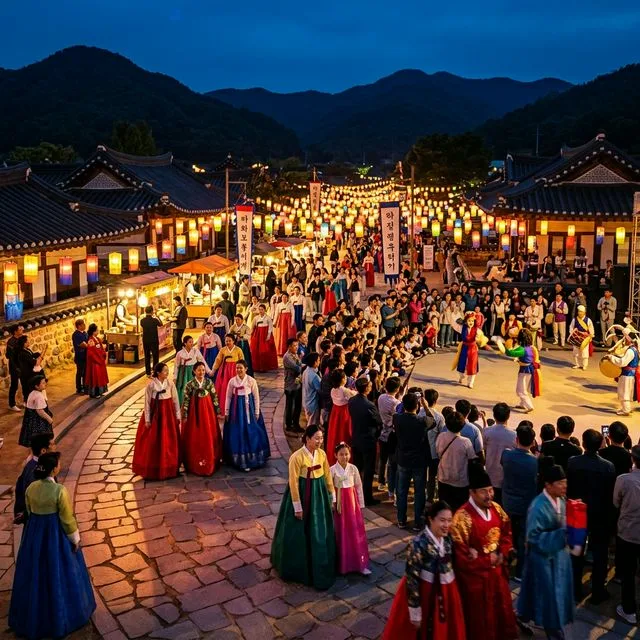
While the Seoul Lantern Festival is popular, the Jinju Namgang Yudeung Festival is the "original" and arguably the most beautiful. Thousands of colorful lanterns (yudeung) of all shapes and sizes float on the Namgang River, turning the water into a shimmering carpet of light. In 2026, it has been designated as a "Global Festival" to enhance its international appeal.
A Legacy of War
The festival isn't just about pretty lights; it commemorates the Battle of Jinju (1592) during the Imjin War. The defenders of the Jinjuseong Fortress floated lanterns on the river as a military tactic—both to signal families outside the walls and to prevent Japanese troops from crossing the river in the dark. After the war, the tradition continued to honor and comfort the souls of the patriotic martyrs who died defending the city.
Floating Your Wishes
Visitors can participate by making and floating their own wish lanterns on the river. There are also elaborate lantern displays, fireworks, cultural performances, and parades. Floating "bridges" made of lanterns allow you to walk across the river, providing an incredible perspective of the fortress walls.
9. Andong Mask Dance Festival: Satire and Spirituality
2026 Confirmed Dates: September 25 – October 4
If you want to understand the soul of Korean folk culture, go to Andong. The Andong Mask Dance Festival is held in Andong City, with many events occurring at the UNESCO-listed Hahoe Folk Village, a place where time seems to have stopped in the Joseon Dynasty.
The Hahoe Masks
The festival features mask dances from all over Korea and the world, but the star is the Hahoe Byeolsingut Talnori, a traditional mask dance drama recognized by UNESCO as an Intangible Cultural Heritage of Humanity. The masks represent different social archetypes: the Bride, the Scholar, the Aristocrat, and the Butcher. The plays are traditionally satirical, allowing commoners to mock the upper classes and air their grievances under the anonymity of the mask.
The Setting
Watching these performances daily in the sandy riverbanks of Hahoe, surrounded by thatched-roof houses and ancient pine trees, is a "time travel" experience. The interactive performances often involve the audience, making them part of the play.
10. Hampyeong Butterfly Festival: Nature’s Delicate Parade
2026 Confirmed Dates: April 24 – May 5
Spring in Korea is usually associated with cherry blossoms, but in Hampyeong, it’s all about the wings. The Hampyeong Butterfly Festival is a massive celebration of ecology and agriculture, held at the Hampyeong Expo Park. The festival dates coincide with Children's Day (May 5th), making it a popular destination for families.
Thousands of Butterflies
The festival releases tens of thousands of butterflies into the air. You can marvel at butterflies in large conservatories, observe their life cycles, and participate in hands-on activities such as releasing butterflies into the wild. It’s a photographer’s dream and a fantastic educational experience for children. A newly introduced complex play and learning space called "Nabit Park" (나빛파크) focuses on butterfly ecology.
More Than Just Butterflies
The festival also features agricultural exhibits, traditional folk games, educational workshops, and a "Butterfly Train." Cultural performances and a dairy farm visit are also part of the family-friendly amenities. It’s the perfect spring outing if you want to escape the crowds of the typical cherry blossom spots.
Pro Tips for the Festival Hunter in 2026
Navigating rural Korea during festival season requires a bit more planning than a typical city stay. Here are the essentials:
1. Transportation is Key
Many of these festivals are in counties without KTX stations. You will likely need to use the Intercity Bus network. Use apps like Kobus or T-money GO to check schedules.
- For reaching Gimje or Jinju, the Mastering the KTX: How to Book High-Speed Trains in Korea is your best bet.
- Make sure your Mastering the T-Money Card: Your Key to Korea's Transit (and More) is topped up for local buses in the rural areas.
- If you're traveling a lot in 2026, look into the Battle of the Cards: K-Pass vs. Climate Card vs. T-Money for potential savings on transit.
2. The Language Barrier
In Seoul, most signs are in English. In Hampyeong or Muju, you will encounter much less English.
- Download Naver Map: It is far more accurate in rural Korea than Google Maps.
- Use Papago: This is the superior translation app for Korean. You can even take photos of menus or signs for instant translation.
3. Booking Logistics
Some festivals, like Muju (Firefly Tour) or Jindo (shuttles), require reservations. These sites are often "Korean-only."
- Use a concierge service or travel groups like Trazy or Klook who often run special day-trip buses from Seoul for these specific festivals.
4. What to Pack
- Comfortable Shoes: You will be walking on dirt paths, riverbanks, and through fields.
- Portable Battery: Using GPS and translation apps in rural areas drains your battery fast.
- Long Pants: Essential for the Muju Firefly tour to protect against mosquitoes.
Conclusion: Which One Will You Choose?
The beauty of South Korea lies in its duality. You can spend your morning in a high-tech robotic cafe in Gangnam and your evening pulling a 40-ton rope in a village that hasn't changed its traditions in five centuries. These 10 festivals represent the diversity of the Korean spirit—its reverence for nature, its satirical humor, its historical resilience, and its deep-seated sense of community (Jeong).
So, as you plan your 2026 journey, don't just stick to the Top 15 Must-Visit Destinations in South Korea (Beyond Seoul). Take a chance on a bus to Jindo, a train to Gimje, or a trek to the fireflies of Muju. The "real" Korea is waiting for you in its golden fields and lighted rivers.
Which festival is going on your bucket list? Let us know in the comments below!