Battle of the Cards: K-Pass vs. Climate Card vs. T-Money

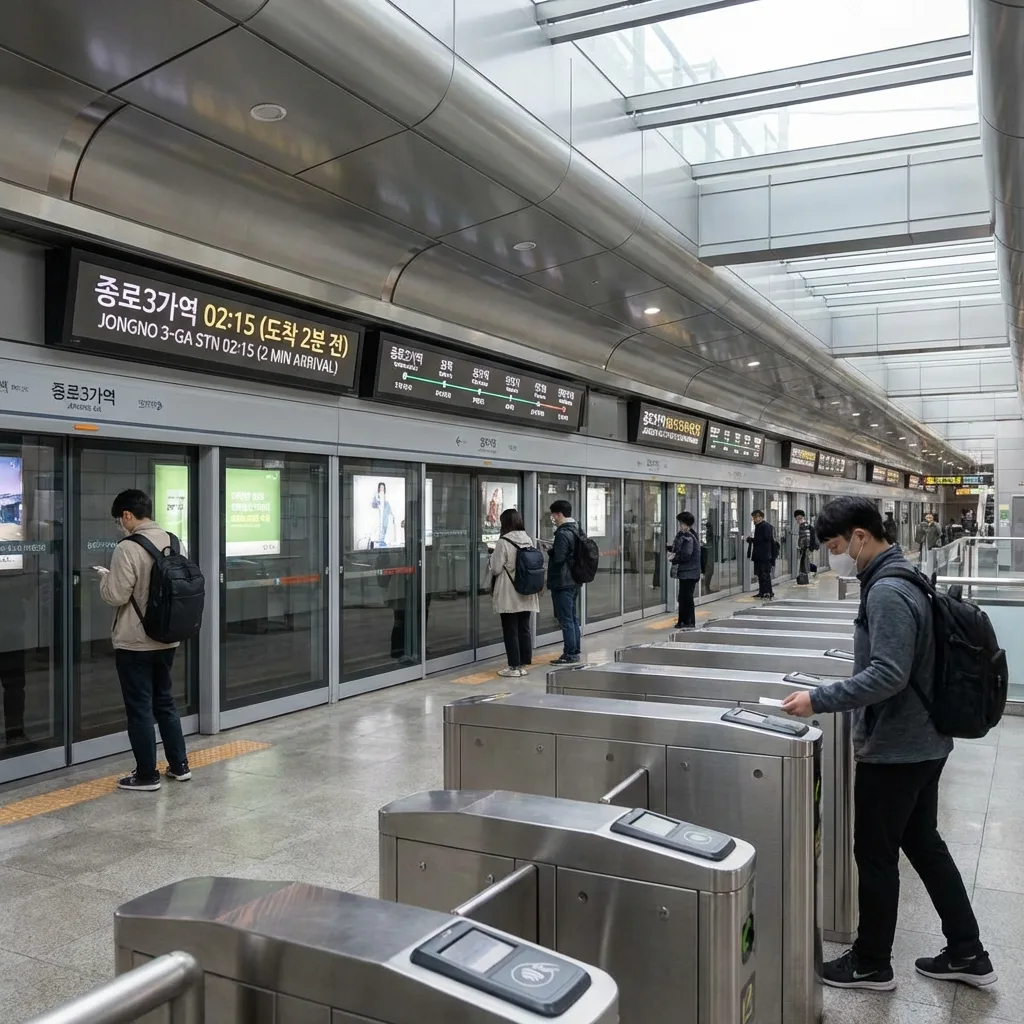
In 2024, Korea's public transport payment landscape got complicated. What used to be a simple choice—"Just get a T-Money card"—has evolved into a three-way battle for your wallet.
Now, travelers are faced with three major competitors: the resident-focused K-Pass, the Seoul-specific unlimited Climate Card (Gihu Donghaeng Card), and the classic, reliable T-Money.
Which one should you buy? The answer depends entirely on your itinerary. Are you a "Seoul Power User" hitting five cafes a day in Hongdae? Or are you a cross-country explorer heading to Busan and Jeju?
Here is the definitive breakdown for 2025 to help you choose the right card and save money.
1. T-Money: The Best Friend for 90% of Tourists
If you want a card that works everywhere without thinking, this is it. The T-Money card has been the gold standard for over 20 years, and for most short-term visitors, it is still the best option.
Why It Wins
- Nationwide Coverage: It works on every subway, city bus, and airport railroad train in the entire country. From the deeply buried stations of Seoul to the beach buses of Busan and the rural routes of Gangwon-do, T-Money is accepted.
- More Than Transit: You can use it to pay for taxis. You can also use it to buy snacks at major convenience stores (GS25, CU, 7-Eleven).
- No Expiration: The balance never expires. You can keep the card as a souvenir and use the remaining won on your next trip five years later.
The Downside
- No "Unlimited" Rides: You pay per ride (approx. 1,400 KRW base fare).
- Card Cost: You have to buy the physical blank card for about 3,000 KRW - 5,000 KRW before loading it.
Verdict: Get this if you are leaving Seoul, taking taxis, or staying for less than 3 days.
2. The Climate Card (Gihu Donghaeng Card): The Seoul Unlimited Pass
Launched to encourage eco-friendly transport usage, the Climate Card is Seoul City’s answer to unlimited travel. It is a game-changer for heavy transit users, but it comes with strict geographical limits.
What It Covers
- Seoul Subway Lines: Line 1 through 9, Ui-Sinseol, Sillim, Gyeongui-Jungang, and others as long as you board and exit within Seoul limits.
- Seoul City Buses: All Blue and Green buses licensed in Seoul.
Tourist Passes (The "Best Value" Options)
For 2025, special tourist passes are available without needing a monthly commitment:
- 1-Day Pass: 5,000 KRW
- 2-Day Pass: 8,000 KRW
- 3-Day Pass: 10,000 KRW (Best Value!)
- 5-Day Pass: 15,000 KRW
The "Catch"
This card is strictly for SEOUL.
- No Shinbundang Line: The expensive "Red Line" to Gangnam/Pangyo is excluded.
- No Red Buses: Intercity buses to Gyeonggi-do are excluded.
- No Taxis: You cannot pay for cabs with this.
- Geofenced: If you board in Seoul but exit at a station outside of Seoul (like Suwon or Incheon), you may be blocked or charged extra.
Verdict: Perfect for heavy transit users who plan to stay only in Seoul and ride the subway 4+ times a day.
3. K-Pass: The Resident's Choice (Why You Can't Get It)
You might have seen news articles about the K-Pass offering amazing refunds of 20-53% on your transport spend. It sounds incredible, but don’t get massive FOMO.
- The System: It is a refund-based card. You use it like a credit card, and the government deposits cash back into your account the next month.
- The Requirements: To sign up, you need a Korean Resident Registration Number (or Alien Registration Card) and a verified Korean bank account.
- Minimum Usage: You must use public transport at least 15 times a month to qualify for the tier 1 benefits.
Verdict: This is designed for locals and long-term expats. If you are a tourist on a visa-free entry, you cannot get this card. Ignore it and focus on T-Money vs. Climate Card.
Feature Comparison Table
| Feature | T-Money | Climate Card | K-Pass |
|---|---|---|---|
| Eligibility | Everyone | Everyone | Residents (ARC Required) |
| Coverage | Nationwide (Seoul, Busan, Jeju, etc.) | Seoul Only | Nationwide |
| Taxi Payment | Yes | No | No |
| Cost Basis | Pay-per-ride | Unlimited Flat Rate | Refund % (20-53%) |
| Best For | General Tourists & Multi-City Trips | Seoul Power Users & Budget Travelers | Locals & Long-term Residents |
Step-by-Step Scenario
Still confused? Let’s look at two common travel trips:
Scenario A: The "All Over Korea" Trip
- Itinerary: 4 Days in Seoul, 2 Days in Gyeongju, 3 Days in Busan.
- Choice: T-Money.
- Why: You need one card that works everywhere. The Climate Card would become a useless piece of plastic the moment you leave Seoul Station. T-Money works on the Metro in Seoul, the buses in Gyeongju, and the Subway in Busan.
Scenario B: The "Seoul Deep Dive"
- Itinerary: 5 Days purely in Seoul. Shopping in Myeongdong, cafes in Seongsu, nightlife in Hongdae.
- Choice: Climate Card (5-Day Pass for 15,000 KRW).
- Why: If you take the subway 4 times a day (Hotel -> Brunch -> Palace -> Dinner -> Hotel), that’s roughly 5,600 KRW/day. Over 5 days, that is 28,000 KRW. The 15,000 KRW pass saves you almost 50%.
Tips for Using Transport Cards
- Recharging: T-Money and Climate Cards (physical versions) must be recharged with CASH at station machines or convenience stores. Keep some 10,000 KRW bills handy.
- Transfers: Remember to tap OUT when you leave the bus or subway. Korea has a transfer system that gives you free transfers within 30 minutes, but only if you tap out. A missed tap leads to a penalty fare.
- Refunds: Leaving Korea with 20,000 KRW left on your T-Money? You can get a refund at major convenience stores (minus a 500 KRW service fee) or at the service centers in subway stations.
Digital Payment: Does Apple Pay or Samsung Pay Work?
In 2024–2025, Korea's transit payment ecosystem finally began accepting mobile wallets on a limited basis—but with important caveats every traveler must understand.
Apple Pay
Apple Pay is accepted at Hyundai Department Stores, many major chains, and an expanding number of transit payment terminals—but as of early 2026, it is not universally supported on subway fare gates or buses. Physical card readers at Seoul subway fare barriers still require a T-Money chip or compatible Visa/Mastercard contactless, not Apple Pay's standard NFC.
The exception: If you load T-Money onto an iPhone via the iOS Wallet app (currently available on iPhones sold in Korea with a Korean Apple ID), you can tap your iPhone at subway gates. However, this feature requires a Korean Apple ID to set up and is not yet reliable for foreign Apple accounts.
Bottom line for tourists: Do not rely on Apple Pay for transit. Carry a physical T-Money or Climate Card as your primary payment method.
Samsung Pay and Google Pay
Similar restrictions apply. Samsung Pay works at payment terminals in stores but not at standard subway fare gates without specific NFC-T chip compatibility. Google Pay has even more limited acceptance at transit points.
The Practical Takeaway
For shopping at convenience stores, cafes, and restaurants, contactless card payments (Visa Paywave, Mastercard Contactless) work at virtually all modern terminals in Korea as of 2026. For transit, physical cards remain essential.
Airport-to-City: Navigating the AREX (Airport Railroad Express)
Getting from Incheon Airport to Seoul is the first transit decision most travelers make—and it involves a different payment calculation than the city subway system.
Direct Express vs. All-Stop Train
The AREX (Airport Railroad Express) offers two service types:
| Type | Journey Time | Stops | Fare (One Way) |
|---|---|---|---|
| Direct Express (직통열차) | 43 min (Incheon → Seoul Station) | 0 | 11,000 KRW |
| All-Stop (일반열차) | 66 min | 9 stops | 4,550 KRW |
Which Card Pays for What?
- T-Money: Works on the All-Stop train (tap in/out like a regular subway).
- Climate Card: Does NOT cover AREX, as the line is operated by a separate company outside the Seoul Climate Card network.
- Credit/Debit Card: Can be used to buy a single-journey ticket at the AREX ticket machines in the airport terminal. Look for the English-language interface.
Recommendation: Tourists without a T-Money card yet should buy a single-journey AREX ticket at the airport, then purchase their T-Money or Climate Card from a convenience store (GS25, CU) inside Seoul Station or any subway station.
City-by-City: What Works Where
T-Money is nationwide—but the experience varies significantly by city. Here is what to expect outside Seoul.
Busan
Busan's metro (Busan Metropolitan Transit Corporation, BMTC) fully accepts T-Money. The Busan-Gimhae Light Rail (BGL) connecting Gimhae Airport to the downtown area also accepts T-Money. Climate Card does not work here—you will be charged individually for each ride.
Jeju Island
Jeju operates on a different bus-only public transit system (no metro). T-Money is accepted on all Jeju public buses, making it the correct card for island travel. Intercity bus tickets (to Seogwipo or the airport) can also be paid with T-Money.
Gyeongju
Gyeongju has limited city bus service. T-Money works on local buses, but the city is best explored by bicycle rental or taxi. For taxi payments, T-Money is accepted by most Gyeongju taxis, giving it a clear advantage over any app-based or cash-only alternatives.
Sokcho (Gateway to Seoraksan)
Sokcho does not have a metro. City buses connecting to Seoraksan National Park accept T-Money. Budget Jeokbus (red express buses) from Seoul to Sokcho do not accept T-Money—you must purchase an intercity bus ticket separately via Korail, Bustago, or T-money's integrated bus ticketing (a separate function from the transit card itself).
Advanced Tips: Beating the System
The Transfer Window
Korea's transfer discount system is one of the most generous in the world—but it requires active management. When you transfer between subway and bus (or bus and bus), you must tap out of the departing vehicle and tap into the new one within 30 minutes to qualify for the free transfer. If you miss this window by even one minute, you are charged a full new base fare.
Practical tip: When your subway ride ends and you want to catch a connecting bus, exit the station's fare gate first, then board the bus outside. Do not delay at a convenience store between taps.
Peak Hour Strategy
Seoul's subway lines are notoriously congested during morning (7:30–9:30 AM) and evening (6:00–8:00 PM) rush hours. Lines 2 and 9 are the most severe. Line 9's "Express" carriages are particularly standing-room-only between Gimpo Airport and Express Bus Terminal.
Strategy: On Line 9, board the all-stop train rather than the express during rush hour—the all-stop is significantly less crowded. Travel time difference is approximately 12 minutes, but the difference in physical comfort is substantial.
The Night Bus Network
Seoul's subway closes between 11:30 PM and approximately 1:00 AM (varies by line and terminal station). The city compensates with the N-Bus (올빼미 버스)—a set of nine night bus routes that run from 12:00 AM to 5:00 AM. These buses are covered by T-Money and the Climate Card, though they do not offer transfer discounts during this window. The N-Bus map is available on the Seoul Metropolitan Government website and the Naver Map app.
11. The 2026 Tourist Champion: WowPass and NAMANE
In recent years, a new category of "All-in-One" cards has emerged specifically for international travelers who want to avoid the hassle of carrying cash.
WowPass: The Currency Exchange Hybrid
WowPass has become a dominant choice in 2026. It is a prepaid debit card that you can top up with your home currency (USD, EUR, JPY, etc.) at specialized orange kiosks found in major subway stations and hotels.
- The T-Money Integration: Every WowPass has a built-in T-Money chip. However, there is a catch: the "Shopping" balance and the "Transit" balance are separate. You must top up the transit portion with cash at a regular station machine, even if your WowPass has 500,000 KRW on it.
- The Benefit: It 2026, many small shops in Seongsu and Ikseon-dong are going "Cashless," and WowPass is the most reliable way for a tourist to pay where Apple Pay might fail.
NAMANE: Customize Your Commute
NAMANE cards are popular with K-Pop fans because you can print any photo onto the front of the card at a kiosk.
- The QR Top-up: Unlike T-Money, you can top up the "Pay" balance of a NAMANE card via an app using a foreign credit card, though the transit portion still requires a physical kiosk.
12. Subway Etiquette 2.0: The Pink Seat and Silent Cars
Mastering the card is only half the battle; mastering the social environment is the other.
- The Pink Seat: Every subway car has a few seats upholstered in bright pink. These are strictly reserved for pregnant women. Even if the train is packed and the seat is empty, Koreans will rarely sit in them. As a tourist, sitting in a pink seat is a major social faux pas.
- Elderly/Disabled Sections: The seats at the very ends of each carriage are reserved for the elderly, disabled, and injured. Unless you fit that description, do not sit there.
- The Volume Rule: In 2026, the "Silent Car" culture is stronger than ever. Talking loudly on your phone or with friends is considered extremely rude. Most commuters wear noise-canceling headphones and maintain total silence.
13. Station Survival: Emergency Buttons and Digital Help Desks
Korean subway stations are massive—sometimes they feel like underground cities. Knowing how to get help is essential.
- The SOS Button: Found on every platform and inside every elevator. If you press it, you are connected directly to the station control room. In 2026, many of these are equipped with AI Translation, allowing you to speak in English while the operator hears Korean.
- The "I'm Lost" Kiosks: Large digital screens (Digital Subway Map) are scattered throughout the concourse. You can scan your transit card at these kiosks to see exactly where you are and get a "Shortest Path" to your destination, including which car is closest to your transfer.
- The Yellow Bathroom Button: If you find yourself in a bathroom without toilet paper (rare in 2026, but possible in older stations), look for a small yellow button. Pressing it alerts the station staff.
14. Common Mistakes and How to Avoid Them
Even with the best planning, new travelers often hit these three stumbling blocks:
- Mistaking the Gate Color: In some stations, you’ll see separate turnstiles for different lines (e.g., Line 1 vs. Airport Railroad). Always look at the color of the strip on the floor or the sign above. If you tap into the wrong line's gate, you might have to pay twice.
- Forgetting to Tap Out on Buses: While tapping out is optional on some local routes, you must tap out if you want to receive the free transfer discount to your next bus or subway. In 2026, the transfer window is generally 30 minutes (60 minutes during late-night hours).
- The "Separate Balance" Confusion: As mentioned, if you use a WowPass, remember that your shopping money and your transit money are in two different "pots." Always carry a 10,000 KRW bill in your phone case just in case your transit balance hits zero at a station that doesn't accept credit cards for top-ups.
15. Conclusion
Mastering South Korea's public transportation system is the single most important skill for an independent traveler in 2026. It is the key that unlocks the country, allowing you to move from the futuristic skyscrapers of Seoul to the peaceful temples of Gyeongju with total confidence.
The system is designed with you in mind—it is clean, punctual, and increasingly AI-equipped to handle any language barrier. Don't be afraid to make a wrong turn; in a city where the next train is always just 3 minutes away, there are no mistakes—only unexpected opportunities for exploration.
If you need the nationwide overview first, read the complete guide to public transportation in South Korea. If you are still deciding whether the universal card is enough, use the practical T-Money card guide. To apply the right card inside the capital, continue with the Seoul subway and bus guide. And if your plan includes leaving Seoul, pair this with the KTX booking guide.