Xiaolongbao (Soup Dumplings): Best Spots to Try Them in Shanghai

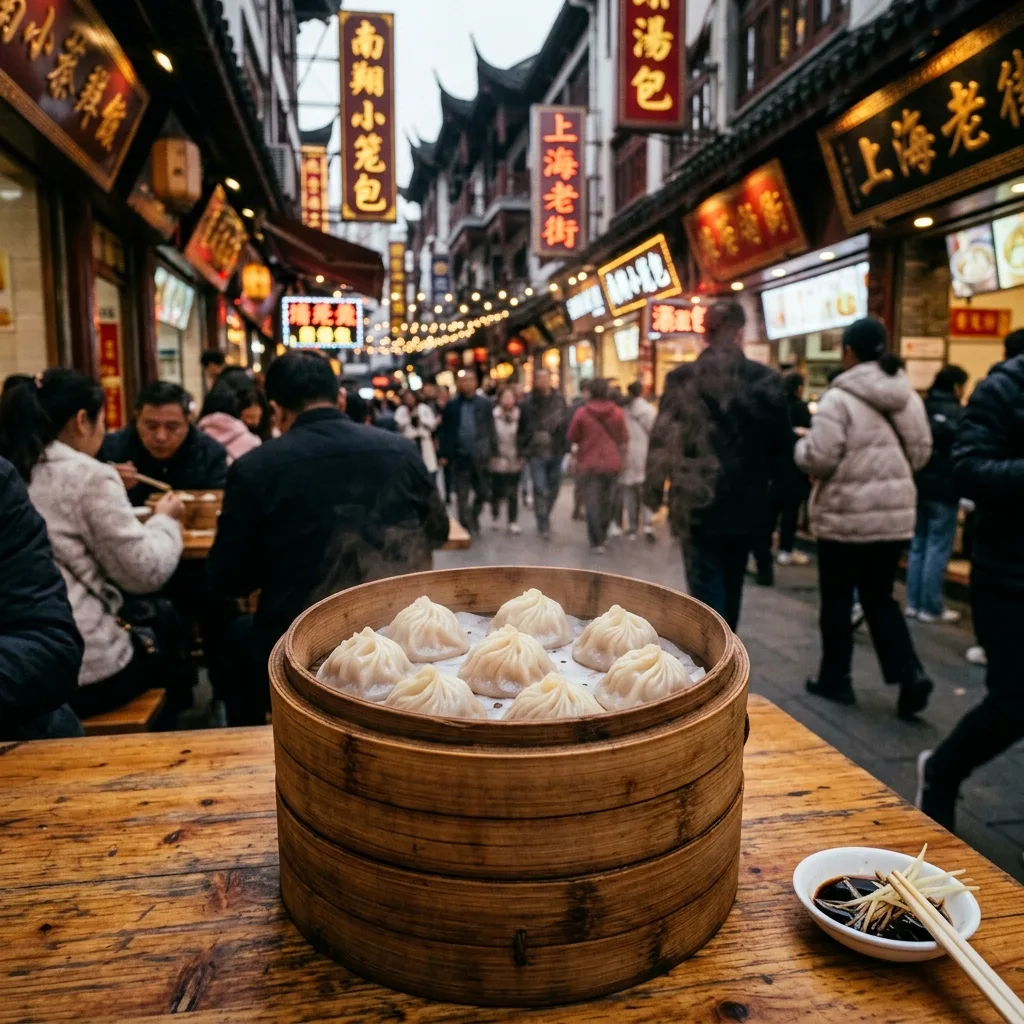
You've seen the videos. Someone lifts a gossamer-thin dumpling from a bamboo steamer, tilts it gently into a spoon, bites a tiny hole in the wrapper, and releases a torrent of scalding soup. It looks effortless. Your first attempt will not be effortless. The dumpling will burst, the soup will soak your shirt, and you will understand why Shanghainese locals spend years perfecting the ritual. But none of that should stop you from trying — because eating xiaolongbao (小笼包) in the city that invented them is one of the most satisfying food experiences in all of Asia.
Shanghai has hundreds of places claiming to serve the best xiaolongbao in the world, from century-old institutions with Michelin recognition to neighborhood stalls that charge less than a subway ride. This guide cuts through the noise. You'll find the five best spots ranked by category, current prices as of 2026, exact opening hours, practical transport directions, and the step-by-step technique for eating them without disaster.
What Makes Shanghai Xiaolongbao Different
Xiaolongbao are steamed soup dumplings made with a thin, unleavened wheat flour wrapper and filled with minced pork (or crab and pork) combined with a gel of solidified aspic. During steaming, the aspic melts into a hot, savory broth that pools inside the dumpling — the defining characteristic that separates a true xiaolongbao from any ordinary steamed bun. A well-made wrapper should be thin enough to see the filling through, strong enough to hold the soup, and soft enough to tear cleanly with your teeth. Each dumpling is traditionally folded with exactly 18 pleats.
The dumpling traces its roots to Nanxiang, a suburb of Shanghai, in the late nineteenth century, but the style was adopted and refined throughout the city over the following hundred years. Today, Shanghai-style xiaolongbao are distinct from the larger Taiwanese versions popularized globally by Din Tai Fung: Shanghainese ones tend to be smaller, more delicate, and contain more soup relative to filling. The soup is lighter and clearer, and the pork is seasoned with ginger and Shaoxing rice wine rather than heavy aromatics.
If you're planning a broader food tour of China, the Chinese Regional Food Guide: Dim Sum, Sichuan Spice & Beijing Duck gives an excellent overview of how Shanghai's Jiangnan cuisine fits into the larger regional landscape — soft, sweet, and technique-driven in a way that contrasts sharply with Sichuan or Cantonese cooking.
The Best Xiaolongbao Spots in Shanghai
Nanxiang Mantou Dian — The Historic Original
The verdict: Most famous, most crowded, highest symbolic value. Worth doing once for the history alone.
If there is one xiaolongbao restaurant every visitor to Shanghai feels compelled to try, it is Nanxiang Mantou Dian (南翔馒头店). Founded in 1900 and now holding a Michelin Bib Gourmand rating, this multi-floor restaurant sits directly inside the Yu Garden bazaar in the Old City — the most photographed location in Shanghai, surrounded by the traditional Jiangnan rooftiles and zigzag bridge that appear on every China travel postcard.
The setup: The ground floor operates as a takeaway counter. You join the queue (expect 30–60 minutes on weekends), buy a bamboo steamer of six dumplings at the counter, and eat standing or perched on a ledge outside. The upper floors offer table seating with a full menu and table service, but the prices are noticeably higher and the dumplings — some argue — are slightly less fresh since they are made in smaller batches per order rather than continuously at volume.
What to order:
- Pork xiaolongbao (猪肉小笼): ¥42 for six (ground floor takeaway)
- Crab meat and pork xiaolongbao (蟹肉小笼): ¥72 for six
- Matsutake and pork xiaolongbao (松茸小笼): ¥108 for six
- Clam and pork xiaolongbao (蛤蜊小笼): ¥48 for six
Hours: 08:30–21:00 daily
Address: 85 Yuyuan Road, Huangpu District. Walk through the main arch of the Yu Garden Bazaar and it's impossible to miss — look for the queue.
Since Nanxiang Mantou Dian is inside the Yu Garden complex, pairing it with a visit to the classical garden itself makes for a natural half-day itinerary. The Yuyuan Garden and Old City: Shanghai's Traditional Heart guide covers the full garden visit, the best photo spots, and how to navigate the bazaar without overpaying at tourist traps.
Jia Jia Tang Bao — The Connoisseur's Choice
The verdict: Thinner wrappers, more soup, more flavor. The dumpling purists come here.
Jia Jia Tang Bao (佳家汤包) has been run by the same family since 1986 and has accumulated a following among both locals and food writers that no amount of tourist hype has diminished. It also holds Michelin Bib Gourmand recognition, but unlike Nanxiang Mantou Dian, the atmosphere here is entirely unglamorous — fluorescent lights, communal tables, the hiss of bamboo steamers, and a queue that starts forming before the doors open.
The wrappers are notably thinner than at other spots, folded with crisp, precise pleats, and the broth inside is more concentrated. The pork-and-crab filling (蟹粉小笼) is widely considered the best version in the city. At ¥39 per basket, it is also one of the better-value luxury dumpling experiences anywhere in China.
Timing is everything here. The most popular variety — plain pork — often sells out before 10:00. The restaurant operates until the day's batch is gone, which on weekdays might be early afternoon. Arrive at opening (around 7:30–8:00) if you want both the full menu and minimal queuing.
Address: 90 Huanghe Road, near People's Square (Huangpu District) Metro: Line 1/2/8, People's Square Station, Exit 4
Fu Chun Xiaochi — The Time-Honored Local
The verdict: Shanghai's oldest surviving xiaolongbao brand. Unpretentious, consistent, and beloved by residents.
Fu Chun (富春小吃) was established in 1885 and is officially recognized as a China Time-Honored Brand (中华老字号), one of fewer than two thousand businesses in the country to hold the designation. The Xuhui District location is where most locals go — none of the tourist architecture of the Old City, no Michelin buzz, just a canteen-style dining room full of Shanghainese people eating breakfast.
The dumplings here are porky in a way that some find overwhelming and others find revelatory. The pork filling is seasoned aggressively with ginger and rendered pork fat, producing a rich broth that coats the palate. For visitors accustomed to the more restrained style of Nanxiang or Jia Jia, Fu Chun offers a deliberately different interpretation — bolder, meatier, and unapologetically old-school.
What to order:
- Pork xiaolongbao (猪肉小笼): ¥18 for six
- Crab roe xiaolongbao (蟹黄小笼): ¥58 for six
Best time to visit: Weekday mornings. Fu Chun also serves congee, pan-fried scallion pancakes (cong you bing), and shao mai, so it functions perfectly as a full Shanghainese breakfast spread for around ¥40–60 total per person.
Address: Multiple locations; the most accessible is 650 Wulumuqi Road, Xuhui District.
Din Tai Fung Shanghai — For the International Benchmark
The verdict: The global standard-bearer. Not the most Shanghainese experience, but technically flawless.
Din Tai Fung originated in Taipei and became internationally famous before it arrived in Shanghai, which creates an odd dynamic: visiting Din Tai Fung in Shanghai can feel counterintuitive when local legends like Jia Jia Tang Bao exist at half the price. But there are two strong arguments for a Din Tai Fung visit.
First, Din Tai Fung's quality control is unparalleled. The wrappers are weighed to the gram — each one exactly five grams, each filling exactly sixteen grams — and the 18-pleat fold is enforced as a non-negotiable standard. If you want to understand what a technically perfect xiaolongbao looks and tastes like before comparing it to rougher local versions, Din Tai Fung provides that baseline.
Second, Din Tai Fung is far easier to navigate as a first-time visitor. English menus, bilingual staff, and an online reservation system remove the friction that local-only spots impose on travelers who do not speak Mandarin.
Shanghai locations: IFC Mall (Lujiazui), Raffles City (Renmin Square), and several other shopping mall locations throughout the city.
Yang's Dumplings (Yang's Fry-Dumpling) — The Pan-Fried Alternative
The verdict: Not strictly xiaolongbao, but the best pan-fried soup dumpling (shengjian bao) in Shanghai — and a mandatory stop.
Shengjian bao (生煎包) are xiaolongbao's pan-fried cousin: same soup-filled concept, but with a thicker wrapper, crispy browned base, and sesame-sesame-scallion garnish. Yang's Dumplings (小杨生煎) has been the definitive shengjian bao spot in Shanghai since 1994 and operates dozens of outlets across the city.
They are not interchangeable with steamed xiaolongbao. The texture contrast between the crunchy bottom and the soft, slightly chewy top wrapper is its own pleasure, and the broth inside a shengjian bao is richer and more gelatinous than in the steamed version. At roughly ¥15–22 for four pieces, they are also excellent value.
What to order: Pork shengjian (四只一份). A portion of four is filling enough as a snack between larger meals.
How to Eat Xiaolongbao Without Burning Yourself
This is not optional reading. Xiaolongbao at serving temperature can reach over 80°C inside, and first-time visitors routinely scald their mouths by biting directly into the dumpling.
The correct technique:
-
Pick up gently. Use chopsticks to grip the dumpling near the top pleat — never in the middle, or the wrapper will tear and the soup will escape into the steamer basket. If you are not comfortable with chopsticks, a Chinese soup spoon works.
-
Transfer to the spoon first. Place the dumpling in the ceramic soup spoon before anything else. This is your safety net.
-
Bite a small hole. With the dumpling resting in the spoon, bite a tiny opening near the top — roughly 3–4mm — and let the steam escape. Wait ten seconds.
-
Drink the soup. Tilt the spoon toward your lips and sip the broth through the hole you created. This is the point where most tables go quiet.
-
Add condiment. Dip in the ginger-black vinegar sauce provided at the table before eating the rest of the dumpling. The ratio of ginger to vinegar is personal — most local diners prefer more vinegar than ginger.
-
Eat the dumpling. Pop the rest in your mouth. The second half should be just warm enough to eat immediately.
Practical Guide
Getting to the Main Xiaolongbao Areas
Old City / Yu Garden (Nanxiang Mantou Dian):
- Metro Line 10, Yuyuan Garden Station, Exit 1
- From The Bund: 15-minute taxi, or Line 10 from East Nanjing Road Station
People's Square (Jia Jia Tang Bao):
- Metro Line 1/2/8, People's Square Station, Exit 4
- Central location — virtually every metro line connects here
Xuhui District (Fu Chun Xiaochi):
- Metro Line 1, Hengshan Road Station, or Line 9/11, Xujiahui Station
- A 10–15 minute walk from either station
Payment
All major spots accept WeChat Pay and Alipay. Jia Jia Tang Bao and Fu Chun are cash-friendly but card acceptance is unreliable at local spots. Carry ¥100–200 in cash as backup. Din Tai Fung accepts international credit cards.
Queuing
Weekend mornings between 10:00–13:00 are peak queue times at Nanxiang Mantou Dian and Jia Jia Tang Bao. For Nanxiang, weekday mornings (before 10:00) or dinner service (after 18:00 on weekdays) offer noticeably shorter waits. For Jia Jia Tang Bao, arriving at opening is the only reliable way to avoid a 45-minute wait.
Budget
| Restaurant | Per Basket (6 dumplings) | Meal for One |
|---|---|---|
| Nanxiang Mantou Dian (ground floor) | ¥42–108 | ¥60–150 |
| Jia Jia Tang Bao | ¥29–39 | ¥50–80 |
| Fu Chun Xiaochi | ¥18–58 | ¥30–70 |
| Din Tai Fung | ¥75–135 | ¥150–250 |
| Yang's Dumplings | ¥15–22 (per 4 pieces) | ¥30–60 |
Tips and Common Mistakes
Order one basket at a time. Xiaolongbao cool quickly and the wrapper becomes gummy within 15 minutes of steaming. Order a basket, eat it, then order the next. Restaurants operate on a continuous production cycle and a fresh basket is rarely more than five minutes away.
Avoid the midday tourist surge at Nanxiang. Between 11:00 and 14:00 on weekends, the queue at Nanxiang Mantou Dian ground floor can stretch 60–90 minutes. The dumplings are not 90 minutes better than Jia Jia Tang Bao's. Go early, go on a weekday, or go at dinner.
The upper floors at Nanxiang are not necessarily better. Many travelers assume that paying more for sit-down service means fresher or higher-quality dumplings. In practice, the ground floor takeaway counter produces dumplings in much higher volume, which means the turnover is faster and the aspic has less time to re-solidify before serving. The upper-floor dumplings sit longer between production and service.
Crab season matters. The premium crab-roe (蟹黄) and crab-meat (蟹肉) xiaolongbao are at their best in October and November when hairy crabs from Yangcheng Lake are in season. Outside of autumn, these versions are made with frozen or out-of-season crab and the flavor is noticeably flatter. If you are visiting between December and September, the plain pork version is the better choice.
Skip the vinegar at local spots. The black vinegar and ginger condiment served at most restaurants is calibrated for the specific pork mixture used at that restaurant. At Jia Jia Tang Bao, locals often eat the first dumpling without any condiment to taste the soup uncut before adding vinegar. Try it once clean before adding the sauce.
Bring a Chinese speaker or use a translation app. Jia Jia Tang Bao and Fu Chun have Chinese-only menus and staff who may speak limited English. Google Translate's camera mode reads printed Chinese menus accurately. A screenshot of the menu items in Chinese characters prepared in advance is even more reliable in areas with spotty internet.
FAQ
Is xiaolongbao the same as soup dumplings? Yes. "Soup dumplings" is the English translation commonly used in Western Chinese restaurants, primarily popularized by Din Tai Fung's international expansion. In Chinese, the dish is xiaolongbao (小笼包), literally meaning "small basket buns." The bamboo steamer basket (xiaolong, 小笼) gives the dish its name, not the soup inside.
What is the difference between xiaolongbao and shengjian bao? Both are soup-filled dumplings from Shanghai, but shengjian bao (生煎包) are pan-fried instead of steamed. Shengjian bao have a thicker, breadier wrapper, a crispy browned bottom, and a richer, more gelatinous broth. Xiaolongbao are steamed, lighter, and more delicate. Yang's Dumplings is the city's definitive shengjian bao spot.
How many xiaolongbao is a normal serving? A single bamboo steamer holds six to eight dumplings depending on the restaurant. Most first-time visitors underestimate how filling they are — three baskets (18–24 dumplings) is a generous meal for two people who are not eating anything else. One basket is a substantial snack for one person.
Do I need to book ahead? Nanxiang Mantou Dian and Jia Jia Tang Bao do not accept reservations — both are queue-only. Din Tai Fung accepts reservations through its app or WeChat mini-program and is strongly recommended on weekends.
Are there vegetarian or halal xiaolongbao options? Traditional xiaolongbao are always made with pork, and most Shanghai restaurants do not offer vegetarian alternatives. Din Tai Fung offers a small vegetarian menu at some locations but the xiaolongbao themselves remain pork-based. Halal xiaolongbao are rare in the mainstream Shanghai market — a few specialist restaurants in the Muslim Quarter near the Xiaotaoyuan Mosque serve beef-filled variations.
Conclusion
Shanghai's xiaolongbao landscape breaks down cleanly by what you are looking for. If you want the historic experience in a memorable setting, Nanxiang Mantou Dian inside the Yu Garden bazaar is the correct choice — go early, queue for the ground floor, and pair it with a walk through the classical garden. If you want the best dumpling on pure technical merit, make the trip to Jia Jia Tang Bao near People's Square before 9:00 on a weekday. If you want to eat like a Shanghainese local without tourist proximity, Fu Chun Xiaochi in Xuhui offers a 140-year-old recipe at prices that have barely kept pace with inflation.
All three are within easy reach of the city's central metro network, and all three can realistically fit into a single food-focused morning if you pace yourself with one basket per stop. Budget around ¥200–300 total for all three in a single morning — an extraordinary value for what is genuinely some of the best food in the world.
For the full picture of eating and navigating Shanghai, the Shanghai Travel Guide: The Bund, French Concession & Hidden Gems covers transport, neighborhoods, and broader food recommendations that fit around a xiaolongbao crawl.
One last reminder before you go: the soup is hotter than you think. Use the spoon.