Mount Fuji Climbing Guide: Routes, Season & What to Pack
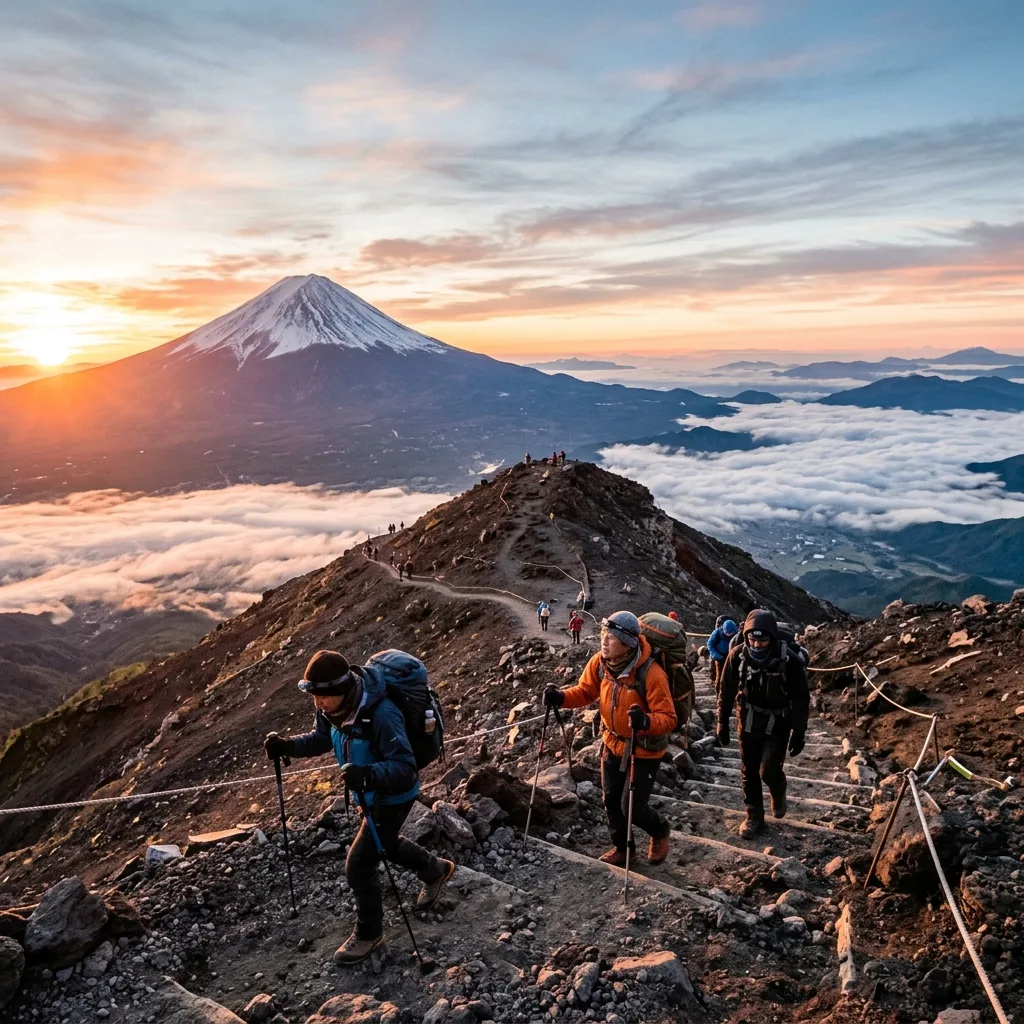
The hardest part of planning a Mount Fuji climb is not the hike itself. It is getting the timing, route, reservation rules, and packing list aligned before you show up at the 5th station with the wrong shoes and no plan for the descent. Fuji is famous because it is accessible, but that accessibility is also what makes poor preparation expensive. If you want a summit sunrise without turning the trip into a survival story, you need to understand the season, pick the right trail, and pack for conditions that change fast.
Which Route Should You Climb?
If you want the shortest answer, choose the Yoshida Trail unless you have a specific reason not to. It is the most popular route, it has the strongest support network, and it is usually the easiest first ascent for travelers who have never climbed a 3,000-meter mountain before. The official Mount Fuji climbing site lists four routes in the open season, but those routes are not interchangeable. They differ in distance, exposure, crowd levels, and how forgiving they are when your legs start to fail near the top.
Mount Fuji is not a technical climb, but it is still a high-altitude mountain with cold wind, loose volcanic gravel, and a descent that can feel longer than the ascent. The best route for you depends on whether you value comfort, quiet, speed, or the best chance of seeing the sunrise from the summit. For most first-timers, the priority should be safety, rest access, and the ability to adjust if the weather turns.
Yoshida Trail
The Yoshida Trail is the classic choice for a first climb. It starts on the Yamanashi side and is the most established route for international visitors. The trail has the most mountain huts, the broadest support infrastructure, and the easiest logistics if you are coming from Tokyo or the Fuji Five Lakes area. It also has the heaviest foot traffic, especially in late July and August, which means the climb can feel crowded even when the mountain itself still looks vast.
If your goal is a sunrise summit, Yoshida is the route most people choose because the hut network makes an overnight itinerary practical. That matters. A controlled pace, a few short breaks, and a properly timed hut stop are far better than trying to “save time” with a bullet climb. The official site’s current rules are designed to discourage that exact mistake.
The main tradeoff is congestion. On busy weekends, Yoshida can feel like a steady stream of headlamps rather than a remote mountain trail. That is not necessarily bad for a first climb, because you are more likely to have people, signs, and staff nearby if you need help. It is, however, less satisfying if you want solitude.
Subashiri Trail
Subashiri is a smart alternative if you want a little more breathing room without committing to the hardest route. It begins on the Shizuoka side and starts more quietly through a forest section before merging with the higher mountain experience. That lower forest approach is useful psychologically: it feels less exposed at the beginning, which helps some first-timers settle into a rhythm before the terrain becomes more serious.
Subashiri is often recommended to climbers who want a route that feels less crowded than Yoshida but still manageable. The descent is famous for its volcanic ash and loose footing, so you should expect your legs to work hard on the way down. That “sand run” style descent is not a gimmick. It is one of the things that makes the route memorable, and one of the reasons you should not wear weak shoes.
If you are choosing between Yoshida and Subashiri, ask yourself whether you want the most support or a slightly more natural, less crowded experience. Yoshida wins on infrastructure. Subashiri wins on atmosphere.
Gotemba Trail
Gotemba is the route for people who already know they want a harder mountain day. It starts lower than the others, which means a longer total climb and more exposure to fatigue. In practical terms, it is the least convenient route for a first Mount Fuji attempt unless you are deliberately looking for a serious challenge or a quieter climb.
The upside is space. Gotemba is the route people choose when they want to escape the biggest crowds and accept that the mountain will ask more from them in exchange. The downside is obvious: more distance, more time, more energy, and less margin for error if your pacing is poor or the weather deteriorates.
If you want to understand how route choice changes the whole shape of a Japan trip, it helps to think about Fuji the same way you would think about city logistics. Just as Getting Around Tokyo: Trains, IC Cards & Navigation Apps can make a Tokyo day smoother, route selection can make or break your Fuji day. The right choice removes friction before it starts.
Fujinomiya Trail
Fujinomiya is often described as the shortest ascent route, but short does not mean easy. It is steeper and more direct than some of the others, which can be a blessing if you are fit and dislike long approaches, but a problem if your knees are sensitive or your pacing is weak. It is also a good reminder that a shorter route can still be harsh when elevation gain stacks up quickly.
This route is best for climbers who want a direct line to the summit and do not need the biggest hut network. If you are comfortable on steep terrain, it can feel efficient. If you are not, the efficiency disappears and is replaced by a constant sense of effort.
The official Mt. Fuji site now treats the Shizuoka routes as part of a broader managed climbing system, including pre-registration and e-learning. That matters because it signals a general shift: climbing Fuji is still possible for ordinary travelers, but it is no longer a casual walk-up mountain.
Route Comparison at a Glance
| Route | Best for | Main strength | Main drawback |
|---|---|---|---|
| Yoshida | First-timers, sunrise seekers | Best hut support and easiest logistics | Most crowded |
| Subashiri | Balanced first or second climb | Quieter start and forest scenery | Loose descent footing |
| Gotemba | Strong hikers, quiet climb | Least crowded experience | Longest and most demanding |
| Fujinomiya | Fit hikers wanting a direct ascent | Shortest and most direct | Steep and punishing if you misjudge pace |
If you want the route summary in one sentence, it is this: Yoshida is the safest default, Subashiri is the best compromise, Fujinomiya is the direct option, and Gotemba is the hardest line. None of them are “easy” once weather, altitude, and fatigue show up together.
When to Go and What the Season Actually Means
The official 2026 climbing season on the Mount Fuji site is scheduled from July 1 to September 10, 2026, with access to the summit area prohibited until June 30 on a tentative basis. That date range is the most important planning fact in the entire article. If you arrive outside the season, you are not just dealing with inconvenience. You are dealing with closed trails, closed facilities, and dangerous conditions that the official site explicitly warns against.
For Yoshida, the season window is especially important because the route is the most regulated and most heavily used. For the Shizuoka routes, the official pages also point climbers toward advance registration and the relevant prefectural systems. In other words, the climbing calendar is no longer just a weather question. It is a compliance question.
Season timing also affects the kind of experience you get. Early season can be quieter, but weather can still be unstable and snow or residual closure issues can delay access. Late July through late August is the busiest period, which means more people, more hut bookings, and more strain on the trail. If you want the best balance, aim for a weekday in the middle of the official season rather than the opening rush or the last-minute crowd surge before closure.
If you are planning Fuji as part of a wider Japan itinerary, do not treat it like an isolated hike. It is better to line it up with your Tokyo arrival, hotel check-in timing, and transportation plan. A good start is Japan Travel Planning: Visa, IC Card, Rail Pass & Essential Logistics Guide, because Fuji becomes much easier when your rail and bus transfers are already sorted.
Practical Guide
Hours, Admission, and Reservation Rules
The most current official rule set is straightforward, even if it feels bureaucratic at first.
The Yoshida Trail access page states that the gate at the 5th station is closed from 2:00 PM to 3:00 AM the following day, excluding mountain hut guests. It also says the gate may close earlier if the daily limit of 4,000 climbers is reached. The site lists a Hiking Fee of 4,000 yen per person per visit and says advance payment is required for passage reservations. It also notes that reservations can be made up until the day of the climb, but only until the limit is reached.
That is the operational reality for 2026: you do not just “show up and climb” in the old sense. You plan your timing, decide whether you are booking a hut, and understand that the system is designed to discourage late, poorly prepared traffic. If you have a hut reservation, you can pass even if restrictions are in place, but the fee still applies. If you do not have a hut reservation, you need to pay attention to the gate timing and the daily cap.
For the official booking flow, the Yamanashi side points climbers to the Yoshida Trail Access Reservation System. The same official site also links to the purchase pages for Japanese and multilingual users. On the Shizuoka side, the official Mt. Fuji climbing site points climbers to the Shizuoka Prefecture Mt. Fuji Climbing Pre-Registration System, which includes advance registration and e-learning.
If you want the broad official overview before choosing a route, the best starting point is the site’s Things you must know before climbing Mt. Fuji page. It lays out the season, the fee, the access restrictions, and the general rule set in one place.
How to Get There
Most travelers reach Fuji through Tokyo, the Fuji Five Lakes area, or Shizuoka depending on the route they choose. For Yoshida and the classic north-side approach, the common base is the Fuji Five Lakes area, especially around Kawaguchiko. That is where the transport network tends to make the most sense for visitors who are combining the hike with a Tokyo stay.
The important thing is not the exact train line but the transfer logic. You want to arrive the day before if you are doing an overnight climb, or early enough on the morning of a day climb that you are not racing the weather, the bus schedule, and your own nerves at the same time. Once you start moving toward the 5th station, your margin for error becomes smaller.
If you are staying in Tokyo first, a city-specific planning guide helps because the mountain is easier when your urban base is efficient. Ultimate Tokyo Travel Guide 2026: Everything First-Timers Need to Know is useful if you want to sort neighborhoods, transit, and where to sleep before you head for the mountain. If you are still deciding whether to add Fuji as a day trip or a dedicated side journey, Best Day Trips from Tokyo: Nikko, Kamakura, Hakone & More gives you a useful comparison point.
What to Book in Advance
At minimum, book your mountain hut if you plan to climb overnight. That is the single biggest comfort and safety upgrade you can make. A hut reservation reduces the pressure to overpush, helps you time the sunrise, and gives you a warm place to rest instead of trying to “power through” altitude fatigue.
Book earlier than you think you need to. Fuji is famous, and famous mountains fill up faster than casual travelers expect. Late July and August weekends are the hardest dates. If your schedule is fixed, your flexibility disappears quickly.
You should also decide whether you are using the official access reservation system in advance or relying on same-day registration. Same-day registration exists, but it is not the smarter default if your trip is already constrained by flights, train tickets, or a packed Japan itinerary. Treat the reservation as part of the trip, not an afterthought.
What to Pack
Mount Fuji packing should be built around four layers of risk: cold, wind, rain, and exhaustion. A day can begin pleasantly in the foothills and end in near-freezing conditions near the summit. That is why “summer mountain” thinking is dangerous. Summer on Fuji still means gloves, shells, insulation, and the ability to protect yourself when you stop moving.
Start with footwear. Wear broken-in hiking shoes or boots with enough grip for volcanic gravel and uneven stone. Avoid sandals, flat sneakers, and anything that will slide around when the trail gets steep or wet. The official Yamanashi guidance specifically warns that unprepared climbers may be stopped if their gear is not appropriate.
Next, build your clothing around layers:
- Base layer that wicks sweat
- Mid layer that holds warmth
- Waterproof or at least highly water-resistant outer layer
- Warm hat or buff
- Gloves
- Extra socks if your feet blister easily
Bring a headlamp even if you think you will not need it. On Fuji, most sunrise plans involve darkness, and darkness makes every descent and route-finding decision worse. A phone flashlight is not the same thing. Add a power bank as well, because battery life drops faster in cold conditions.
Water and snacks matter more than people admit. The mountain does have facilities in season, but you should not assume you will always be able to buy exactly what you want, when you want it, at the price you want. Carry enough water to manage the early climb without panic. Bring simple food that is easy to eat at altitude: rice balls, energy bars, nuts, or other low-fuss calories.
Cash still matters. Not every stop on the mountain will be optimized for card payments, and some services work best if you have yen on hand. Toilets, huts, and small rest stops are all easier if you are not trying to solve payment friction in bad weather.
If you want a trip that feels composed rather than improvised, think of the mountain the same way experienced travelers think about a Tokyo day. The more you reduce decision-making on the day itself, the more attention you can give to the actual climb. That is the same logic that makes Getting Around Tokyo: Trains, IC Cards & Navigation Apps useful: the less you have to figure out in motion, the smoother the trip becomes.
A Simple Packing Checklist
- Hiking shoes or boots with grip
- Layered clothing
- Waterproof shell
- Gloves
- Hat or buff
- Headlamp
- Power bank
- Water
- High-calorie snacks
- Cash
- Compact first-aid basics
- Sunscreen and lip balm
- Small trash bag for packing out waste
You do not need to overpack, but you do need to avoid the common mistake of assuming Fuji is a warm summer day trip. It is not.
Tips and Common Mistakes
The biggest Fuji mistakes are not dramatic. They are usually small planning errors that compound into a bad night.
The first mistake is climbing too late in the day without a hut plan. The official rules now strongly discourage bullet climbing, and for good reason. A late start turns a managed overnight climb into a rushed, exhausted push through the dark. If you want sunrise, plan for sunrise. Do not improvise it after you are already tired.
The second mistake is choosing a route based only on popularity. Yoshida is the safest default, but the best route still depends on your conditioning and your tolerance for crowds. A climber who hates congestion might do better on Subashiri. A strong hiker with limited time might prefer Fujinomiya. A fit traveler looking for the least crowded challenge might like Gotemba. Route choice is a comfort decision as much as a logistics decision.
The third mistake is underestimating the descent. People often talk about “climbing Fuji” as if the summit is the end. It is not. The descent punishes weak ankles, poor shoes, and bad pace control. Loose gravel and tired legs are a bad combination. If your legs are already cooked from the ascent, the descent can feel emotionally longer than the climb up.
The fourth mistake is ignoring altitude symptoms. Fuji is not an especially technical peak, but altitude is still altitude. Headache, nausea, dizziness, and unusual fatigue should not be waved away as normal toughness. Slow down, hydrate, eat something simple, and do not let ego write checks your body cannot cash.
The fifth mistake is treating weather as a background detail. On Fuji, weather is one of the main characters. Wind chill can turn a mild-looking evening into a miserable climb. Rain can make the descent sloppy. Cloud cover can erase the sunrise view you came for. Check conditions, then check them again, and still be ready for them to change after you start.
The sixth mistake is forgetting that the mountain is managed differently now than it was years ago. The official site’s current pages reflect a more controlled system, with fees, registration, and gate timing built to protect climbers and reduce overcrowding. If you show up expecting an old-school free-for-all, you will be the person who has not done the homework.
One final practical tip: if Fuji is part of a longer Japan trip, make your hiking day compatible with the rest of your itinerary. That means not stacking the summit attempt right after a red-eye arrival, not relying on a last-minute transport miracle, and not assuming you will be energetic enough for an evening city plan after coming down. Good travel planning is boring. It is also what keeps big days from collapsing.
FAQ
Can beginners climb Mount Fuji?
Yes, beginners can climb Mount Fuji, but “beginner-friendly” is not the same as “casual.” The mountain is accessible in the sense that it does not require ropes or technical alpine skills, yet the altitude, weather, and long descent still demand preparation. If you are a beginner, choose a route with strong support, like Yoshida, and avoid overconfidence about pace.
Do I need a mountain hut?
You do not strictly need a mountain hut, but it makes the experience much better if you want a summit sunrise or a calmer pace. Huts help break the climb into manageable pieces and reduce the temptation to rush. They are also the cleanest answer to the common mistake of trying to cram Fuji into a single exhausted push.
What is the best time of year to climb?
The official 2026 season runs from July 1 to September 10, 2026. If you want the most manageable conditions, aim for a weekday in the middle of that window rather than opening day, a holiday weekend, or the final days before closure. Early and late season can be less crowded, but they can also be less predictable.
Do I need to book in advance?
If you want the best experience, yes. Book your mountain hut in advance and understand the access reservation rules for your chosen route. For Yoshida, the official site requires advance payment for passage reservations and warns that the gate can close once the daily limit is reached. For Shizuoka routes, pre-registration and e-learning are part of the current system.
How cold does it get?
Colder than most first-time visitors expect. Even in summer, the summit area can drop near freezing, and wind makes it feel worse. Bring layers, gloves, and a shell, not just a T-shirt and a hoodie. If you stop moving, the temperature difference becomes obvious fast.
Is Mount Fuji worth it if I only have one free day?
Only if you are realistic about what one day can do. A single free day can work if your transport, weather, and fitness are aligned, but the mountain is much less forgiving when the rest of the itinerary is cramped. If you want a more flexible day around Tokyo instead, you may be happier with a day trip or city-focused plan and leaving Fuji for a proper overnight.
Conclusion
Mount Fuji is one of the most famous hikes in the world because it gives ordinary travelers a real summit experience, but the modern climb is no longer something to approach casually. The 2026 season is scheduled for July 1 through September 10, the current official fee is 4,000 yen, and the access system now includes gate timing, daily caps, and reservation rules that reward preparation.
If you want the safest first ascent, pick Yoshida. If you want fewer people without making the climb dramatically harder, look at Subashiri. If you want the shortest direct route and you are comfortable with steep effort, Fujinomiya is the stronger fit. If you want the toughest challenge and the least crowd pressure, Gotemba is the route with the most demand.
The real secret to a good Fuji climb is not bravery. It is sequencing. Book the hut if you need one, choose the route that matches your legs, pack for cold weather even in summer, and build the climb into the rest of your Japan trip instead of treating it as an afterthought. If you do that, Mount Fuji becomes what it should be: hard, memorable, and manageable.
Before you go, revisit the official guidance, lock in your transport, and make sure your wider trip is in order with Japan Travel Planning: Visa, IC Card, Rail Pass & Essential Logistics Guide and Ultimate Tokyo Travel Guide 2026: Everything First-Timers Need to Know. If you are still deciding whether to add Fuji at all, Best Day Trips from Tokyo: Nikko, Kamakura, Hakone & More is the right comparison point.