Chinese Regional Food Guide: Dim Sum, Sichuan Spice & Beijing Duck

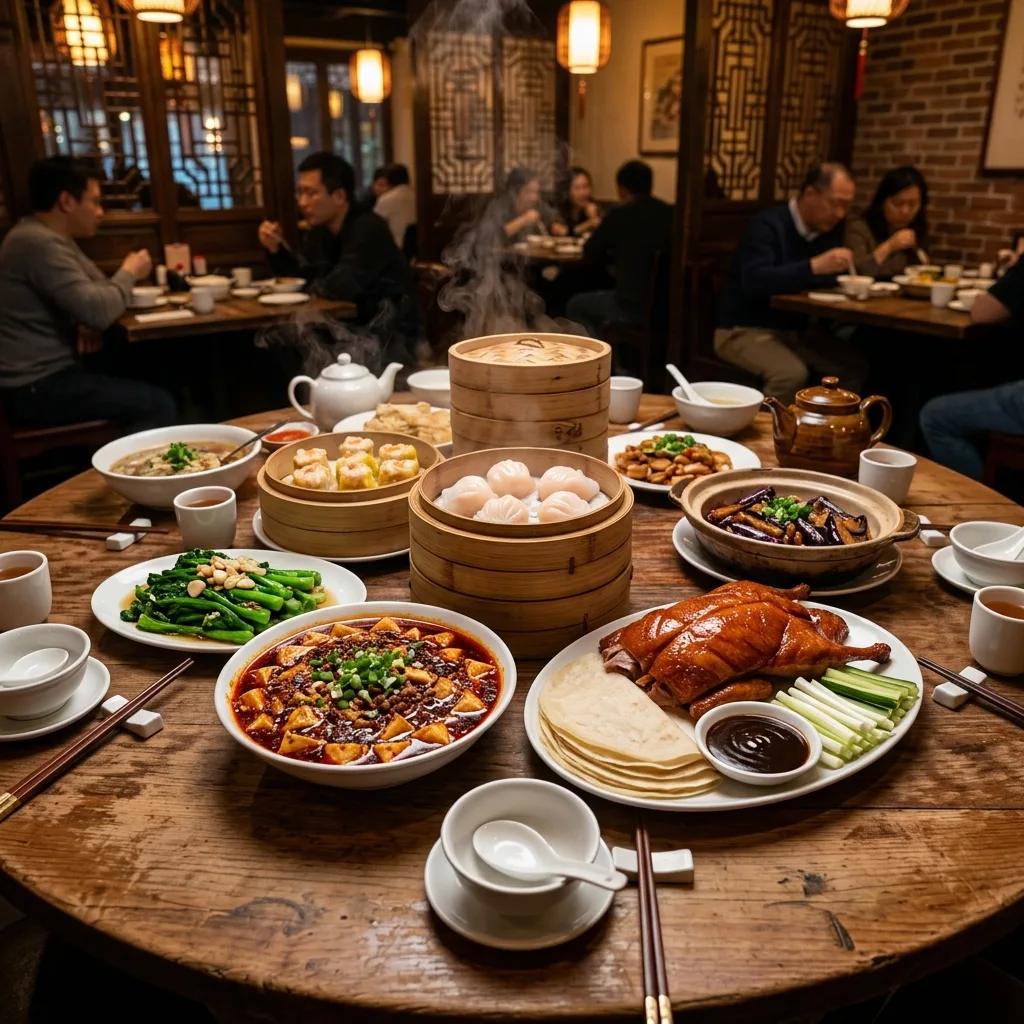
Most visitors arrive in China with a single dish on their mind — often Peking duck. But the country's food map is a continent unto itself, where the same word "spicy" means something entirely different in Sichuan than it does anywhere else, where breakfast in Guangzhou is a two-hour social ritual, and where a lacquered duck in Beijing arrives at the table as a ceremony. This guide covers three of China's most distinct regional cuisines so you can eat intentionally, wherever your itinerary takes you.
What Makes Chinese Regional Food So Different?
China's culinary landscape is shaped by geography, climate, and thousands of years of distinct local culture. The Eight Great Cuisines — a classical Chinese framework — include Cantonese, Sichuan, Hunan, Jiangsu, and four others, each with its own flavor profiles, techniques, and signature ingredients. For first-time travelers, three regions stand out as both accessible and transformative: the Pearl River Delta (dim sum country), Sichuan Province (the kingdom of mala spice), and Beijing (home of the imperial roast duck). Each rewards a little pre-trip knowledge — knowing what to order, when to go, and which restaurants to trust makes the difference between a forgettable meal and one you'll spend years trying to recreate.
Dim Sum: The Art of Yum Cha in Guangzhou and Hong Kong
Dim sum (點心, diǎnxīn) is more than a meal — it's a social institution. The Cantonese practice of yum cha (飲茶, "drink tea") built around it is best understood as brunch reimagined as a cultural event. Families gather at round tables, pour endless pots of pu-erh or chrysanthemum tea, and share dozens of small dishes across two or three hours. Nobody is in a hurry. If you approach dim sum the way you'd approach fast food — rushing in, picking one item, rushing out — you'll miss the point entirely.
When to Go
Arrive between 7:30 AM and 11:00 AM. This is when the kitchen operates at full speed, the steamers are freshest, and the full range of dishes is available. By noon, popular items like har gow (shrimp dumplings) and cheung fun (rice noodle rolls) may already be sold out at the best local spots. In Guangzhou, many tea houses open as early as 6:00 AM and attract elderly regulars who read newspapers over endless refills.
What to Order First
For first-timers, build your order around five core dishes:
Har Gow (蝦餃) — Steamed shrimp dumplings with translucent wrappers. The skin should be thin, slightly chewy, and tight enough to hold its shape when lifted with chopsticks. A kitchen's har gow is the clearest test of its technique; if the skin tears or sticks, move on.
Siu Mai (燒賣) — Open-topped pork-and-shrimp dumplings steamed in bamboo baskets. Look for a firm texture and a top garnish of bright orange roe or a green pea — both signal a kitchen paying attention to presentation.
Cheung Fun (腸粉) — Silky rice noodle rolls filled with shrimp, beef, or char siu pork, then drizzled with sweet soy sauce. The texture contrast between the slippery wrapper and the savory filling is what makes this Cantonese comfort food at its peak.
Char Siu Bao (叉燒包) — Steamed barbecue pork buns, soft and pillowy with a slightly sweet, sticky filling. The baked version (烤叉燒包) has a glossy caramelized top and is equally good.
Egg Tarts (蛋撻) — Served at the end, these custard tarts in a crumbly pastry shell come out warm from the oven. In Hong Kong, the Portuguese-influenced version uses a laminated puff pastry shell for added flakiness.
Guangzhou vs. Hong Kong: Which Is Better for Dim Sum?
Both are excellent and distinctly different. Guangzhou dim sum leans traditional — delicate flavors, unhurried service, a deep emphasis on seasonal ingredients and classical preparation. The city is the origin point of the cuisine, and many of its older tea houses have been perfecting the same recipes for generations.
Hong Kong's version has evolved under different influences: British colonial history, tighter real estate (smaller kitchens, faster turnover), and a culture that prizes both innovation and efficiency. You'll find more modern riffs here — truffle har gow, foie gras siu mai, elaborate dessert dim sum. Prices in Hong Kong are also higher; expect to spend HK$150–$300 ($20–$40 USD) per person at a mid-range restaurant versus ¥80–¥150 RMB ($11–$20 USD) in Guangzhou.
Practical Notes for Dim Sum in Guangzhou
Price range: ¥50–¥80 per person at local tea houses; ¥100–¥150 at mid-range restaurants; ¥200–¥400 at premium venues.
Ordering: Many traditional restaurants still use push carts — flag down the attendant and point. Modern venues use paper order forms or tablet menus. Circle your selections and hand the form to a server.
Tipping etiquette: Not customary. If the service was genuinely exceptional, leaving the loose change is appreciated but not expected.
Sichuan Cuisine: Understanding Mala and the 24 Flavor Profiles
If Cantonese cuisine is a study in restraint and freshness, Sichuan cuisine is an argument for bold excess — but a deeply sophisticated one. The region's food culture is built around the concept of mala (麻辣), a compound sensation of numbing (麻, má) from Sichuan peppercorns and heat (辣, là) from dried chilies. The combination doesn't just burn — it creates a tingling electrical current across the lips and tongue that's simultaneously intense and addictive.
But Sichuan cuisine is far more complex than heat alone. Classical Sichuan cooking recognizes 24 distinct flavor profiles, including fish-fragrant (鱼香, yúxiāng) — despite containing no fish — sour-and-spicy (酸辣), and the subtle aromatic profile of tea-smoked duck. The mala stereotype flattens a cuisine that rewards curiosity.
The Dishes You Must Try in Chengdu
Mapo Tofu (麻婆豆腐) — The signature dish of Sichuan. Silky soft tofu sits in a bubbling sauce made from fermented black bean paste (doubanjiang), ground beef or pork, Sichuan peppercorns, dried chilies, and a finish of fragrant chili oil. The best version comes from Chen Mapo Tofu (陈麻婆豆腐), the dish's original restaurant, at 10 Qinghua Road, Chengdu. Expect queues. The wait is worth it.
Hotpot (火锅) — The social soul of Chengdu. Unlike the heavier beef-tallow broths found in Chongqing (where Sichuan hotpot originated), Chengdu's version tends toward a more fragrant base using rapeseed oil, star anise, cinnamon, and bay leaves. You cook raw ingredients — sliced beef, offal, lotus root, tofu skin, leafy greens — in the bubbling broth at the table. The yuanyang (鸳鸯) pot gives you both a mala broth and a mild, clear broth side by side, a useful option for groups with different spice tolerances.
Dan Dan Noodles (担担面) — Thin wheat noodles served in a concentrated sauce of sesame paste, chili oil, vinegar, and minced pork, topped with preserved vegetables. The name comes from the shoulder pole (dan) street vendors once used to carry their portable stoves. The proper version has almost no broth — it's a thick, clingy sauce rather than a soup.
Kung Pao Chicken (宫保鸡丁) — Often misrepresented abroad, the real version is a precisely balanced stir-fry of tender chicken, dried chilies, roasted peanuts, and scallions in a glossy sauce with a sweet-sour-spicy profile. The peanuts should stay crisp; the chicken should be velvety.
Managing the Heat
Ordering wisely prevents a miserable first meal. When in doubt:
- Say "微辣" (wēi là, "slightly spicy") — this reduces the chili volume but keeps the flavor profile intact.
- Say "不辣" (bù là, "not spicy") — the kitchen will make a mild version, though some dishes lose much of their character this way.
- Start with tea-smoked duck or bang bang chicken before moving into hotpot. Building tolerance over a few days is far more enjoyable than going straight for the 10-chili hotpot broth on night one.
Where to Eat in Chengdu
Yulin District (玉林) — The local neighborhood famous for cangying guan (苍蝇馆, "fly restaurants"), tiny legendary eateries with no English menus and lines of locals. These are where Chengdu residents eat when they're not performing for tourists.
Wenshu Monastery Area — Beyond the temple itself, this district is lined with traditional snack vendors and tea houses. Good for leisurely exploration and lighter snacking between sights.
Kuanzhai Alley (宽窄巷子) — A pedestrianized heritage street with a concentration of restaurants. More tourist-oriented than Yulin but convenient if you're short on time and need English-language menus.
Peking Duck: Beijing's Imperial Centerpiece
Peking duck (Běijīng kǎoyā, 北京烤鸭) is one of the oldest and most technically demanding dishes in Chinese cuisine. The preparation — air-pumped under the skin to separate it from the fat layer, then lacquered with maltose syrup and roasted in a hung oven over fruit wood — takes over 24 hours from start to finish. The result: skin so thin and crisp it shatters, meat rich and juicy beneath. It is served tableside by a trained carver, who produces paper-thin slices in a specific sequence, prioritizing the crispest skin sections first.
The correct way to eat it: place two or three slices on a thin pancake, add a smear of sweet bean sauce (tiánmiànjiàng), a few batons of cucumber and scallion, then fold and eat immediately before the pancake goes soft. There is no silverware at this stage — use your hands.
For the full Beijing dining context, our Beijing Food Guide: Peking Duck, Jianbing & Night Market Snacks covers local street food alongside the duck restaurants.
The Best Peking Duck Restaurants in 2026
Siji Minfu (四季民福) — The consensus pick among locals and experienced travelers. Located near the Forbidden City (multiple branches), it delivers excellent quality without tourist-trap pricing. A half-duck runs ¥259 ($36 USD), making it significantly more affordable than premium competitors. The trade-off: weekend waits of up to 90 minutes. Reservations via WeChat are strongly recommended.
Dadong (大董烤鸭) — The modern prestige option. Dadong's technique produces arguably the crispiest skin in the city, using a leaner bird and a refined roasting method that renders most of the subcutaneous fat. Price per duck: ¥398 ($55 USD). The restaurant's interior is sleek and contemporary — a deliberate departure from traditional duck-house aesthetics. Reservations are essential, especially on weekends.
Bianyifang (便宜坊) — The oldest operating Peking duck restaurant in the world, founded in 1416 during the Ming Dynasty. It uses a different roasting method than most competitors — a焖炉 (mèn lú, "stuffy oven"), where the bird is cooked inside a sealed clay oven using residual heat rather than an open flame. This produces a slightly softer, more uniformly cooked skin compared to the shatteringly crisp style of Dadong. Average spend: ¥123 per person (~$17 USD), making it the most accessible of the three.
Ordering Beyond the Duck
A full Peking duck meal at a proper restaurant includes more than the bird. Standard accompaniments worth ordering:
- Duck bone soup (鸭架汤) — the carcass goes into a milky broth, often served at the end of the meal as a palate cleanser
- Duck liver and heart — served as a cold appetizer, sliced thin with vinegar and chili
- Four-colored vegetarian dish — seasonal greens to balance the richness of the duck
If you're planning a broader Beijing trip, our Ultimate Beijing Travel Guide: Great Wall, Forbidden City & More gives context for pairing food with sightseeing across the city.
Practical Guide: Prices, Hours & Booking
| Region | Dish | Budget | Mid-Range | Premium |
|---|---|---|---|---|
| Guangzhou | Dim Sum | ¥50–80/person | ¥100–150 | ¥200–400 |
| Chengdu | Hotpot | ¥80–120/person | ¥150–250 | ¥300+ |
| Beijing | Peking Duck | ¥123/person (Bianyifang) | ¥259 half-duck (Siji Minfu) | ¥398/duck (Dadong) |
Dim Sum Hours: Most Guangzhou tea houses open 6:00–7:00 AM and stop serving by 2:00–3:00 PM. Peak time is 8:00–10:30 AM. Hong Kong venues often run a separate dinner dim sum service until 9:00 PM.
Hotpot Hours: Chengdu hotpot restaurants typically open at noon, with dinner service from 5:00 PM until midnight or later. Weekend evenings see waits of 30–60 minutes at popular venues.
Peking Duck Hours: Most duck restaurants serve lunch from 11:00 AM–2:00 PM and dinner from 5:00 PM–9:30 PM. Last orders for duck are often 30–45 minutes before closing, as carving and preparation take time.
Booking Recommendations:
- Siji Minfu and Dadong both accept WeChat reservations; international travelers may need a local contact to assist.
- Dim sum tea houses in Guangzhou rarely take reservations — arrive early or join the queue.
- Many Chengdu hotpot spots list on Dianping (the Chinese Yelp equivalent); screenshots of the address work well for showing taxi drivers.
For visa requirements and getting into China in the first place, the China Travel Planning: Visa, WeChat Pay, High-Speed Rail & Practical Guide covers everything you need before departure.
Tips & Common Mistakes
Don't arrive at dim sum at noon. The kitchen winds down mid-morning; the best items disappear early and the remaining dishes sit longer in steamers. An 8:30 AM arrival is not too early — this is what locals do.
Don't assume all "spicy" dishes are equally hot. A dish labeled 辣 (là) in Beijing is a mild curiosity compared to the same label in Chengdu. Regional calibration matters enormously.
Don't skip the soup course at a duck restaurant. The duck bone soup served at the end is one of the best things you'll eat — it's included in the set meal price at most venues and marks the transition from the main event to a quiet, satisfied finish.
Do set up mobile payment before you go. Many small restaurants in all three regions — especially the "fly restaurants" in Chengdu's Yulin district and traditional tea houses in Guangzhou — operate cash-only or WeChat Pay / Alipay only, with no card terminals. Having your WeChat Pay linked to a foreign bank card (now possible with a passport scan) removes this friction.
Do try the street snacks in every city. Jianbing (煎饼) in Beijing, tanghulu (糖葫芦) along Wangfujing, sweet water noodles in Chengdu, and pineapple buns in Hong Kong are all worth the few yuan they cost. The snack culture in China is as rich as the sit-down restaurant culture, and wandering with something in hand is part of how the locals experience their own food scene.
Don't overlook the tea. In a dim sum tea house, the tea sets the tone for the meal. Pu-erh (熟普洱) is earthy and digestive — the right call after a rich meal. Chrysanthemum (júhuā) is light and floral. Tieguanyin oolong sits in between. Ordering thoughtfully signals to the staff that you know what you're doing, which tends to result in better service.
FAQ
Can I eat dim sum outside of Guangzhou and Hong Kong? Yes — dim sum restaurants operate across China and internationally, including in Beijing and Shanghai. However, the canonical experience is in the Pearl River Delta region. Cantonese tea houses in Guangzhou and Hong Kong carry the cultural weight and depth of tradition that elsewhere simply can't replicate at the same level.
How spicy is Sichuan food really? Variable. A dish like mapo tofu at Chen Mapo Tofu in Chengdu will register as genuinely intense for most Western palates even on a "mild" day. Dan dan noodles can be calibrated more easily. Hotpot is as spicy as you make it — choosing a mild broth or the yuanyang option gives you control. The mala numbing sensation is often more disorienting than the heat itself on a first encounter.
Is Peking duck safe for travelers with dietary restrictions? The dish itself contains only duck, maltose syrup, and the accompaniments (pancakes, scallion, cucumber, sweet bean sauce). Wheat is present in the pancakes and sauce. Restaurants at the Dadong and Siji Minfu level will accommodate modifications if asked; smaller historic venues may struggle with customization.
Do I need to make a reservation for Peking duck? For Dadong: yes, always — walk-ins at peak hours are rarely accommodated. For Siji Minfu: strongly recommended on weekends; weekday lunch walk-ins are possible. For Bianyifang: reservations are less critical but still advisable for dinner.
What's the difference between Peking duck in Beijing and versions served elsewhere? The Beijing version uses a specific breed of duck (北京鸭, Peking duck breed), a traditional hung oven (挂炉, guà lú) method, and fresh-made pancakes. Versions served elsewhere often use frozen duck, conveyer-style ovens, and pre-made wraps — technically the same dish but noticeably different in skin texture, fat rendering, and flavor.
Conclusion
China's regional food culture rewards travelers who plan ahead and eat with curiosity rather than caution. Dim sum in the morning in Guangzhou is a fundamentally different experience from hotpot at midnight in Chengdu's Yulin district, which is itself nothing like a formal Peking duck dinner in a Beijing restaurant near the Forbidden City. None of these require fluency in Mandarin or extensive local knowledge — just a willingness to arrive early, point confidently, and let the meal unfold at its own pace.
Start with one region, build familiarity, and give yourself permission to return for the others. China is large enough that no single trip covers it all, and its food is reason enough to keep coming back.