Beyond Seoul: The Top 10 Must-Visit Cities in South Korea

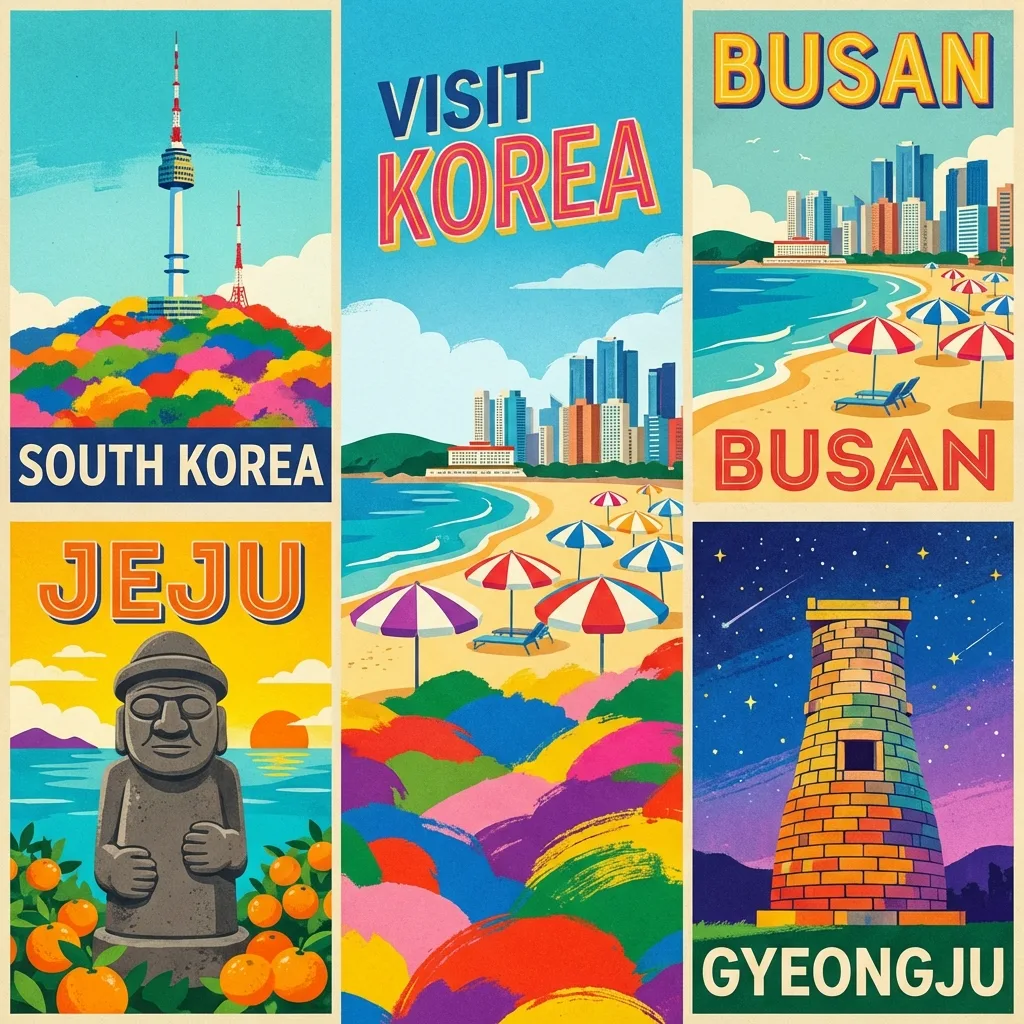
Most first-time visitors spend 90% of their time in Seoul. While Seoul is incredible, the real magic of Korea lies in its diversity. Thanks to the high-speed KTX network, you can cross the entire country in under 3 hours. This means you can wake up in a skyscraper hotel and have lunch in a 1,000-year-old traditional village.
If you are planning your itinerary, here are the Top 10 cities that offer the best mix of culture, nature, and modern vibes.
1. Seoul (The Heart of Korea)
Best For: Everyone. The perfect mix of 600 years of history and futuristic tech. Travel Time: N/A (Start here). Must Eat: Everything.
You will land here, and you might never want to leave. Seoul has it all: Five Grand Palaces (like Gyeongbokgung), the futuristic Dongdaemun Design Plaza, and endless nightlife in Hongdae and Itaewon.
- Don't Miss: A sunset view from N Seoul Tower.
- Hidden Gem: Head to Seongsu-dong, Seoul's answer to Brooklyn. This former industrial district has been transformed into a neighbourhood of independent coffee roasters, concept stores, converted factory galleries, and some of the most Instagrammable brunch spots in the city. It attracts a creative crowd and feels genuinely different from the tourist trail.
- Early Riser Tip: Visit Bukchon Hanok Village at dawn, before the tour groups arrive. The narrow alleyways of traditional wooden houses (hanok) against the Seoul skyline are best experienced in near-silence, with only the sound of temple bells in the distance. By 9 AM, the streets fill up quickly.
- Getting Around: Seoul Metro Line 2 (the green circle line) is the most useful for first-timers — it connects Hongdae, Gangnam, and the path toward Seongsu-dong. A T-Money card (loaded at any convenience store) works on all subway lines, buses, and even some taxis. Single rides cost around 1,400 KRW.
2. Busan (The Coastal Metropolis)
Best For: Beach lovers, seafood fans, photo-takers. Travel Time: 2.5 hours (KTX from Seoul). Must Eat: Dwaeji Gukbap (Pork Soup), Hotteok (Seed pancake).
The "Miami of Korea." Busan is looser, louder, and more colorful than Seoul. Visit Haeundae Beach for skyscrapers-meet-ocean views, and wander the pastel-colored alleys of Gamcheon Culture Village. Before you go, read our Complete Guide to Busan to plan your days by the coast.
- Don't Miss: Jagalchi Fish Market.
- Unique Experience: Ride the Sky Capsule at Haeundae Blueline Park — a pastel-colored sky rail that hugs the coastline above the beach, giving you aerial views of the sea that no ground-level photo can replicate. Book ahead on weekends; it sells out fast.
- Cliffside Temple: Haedong Yonggungsa is one of the few Buddhist temples in Korea built directly on the ocean cliffs. Arrive at sunrise for a genuinely spiritual experience, with waves crashing below the stone lanterns and the smell of incense mixing with sea air.
- Station Know-How: KTX trains from Seoul arrive at Busan Station (central, near Chinatown and Jagalchi Market) — not Gupo Station, which is out of the way. From Busan Station, the subway gets you anywhere. Pick up the Busan City Pass at the station's tourist information desk for unlimited metro rides and discounts at major attractions.
3. Jeju Island (The Nature Wonder)
Best For: Nature lovers, relaxation, honeymoons. Travel Time: 1 hour (Flight from Gimpo). Must Eat: Hallabong tangerines, Black Pork BBQ.
A volcanic island with its own unique culture. Jeju is UNESCO-listed for a reason. Hike up Hallasan Mountain (the highest in Korea) or explore the dramatic cliffs of Seongsan Ilchulbong. Its dramatic coastlines and secluded luxury resorts also make it Korea's top destination for couples — see our honeymoon in South Korea guide for romantic itineraries.
- Note: You usually need to rent a car here.
- On Renting a Car: Public buses do exist on Jeju, but they take 2 to 3 times longer than driving and don't serve many of the best natural sites. Renting a car is by far the most practical option. International visitors need an International Driving Permit. Book in advance during peak season — car rental desks at Jeju Airport sell out quickly.
- Best Time to Visit: April to June and September to October are the sweet spots. Summer (July–August) brings intense heat, large crowds, and the threat of typhoons that can cancel flights and close hiking trails without warning. Spring brings cherry blossoms and mild temperatures; autumn delivers crisp air and golden foliage on Hallasan.
- Hidden Walking Trail: The Jeju Olle Trail is a network of 26 marked walking routes that circle the entire island, hugging coastlines, passing through villages, and cutting through tangerine orchards. Even walking just one or two sections gives you a side of Jeju that tour buses never see.
4. Gyeongju (The Museum Without Walls)
Best For: History buffs. Travel Time: 2 hours (KTX from Seoul). Must Eat: Hwangnam Bread (Red bean pastry).
For 1,000 years, this was the capital of the Silla Kingdom. The city is dotted with giant grass mounds (Royal Tombs). It feels ancient and spiritual. Our in-depth Gyeongju Travel Guide covers every site, including the stunning Wolji Pond night view.
- Don't Miss: Bulguksa Temple and Cheomseongdae Observatory at night.
- Night Magic: Donggung Palace and Wolji Pond (formerly Anapji Pond) is the most dramatic sight in Gyeongju after dark. The reconstructed Silla-era palace pavilions are illuminated and reflected perfectly in the still water below. Arrive at dusk and stay for an hour — it is genuinely one of the most beautiful scenes in all of Korea.
- Explore on Two Wheels: Gyeongju is famously flat, and bicycle rental is the best way to navigate between its scattered historical sites. Rental shops cluster near the Royal Tombs park and charge around 5,000–10,000 KRW per day. You can ride from the tomb mounds to Cheomseongdae to Bulguksa — without ever needing a taxi.
- Strategic Add-On: Gyeongju is only 30 minutes from Busan by KTX, making it one of the easiest add-ons in Korea. If you are basing yourself in Busan, you can do Gyeongju as a full day trip without packing a bag. This combination — two nights in Busan, one day in Gyeongju — is one of the most satisfying itinerary pairings in the country.
5. Jeonju (The Food Capital)
Best For: Foodies. Travel Time: 1.5 hours (KTX from Seoul). Must Eat: Jeonju Bibimbap.
The spiritual home of Korean food. The Jeonju Hanok Village is the largest cluster of traditional houses in the country. It's touristic, but renting a Hanbok (traditional dress) and eating your way through the street food stalls is a rite of passage.
- The Definitive Bibimbap: If you eat one bowl of Jeonju Bibimbap during your trip, make it at Gajok Hoegwan — the most celebrated of the traditional restaurants inside Hanok Village. The version here uses Jeonju's specific breed of short-grain rice, a local gochujang paste made with Jeolla Province chili, and over a dozen hand-prepared toppings. The difference from a standard Seoul restaurant is immediately obvious.
- Makgeolli Bar Culture: Jeonju has a unique tradition — order a plate of food at any Makgeolli bar, and free side dishes (anju) keep arriving automatically with every round of the cloudy rice wine. This generous custom, specific to Jeonju, means a simple evening of drinks often becomes a full meal. The alleys behind Hanok Village are lined with these atmospheric, dimly lit bars.
- Film Festival: If your visit falls in October, check the dates for the Jeonju International Film Festival (JIFF). One of Asia's most respected independent film festivals, it transforms the city into a hub for Korean and international arthouse cinema — with outdoor screenings, director talks, and a uniquely festive atmosphere layered over the usual hanok charm.
6. Andong (The Spirit of Tradition)
Best For: Cultural purists. Travel Time: 2 hours (KTX-Eum from Cheongnyangni). Must Eat: Andong Jjimdak (Braised Chicken).
If Jeonju is "tourist tradition," Andong is "real tradition." It is the center of Korean Confucianism. Visit the Hahoe Folk Village, where people still live in centuries-old houses.
- Don't Miss: The Mask Dance Festival (if visiting in Autumn).
- Confucian Academy: Dosan Seowon, built in 1574 to honor the great scholar Yi Hwang (Toegye), is one of the finest preserved Confucian academies in Korea. The setting is extraordinary — a collection of wooden lecture halls and dormitories arranged along a river, surrounded by pine-forested hills. The face of Yi Hwang appears on the 1,000 KRW banknote. This is where his students actually studied.
- Andong Soju: This is not the mild, sweet soju sold in Seoul convenience stores. Andong Soju is the original — distilled at 45% ABV using a centuries-old technique, it tastes closer to a premium grain spirit than a cocktail mixer. It is sold locally in traditional ceramic bottles and is worth bringing back as a gift. The Andong Soju & Traditional Food Museum offers tastings.
- Getting There Right: The KTX-Eum from Cheongnyangni Station (in eastern Seoul) is the correct route — not the main Seoul Station KTX lines. This is a common mistake that adds an hour to the journey. Total travel time from Cheongnyangni to Andong is around 2 hours, and trains run regularly throughout the day.
7. Suwon (The Day Trip)
Best For: A quick escape from Seoul. Travel Time: 30-60 mins (Subway/Train). Must Eat: Suwon Galbi (Marinated Ribs).
Famous for the Hwaseong Fortress, a UNESCO World Heritage site with massive walls you can hike around. It's also the home of Samsung.
- Inside the Fortress: Most visitors walk the outer walls, but the Hwaseong Haenggung Palace, located inside the fortress perimeter, is equally impressive. This was the temporary royal palace used by King Jeongjo during his visits from Seoul. The main hall hosts regular reenactment performances where actors in full Joseon Dynasty costume recreate royal ceremonies.
- Night Walk: On weekends, the fortress walls are illuminated from 9 PM to 10 PM, creating a completely different atmosphere from the daytime experience. The lit battlements and watchtowers against a dark sky make for dramatic photography. Check the Suwon City Tourism website for seasonal schedules before you go.
- Tech Enthusiast Add-On: Suwon is the location of Samsung Digital City, the company's global R&D headquarters. Samsung offers occasional campus tours and operates an Innovation Museum that is open to the public — it traces the history of electronics from the earliest transistor radios to current semiconductor technology. Book well in advance through Samsung's official site.
8. Gangneung (Coffee & Coast)
Best For: Cafe hopping, romantic vibes. Travel Time: 2 hours (KTX from Seoul). Must Eat: Chodang Soft Tofu.
Located on the East Coast, Gangneung has deep blue waters different from the west. The Anmok Coffee Street is lined with massive coffee shops facing the ocean. K-Pop fans visit for the "BTS Bus Stop" at Jumunjin Beach.
- Jeongdongjin: Just 18 kilometers south of Gangneung sits Jeongdongjin, home to the world's only train station built directly on a beach. The station platform is so close to the water that waves occasionally spray the tracks. It became famous as a location in a beloved 1990s Korean drama, and the Sunrise Park next to it fills with visitors every New Year's Eve awaiting the first sunrise of the year.
- Art Hotel: Haslla Art World is part hotel, part contemporary art museum perched on a cliff above the East Sea. Even if you are not staying here, the outdoor sculpture garden overlooking the ocean is worth the taxi fare from Gangneung. At sunset, the combination of large-scale sculptures and sea light is extraordinary.
- Coffee Festival: If you visit in October, the Gangneung Coffee Festival transforms the city into Korea's unofficial coffee capital for a weekend. Given that Gangneung already claims the title of Korea's coffee culture heartland (the specialty roasting scene here predates the Seoul wave), the festival draws serious coffee professionals from across Asia alongside curious travelers.
9. Sokcho (Mountain Meets Sea)
Best For: Hikers. Travel Time: 2.5 hours (Bus from Seoul). Must Eat: Dakgangjeong (Sweet Crispy Chicken).
The gateway to Seoraksan National Park, Korea's most beautiful mountain. You can hike the Ulsanbawi Rock in the morning and eat fresh sashimi by the port in the evening.
- Abai Village: On the northern edge of Sokcho sits Abai Village, one of Korea's most unusual communities. It was founded by North Korean refugees who fled south during the Korean War and settled on this narrow sandbar, naming their new home after a North Korean term of endearment. The village retains its own distinct food traditions — most notably Ojingeo Sundae (squid stuffed with rice and vegetables) and Abai Sundae (a larger, denser blood sausage variant). It is a living piece of Korean modern history.
- Cheongcho Lake: Between the bus terminal and Abai Village lies Cheongcho Lake, a gorgeous lagoon separated from the sea by a thin strip of land. The lakeside walking path is flat, scenic, and takes about an hour to complete. At dusk, the reflections on the water and the backdrop of Seoraksan's peaks make it one of the more quietly beautiful spots on the entire East Coast.
- Adventurous Onward Connection: For travelers with a truly adventurous spirit, Sokcho operates a ferry connection to Vladivostok, Russia (seasonal) and historically to Japanese ports. Routes and schedules change, so verify current availability, but the idea of crossing the sea to Northeast Asia by boat from this small Korean port city has an undeniable romantic appeal as an add-on to an otherwise standard itinerary.
10. Incheon (Past & Future)
Best For: Layover travelers, architecture fans. Travel Time: 1 hour (Subway from Seoul). Must Eat: Jajangmyeon (Black Bean Noodles) in Chinatown.
Most people only see the airport, but Incheon has Korea's only official Chinatown and the futuristic smart city of Songdo, which looks like it's from 2050.
- Open Port Area: Walk ten minutes from Chinatown into the Incheon Open Port Area, and you step into Korea's most unusual architectural neighborhood. When Incheon opened to foreign trade in 1883, Japanese, Chinese, and Western merchants built consulates and trading houses here — all of which still stand. The Japanese-style bank buildings, the neoclassical customs house, and the preserved foreign settlement streets create a genuinely strange and fascinating streetscape unlike anything else in Korea.
- Wolmido Island: A short taxi ride from Chinatown, Wolmido is a small island connected to the mainland by a causeway and packed with an old-school amusement park, fresh seafood restaurants, and a boardwalk that fills with families on weekends. It has a slightly retro, unhurried energy — very different from either the modernity of Songdo or the busyness of Seoul.
- Getting There: From Seoul, use the AREX Airport Railroad Express from Seoul Station for the fastest connection (43 minutes, around 9,500 KRW). If you are heading to Incheon city center rather than the airport, Metro Line 1 (the blue line) also runs directly from Seoul to Incheon and stops near Chinatown and the Open Port Area — slower, but significantly cheaper at around 1,700 KRW.
How to Build Your Own Itinerary: Mix-and-Match Guide
The most common mistake first-time visitors make is trying to visit too many cities in too few days. Korea's KTX network creates the illusion that everywhere is easy — and it is — but moving every day means you never sink into anywhere properly. Here is a framework by trip length.
5 Days — The Essential South: Seoul (3 nights) + Busan (2 nights). This is the most satisfying short itinerary. Use Seoul to calibrate your sense of Korea, then take the morning KTX to Busan and spend two full days on the coast. Day-trip to Gyeongju from Busan if you have the energy.
7 Days — The Classic Triangle: Seoul (3 nights) + Gyeongju (1 night) + Busan (2 nights) + return to Seoul. With a seventh day, you can add a half-day detour to Andong (from Seoul before heading south) or catch the spring cherry blossoms at Jinhae (near Busan, in late March and early April).
10 Days — The Full South Loop: Seoul (3 nights) + Andong (1 night) + Gyeongju (2 nights) + Busan (2 nights) + Jeju (2 nights). This is the sweet spot for a first visit. You see ancient Korea, modern coastal Korea, and the volcanic island — three completely different experiences in ten days. Fly Seoul to Jeju at the end.
14 Days — The Grand Tour: Add Jeonju (1 night southbound from Seoul), Suwon (day trip from Seoul on arrival day), Gangneung (1 night, via KTX from Seoul before heading north to Sokcho), and Sokcho (1 night). This route covers the entire country in a logical loop and gives you genuine depth everywhere you go.
The Golden Rule: Choose a region and commit to it. The South Loop (Seoul → Gyeongju → Busan → Jeju) and the East Coast Loop (Seoul → Gangneung → Sokcho) are two distinct experiences with very different characters. Trying to do both in under two weeks means doing neither properly. Pick your priority — culture and coast, or nature and mountains — and build from there.
Getting Between Cities: The Transport Matrix
Korea's public transport infrastructure is exceptional. Every route below is reliable, comfortable, and bookable through the Korail website or the Naver Maps app (which works better than Google Maps for Korean transit).
| Route | Fastest Option | Duration | Cost (approx.) | Frequency |
|---|---|---|---|---|
| Seoul → Busan | KTX | 2h 20m | ~60,000 KRW | Every 20–30 min |
| Seoul → Gyeongju | KTX | 2h 00m | ~50,000 KRW | Every 60 min |
| Seoul → Jeonju | KTX | 1h 20m | ~28,000 KRW | Every 30–60 min |
| Seoul → Gangneung | KTX | 2h 00m | ~27,000 KRW | Every 60 min |
| Seoul → Sokcho | Express Bus | 2h 30m | ~20,000 KRW | Every 30 min |
| Seoul → Andong | KTX-Eum (via Cheongnyangni) | 2h 00m | ~25,000 KRW | Every 60–90 min |
| Busan → Jeju | Domestic Flight | 50m | ~40,000–80,000 KRW | Multiple daily |
| Busan → Gyeongju | KTX | 30m | ~10,000 KRW | Every 20–30 min |
| Seoul → Jeju | Domestic Flight | 1h 00m | ~50,000–100,000 KRW | Multiple daily |
Practical Notes:
- Book KTX tickets in advance on weekends and Korean public holidays — trains fill completely.
- The Sokcho express bus departs from Seoul Express Bus Terminal (Gangnam), not from Seoul Station.
- Domestic flights between Korean cities are handled by Korean Air and Asiana, but budget carriers Jeju Air, Jin Air, and T'way frequently offer sub-40,000 KRW fares on the Seoul–Jeju and Busan–Jeju routes if you book early.
- For the Andong route, note that KTX-Eum trains depart from Cheongnyangni Station in eastern Seoul, which is on Metro Line 1 and Line 5. This is a 30–40 minute subway ride from central Seoul — factor it into your departure time.
Itinerary Tip:
A classic 10-day route is Seoul (4 days) -> Gyeongju (2 days) -> Busan (2 days) -> Return to Seoul. Add Jeju if you have 3-4 extra days.
If you are just beginning to sketch out your trip, starting with The Ultimate Seoul Travel Guide will anchor the urban portion of your itinerary. From there, if you find yourself craving fewer crowds and more scenic landscapes, consider swapping a city or two for locations featured in 7 Best Nature Destinations in Korea. Regardless of whether you stick to the bustling metropolises or venture into quiet countryside towns, familiarizing yourself with Cultural Etiquette in South Korea will ensure you are warmly welcomed everywhere you go.