Dongdaemun Design Plaza (DDP): Exploring Seoul's Fashion Hub
Quick Navigation
- Part of the [Korea Cultural Landmarks] series.
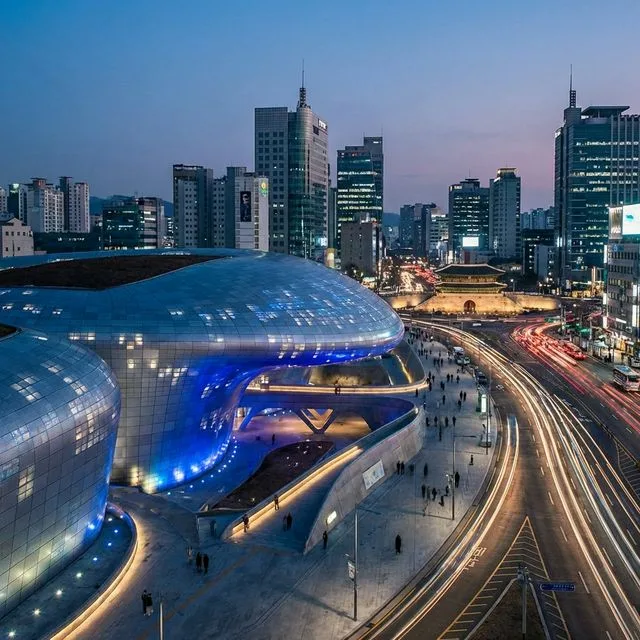
If you’ve ever wondered what it would look like if a silver spaceship decided to dock in the middle of a 600-year-old city, visit the Dongdaemun Design Plaza (DDP). Located in the heart of one of Seoul's busiest shopping districts, the DDP is a neofuturistic marvel that has become the definitive symbol of "Dynamic Korea."
Designed by the late Pritzker Prize-winning architect Zaha Hadid, the DDP is a sprawling, windowless structure of flowing curves and metallic surfaces. It is a place where history, tech, and style collide—a cultural landmark that serves as the primary stage for Seoul Fashion Week, tech exhibitions, and a nocturnal shopping scene that truly never sleeps.
Whether you’re an architecture geek, a fashionista hunting for the next trend, or a night owl looking for adventure at 3 AM, this guide will help you navigate the curves of Seoul's creative heart.
1. The Architecture: Zaha Hadid’s Masterpiece
In a city defined by its rigid grid of apartment blocks and ancient palaces, the DDP is an anomaly. There are almost no straight lines or corners in the entire complex.
The "Metonymic Landscape"
Zaha Hadid’s concept for the DDP was a "Metonymic Landscape"—an urban space that flows like water, integrating the greenery of the surrounding park with the silver skin of the building. The structure seems to melt into the ground, with walkways that morph into walls and rooftops that become public plazas.
The 45,000 Panels
The building’s skin is made of 45,133 aluminum panels. Because of the building's "atypical" (non-repeating) shape, virtually every single panel was custom-made using 3D modeling and advanced machinery. No two panels are exactly the same. During the day, they shimmer in the sunlight; at night, they serve as a massive projection screen for world-class media art.
Must-See Architectural Spots
- The Miraero Bridge: This is the iconic walkway connecting the DDP to the street. It feels like boarding a futuristic craft.
- The Cave Stairs: A spiraling, white-walled staircase that looks like it belongs in a sci-fi film. It’s a favorite for fashion photographers.
- Oullim Square: The lowered central plaza where old fortress walls (discovered during construction) have been preserved and integrated into the modern design.
2. Seoul Fashion Week: The Runway of the People
If the DDP is the body, then fashion is the blood that keeps it moving. Twice a year (usually in February/March and August/September), the DDP becomes the global center of K-Fashion.
Attending the Shows
While the main runway shows inside the halls are often invite-only (for buyers and press), the DDP exterior becomes a public fashion show. Hundreds of models, influencers, and "it-girls" descend on the stairs, posing for street-style photographers.
[!TIP] Even if you don't have a ticket, visit the DDP during Fashion Week. The energy is electric, and you’ll see the trends of 2026 being born right in front of you.
The Design Lab and Museum
For those visiting between events, the Design Lab (D-Lab) on the second and third floors is a must. It houses a curated selection of shops featuring up-and-coming Korean designers, stationery, and home goods that you won't find at Myeongdong.
3. The Night Show: Seoul Light DDP
The DDP truly comes alive after the sun goes down. Starting around 6 PM, the silver building transforms into a 222-meter-wide canvas.
Media Art Facade
Seoul Light DDP is an annual media art festival where the facade is illuminated with high-definition projections. Past shows have included collaborations with artist Kim Whanki and AI simulations of nature.
- The 2025 Schedule: Expect major shows in late summer (July/August) and a spectacular countdown show on New Year’s Eve.
The LED Rose Garden
While the famous permanent "20,000 LED Roses" installation has been moved to various locations, the DDP consistently hosts light installations in its "Grass Hill" area. It’s the perfect spot for a romantic night walk or a futuristic photo shoot.
4. Shopping Around DDP: The 24-Hour Ecosystem
The DDP is surrounded by the Dongdaemun Fashion Town, a massive cluster of wholesale and retail malls that makes Gangnam look like a quiet village.
The Wholesale Giants (The Night Owls)
The wholesale markets like apM Place, apM Luxe, and Design Ellevit open around 8:00 PM and close at 5:00 AM.
- The Catch: These buildings are primarily for business-to-business (B2B) buyers. Many vendors won't sell a single item to a tourist.
- The Workaround: Focus on buildings like Doota Mall, Migliore, and Hello apM. These are "retail-friendly" versions of the wholesale malls where you can find the same trends and even bargain for prices.
The DDP Museum Store
Inside the DDP, the official Museum Store is where you should go for high-quality, architecturally-inspired souvenirs. It’s where you’ll find minimalist jewelry, Zaha Hadid-inspired home decor, and premium Hangeul stationery.
5. The Niche Gem: Toy and Stationery Street
Just a 5-minute walk from the DDP is the Dongdaemun Toy and Stationery Market. It is the absolute opposite of the futuristic DDP—row after row of traditional wholesale shops selling everything from Lego sets to traditional Korean paper (Hanji) at massive discounts. It’s a paradise for hobbyists and those looking for unique gifts for kids (or kid-at-heart adults).
6. Photography Tips for the DDP
- Wait for the Blue Hour: The 20 minutes after sunset provides the perfect contrast between the deep blue sky and the warm interior lights of the building.
- Use a Wide Lens: The scale of the DDP is hard to capture with a standard phone camera. If you have an "0.5x" ultra-wide lens, use it here.
- Capture the Texture: Don't just take pictures of the building. Get close to the aluminum panels to capture the industrial detail.
Conclusion
The DDP is more than just a building; it is a manifestation of Seoul’s ambition. It represents a city that respects its history (by preserving the fortress walls in the plaza) while sprinting toward the future with Zaha Hadid’s curves.
Whether you come for a high-fashion runway show or a late-night wander through the neon-lit wholesale markets, you’ll leave with the same feeling: that you’ve just visited a version of the future that is distinctly, beautifully Korean. Before heading to DDP, make sure you download our Seoul subway guide since Dongdaemun History & Culture Park station connects three major lines. If the wholesale markets feel too chaotic, you can find a more curated, retail-friendly K-beauty experience in our Myeongdong shopping guide. And if your fashion tastes lean more toward luxury designer labels than streetwear, the boutiques covered in our Gangnam luxury fashion guide offer a completely different side of Korean style.
Visitor Essentials: Hours, Admission, and Getting There
Opening Hours
| Space | Hours | Notes |
|---|---|---|
| DDP Exterior / Public Plazas | 24 hours | Oullim Square, Miraero Bridge always accessible |
| Design Lab (D-Lab) | 10:00 AM – 8:00 PM | Closed Mondays; some shops close at 9 PM |
| DDP Museum Store | 10:00 AM – 9:00 PM | Open 365 days |
| Seoul Light (Media Art) | Dusk – 11:00 PM | Seasonal; check seoul.go.kr for current schedule |
| Design Museum | 10:00 AM – 7:00 PM | Specific exhibitions may have different hours |
Admission: The DDP exterior, plazas, and walkways are entirely free. Specific exhibitions in the Design Museum and D-Lab spaces charge between ₩5,000–₩20,000 depending on the show. Seoul Fashion Week runway access is invitation-only; the public exterior areas around the shows are always free.
Getting There
- Dongdaemun History & Culture Park Station (Lines 2, 4, 5): The DDP is directly connected to Exits 1 and 2 — you walk underground from the station directly into the DDP’s lower level. This is the most convenient entry.
- Dongdaemun Station (Lines 1, 4): A 5-minute walk; take Exit 8 and walk southwest along the shopping mall corridor.
- Bus: Routes 102, 104, 107, 302, 420 stop at "동대문디자인플라자" (Dongdaemun Design Plaza).
The Wholesale Shopping Guide: Navigating the Maze
The wholesale fashion ecosystem around the DDP is unlike any retail experience elsewhere in the world. Understanding the distinction between B2B (wholesale) and retail-friendly buildings is the key to not wasting your evening.
Retail-Friendly Buildings (Start Here)
| Building | Hours | Price Tier | Best For |
|---|---|---|---|
| Doota Mall | 10:30 AM – 5:00 AM | Mid-range | K-fashion brands, beauty, accessories |
| Hello apM | 10:00 AM – 5:00 AM | Affordable | Trendy streetwear, bags, shoes |
| Migliore | 10:30 AM – 5:00 AM | Budget–Mid | Fast fashion, casual wear |
| DDP Design Store | 10:00 AM – 9:00 PM | Design/Premium | Exclusive designer collaborations |
Wholesale-Only Buildings (Buyer Access Required)
apM Place, apM Luxe, and Design Ellevit operate primarily as wholesale markets. Individual vendors set their own policies — some will sell single items; many will not. If you want to try, visit after 11 PM when buyers thin out and some vendors are more flexible with walk-in retail customers. Having a business card (even a personal one) helps enormously with vendor negotiations.
What to Expect Price-Wise
Prices in the retail-friendly wholesale buildings are typically 20–40% lower than equivalent items in mall boutiques or brand stores. Bargaining is expected for purchases of multiple items. The standard opening move: point to 3–5 items and ask "Set price?" — vendors will usually offer a combined discount.
The DDP Event Calendar: What to Plan Around
The DDP hosts a year-round rotation of events. These are the ones worth planning your trip around.
| Event | Timing | What It Is |
|---|---|---|
| Seoul Fashion Week (Spring) | Late March | Major K-fashion labels; public exterior show |
| Seoul Lantern Festival | May | Cheonggyecheon stream adjacent to DDP lit with lanterns |
| Seoul Light DDP (Summer) | July–August | Massive media art projections on the building facade |
| Seoul Fashion Week (Fall) | Late August/September | Second annual fashion week; fall/winter collections |
| Seoul Design Festival | November | Product design exhibitions, international collaborations |
| New Year’s Eve Countdown | December 31 | Major public countdown event; the building serves as the screen |
2026 dates: Check the official DDP website (ddp.or.kr) or the Seoul Tourism Organization calendar — specific dates shift slightly year to year.
Day Visit vs. Night Visit: Which Is Better?
The DDP is one of the few Seoul landmarks genuinely worth visiting twice — once by day and once at night.
Daytime Visit (10 AM – 6 PM)
- The silver paneling reflects daylight in constantly shifting patterns
- The excavated fortress walls in Oullim Square are easier to appreciate without crowds
- The Design Lab shops are fully staffed and less crowded
- The architecture is most comprehensible in daylight — you can read the curves and understand the structure
Nighttime Visit (after 7 PM)
- The media art projections and Seoul Light installations activate
- The wholesale and retail buildings reach peak activity after 9 PM
- The energy of the surrounding fashion district is at its highest
- Photography opportunities are dramatically different — the building becomes a light source
Recommendation: If you only have one visit, go at 7:30 PM on a clear evening. You catch the last of the daylight on the panels, watch the transition to full darkness, and then experience the building lit from within as the night deepens.
Food Near DDP: Where to Eat Before or After
The DDP immediate vicinity has limited quality dining inside the complex itself, but a 5–10 minute walk opens up excellent options.
Gwangjang Market (도보 10분): Korea’s most famous traditional market is a short walk west. The bindaetteok (mung bean pancakes) and yukhoe (beef tartare) here are staples for a reason. Open from morning through late night.
Dongdaemun Flour Dumpling Restaurant (동대문 밀가루 만두): A famous local institution near Doota Mall serving handmade mandu dumplings for ₩7,000–₩12,000 per portion. Perpetually busy; expect a short queue.
Dongdaemun Convenience Store Rooftop: The 7-Eleven at the corner of the Migliore building has a rooftop seating area with an unobstructed view of the DDP facade — perfect for a cheap beer and a front-row seat to the media art show.
The History Beneath the Building: Dongdaemun's Hidden Past
The DDP sits on one of the most historically significant sites in Seoul. Before Zaha Hadid's silver curves arrived, this land hosted:
The Dongdaemun Baseball Stadium (1925–2008): Korea's first modern sports stadium, built during the Japanese colonial period. It hosted the first professional baseball game in Korean history and was a cultural landmark for over 80 years before being demolished to make way for the DDP.
Joseon-era Fortress Walls: During construction of the DDP, workers uncovered sections of the original city wall of Hanyang (the Joseon capital that became Seoul), along with artifacts from a military training ground (Hanlyang Doseong) dating to the 14th century. Rather than destroying the finds, the design team worked around them — the Oullim Square outdoor plaza was specifically sunken and reshaped to preserve and display the excavated walls in their original position. You can walk directly beside 600-year-old stonework while standing in front of one of the most futuristic buildings of the 21st century.
The Context: This juxtaposition — ancient walls inside a Zaha Hadid building — is not incidental. It is a deliberate statement about Seoul's identity as a city that holds its history while accelerating into the future. Standing in Oullim Square at dusk, with the fortress stones illuminated and the silver panels glowing overhead, is one of those rare moments where a city reveals its entire soul simultaneously.
Photography Master Guide
The DDP offers more distinct photographic opportunities per square meter than almost any other site in Seoul. Here is the full breakdown by location and timing.
Miraero Bridge (Daytime, 2–4 PM): The bridge curves create strong leading lines toward the building. Stand at the far end and shoot back toward the entrance. The angle compresses the building's full length into the frame. Use the widest lens available.
The Cave Stairs (Any Time): The white spiral staircase produces abstract architectural images that are nearly impossible to contextualize — the images look like concept art. Works equally well at any time of day. Use a fisheye or ultra-wide lens at the bottom of the staircase looking up.
Oullim Square (Golden Hour, 5–7 PM): The combination of sunlit silver panels, ancient stone walls, and the curved underside of the building creates a warmly lit panoramic scene. This is the location for landscape-style architectural photography.
Media Art Facade (8:30–11 PM): Use a tripod and 2–5 second exposures to capture the full projection without motion blur. The light from the facade is bright enough to illuminate foreground subjects (people, trees) — no flash needed.
The DDP + Dongdaemun Gate (Dawn): The Dongdaemun Gate (the restored Eastern Gate of the old city wall) stands about 400 meters from the DDP. At dawn, with both structures visible and the streets empty, the juxtaposition of 14th-century architecture and 21st-century design in a single frame is uniquely Seoul. This requires a 5:30–6:30 AM visit in summer, slightly later in winter.