Templestay.com Guide: Korea's Official Booking Platform Explained Step-by-Step
If you've tried to book a temple stay in Korea and found yourself staring at a confusing website, switching between Korean and English tabs, or wondering whether that program you clicked is actually available to foreigners — you're not alone. Templestay.com is Korea's only government-run temple stay booking platform, and once you understand how it works, it becomes genuinely straightforward. This guide walks you through every step: creating an account, filtering for English-friendly programs, understanding the two program types, decoding prices, and avoiding the most common booking mistakes.
What Is Templestay.com?
Templestay.com — officially accessed at eng.templestay.com for the English version — is the centralized booking portal operated by the Cultural Corps of Korean Buddhism under the Jogye Order. It was launched to standardize temple stay access across more than 130 participating temples nationwide. No third-party booking platforms (Klook, Trazy, Viator) have a contractual relationship with all temples simultaneously; Templestay.com is the single authoritative source for confirmed availability and pricing.
The platform lists every officially participating temple in Korea, each with its own calendar, program descriptions, and real-time availability. You book directly, pay through the site, and receive a confirmation tied to your account. There is no middleman, no markup, and no ambiguity about whether a slot is real.
For foreign visitors, the English subdomain (eng.templestay.com) mirrors the full Korean site with translated program descriptions, English-language filter options, and support for international credit cards. The experience is not perfect — some temple pages have inconsistent translations — but it is functional and reliable.
The Two Program Types You Need to Know
Before you search for anything, understand the fundamental split between program types. Every temple stay on the platform falls into one of two categories: Experience or Relaxation (Freestyle).
Experience Programs
Experience programs are structured itineraries led by a temple monk or assigned guide. Your schedule is set from arrival to departure. Typical activities include:
- Morning bell ceremony (새벽 예불): A 4:00–5:00 AM ritual of chanting and bows that is often the most memorable part of any temple stay
- Seon (Zen) meditation: Seated silent meditation, sometimes guided with brief instruction
- 108 prostrations: A physical and meditative practice involving 108 deep bows, representing release from the 108 earthly desires in Buddhist teaching
- Temple cuisine: Two or three vegetarian meals cooked without the five pungent roots (garlic, green onion, wild chive, chives, and asafoetida)
- Cultural activities: Lotus lantern making, tea ceremony, prayer bead crafting, or sutra copying depending on the temple
Experience programs are ideal for first-timers. The structure removes guesswork, and the guided elements provide cultural context you won't find in a guidebook. The tradeoff is that your time is not your own. Most run between 1 night 2 days and 2 nights 3 days.
Relaxation (Freestyle) Programs
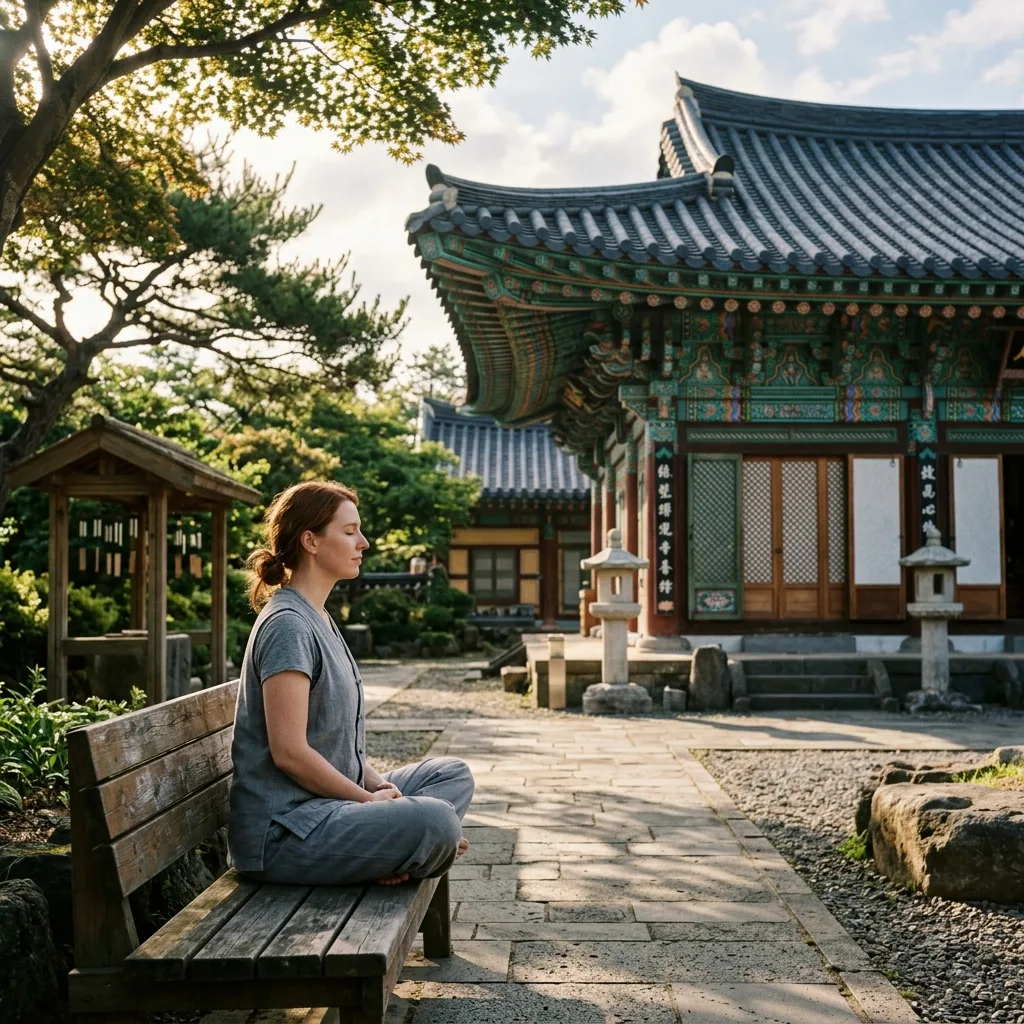
Relaxation programs offer access to the temple grounds, a room, and meals — but no fixed schedule beyond meal times. You set your own pace. You can join the morning bell ceremony if you want, or sleep in. You can wander the grounds, sit in the main hall, or simply read in your room.
These programs suit travelers who have already done a structured temple stay and want the environment without the itinerary, or those who find scheduled group activities anxiety-inducing. They also tend to be slightly cheaper than experience programs at the same temple.
If you are uncertain which type suits you, choose Experience for your first stay.
Navigating Templestay.com Step by Step
Step 1: Go to the English Version
Go directly to eng.templestay.com. Do not start at templestay.com, which defaults to Korean. The English subdomain has the same inventory but with translated program titles and the ability to filter by language.
Step 2: Use the Search Filters
On the main program list page, you will see a row of filter buttons. These are the most important filters for foreign visitors:
- Program Type: Choose Experience, Relaxation, or both
- Region: Filter by province or major city (Seoul, Gyeonggi, Gyeongju, Jeolla, etc.)
- Language: Click "English" to show only programs with English-language guidance or English materials
- Date Range: Enter your travel dates to see real-time availability
The "English" language filter is critical if you don't speak Korean. Not every temple offers English guidance, and attending a fully Korean-language program without the language can feel isolating rather than meditative.
Step 3: Read the Program Page Carefully
Each program listing includes:
- Duration and dates
- Price per person
- A schedule tab with the full itinerary
- A "What to Bring" section
- Participant limit (often 10–20 people for Experience programs)
- Contact email for the temple
Check the schedule tab before booking. Some "Experience" programs are light on activities (a single evening session and breakfast), while others run from 5:00 AM to 9:00 PM with almost no free time. Both are valid — but you should know what you're signing up for.
Step 4: Create an Account
To complete a booking, you need a Templestay.com account. Click "Sign Up" in the top right corner. The registration form asks for:
- Name (as on your passport for international visitors)
- Email address
- Password
- Phone number (international formats are accepted — enter with country code)
- Nationality
You do not need a Korean phone number or a Korean ID. The form works with international email addresses and foreign mobile numbers. Once registered, you'll receive a confirmation email to verify your account.
Step 5: Book and Pay
Once logged in, select your program and click Reserve. The payment page accepts major international credit cards (Visa, Mastercard, AMEX) and some platforms report success with foreign-issued cards without issue. If your card is declined, try a card issued by a different bank or contact the temple directly.
After payment, you receive:
- A booking confirmation email from Templestay.com
- A separate confirmation from the temple itself (may be in Korean — use a translation app)
Save both. The temple confirmation may include specific arrival instructions, parking information, or dress code details.
Step 6: Pre-Stay Communication
Most temples appreciate a brief email 1–2 weeks before your stay, especially if you have dietary restrictions beyond the standard vegetarian menu, or if you have mobility considerations that affect participation in prostrations or floor seating. Use the contact email on the program listing.
Write in simple English. Temple administrators managing international programs generally have functional English — they may respond in Korean, in which case Google Translate or DeepL will handle it adequately.
Prices: What to Expect
Prices on Templestay.com are standardized across program types. As of 2026:
| Program Type | Typical Price Range |
|---|---|
| 1 Night / 2 Days (Experience) | ₩50,000 – ₩100,000 |
| 1 Night / 2 Days (Relaxation) | ₩40,000 – ₩80,000 |
| 2 Nights / 3 Days (Experience) | ₩80,000 – ₩150,000 |
| Day Program (no overnight) | ₩20,000 – ₩50,000 |
These prices include accommodation in a shared or private ondol room (floor sleeping on traditional Korean-style bedding), all meals during the stay, and program activities. They do not include transportation to the temple.
Bongeunsa Temple in Gangnam, Seoul, lists its flagship "Who Am I" program — a 1 night / 2 day English-language Experience program — at ₩70,000 per person as of 2026. This is considered mid-range and includes a temple tour, tea ceremony, meditation session, and 108 prostrations.
Travel Month Discounts
The Cultural Corps of Korean Buddhism periodically runs discount promotions through Templestay.com. The most consistent one is Korea Travel Month (typically November), during which selected programs are priced as low as ₩20,000–₩30,000. These slots fill within hours of being listed. If you plan to visit in November, check the platform in October for early announcements and set a reminder.
Cancellation Policy
The standard cancellation policy across most Templestay.com programs:
- 3 or more days before arrival: 100% refund
- 2 days before arrival: 50% refund
- 1 day before arrival: 10% refund
- Same-day cancellation: No refund
Some temples have stricter policies for peak periods (major Buddhist holidays, cherry blossom season, autumn foliage season). Read the cancellation section on each program listing before booking.
Which Temples to Book First
Not every participating temple is equally suited to foreign visitors. These five consistently earn positive reviews from international travelers:
Bongeunsa (봉은사) — Seoul, Gangnam: The most accessible temple stay for first-timers. Located a 10-minute walk from Samseong Station (Line 2), it sits surrounded by skyscrapers in the heart of Gangnam, which creates a striking visual contrast. English-language Experience programs run year-round. For more on the temple itself, read our guide to Jogyesa Temple Seoul: The Heart of Korean Buddhism in the City, which provides context on Seoul's Buddhist temple landscape.
Jogyesa (조계사) — Seoul, Jongno: The headquarters of the Jogye Order and the most historically significant urban temple in Korea. Temple stays here place you at the administrative and ceremonial center of Korean Buddhism. Accessible from Anguk Station (Line 3).
Haeinsa (해인사) — South Gyeongsang Province: One of Korea's Three Jewel Temples, famous for housing the Tripitaka Koreana — 80,000 woodblock-printed Buddhist scriptures. A stay here carries weight beyond tourism. Mountain location means cooler nights and more demanding access. For a complete picture of what a stay here involves, see our post on the Haeinsa Temple Stay: Spending a Night at Korea's Tripitaka Koreana Monastery.
Bulguksa (불국사) — Gyeongju: A UNESCO World Heritage Site temple that anchors Gyeongju's historic district. Staying here gives you morning access to the grounds before day visitors arrive — a significant advantage at one of Korea's most photographed sites. See our detailed guide to Bulguksa Temple in Gyeongju: History, Hours & How to Get There for transit and entry information.
Geumsunsa (금선사) — Seoul, Bukhansan: A mountain temple within Seoul city limits, accessible from Gupabal Station. Less internationally famous than Bongeunsa or Jogyesa, but offers a genuine mountain forest atmosphere without leaving the city. Both weekday daily programs and 2-day/1-night options are available.
Tips and Common Mistakes
Book English programs explicitly. The "English" filter is easy to overlook, and many travelers book Korean-language programs by accident. If the program page does not mention English guidance or English materials, assume the program runs in Korean.
Don't assume all programs allow drop-ins. Templestay programs require advance registration. Unlike visiting a temple as a tourist, you cannot show up and ask to join. All bookings must be made through the platform at least a few days in advance, and popular programs require 2–4 weeks.
Arrive on time. Temple stays run on tight schedules. If your program begins at 2:00 PM and you arrive at 3:00 PM, you may miss orientation, temple tour, and the assignment of your room — causing disruption for other participants. Build transportation buffer time.
Bring the right items. Most temples provide bedding and basic toiletries, but check your confirmation for what's included. Standard items to bring: comfortable loose-fitting clothes (no shorts or low-cut tops), walking shoes suitable for uneven stone paths, a small flashlight (useful for pre-dawn ceremonies), and any personal medications.
Turn your phone to silent, not just vibrate. The temple environment is quiet by design. Ringtones during ceremonies are disruptive and disrespectful. Photographs are generally permitted on grounds but not inside the main hall during ceremonies — confirm with your guide.
Don't expect luxury accommodation. Ondol rooms are traditional Korean floor-sleeping rooms: a firm sleeping mat on a heated floor, a thin blanket, and minimal furniture. This is part of the experience, not a shortcoming. If floor sleeping is medically difficult for you, inquire with the temple about alternatives before booking.
FAQ
Choosing the Right Program Type
If you are still deciding, a useful shortcut is to choose by travel mood rather than by temple name.
- Pick a city temple if you want convenience, short transit, and a lighter commitment.
- Pick a mountain temple if you want silence, scenery, and a stronger sense of escape.
- Pick a 1-night program if you want the full rhythm of the experience.
- Pick a day program if you are curious but not ready to sleep on a floor.
That simple filter removes most of the decision fatigue. The platform gives you the inventory; this is how you decide what fits your trip.
Do I need to be Buddhist to do a temple stay? No. The Templestay program was designed specifically to be open to visitors of all faiths and backgrounds. You are expected to be respectful of Buddhist customs during the stay — participating in ceremonies, observing silence in designated areas, following the dress code — but no religious belief is required or assumed.
Can I book a temple stay for just one night? Yes. The standard program is 1 night / 2 days. Day programs (no overnight) are also available at some temples for visitors who cannot commit to an overnight stay.
Is the food entirely vegetarian? Yes. Temple cuisine (사찰음식, sachal eumsik) is traditional Korean Buddhist cooking: plant-based, no meat or seafood, and prepared without the five pungent roots. Meals are simple, nutritious, and often surprisingly flavorful given the ingredient restrictions. If you have allergies beyond the standard exclusions, contact the temple in advance.
What if I want to cancel after booking? Log into your Templestay.com account, navigate to your reservations, and initiate the cancellation from there. Refund amounts depend on how many days before arrival you cancel — see the cancellation policy table above. Refunds are processed back to your original payment method, typically within 3–7 business days.
Are temple stays safe for solo female travelers? Yes, consistently rated as among the safest experiences in Korea for solo female travelers. Accommodation is in shared or private rooms on temple grounds with strict community rules. Templestay programs have formal oversight from the Jogye Order, which sets conduct standards for all participating temples.
Can children participate? Most Experience programs accept participants aged 7 and above. Some temples have lower age limits and others offer family-specific programs. Check the individual program listing for age restrictions.
Conclusion
Templestay.com removes the friction that used to come with booking a Korean temple stay as a foreigner. The English subdomain works, the filters are useful, the prices are transparent, and the reservation system handles international payment without requiring a Korean bank account. What the platform can't do is choose the right program for you — that requires knowing whether you want structure or solitude, a mountain or a city, a night or a weekend.
For most first-time visitors, an English-language Experience program at Bongeunsa or Jogyesa in Seoul is the lowest-barrier entry point. For those willing to travel further, Haeinsa and Bulguksa offer experiences that are harder to replicate anywhere else in the world.
Start at eng.templestay.com, apply the English filter, check availability for your dates, and read the schedule tab before you commit. If you want the strongest current overview first, read Temple Stay in Korea: How to Book, What to Expect & Best Programs. Before arrival, review Temple Stay etiquette, and if you want a distinctive specialized program, see Golgulsa Temple Sunmudo Stay.
Korea's temple stay network is one of the most accessible cultural immersion programs of its kind in Asia. Templestay.com is the door. This guide is the key.