Jogyesa Temple Seoul: The Heart of Korean Buddhism in the City
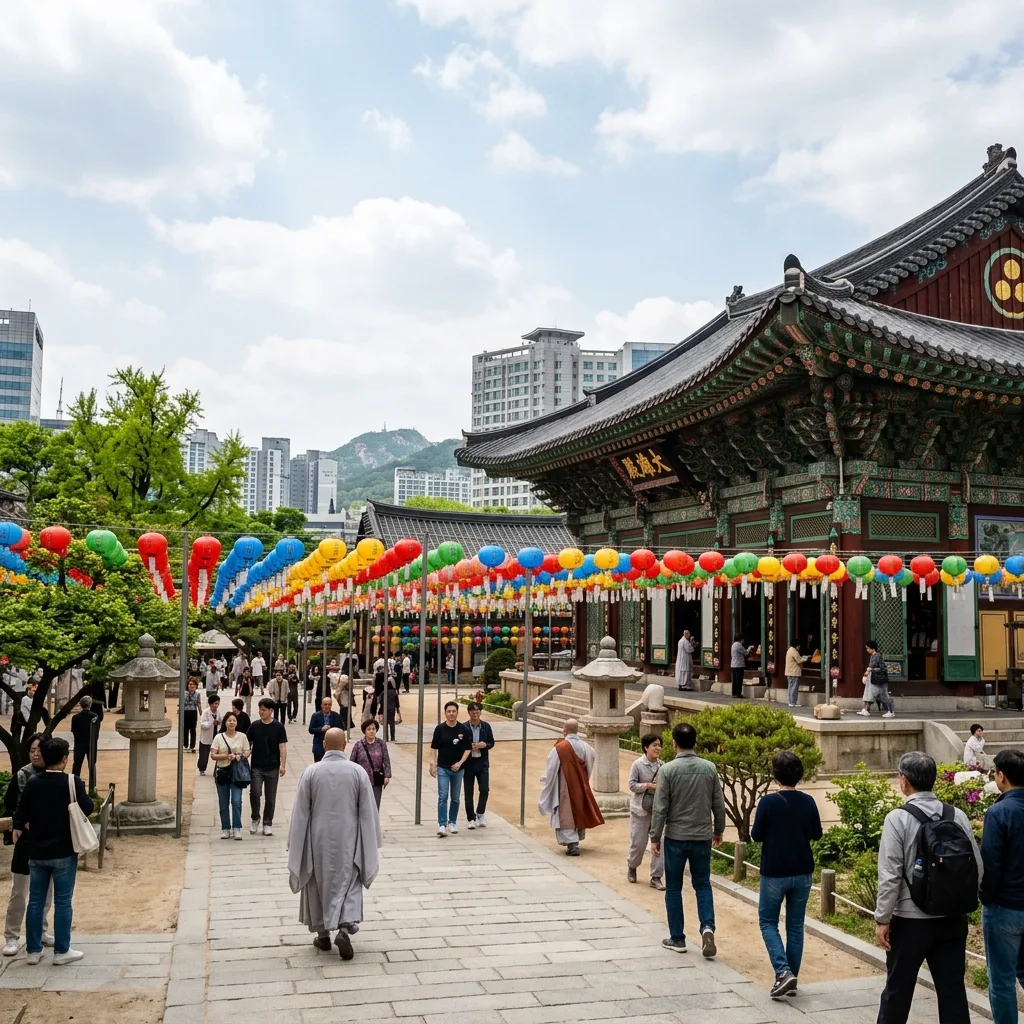
In the middle of one of Asia's most wired, fastest-moving capitals, a 600-year-old Buddhist temple stands quietly surrounded by lotus lanterns and ancient zelkova trees. Jogyesa Temple is the administrative headquarters of the Jogye Order — the dominant order of Korean Buddhism — and for most visitors it delivers something Seoul rarely offers: genuine stillness, available for free, with no reservation required.
Whether you have 20 minutes between sightseeing stops or want to book a multi-day Templestay, Jogyesa rewards every level of engagement. This guide covers everything from the temple's layered history to the subway exit that puts you 300 meters from the gate.
What Is Jogyesa Temple and Why Does It Matter?
Jogyesa Temple (조계사) is not just a scenic spot — it is the nerve center of Korean Buddhism. As the head temple of the Jogye Order, which oversees more than 1,700 Buddhist temples across South Korea, decisions about doctrine, monastic policy, and national Buddhist events are made here. That institutional weight gives the grounds a quiet gravity you don't find at purely ornamental temples.
The temple sits in Jongno District, less than a kilometer from Gyeongbokgung Palace, tucked into a block between the busy cultural corridors of Insadong to the south and Bukchon to the northeast. Its footprint is compact — roughly two city blocks — but every square meter carries meaning.
A Brief History: From the Goryeo Dynasty to the Modern City
Buddhism arrived in Korea in 372 CE, during the Three Kingdoms period, and became the state religion under the Goryeo dynasty (918–1392). The Joseon dynasty that followed was Confucian, and Buddhist institutions were pushed to the mountains, where most of Korea's rural temple complexes were established during this period of urban suppression.
Jogyesa's current incarnation in central Seoul dates to 1910, when it was established as a base for the Jogye Order during Japanese colonial rule — a period when Korean Buddhist leaders fought to preserve an independent tradition distinct from Japanese-influenced Zen (Seon in Korean). The original site was known as Gakhwangsa Temple; it was renamed Taegosa and finally Jogyesa in 1954, after liberation and the restructuring of Korean Buddhism.
The result is a temple with a century-old physical presence in Seoul but a spiritual lineage stretching back more than a millennium. That combination — accessible urban location, genuine religious function, deep historical roots — is what makes Jogyesa worth your time.
What to See Inside the Temple Grounds
The grounds are small enough to tour thoroughly in 45 minutes, but there is enough detail to justify a slow two-hour visit.
Daeungjeon (대웅전) — The Main Dharma Hall
The Daeungjeon is the focal point of the compound. Built in 1938, it combines Joseon-era Buddhist architectural forms — the multi-layered dancheong (단청) painted eaves in red, blue, and green — with a scale suited to urban Seoul. Inside, three gilded Buddha statues sit on the main altar: Sakyamuni in the center, flanked by Amitabha and Bhaisajyaguru. The hall is open for prayer from 4:00 AM to 9:00 PM; visitors are welcome to enter quietly and observe, though photography inside is expected to be discreet and non-intrusive.
The stone steps leading up to the hall are flanked by two stone lanterns that date to the Goryeo period — some of the oldest objects on the grounds, transferred here from temples that were demolished or relocated.
Geuknakjeon (극락전) — The Paradise Hall
Behind and to the left of the Daeungjeon, the smaller Geuknakjeon is dedicated to Amitabha Buddha, the Buddha of Infinite Light associated with the Pure Land tradition. Devotees come here specifically to pray for deceased family members, and the atmosphere is noticeably more intimate than the main hall. The hall keeps the same hours as the Daeungjeon (4:00 AM – 9:00 PM).
The 500-Year-Old Zelkova Trees
Two zelkova trees (느티나무) on the temple grounds are approximately 500 years old, pre-dating the current temple buildings by centuries. They are designated natural monuments by the Korean government. In spring, the area under and around these trees fills with thousands of hanging lotus lanterns in the weeks before Buddha's Birthday (부처님 오신 날), which falls on the fourth month of the lunar calendar — usually in May on the Gregorian calendar. The contrast of the glowing lanterns against the rough bark of ancient trees is one of Seoul's most photographed seasonal sights.
The Lotus Pond and Stone Pagoda
A small lotus pond near the entrance holds pink and white blooms from late June through August. Adjacent to it, a three-story stone pagoda dating to the unified Silla period (668–935 CE) stands as the oldest artifact on site. It was relocated here for preservation. Even if you visit when the lotus is not in bloom, the pond and pagoda together give the entrance area a contemplative quality that contrasts sharply with the traffic noise outside the gate.
The Templestay Information Center
On the western side of the grounds, the Templestay Information Center serves as the national hub for coordinating temple stay programs across Korea. It is worth visiting even if you aren't staying overnight: the center has exhibits on Korean Buddhist culture, free English-language brochures on temple etiquette, and staff who speak English and can answer questions about programs across the country.
Templestay: Sleeping Inside a Seoul Monastery
Jogyesa offers one of the most accessible Templestay programs in Korea precisely because it is in the city. You do not need to travel to a mountain monastery to experience Korean monastic life.
What the "Be a True Hero!" Program Includes
Jogyesa's primary residential Templestay program is called "Be a True Hero!" Recharging Templestay. It typically runs over a weekend (Saturday morning through Sunday afternoon) and includes:
- Morning ceremony (새벽 예불): Participants join monks for the 4:00 AM morning chant in the Daeungjeon — the most atmospheric hour at the temple, when the city is silent and incense fills the hall.
- 108 prostrations: A meditative practice in which participants perform 108 full bows, one for each earthly desire in Buddhist cosmology. It is physically demanding and mentally clarifying.
- Paper lotus flower making: A hands-on craft session with cultural significance — lotus flowers are central symbols in Korean Buddhism, representing purity emerging from muddied water.
- Templestay temple tour: A guided walk through the grounds with historical and doctrinal context provided by an English-speaking guide.
- Meals: Simple monastic meals (사찰 음식) following Buddhist dietary restrictions — vegetarian, no garlic, onion, green onion, chive, or leek (the "five pungent roots" avoided in Korean Buddhist cuisine).
Programs are conducted partly in English. Advance reservation is required via the official Templestay website (eng.templestay.com).
Day Programs (당일 프로그램)
If an overnight stay doesn't fit your schedule, Jogyesa also runs day programs lasting three to four hours. These typically include a temple tour, one hands-on cultural activity (tea ceremony or lotus-making), and a short meditation session. Check the official site for current schedules, as day programs run on specific dates rather than daily.
What to Bring
- Loose, comfortable clothing in muted colors (gray, white, or beige preferred; activewear is fine)
- No sleeveless tops or shorts — you will be given a set of gray temple robes to wear during the program
- No perfume or heavy cosmetics out of consideration for fellow participants and the ritual space
- Cash for optional purchases (incense, prayer beads, dharma goods at the temple gift shop)
Buddha's Birthday Festival (연등회)
Once a year, usually in May, Jogyesa becomes the epicenter of Seoul's largest Buddhist festival. The Lotus Lantern Festival (연등회) has been recognized by UNESCO as Intangible Cultural Heritage of Humanity since 2020. The celebration transforms the streets between Jogyesa and Heunginjimun Gate (Dongdaemun) with hundreds of thousands of lanterns, culminating in a grand parade on the Saturday before Buddha's Birthday.
During this period, Jogyesa itself is open late, lanterns cover every available surface, and free ceremonies run throughout the day and evening. The week-long event draws hundreds of thousands of visitors. If your Seoul trip overlaps with this window, plan your Jogyesa visit for after dark when the lantern display is at full effect — one of the most visually stunning spectacles in the city, and entirely free.
Practical Visitor Information
Hours
The temple grounds are open 24 hours, every day of the year. The main halls have more restricted hours:
- Daeungjeon (Main Hall): 4:00 AM – 9:00 PM
- Geuknakjeon (Paradise Hall): 4:00 AM – 9:00 PM
A nighttime visit (after 8 PM) is particularly atmospheric — the main hall is lit from within, incense smoke drifts across the courtyard, and the surrounding city noise recedes enough to feel the space properly.
Admission
Jogyesa Temple is free to enter. There are no tickets, no booking required, and no timed entry. The only fees are for Templestay programs and optional purchases at the dharma goods shop inside.
How to Get There
Option 1 — Anguk Station (Line 3, Exit 6): Walk approximately 300–400 meters south. This is the most direct route and leaves you approaching the temple from the Insadong side. Transit time from central Seoul stations: about 5–10 minutes.
Option 2 — Jonggak Station (Line 1, Exit 2): Walk approximately 5 minutes northeast toward the temple. Jonggak is on the main north-south subway trunk line, making it convenient from Seoul Station, Myeongdong, or Dongdaemun.
Option 3 — Gwanghwamun Station (Line 5, Exit 2): Walk about 5 minutes east. This option is convenient if you're combining Jogyesa with a visit to Gyeongbokgung Palace, which sits immediately to the north of Gwanghwamun Station.
By bus: Multiple city bus routes stop on Ujeongguk-ro, the street running past the temple's main gate. Search "조계사" in Naver Maps for real-time routing from your location.
By taxi: Tell the driver "조계사" (Jogyesa) or show the Hangul characters — every Seoul driver knows the temple.
What to Wear
Standard respectful attire applies: covered shoulders, no shorts or short skirts inside the halls. Slip-on shoes are practical because you remove footwear before entering the main buildings. During the Templestay, you are provided with temple robes regardless of what you arrive in.
Nearby Attractions to Combine
Jogyesa's Jongno location places it within easy walking distance of several of Seoul's most visited neighborhoods and landmarks:
- Insadong (인사동): 10-minute walk south. Seoul's traditional arts and crafts street with tea houses, galleries, and the Ssamziegil courtyard. If you're exploring the area around Jogyesa, the The Ultimate Seoul Travel Guide: Where to Stay & What to See covers how to structure a multi-day itinerary through this part of the city.
- Bukchon Hanok Village: 15-minute walk northeast. Seoul's best-preserved traditional neighborhood with hundreds of private hanok houses on a hillside. Jogyesa pairs naturally with Bukchon as a half-day cultural itinerary — and if you're weighing different hanok experiences, Bukchon vs Jeonju: Which Hanok Village Should You Visit? breaks down the differences between Seoul's urban hanok area and Jeonju's immersive village.
- Gyeongbokgung Palace: 15-minute walk west/northwest. The largest and most restored of Seoul's Five Grand Palaces.
- Cheonggyecheon Stream: 10-minute walk south. A 6-kilometer urban stream that runs through central Seoul, restored from a buried expressway in 2005.
After exploring temples and traditional neighborhoods, central Seoul also delivers on street food. The A Foodie's Guide to Seoul: Top 15 Must-Try Street Foods covers what to eat within walking distance of the Jongno area.
Temple Etiquette: What First-Time Visitors Get Wrong
Most visitors have an instinctively respectful attitude at Jogyesa, but a few specific norms are worth knowing in advance.
Bowing is appropriate. When entering the main hall or passing a monk, a slight bow (just a nod of the head) is the correct acknowledgment. Deep bows with hands pressed together (합장) are for moments of active prayer.
Walk around stupas and pagodas clockwise. In Buddhist practice, circumambulating sacred objects clockwise is correct orientation. If you see locals walking a slow loop around the pagoda or the main hall, they are performing a form of walking meditation — do not cut through their path.
Photography inside the halls requires judgment. The grounds are open to visitors and casual photography outside is fine. Inside the Daeungjeon or Geuknakjeon, photography during active prayer services is inappropriate. Between services, quiet photography is generally tolerated but not explicitly permitted — observe what locals are doing and err toward restraint.
Do not touch offerings. Fruit, candles, incense, and flowers placed on altars are active offerings and should not be handled or moved.
Keep voice low. This applies especially near the main hall but is a general principle on the grounds. The temple functions as an active place of worship, not a museum.
Shoes off before entering buildings. Shoe racks or shelves are provided outside the main doors. There is no fee for this and no attendant — just use the racks and retrieve your shoes when you leave.
FAQ
Is Jogyesa Temple open every day? Yes. The grounds are open 24 hours, 365 days a year. The main halls (Daeungjeon and Geuknakjeon) are open from 4:00 AM to 9:00 PM. There is no closure for national holidays or special events — in fact, major Buddhist holidays bring more activity, not closures.
Do I need to be Buddhist to visit or participate in Templestay? No. Jogyesa explicitly welcomes non-Buddhist visitors and runs its Templestay programs in English partly to reach international visitors with no prior background in Buddhism. The programs are framed as cultural immersion rather than religious conversion.
How do I book a Templestay at Jogyesa? Through the official Templestay portal at eng.templestay.com. Select Jogyesa from the temple list and choose your program type and dates. Booking should be done at least a week in advance; popular dates (especially around Buddha's Birthday in May) book out months ahead.
What is the best time of year to visit Jogyesa? Spring (April–May) for the lotus lanterns and Buddha's Birthday Festival. Late June through August for lotus blooms in the pond. Anytime for a low-key visit without crowds — weekday mornings before 10 AM are quietest. Avoid weekends during the Lotus Lantern Festival if you dislike large crowds.
Is the temple wheelchair accessible? The main courtyard is paved and generally accessible. The raised threshold at the entrance to the Daeungjeon may present difficulty for wheeled mobility aids. The Templestay Information Center on the grounds is fully accessible. Contact the temple directly if accessibility requirements are a planning factor.
Is there parking at Jogyesa Temple? Limited parking exists for private vehicles, but the temple's central urban location makes it impractical to drive. Public transit (Anguk or Jonggak subway stations) is the intended access mode for most visitors.
Conclusion
Jogyesa Temple earns its place on any Seoul itinerary not just because of what it looks like, but because of what it is: an actively functioning headquarters of a living religious tradition, open to anyone, free of charge, at the center of a major city. You can arrive with no preparation, spend 30 minutes in the courtyard, and leave with a clearer sense of what Korean Buddhism looks and feels like in practice.
Or you can go further — book a weekend Templestay, wake up at 4 AM for morning chants, make a paper lotus, and carry something home that won't appear in any souvenir shop. Either visit is valid, and Jogyesa accommodates both.
If you're building a multi-day Seoul itinerary, anchor this visit to the Jongno/Insadong/Bukchon corridor for an afternoon that moves from active streetlife to quiet contemplation and back again. The contrast is part of the experience.