Haeinsa Temple Stay: Spending a Night at Korea's Tripitaka Koreana Monastery
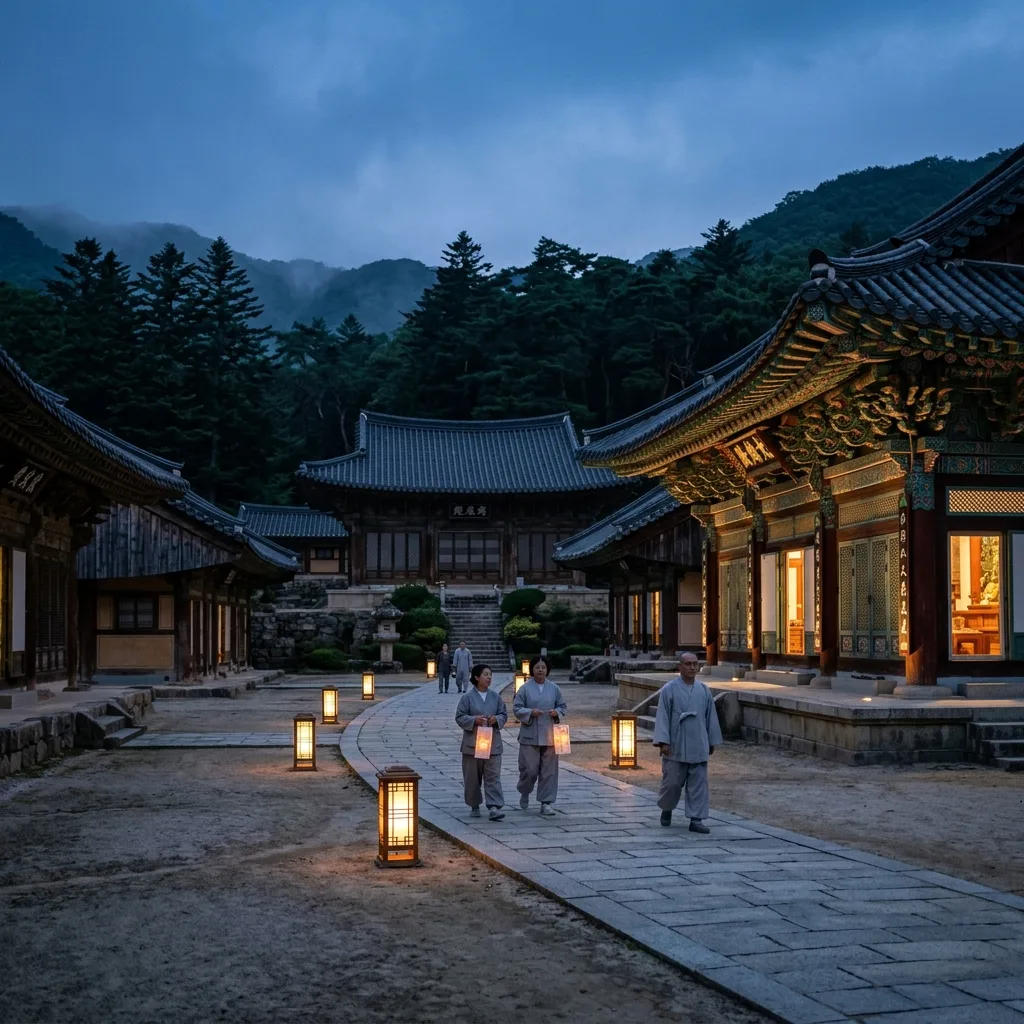
The bell rings at 3:50 a.m. Somewhere in the darkness of the Gayasan mountains, a wooden mallet strikes a large hollow log drum — the mok-eo — and its low resonance rolls across the courtyard, past lanterns swaying in cold mountain air, and through the thin paper walls of your sleeping quarters. You are awake in a way you have never been awake before. This is Haeinsa Temple, home to 81,350 hand-carved wooden printing blocks containing the entire Buddhist canon, and tonight it is also your home.
Haeinsa is not the most famous temple in South Korea for casual tourists — Bulguksa in Gyeongju tends to claim that title — but it is arguably the most significant. As one of the Three Jewel Temples of Korean Buddhism (representing the Dharma, or Buddhist teachings), Haeinsa holds a responsibility that the other temples do not: it is the living custodian of the Tripitaka Koreana, a set of 81,350 wooden printing blocks carved between 1237 and 1248 CE that represent the most complete and accurate version of the Buddhist canon in existence. Both the blocks and their storehouse — the Janggyeong Panjeon — are UNESCO World Heritage Sites. Spending a night here through the official temple stay program is one of the most immersive cultural experiences available anywhere in Korea.
If you have been thinking about trying a Korean temple stay and want something more than a well-trodden tourist circuit, Haeinsa delivers. This guide covers everything: the history of the site, what the temple stay schedule actually looks like hour by hour, how to book, how to get there, and the practical details most other guides gloss over.
What Is the Tripitaka Koreana and Why Does It Matter?
If you have read about Korean temple stays, you may already know that most programs involve waking at dawn, sitting in meditation, eating vegetarian baru gongyang temple meals, and participating in light ceremonies. Haeinsa offers all of that — but the Tripitaka Koreana is what makes this particular temple stay unlike any other in the country.
The Tripitaka Koreana — Goryeo Daejanggyeong in Korean — was carved during the Goryeo Dynasty as a act of national prayer and protection against the Mongol invasions. Each of the 81,350 blocks is made from white birch wood that was soaked in seawater for three years, then dried in shade for another three years before a single character was carved. The ink side of each block was lacquered and fitted with metal corner caps. After more than 750 years, not one block has warped or developed mold. Scholars still do not fully understand how.
The Janggyeong Panjeon, the four wooden buildings that house the blocks, were designed in the 14th century using a passive ventilation system so precise that modern scientists have struggled to replicate its humidity-control logic. The buildings have no insulation, no mechanical climate control, and no seals — and yet the environment inside stays exactly right for wood preservation year-round. This combination of the blocks themselves and the architecture that protects them earned a dual UNESCO World Heritage listing, first for the Janggyeong Panjeon buildings in 1995 and then for the Tripitaka Koreana as a documentary heritage in 2007.
You cannot enter the storehouses — the blocks are viewed through latticed windows — but standing in front of those wooden grilles and peering into the dim interior, rows upon rows of ancient printing blocks receding into shadow, is one of those moments that earns a long-haul flight.
What the Haeinsa Temple Stay Program Includes
Haeinsa runs its temple stay through the official Templestay program administered by the Korean Buddhist Cultural Service. The flagship overnight program is the Tripitaka Koreana Pilgrimage Templestay, which combines cultural activities with the full monastic schedule. As of 2026, the cost is 100,000 KRW per person (approximately USD 72–75 at current exchange rates), which includes accommodation, all meals, and all program activities. Importantly, your temple stay reservation also waives the standard entrance fees to both Gayasan National Park and Haeinsa Temple itself.
The Daily Schedule
Temple stay schedules vary slightly by season, but the structure below reflects the standard overnight program:
Day 1 — Arrival Afternoon
- 14:00–15:00 — Check-in and orientation. You receive a samue (the grey or brown monk's work uniform you wear for the duration of the stay) and are shown to your quarters. Rooms are simple: ondol floor heating, a thin mattress, a folded blanket, and a small window. There are shared bathrooms. The simplicity is intentional.
- 15:30–17:00 — Temple tour and Janggyeong Panjeon visit. A monk or trained guide takes you through the main temple buildings and up to the storehouses. This is the best time to spend real time at the Tripitaka Koreana without the day-trip crowds.
- 17:30 — Baru gongyang dinner. Temple food is served in four bowls — rice, soup, kimchi, and a seasonal side dish. The eating is ritualized: you receive exactly what you can finish, you eat in silence, and you wash your own bowls with water and a small cloth, then drink the wash water. Nothing is wasted. First-timers often find this the most unexpectedly moving part of the entire stay.
- 18:30–19:30 — 108 Bows. The evening prostration ceremony involves 108 full-body bows, one for each of the 108 earthly desires in Buddhist tradition. It takes about 40 minutes, it is physically demanding, and it is quietly transformative.
- 20:00–21:00 — Evening meditation and bell ceremony. The four-instrument ceremony (Samshin Ul-lim) — the large bell, the cloud-shaped gong, the wooden fish drum, and the hide drum — is performed at dusk and dawn. Watching it in the dimly lit courtyard, with the Gayasan forest dark behind the temple walls, is the kind of memory that stays with you.
- 21:00 — Lights out. Monks wake at 3:00 a.m. and the temple quiets early.
Day 2 — Morning
- 03:50 — Wake-up. The mok-eo wooden drum is struck.
- 04:00–05:00 — Morning chanting service (Daeungjeon main hall). Attendance is optional but highly recommended. The chanting, candlelight, and incense at this hour are profoundly atmospheric.
- 05:30 — Dawn baru gongyang breakfast.
- 06:00–07:30 — Haengseon (walking meditation) around the temple grounds and lower mountain path. The forest at dawn, with fog in the valley below, is worth the early wake-up on its own.
- 07:30–09:00 — Prayer bead (yeomju) making workshop. You string your own 108-bead mala bracelet to take home.
- 09:30 — Check-out and departure.
The program also includes seasonal variations — in autumn (October–November), the forest canopy around Haeinsa turns vivid orange and red, and the dawn walk becomes one of the most scenic short hikes in southern Korea.
Getting to Haeinsa Temple
Haeinsa is located in Hapcheon County, Gyeongsangnam-do (South Gyeongsang Province), deep within Gayasan National Park. It is not on a train line, so all access involves buses. The most convenient gateway city is Daegu.
From Daegu (Most Common Route)
- Take the KTX or SRT to Dongdaegu Station from Seoul (approximately 1 hour 40 minutes, from 50,000 KRW one-way).
- From Dongdaegu Station, take a taxi or subway to Daegu Seobu Bus Terminal (서부정류장).
- From Seobu Bus Terminal, take a direct bus to Haeinsa (해인사). Buses depart approximately every 40–60 minutes. Journey time: about 1 hour 10 minutes. Fare: approximately 6,500 KRW one-way.
- The bus drops you at the Haeinsa entrance parking area. From there it is a 15-minute walk through the forest approach road to the temple gate.
From Busan
From Exploring Busan: A Complete Guide to South Korea's Coastal Gem, Busan's Seobu Intercity Bus Terminal has direct buses to Haeinsa (approximately 1 hour 50 minutes, around 10,000 KRW). This is a good option if you are combining a southern Korea itinerary.
By Car or Taxi
From Daegu, the drive takes about 55 minutes via the 88 Expressway. Parking is available at the national park entrance. Taxis from Daegu run around 50,000–60,000 KRW one-way.
Practical Information: Hours, Fees, and Booking
Temple Admission
- Adults (19–64): 3,000–4,000 KRW (fees vary slightly by season; recent sources cite 3,000 KRW)
- Teenagers (13–18): 1,500 KRW
- Children (7–12): 1,000 KRW
- Seniors (65+) and children under 6: Free
- Temple stay participants: Entrance fee waived with reservation confirmation
Opening Hours
- Summer (April–October): 08:30–18:00
- Winter (November–March): 08:30–17:00
Booking the Temple Stay
Book through the official government platform: eng.templestay.com. Look for Haeinsa in the temple directory and select the Tripitaka Koreana Pilgrimage Templestay. The site accepts international credit cards. Cancellations within three days of arrival incur a fee.
Price: 100,000 KRW per person (approximately USD 72–75 as of 2026)
Do not book through third-party aggregators for Haeinsa specifically — the official platform is both cheaper and the only way to guarantee your entrance fee waiver is processed correctly.
What to Pack
The temple provides samue work clothes, bedding, and toiletries. You do not need to bring much. A few things that make a real difference:
- Warm layers for the morning: Even in summer, the Gayasan mountains at 4:00 a.m. are cold. Bring a fleece or light down jacket that fits over the samue.
- Slip-on shoes: You remove your shoes constantly — at every hall, before meals, at the dormitory. Lace-up boots are maddening. Simple sneakers or slip-ons are far better.
- Earplugs (optional): The mok-eo drum at 3:50 a.m. is not subtle, but if you are a light sleeper, shared dormitory sounds in the hours before the drum may be the bigger issue.
- A small notebook: The morning meditation and walking sequence produces a particular kind of clarity. Having something to write in during the free periods is worth it.
- No alcohol: Haeinsa is a fully observant monastery. Alcohol is prohibited on the entire premises. This is a genuine rule, not a suggestion.
Temple Stay Etiquette at Haeinsa
Haeinsa runs a stricter program than some of the more casual temple stays near Seoul. A few norms that matter:
Dress modestly for arrival. You change into samue on check-in, but arriving in shorts and a crop top sets the wrong tone immediately. Dress as you would for a place of active worship.
Silence is the default in most spaces. Conversation in the dormitory, meditation hall, and during meals is not permitted. Conversation in the courtyard and open areas is fine in normal tones.
Photography rules are zone-specific. The main courtyard and temple approach are open to photography. The Janggyeong Panjeon area allows exterior photographs, but photography inside the storehouses or during active ceremonies (chanting, bell ceremony) is not permitted. When in doubt, ask.
The bowing ceremony is participatory, not spectator. You are expected to complete the 108 bows, not observe. Modifications are allowed for guests with physical limitations — inform the staff during check-in.
Meal etiquette matters. The baru gongyang meal protocol is one of the most ritualized parts of the stay. Pay close attention during the brief orientation — the staff explain each step clearly. The most common mistake is serving yourself more food than you can finish; you must eat everything in your bowl.
For a deeper overview of how temple stays work across Korea before you book, see Temple Stay Programs in Korea: A Guide to Finding Inner Peace, and for etiquette specifics that apply across all temple stays, The Sound of Silence: Essential Etiquette for a Korean Temple Stay covers the full protocol.
Tips and Common Mistakes
Book early for autumn. The October–November period, when the Gayasan forest is at full color, is the most popular time for temple stays across Korea. The Haeinsa program has limited capacity — typically 20–30 guests per overnight session — and autumn slots fill weeks or months in advance. Spring (April–May) is almost as beautiful for the Gayasan forest and considerably easier to book.
Plan an extra hour before or after for the temple grounds. The temple stay schedule is structured and leaves little unguided time. If you want to linger at the Janggyeong Panjeon or explore the secondary halls at your own pace, arrive early on check-in day or budget time after checkout before your bus back to Daegu.
Combine with the Gayasan National Park trailhead. The main hiking trail into Gayasan (Topmyo-bong peak, 1,430m) starts near the temple. Day hikers begin around 7:00 a.m.; as a temple stay participant you will be done with breakfast and the prayer bead workshop by 9:30, giving you the option to add a half-day hike before the afternoon bus. The Best National Parks in South Korea for Fall Foliage guide has more on Gayasan's trails in context.
Do not expect WiFi. There is no guest WiFi at Haeinsa. Mobile data works sporadically inside the temple complex. This is a feature, not a bug — most guests report the disconnection as part of what makes the experience work. Download offline maps before you arrive.
The day-trip crowd peaks mid-morning. Because Haeinsa is the most visited non-Seoul temple in southern Korea, tour buses begin arriving around 10:00 a.m. As an overnight guest, you will have the Janggyeong Panjeon almost entirely to yourself during the afternoon tour on Day 1 and during the dawn walk on Day 2. This timing advantage is one of the most underappreciated benefits of the overnight program.
Frequently Asked Questions
Do I need to be Buddhist to participate? No. The Haeinsa temple stay is open to people of all backgrounds and faiths. You are expected to participate respectfully — bowing, chanting phonetically, observing meal rituals — but no belief is required or assumed. The program is cultural and experiential, not evangelical.
Is the program in English? The primary language is Korean, but Haeinsa's templestay team includes English-speaking staff and provides written materials in English. The orientation, guided tour, and activity instructions are all delivered in both Korean and English. You will not be lost.
Can I attend as a solo traveler? Yes, and solo travelers are common in temple stay programs. The communal structure of the schedule means you are rarely on your own for extended periods, and the quiet atmosphere makes it a natural fit for solo travel. Accommodation is single-sex shared rooms.
What is the physical demand level? The 108 bows are the most physically demanding element — expect sore knees and thighs the next day if you are not accustomed to floor-based exercise. The morning walking meditation is gentle. The dawn hike is optional and moderate. Guests with mobility limitations should note their needs during booking.
Can children participate? The program accepts families, but the 3:50 a.m. wake-up and extended ceremony times make it better suited for children 10 and older. Younger children are welcome but the overnight structure can be difficult for small kids and disruptive for other guests.
What if I need to cancel? Cancellations made more than 72 hours before arrival receive a full refund through the official templestay.com booking system. Within 72 hours, a partial cancellation fee applies. The exact fee schedule is posted on the booking platform.
Conclusion
A temple stay at Haeinsa is not a spa retreat with Buddhist aesthetics. It is a genuine encounter with a living monastery, one of the oldest continuous religious sites in East Asia, and the physical home of a written heritage that has survived wars, fire, and seven centuries of Korean history. The schedule is demanding by tourist standards — the 4:00 a.m. wake-up is real, the silence during meals is real, and the physical toll of 108 bows the night before is real. Most guests report that these demands are precisely what make the experience stick.
If you are building a southern Korea itinerary, Haeinsa fits naturally alongside Busan (2 hours by bus) and makes a powerful contrast to beach and food-market days. If you are planning a longer trip across the country, The Ultimate 10-Day South Korea Itinerary for First-Timers can help you slot it in without overloading your schedule.
Book through eng.templestay.com. Arrive before dark on the first day. Wear something warm to sleep. When the mok-eo wakes you at 3:50 a.m., get up.