Temple Stay Programs in Korea: A Guide to Finding Inner Peace
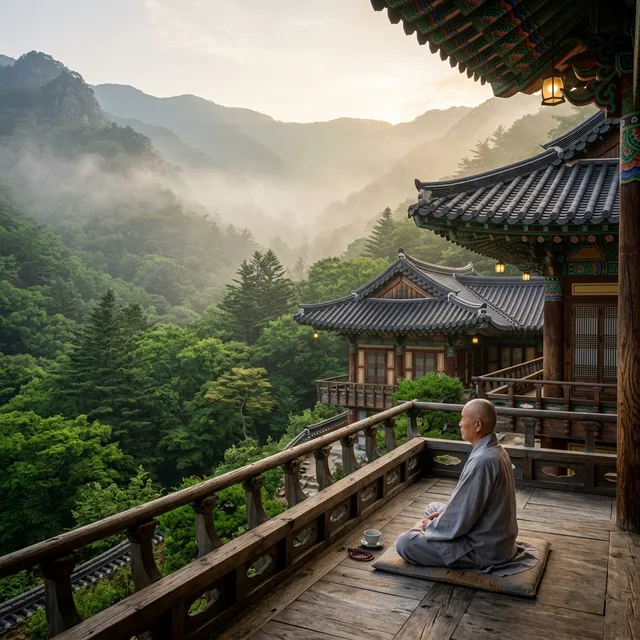
In a world that never stops pinging, buzzing, and demanding our attention, South Korea—the most connected nation on Earth—offers an unexpected antidote. Deep in the mist-covered mountains and tucked into the skyscrapers of Gangnam are hundreds of Buddhist monasteries that have opened their doors to the public.
A "Temple Stay" is more than just a bed for the night. It is a portal into a 1,700-year-old way of life. It is an invitation to put down your phone, trade your clothes for a simple gray uniform, and see if you can find the space between your thoughts.
In this guide, we explore the best temple stays in Korea for 2024-2025, from the high-energy martial arts of Golgulsa to the Michelin-featured silence of Baekyangsa.
1. Choosing Your Path: The Two Types of Temple Stay
Every temple offers a different "vibe," but they generally fall into two categories. Knowing which one you need is the difference between a stressful stay and a transformative one.
The Experiential Program (The "Deep Dive")
If you want to understand why monks do what they do, choose an Experiential stay. This is a structured schedule that typically includes:
- Yebul (Chanting): Participating in the dawn and evening ceremonies.
- Cham-seon (Meditation): Learning Seon (Zen) meditation techniques.
- 108 Prostrations: A physical meditation that involves bowing 108 times.
- Crafting: Making lotus lanterns or prayer beads.
The Rest-Oriented Program (The "Digital Detox")
Often called "Freestyle," this is becoming the most popular choice for 2025 travelers.
- The Concept: You follow the temple's meal and chanting times, but the rest of the day is yours. You can hike the mountain trails, read in the courtyard, or sit in the meditation hall for as long as you like.
- Best For: Those suffering from burnout who just need quiet and nature without the "homework" of a structured class.
2. Top Temples for Foreigners in 2024-2025
While over 100 temples offer programs, these are the standout experiences for international visitors.
Bongeunsa (Seoul): The Urban Oasis
Located directly across from the COEX mall in Gangnam, Bongeunsa is the most accessible temple stay in the country.
- The Contrast: You can look up from your meditation and see the glass towers of the World Trade Center Seoul through the pine trees.
- Best For: Travelers with a tight schedule who want to experience monastic life without leaving the city.
Woljeongsa (Pyeongchang): The Nature Cathedral
Nestled in Odaesan National Park, Woljeongsa is famous for its 1km-long Fir Tree Forest path.
- The Experience: The sound of the mountain stream and the wind through the 80-year-old trees is the core of this stay. It feels like a high-altitude sanctuary.
- Must-Do: Walking the forest path in the early morning mist before the day-hikers arrive.
Golgulsa (Gyeongju): The Active Monastery
If traditional meditation is too sedentary for you, head to Golgulsa. It is the headquarters of Seonmudo, an ancient Buddhist martial art.
- The Vibe: Much more intense than other temples. You will practice kicks, punches, and archery alongside traditional meditation.
- The Setting: The temple is built into limestone cliffs, featuring 12 rock-cut grottoes.
Baekyangsa (Jangseong): For the Soul’s Palate
If you watched Netflix's Chef's Table, you know Jeong Kwan Snim. Her temple, Baekyangsa, is the global destination for Korean Temple Food.
- The Food: Everything is vegan, seasonal, and made with ingredients grown on the temple grounds. It’s an exploration of the "True Taste" of Zen.
- Availability: Due to its fame, these slots book up 3-6 months in advance.
3. The Sensory Routine: What Actually Happens?
Monastic life is built on Ritual. Even as a guest, participating in these rituals is what creates the "Inner Peace" seekers look for.
3:30 AM: The Sound of the Dharma
Your day begins with the sound of the Moktak (wooden percussion) and the large Four Instruments (Drum, Bell, Cloud plate, and Carp wood). This isn't just an alarm; it's a call to wake up the spirits of the air, the water, the earth, and the humans.
Balwoo Gongyang: The Mindful Meal
You eat your meals from Balwoo (four nested bowls).
- The Rule of No Waste: You finish every grain of rice and every drop of soup. At the end, you use a slice of yellow radish and water to clean your bowls, and then you drink the cleaning water.
- The Lesson: It teaches extreme gratitude for the labor that went into the food. It is surprisingly emotional for many Westerners used to "grab-and-go" meals.
108 Prostrations: The Ego-Slayer
Bowing 108 times sounds like a workout, and it is. But as you repeat the motion, your mind stops wandering. Each bow is an act of letting go of a desire or an attachment. By the 50th bow, your sweat is real. By the 100th, your ego is usually gone.
4. The Balwoo Gongyang: A Lesson in Zero-Waste Living
To the uninitiated, the monastic meal ritual known as Balwoo Gongyang can seem intimidating, but it is often the most profound part of the stay.
- The Four Bowls: You are given a set of four nested wooden bowls of varying sizes. The largest is for rice, the second for soup, the third for water, and the fourth for side dishes.
- The Protocol: Every movement is synchronized. You open the bowls in a specific order with a specific sound. You receive the food with your head bowed.
- The Yellow Radish Secret: You are given a single slice of yellow radish (danmuji) at the start. You do not eat this initially. After you have finished your food, you use this radish like a sponge to wipe any remaining grains of rice or sauce from your bowls. You then clean the bowls with water, drink the water (yes, all of it), and finally eat the radish.
- The Takeaway: In a world of extreme consumption, this ritual forces you to confront the reality that nothing should be wasted.
5. Why No Garlic? The Philosophy of Temple Food
Korean temple food is famous worldwide, but it differs from regular Korean vegan food in one major way: The Five Pungent Herbs (O-sin-chae).
- The Forbidden Five: Green onions, garlic, chives, Korean wild chives, and leeks are strictly banned.
- The Reason: In Buddhist philosophy, these herbs are believed to increase anger when eaten raw and stimulate sexual desire when cooked. To maintain a calm, meditative state, monks avoid these heavy stimulants.
- The Results: Instead, they use natural seasonings like kelp, mushroom powder, and perilla seeds. The result is a clean, subtle flavor profile that highlights the natural sweetness of the vegetables.
6. Mastering the Seon (Zen) Posture
Meditation at a temple isn't just "relaxing." It is "active stillness."
- The Legs: You will be taught the Half-Lotus or Full-Lotus position. If you have tight hips, most temples allow you to use a thicker cushion (Bang-seok) to elevate your glutes, making it easier on your knees.
- The Hands (Beop-gye-jeong-in): Place your right hand on your lap, palm up. Place your left hand on top of the right, and touch your thumbs together lightly to form a circle. This circle is the "Dharma Realm." If your thumbs start to droop, it means you are falling asleep. If they push together too hard, you are too tense.
- The Breath: Inhale through the nose, counting to three. Exhale through the mouth or nose, counting to six. Focus on the "Dan-jeon" (the point two inches below your navel).
7. The 2002 World Cup Origins
Why did Korean temples suddenly start hosting foreigners?
- The Story: During the 2002 World Cup, Korea faced a massive shortage of hotel rooms. The government asked the Buddhist Order for help. Temples opened their doors as a "cultural accommodation" to help house visitors from around the world.
- The Success: What was meant to be a temporary fix became a national phenomenon. Visitors loved the tranquility so much that the "Templestay" program was officially established as a permanent cultural offering.
8. Seasonal Transitions at the Monastery
When you visit dictates your experience:
- Spring (April-May): The season of the Lotus Lantern Festival. Temples are covered in thousands of colorful paper lanterns to celebrate Buddha's birthday.
- Autumn (October-November): Peak beauty. Mountain temples like Woljeongsa and Haeinsa are surrounded by ruby-red maple leaves. It is the best time for "forest bathing."
- Winter (December-February): The most rigorous. Waking up at 3 AM in a snow-covered mountain temple is a test of will, but the absolute silence of a winter monastery is unmatched.
To preserve the peace of the monastery, you are expected to follow the Three Silences:
- Silence in the Hall: When inside the Buddha hall, avoid all whispering.
- Silence in the Refectory: Eating is a meditation. No talking during Balwoo Gongyang.
- Silence in the Hearts: This is the "Digital Detox." Most temples ask you to keep your phone in your room or a locker.
5. What to Bring for Your Soul’s Journey
Temples provide the basics, but you need to be prepared for "Monastic Simplicity."
- Toiletries: Bring your own toothbrush, toothpaste, and soap. Many mountain temples use eco-friendly soaps only.
- Warm Layers: Even in summer, the mountains get cold at 4 AM.
- Walking Shoes: You'll be doing a lot of walking on unpaved gravel paths between halls.
- Modest Socks: Bare feet are generally considered disrespectful in the Buddha halls.
6. How to Plan and Book
The official portal for all bookings is Templestay.com.
- The English Filter: Check the box for "English Speaking" to see temples with dedicated translators.
- The Booking Window: Most temples open their calendar 30-60 days in advance.
- Waitlists: If a popular temple like Baekyangsa is full, check for "One Day" programs as an alternative.
9. Chadam: Tea with a Monk
The most anticipated part of the stay is often Chadam—the time for tea and conversation with a resident monk.
- The Setting: You sit on cushions in the monk's private quarters or a communal tea room. The monk will brew traditional Korean green or lotus tea.
- What to Ask: This is your chance to ask about anything—Buddhism, life struggles, their path to enlightenment, or even their favorite food. Monks are often surprisingly modern and humorous.
- The Value: Having someone listen to your life story without judgment is a rare gift in the modern world. Many guests find they share things with a monk that they haven't shared with their friends or family.
10. The Psychology of the Grey Uniform
Upon arrival, you are handed a grey vest and a pair of wide-leg trousers.
- Dissolving the Ego: In the outside world, we use brands, styles, and jewelry to signal our status and personality. In the temple, everyone looks the same.
- The Comfort: The clothing is designed for sitting on the floor and bowing. It is made of loose, breathable cotton or linen.
- The Effect: By the second day, you stop looking at yourself in the mirror and start looking at the mountains. It is a powerful first step in letting go of "self."
11. World Heritage Deep Dives
For those who want history combined with their stay:
- Haeinsa (Hapcheon): This temple houses the Tripitaka Koreana, the world’s most comprehensive collection of Buddhist scriptures carved onto 81,258 wooden blocks. Staying here is like sleeping inside a 13th-century library.
- Mihwangsa (Haenam): Located on the southernmost tip of the Korean peninsula. It is famous for its view of the sun setting over the yellow sea. It is often called the "Most Beautiful Temple in the World."
12. Beyond One Night: Volunteer Programs
If one night isn't enough, many temples offer Volunteer Programs (Bong-sa).
- The Deal: You stay at the temple for weeks or months. In exchange for free room and board, you help with the kitchen work, cleaning the halls, or translating for foreign guests.
- The Commitment: This is for serious spiritual seekers or students on a long gap year. You must follow the monks' schedule exactly, including the 3:30 AM wake-up call, every single day.
13. Speak Like a Local: Temple Phrases
While most temples have English support, even a few words in Korean will open hearts.
- Annyeong-haseyo (Hapjang-dae-sal): While bowing with your hands together.
- Sungsul-ha-se-yo: May you find enlightenment (A common greeting among Buddhists).
- Gomapseumnida: Thank you (Especially important during the meal).
- Masi-isseo-yo: This food is delicious.
14. Final Summary Table: Your Monk Journey
| Temple | Category | Difficulty | Highlight |
|---|---|---|---|
| Bongeunsa | Urban | Easy | Central Seoul, skyscrapers + Zen. |
| Woljeongsa | Nature | Moderate | Fir Tree Forest, deep mountain air. |
| Golgulsa | Active | High | Seonmudo Martial Arts training. |
| Baekyangsa | Culinary | Easy | World-class temple food experience. |
15. The Challenge of Silence
For many modern travelers, the hardest part of a temple stay isn't the 3:30 AM wake-up call or the 108 bows—it's the Silence.
- The Restlessness: After 20 minutes without stimulation, your mind will likely start scrolling through imaginary social media feeds or worrying about your job.
- The Monk’s Advice: "The boredom is the medicine," one monk told me. "In that space where you are bored, the truth of your life finally has room to speak."
- The Breakthrough: Most guests find that after 24 hours, the restlessness fades, replaced by a deep, grounded sense of belonging to the present moment.
16. Evening Yebul: The transition
As the sun sets over the mountain, the atmosphere of the temple shifts.
- The Sensory Experience: The scent of sandalwood incense fills the air. The monk strikes the large bronze bell (Beom-jong), and the sound vibrates through your very skeleton.
- The Ritual: You walk into the dark hall, illuminated only by candles and the golden light on the Buddha’s face. The rhythmic chanting of the monks creates a hypnotic soundscape that helps you transition into a night of quiet reflection.
17. Rules for the Digital Pilgrim: Photography
While temples are visual masterpieces, you must follow strict guidelines:
- Never during Ceremonies: Do not take photos or videos during Yebul or meditation. It is considered a major intrusion.
- Monk Portraits: Always ask before taking a picture of a monk. Most are happy to oblige, but some older monks prefer to remain unrecorded.
- Inside the Halls: Photos of the interior statues and paintings are often forbidden to preserve the sacred nature of the space. Look for signs saying "No Photos" (Sa-jin-chwi-young-geum-ji).
Conclusion
A temple stay in Korea is a rare opportunity to meet yourself without the masks of society. It is the oldest form of "wellness" tourism, dating back over a thousand years before the word was invented.
When you leave the monastery and return to the neon lights and roaring buses of Seoul, you will find that the noise doesn't bother you as much. You have a "Small Buddha" inside you now—a place of quiet strength that you can return to whenever the world gets too loud.
If you want the strongest all-in-one overview, continue with Temple Stay in Korea: How to Book, What to Expect & Best Programs. For a practical booking walkthrough, use the Templestay.com guide. Before you go, review Temple Stay etiquette, and if you want a more unusual version of the experience, look at Golgulsa Temple Sunmudo Stay.