Photography Rules in China: Museums, Military Zones & What to Avoid

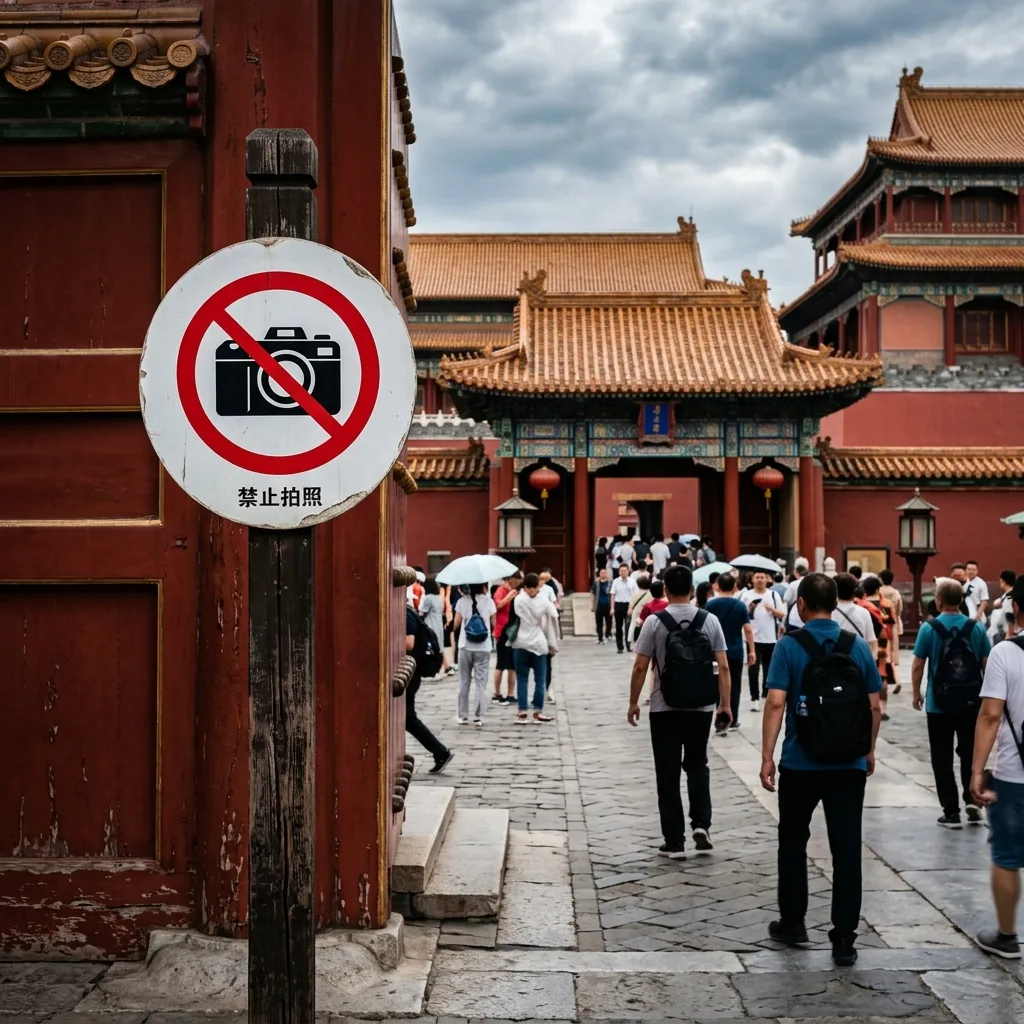
China is one of those destinations where a camera can help you tell the story of the trip, but it can also get you into trouble if you treat every scene like an open-air postcard. Most of the time, travelers can photograph streets, food, skyline views, markets, and public monuments without any issue. The risky part is knowing where the line changes: museums with room-by-room restrictions, military-adjacent areas, border zones, transport infrastructure, government sites, and anything clearly marked as restricted. This guide is for the moments when you are standing there with your phone in your hand and need to make the right call fast.
What You Can and Cannot Photograph
The safest rule is simple: if a sign, staff member, or room label says no photos, treat that as final. In museums, photography rules can change from one exhibition hall to the next; in military or border-sensitive areas, the answer is often no regardless of how ordinary the scene looks.
China does not have one universal “yes” or “no” rule for every place, which is why travelers get tripped up. A square in front of a museum may be fair game, but the gallery inside may ban flash. A scenic road near a coast may be public, but a facility down the road may be protected. The practical skill is not memorizing a single rule. It is learning how to read the environment quickly and err on the side of caution.
The most reliable benchmark is the official wording used by the venue or authority in charge. The National Museum of China, for example, says visitors may take photos in exhibitions displaying its collections, but flash, selfie sticks, and tripods are not allowed. It also notes that temporary exhibitions may allow or prohibit photography depending on the relevant agreement. That is the pattern you will see again and again across major museums: the building may allow photos, but the specific room may not.
Military-related places are different. The legal standard is much stricter. China’s Military Facilities Protection Law covers military facilities including bases, ports, airports, depots, communications sites, and related infrastructure. Official reporting on the 2025 regulations for important military-industrial facilities makes the point even more clearly: access to protected zones without authorization is prohibited, and photography, videography, audio recording, sketching, or documentation of those protected areas is not allowed.
That means you should not treat a military perimeter like a scenic overlook. If you are not explicitly invited into an area, or if barriers and signs suggest a restricted zone, the correct move is to stop shooting and move on. The potential consequence is not just a polite warning. In serious cases, illegal photography can lead to police involvement, image deletion, questioning, or worse if sensitive information is involved.
If you are planning the broader China leg of your trip, it helps to solve the logistics that often go hand in hand with photography. For example, if you are relying on your phone for navigation, booking, and translation, read China SIM Card Guide 2026: eSIM, Local Cards & Roaming Options before you land. If you are unsure how to pay for tickets or small purchases without fumbling at the counter, Currency in China: Where to Exchange, Use Cards & Avoid Scams covers the payment side. And if you worry about asking staff for permission or understanding posted notices, Language Barrier in China: Essential Mandarin Phrases & Translation Apps is the practical companion piece.
Museums: When Cameras Are Allowed and When They Are Not
Many travelers assume museums are camera-friendly because they are public, curated, and designed for visitors. In China, that assumption is only partly true. A museum can be open to the public and still apply very strict image rules inside specific galleries or temporary exhibitions.
The general pattern is consistent across major institutions. If photography is allowed, the venue will usually post clear conditions such as no flash, no tripod, no selfie stick, and no touching exhibits. If photography is not allowed, the museum will usually mark the entrance, the gallery door, or the gallery wall with a clear reminder. The National Museum of China’s visitor notice and photo instructions are a useful template for how to interpret those signs. They explicitly tell visitors that flash, selfie sticks, and tripods are not permitted in the areas where photography is allowed, and that temporary exhibitions may have separate rules.
That split is important. A museum can have one room where you can shoot freely and another room where photography is completely forbidden. In many cases, the restriction is not about the museum being unfriendly to tourists. It is about loan agreements, conservation concerns, or the sensitivity of the objects on display. Some temporary exhibitions bring in borrowed works with strict no-photo clauses. Other rooms may allow still photography but prohibit video recording because of copyright or security reasons.
When you are inside a Chinese museum, do three things before you lift the camera:
- Scan the entrance for icons and Chinese text.
- Check each gallery doorway, because rules can change room by room.
- Look at what other visitors are doing, but do not rely on crowd behavior alone.
If one person is filming casually, that does not mean the entire hall is open for recording. If everybody is ignoring the rule, that does not make the rule disappear.
The safest tactic is to ask first when there is any uncertainty. A quick “可以拍照吗?” means “Can I take photos?” and “可以录视频吗?” means “Can I record video?” Staff members usually answer with a yes, no, or a simple clarification such as “no flash only” or “photos in this hall only.” That one question can save you a long edit later or prevent an awkward interaction.
There is also a behavior side to museum photography that many guides skip. Even when photos are allowed, you still need to photograph like a guest, not a producer on a commercial shoot. That means no blocking doorways, no sprinting ahead to hold space, no spreading your gear across benches, and no treating the museum like a tripod studio. Museums in China can be crowded, especially on weekends and holidays, and staff are quick to notice anything that slows traffic or threatens the exhibits.
One of the easiest mistakes is assuming “no flash” is just a suggestion. It is not. Flash can be harmful to fragile materials and can also disrupt other visitors. The same goes for selfie sticks, which can swing too close to objects or other guests. If you absolutely need a steady shot, use a calmer composition, brace your elbows, and keep your gear compact.
If you are building a photo-heavy itinerary, you will also notice that some famous institutions impose booking systems or time-slot entry rules. The Palace Museum’s visitor guidance, for example, has required advance reservations and does not offer same-day tickets, and it notes that the museum is closed on Mondays except on national holidays. That is not a photography rule by itself, but it matters because the more constrained the admission system, the more carefully you should plan your visit and your shooting time. A rushed entry process is not the place you want to discover that your bag, battery pack, or tripod is a problem.
The broader lesson is that museums in China are usually photo-sensitive rather than photo-hostile. If you understand the room-specific rules, you can still leave with strong images. But you have to read the signs, respect the staff, and keep your setup simple.
Military Zones, Border Areas, and Sensitive Infrastructure
This is the part of the article where caution matters most. Military zones are not a gray area that becomes fine because you are standing on a public sidewalk with a tourist lens. If a location is military, military-adjacent, or clearly protected, do not photograph it unless you have explicit permission.
China’s Military Facilities Protection Law is broad enough to cover more than the stereotype of a visible barracks gate. The law includes command organs, military airports, ports, docks, training grounds, depots, military information infrastructure, observation stations, navigation markers, military roads, and other related facilities. That breadth is exactly why travelers need to be conservative. What looks like a simple harbor, communications post, or fenced compound may actually fall under a protected category.
In 2025, official reporting on new regulations for important military-industrial facilities stated that protected areas without authorization are off-limits and that photography, videography, audio recording, sketching, and documentation are not allowed. That wording matters because it shows how seriously the authorities treat the act of recording, not just entering. Even standing outside a zone and taking “harmless” reference shots can become a problem if the area is restricted.
For travelers, the practical guidance is easier than the legal wording:
- Do not photograph military gates, checkpoints, patrols, or vehicles.
- Do not linger with your camera around ports, naval areas, or fence lines.
- Do not use drones near anything that looks sensitive without checking the rules.
- Do not assume a coastline, hill, or road is safe to film just because it has a view.
- Do not photograph security signage, access controls, or guard routines.
Border areas deserve the same caution. Border crossings, checkpoints, immigration lines, and customs areas are usually high-control environments where staff expect no casual photography. Even if the architecture looks interesting, the presence of inspection points and security equipment should be enough to make you stop. A camera pointed at a checkpoint can attract attention quickly, and there is no upside to turning a crossing into a confrontation.
The same common sense applies to some transport and utility infrastructure. Large railway facilities, military-linked docks, power substations, communication towers, and similar installations may not be obvious to travelers. If the scene is dominated by security fences, warning signs, cameras, or restricted access, assume the answer is no. There is no reward for trying to prove that the place is technically visible from public land.
It is also wise not to photograph security personnel directly unless you have a legitimate reason and the environment is clearly ordinary. Most travelers are not trying to do anything suspicious, but a phone pointed at guards, scanners, or screening procedures can create a bad impression fast. That is especially true near transport hubs, government buildings, or anything associated with security operations.
If your trip includes places where military and civilian zones sit close together, slow down and use context. A scenic coastal road may be fine, but a fenced side road leading to an installation may not be. A street market may be public, but a building in the background may still be sensitive. When in doubt, zoom out from the shot idea and ask whether the image is worth the risk. Usually it is not.
The best habit is to keep your “safety lens” on by default. Before you take a photo, ask:
- Is this clearly a public tourist scene?
- Is there any signage telling me not to shoot?
- Are there guards, barriers, or inspection points nearby?
- Would I be comfortable if a staff member asked to see the photo?
If any answer feels uncertain, do not take the shot.
Practical Guide
How to Read the Signs
Most photo rules in China become manageable once you learn the common signs. You do not need to read perfect Chinese to make a decent judgment. The key phrases are simple and show up often:
禁止拍照= no photography禁止录像= no video recording请勿使用闪光灯= no flash请勿使用三脚架= no tripod请勿使用自拍杆= no selfie stick参观区域内可拍照= photography allowed in visitor areas未经允许不得拍摄= do not photograph without permission
If a sign combines multiple restrictions, obey all of them. “No flash” does not mean “video is fine.” “Photography allowed” does not mean “tripods are fine.” And “please do not shoot” on a temporary exhibition is usually not a casual request; it is the actual rule.
What to Do Before You Shoot
The fastest way to avoid problems is to decide early whether photography matters to your visit. If it does, build that into your route rather than improvising on the spot.
Start by checking the official site or official WeChat account of the museum or attraction. If the place is large, look for visitor notices, ticketing rules, and photo policies before you go. Major institutions often publish English guidance, but the Chinese version is usually the authoritative one. If the venue uses timed entry, reservations, or real-name ticketing, plan that step first so you are not rushed when you arrive.
Next, keep your gear light. A phone or a small camera is easier to manage than a full production kit. The more equipment you carry, the more likely you are to be slowed down by security checks or staff questions. Many travelers overestimate how much gear they actually need. A clean phone camera, a spare battery, and a compact cleaning cloth are usually enough.
If you are carrying a tripod or gimbal, ask yourself whether it is actually worth the hassle. In many museums and protected spaces, the answer will be no. Tripods may be fine outside in open public spaces but not inside exhibition halls. A small handheld setup keeps you flexible and avoids unnecessary attention.
How to Ask Permission
If you are unsure, ask. That is not weak planning; that is the correct behavior.
Useful phrases:
可以拍照吗?= Can I take photos?可以录像吗?= Can I record video?这里能用闪光灯吗?= Can I use flash here?可以用三脚架吗?= Can I use a tripod?这里是不是禁止拍照?= Is photography prohibited here?
If the staff member hesitates or gives a short answer, follow the more restrictive interpretation. A vague smile is not permission.
How to Handle a Mistake
If you accidentally took a photo where you should not have, stop shooting immediately. Do not argue. Do not pretend not to understand. Do not start deleting only part of the material while the staff is still talking to you. The best response is calm compliance.
If asked to delete a photo, do it on the spot. If asked to stop recording, stop immediately. If a staff member wants to inspect the image or clarify what you were shooting, keep the interaction polite and brief. The more cooperative you are, the less likely a minor issue becomes a bigger one.
This is another place where the surrounding travel logistics matter. If you have easy mobile data, translation tools, and working payment methods, you can resolve misunderstandings faster and with less stress. That is why practical prep articles like China SIM Card Guide 2026: eSIM, Local Cards & Roaming Options, Currency in China: Where to Exchange, Use Cards & Avoid Scams, and Language Barrier in China: Essential Mandarin Phrases & Translation Apps are not separate from photography etiquette. They are part of the same problem: staying calm, informed, and mobile enough to follow the rules.
Booking and Time Planning
Many of the best photography moments in China happen in places with controlled entry. Museums may require advance booking. Popular exhibition halls may sell out. Major attractions may have time slots or holiday blackouts. The Palace Museum is a good example of how structured that system can be: visitors need reservations, same-day tickets are not available, and the museum closes on Mondays except during national holidays.
That kind of system changes how you should plan your photos. Arrive early enough to clear security without rushing. Read the rules before you enter. Do not assume you can step outside and re-enter easily if your bag is not ready or your battery dies. If a venue has a strict reservation window, your photography window is also limited by that schedule.
For travelers trying to combine photography with a broader itinerary, this means one thing: separate your “shooting day” from your “quick visit day” when you can. If a location matters to your portfolio, give it enough time to observe the rules, wait for light, and move at a respectful pace.
Tips & Common Mistakes
The most common mistake travelers make is assuming that a place with tourists must be open for photography. That is not true. A space can be public, busy, and attractive, but still have strict camera rules. This is especially common in museums, memorial sites, religious spaces, and anything with security concerns.
Another common mistake is using the wrong clue hierarchy. People often trust a crowd more than a sign, or a sign more than a staff member, or a staff member more than the venue website. The correct order is the opposite of what many first-time visitors do:
- Official notice or rule posted by the venue.
- Staff instruction at the site.
- Room-specific signage.
- What other visitors happen to be doing.
If the first three sources agree, follow them. If they conflict, ask again. Do not guess from the crowd.
Travelers also underestimate how often “no flash” matters. Even in places where photography is otherwise fine, flash can be the reason staff stop you. It is better to lock flash off before you enter the hall than to discover the problem in the middle of a packed exhibition.
A related mistake is treating the camera as if it were invisible. It is not. Large lenses, selfie sticks, and gimbals draw attention. If you want a low-friction visit, keep your device small and your movement unobtrusive. That approach works better in crowded museums and also in public environments where people are sensitive to being photographed.
Do not forget that some of the most restrictive areas are not the glamorous ones. Border posts, checkpoints, transport corridors, and sites that look like ordinary industrial buildings can be more sensitive than a famous landmark. If you see barriers, cameras, or security staff, slow down and think before you shoot.
One overlooked tip is to build a respectful image list before you arrive. Decide what you actually want from the visit. Is it the exterior, the architecture, the object details, the crowd-free wide shot, or the atmosphere? If you know the target, you will spend less time wandering into restricted spaces and more time taking the images that matter.
Finally, remember that travel etiquette and photography etiquette overlap more than people think. If you are already trying to learn local norms, the same discipline that helps with camera rules will help with Chinese Culture Guide: Customs, Etiquette & Dos and Don’ts for Travelers. The goal is not to make every interaction formal. The goal is to show enough awareness that staff and locals do not need to manage your mistakes for you.
FAQ
Can I take photos in Chinese museums?
Sometimes yes, sometimes no, and often “yes, but only in certain areas.” Major museums commonly allow photos in permanent collections while banning flash, tripods, and selfie sticks. Temporary exhibitions may have completely different rules. Always check the sign at the entrance of each gallery.
Can I take photos near military bases or border areas?
No, not if the area is restricted or appears sensitive. Military facilities and protected zones are not casual sightseeing spots. If barriers, guards, warning signs, or access controls are present, do not photograph the area. If you are unsure, move away and stop filming.
What should I do if a staff member tells me to stop?
Stop immediately, apologize briefly, and follow the instruction. If they ask you to delete a photo, do that on the spot. Do not argue or try to explain your intent at length. Compliance is the safest and most respectful response.
Is flash allowed if photography is otherwise permitted?
Usually no, or at least not by default. Many museums and galleries allow normal still photos but ban flash because it can damage exhibits or disturb other visitors. Unless the venue explicitly allows flash, leave it off.
Are tripods and selfie sticks allowed?
Often not inside museums or other indoor attractions. Even when photography is allowed, venues commonly prohibit tripods and selfie sticks. Use a handheld setup unless the venue explicitly says otherwise.
How do I know whether a place is sensitive?
Look for warning signs, security presence, fences, checkpoints, or staff who seem to be actively controlling access. If the environment feels more like a controlled facility than a tourist attraction, assume the camera rules are stricter than usual.
Conclusion
The cleanest way to photograph China safely is to treat the rules as place-specific, not country-wide. Museums may permit photos in one hall and ban them in the next. Military zones and related infrastructure are a different category altogether, where photography can be prohibited even from outside the fence line. Border and security areas deserve the same caution.
If you remember only three things, make them these: read the signs, ask when unsure, and back off when the environment looks sensitive. That simple habit keeps you out of trouble, protects exhibits and restricted sites, and makes you look like a considerate traveler instead of someone testing boundaries for content.
For a smoother trip overall, pair this guide with practical prep on data, money, and communication. Those basics make it easier to ask the right question, interpret the answer, and move on without stress. In the end, the best travel photos come from paying attention before you click, not from taking the shot first and hoping it works out later.