Korean Countryside Roads: Self-Drive Healing Routes in Gyeongbuk
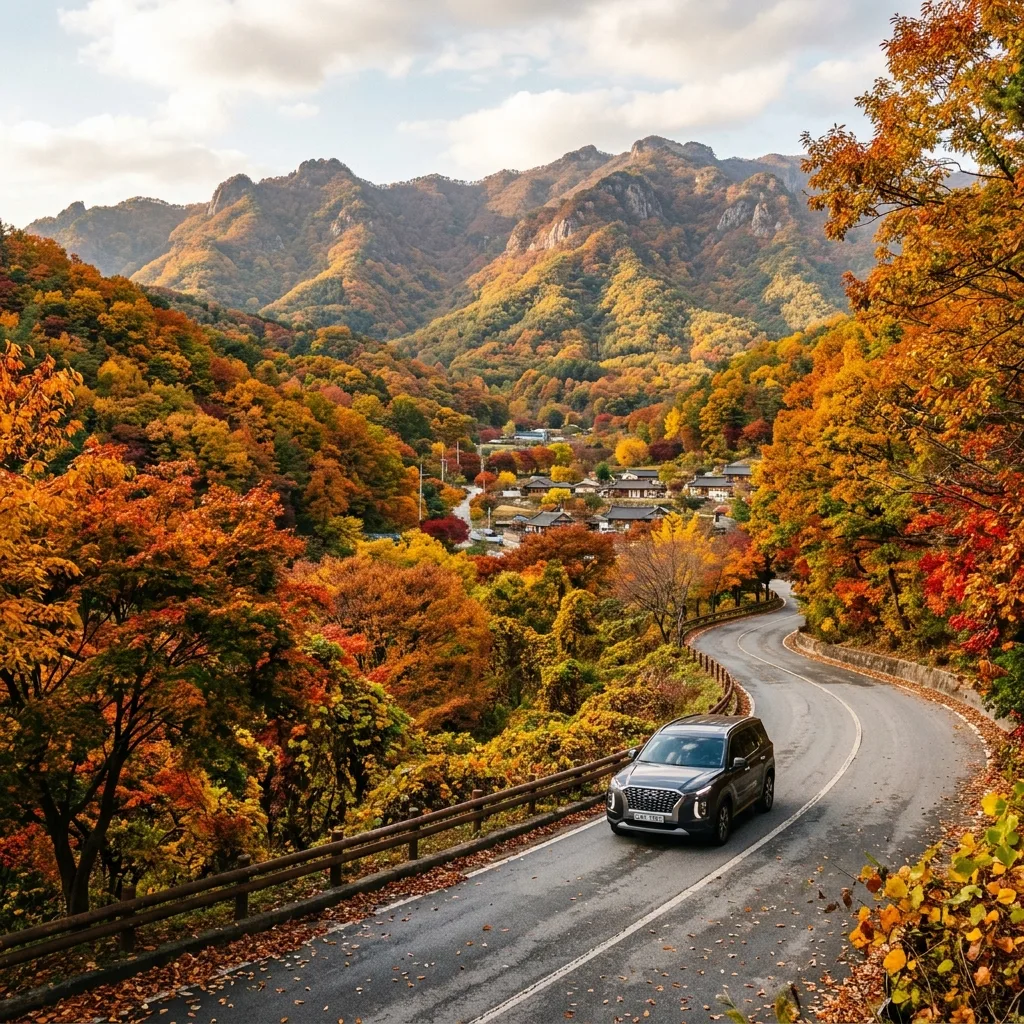
The best road trip in Korea is not always the fastest one. If you want a trip that feels slower, softer, and more restorative than a city hop, Gyeongsangbuk-do is where the countryside starts to do the heavy lifting. This is the part of Korea where historic cities, mountain valleys, coastal detours, and temple grounds sit close enough together that a self-drive route can feel both efficient and healing. Instead of rushing from landmark to landmark, you can build a day around quiet roads, lunch stops, autumn ginkgo tunnels, and a sunset walk beside the sea.
In Gyeongbuk, the reward is not just arriving somewhere. It is the transition between places: a winding approach into a village, a tree-lined road that suddenly opens to a temple gate, or a coastal shoulder road where the light changes every ten minutes. This article is for travelers who want practical driving guidance, route ideas that actually make sense, and a few grounded tips for making the trip feel relaxing rather than complicated.
Why Gyeongbuk Works So Well for a Healing Self-Drive
If you are looking for a countryside drive in Korea that feels restorative instead of rushed, Gyeongbuk is one of the strongest regions to choose because it combines three things at once: historic depth, varied landscapes, and enough road infrastructure to make a flexible route realistic for international travelers.
The region stretches across inland mountains, river valleys, and coastal roads, so you can shape a trip around your mood. Want something contemplative? Head to a temple, a seowon, or a heritage village and keep the day slow. Want motion and open views? Use the national highways and local roads to build a loop through Gyeongju, Andong, and Mungyeong, with short scenic stops in between. Want food as part of the healing? Gyeongbuk is also excellent for eel, spicy fish stew, sanchae meals, and local markets that work well as mid-drive breaks.
The word "healing" gets overused in travel marketing, but in Gyeongbuk it makes practical sense. The roads are often less intense than in dense metropolitan areas, many scenic stops are spaced far enough apart to create breathing room, and there are plenty of places where you can park, walk ten minutes, and reset before getting back behind the wheel. That rhythm matters. A good self-drive itinerary should not feel like a race; it should feel like a controlled deceleration.
If you have already read our guides to Mastering the KTX: How to Book High-Speed Trains in Korea and The Ultimate Guide to Public Transportation in Korea (2025 Edition), this route is the natural next step. Trains and buses are excellent for many Korean trips, but a countryside healing route is one of the clearest cases where a car gives you more freedom, especially when your day includes multiple small stops instead of one major destination.
What makes the region different
Gyeongbuk is not a single tourism object. It is a linked landscape of old capitals, temple sites, farming villages, rivers, and coastlines. That matters because a self-drive route becomes more enjoyable when the in-between segments are part of the experience instead of dead time.
Here is the practical pattern most travelers should keep in mind:
- Use Gyeongju as the easiest starting point for heritage and coastal scenery.
- Use Andong for culture-heavy inland driving and traditional village access.
- Use Mungyeong for mountain roads, valleys, and a more rural inland feel.
- Keep one flexible day for a "nothing fixed" drive, because weather and traffic can change the best route on the fly.
That structure gives you variety without overcomplicating the trip. It also makes the region easy to customize for spring blossoms, summer greenery, autumn foliage, or a quiet winter itinerary.
Recommended Healing Routes in Gyeongbuk
The most useful way to plan a self-drive trip here is not by trying to see all of Gyeongbuk in one sweep. Instead, build a compact loop around one or two themes. Below are the routes that make the most sense for first-time visitors and for repeat travelers who want a more deliberate pace.
1) Gyeongju heritage and coast loop
This is the easiest route to recommend because it blends Korea's ancient capital atmosphere with a restorative coastal segment. Start in central Gyeongju, where temples, tomb parks, and low-rise neighborhoods set a calm pace, then move east toward the sea for a change of energy. The appeal of this route is contrast: stone heritage in the morning, open coastal air in the afternoon.
Begin with a heritage stop such as Bulguksa, then continue toward quieter road segments that let you breathe between sites. On a clear day, the coastal portion is especially strong for travelers who want visual relief after a dense urban stretch. If you only have one day in Gyeongbuk and you want the feeling of a real escape, Gyeongju is usually the best place to start.
The section many visitors miss is the in-between drive itself. Rather than treating the road as transit, use it as part of the itinerary. Slow down near village edges, follow the smaller access roads when they are safe and well marked, and give yourself time to stop for tea or a light meal. A healing route works because you do not pack every hour.
For a road-trip writer's version of Gyeongju, think of it as the place where Gyeongju Travel Guide: The Museum Without Walls becomes a car itinerary instead of a list of sights. That shift is useful: when you drive, the city stops being a checklist and starts feeling like a landscape.
2) Ginkgo roads and autumn quiet drives
If you are visiting in autumn, few things are more satisfying than a tree-lined road with enough space to pull over and take in the scenery. Gyeongju's ginkgo roads are especially strong for this kind of mood, and they work well as short scenic segments between larger stops.
One example is Tongiljeon Ginkgo Road, which is famous for its long line of golden trees in fall. It is not a "major attraction" in the usual sense, which is exactly why it works for healing travel. You can spend twenty or thirty minutes there, walk a little, take photos, and then continue to a temple, museum, or lunch spot without feeling overcommitted.
The trick with these roads is timing. Go too late in the day and you lose the color. Go at peak weekend traffic and the atmosphere becomes less tranquil. If possible, choose a weekday morning or an early afternoon time slot, especially during peak foliage season. The road itself is part of the experience, so the goal is not just to arrive; it is to arrive when the light and traffic conditions support the mood you are after.
3) Andong cultural inland loop
Andong gives you a different kind of healing route: less coastal openness, more cultural depth and slower rural rhythm. It is the place to build a day around traditional architecture, local food, and road segments that feel more internalized than cinematic.
If Gyeongju is about ancient capital grandeur, Andong is about continuity. The landscape does not shout for attention. It asks you to pay attention. That makes it perfect for travelers who want a more reflective drive, especially if they enjoy hanok villages, Confucian heritage, or a lunch break that feels genuinely local rather than tourist-engineered.
This is also where an article like Andong Mask Dance Festival: A Dive into Traditional Arts becomes useful beyond festival season. The cultural context around Andong gives the road trip more meaning, because the city is not just a stop. It is a living center of tradition that rewards slower travel.
4) Mungyeong mountain and valley route
Mungyeong is ideal if your idea of healing includes mountain air, winding roads, and a little more distance from the mainstream tourist circuit. The terrain gives you natural pacing: roads rise and fall, views open and close, and the itinerary can feel more organic than urban sightseeing.
This route works especially well for travelers who do not want to spend the whole day in heritage architecture. You can mix valley stops, forest edges, and local restaurants, then return to the road without ever feeling trapped in traffic-heavy zones. For some visitors, that is the best version of restorative travel: a route that stays visually interesting without requiring constant decision-making.
If you are already comfortable with driving in Korea, Mungyeong can become the "second-day" route after Gyeongju or Andong. If you are new to Korean roads, keep your plan shorter and focus on one or two major stops instead of trying to stitch together every scenic possibility.
Secondary Route Ideas and Variations
Not every trip has to follow the same loop. The most useful thing about Gyeongbuk is that it supports variations. You can build a route around season, weather, food, or drive length. Below are the most practical variations to consider.
Coastal reset version
If your body is tired from city walking, a coastal reset route is the easiest healing concept to execute. Add a sea-facing road, one easy cafe stop, and a short trail or observation point. Do not overpack the day. The point is to use the horizon line as a psychological reset.
For this style of trip, the Padosori Trail in Gyeongju is a strong example because it combines shoreline scenery with an easy walking component. According to the current official listing, the trail is 1.7 kilometers long, parking is available, and parking is free. That matters because travelers often assume scenic roads become expensive once they are "touristy," but a lot of the value here comes from simple access rather than high ticket prices.
The best coastal reset day has a simple structure: drive, walk, eat, pause, and drive again. If the weather is windy or bright, do not fight it. Coastal healing is often stronger when you leave space for the environment to dominate.
Temple-and-tea version
Another variation is to anchor the route around a temple or heritage site and then let the rest of the day soften around that stop. This is especially good for travelers who want the road itself to feel meditative. Choose one major cultural site, one smaller road detour, and one tea or coffee stop where you can sit for at least thirty minutes.
If you build the day around a temple visit, the route becomes less about distance and more about posture. Drive slowly, keep music low, and avoid overplanning the afternoon. A temple-centered healing route is more successful when the pacing is deliberate and the transitions are calm.
Food-first version
Some travelers do not need more scenic stops; they need a route that organizes itself around meals. Gyeongbuk is excellent for that. You can build the day around breakfast in one town, a noodle or stew lunch in another, and a late-day coffee or dessert stop near a drive-friendly attraction.
This version is especially useful when you are traveling with someone who gets tired of long walks or repeated temple visits. A food-first route gives everyone an excuse to keep moving without feeling like the day is mechanically structured. You can use markets, local restaurants, and convenience-store breaks as small anchors while the roads between them do the quiet work.
Foliage version
In autumn, the route should favor tree tunnels, riverside sections, and roads with long sightlines. This is the best season for a healing self-drive trip because the landscape itself changes the emotional tone of the day. Even modest roads feel special when the leaves turn and the air cools.
If you are choosing between a packed sightseeing day and a foliage day, choose foliage. The reason is simple: autumn scenery does much of the work for you. You do not need as many expensive or highly structured attractions when the road is doing the visual lifting.
Practical Guide: Hours, Admission, Prices, and Driving Basics
This is the section where a lot of travel guides get vague, so let's be direct. The roads themselves are generally free to use, but your real costs will come from fuel, tolls on some routes, parking at certain attractions, and meals. If you are doing a healing road trip, the budget should be planned around flexibility rather than strict point-to-point transit.
Verified attraction details
For a real-world stop, Bulguksa is a good example because it is both iconic and practical. The official Bulguksa site currently lists free admission for cultural heritage viewing, with entry hours that vary by season: 9:00 a.m. to 5:00 p.m. in November through January, 9:00 a.m. to 5:30 p.m. in February and October, and 9:00 a.m. to 6:00 p.m. from March through September. The site also lists parking fees, including 2,000 won for passenger cars and medium vehicles, and 4,000 won for large vehicles.
That kind of detail matters because a self-drive itinerary often looks simple on paper but becomes more expensive if you do not account for parking. Bulguksa is a good benchmark for planning the rest of the day: the attraction itself is free, but parking and surrounding spend are still part of the trip.
For a quieter scenic stop, the Padosori Trail listing notes free parking. The trail is also short enough that it fits well into a road day without creating a fatigue spike. That makes it useful as a "reset stop" between larger cultural or food destinations.
How to get there
Most travelers will find Gyeongbuk easiest to reach by a combination of KTX or intercity transit plus car rental, or by renting a car in Seoul or Busan before heading east. If you want to avoid city pickup stress, consider arriving by train first and picking up the car closer to your main route. That can simplify the first hour of the trip.
If you need a reminder on rail logistics before the drive, our Mastering the KTX: How to Book High-Speed Trains in Korea guide covers the train side, while The Ultimate Guide to Public Transportation in Korea (2025 Edition) helps you decide when rail or bus still makes more sense than driving.
Once you have the car, the best practice is to keep your route compact. In Korea, driving distances can look short on a map but still take time because of speed limits, mountain bends, village roads, and photography stops. A two-hour radius can easily become a full-day route once you account for meals and scenic detours.
Suggested daily budget
Budgeting for a Gyeongbuk road trip is less about entrance fees and more about the total comfort level you want.
- Fuel: depends on your rental car and route length.
- Parking: some attractions are free, while major heritage sites may charge modest fees.
- Meals: range from inexpensive local restaurants to more curated cafes and specialty dishes.
- Tolls: can be relevant if you are covering longer intercity segments.
- Overnight stay: consider a hanok guesthouse, a small pension, or a standard hotel depending on the route.
If you want the trip to feel truly healing, do not cut the budget too tightly. The value of this kind of route comes from not needing to chase the cheapest possible option at every stop.
Best time to go
Spring and autumn are the most reliable seasons for a countryside drive in Gyeongbuk. Spring gives you soft green hills and mild temperatures. Autumn gives you the strongest visual payoff with ginkgo, maple, and clearer air. Summer can be beautiful, but you need to plan around heat, humidity, and occasional rain. Winter can be calm and atmospheric, but the experience becomes more weather-sensitive and some travelers will prefer shorter segments.
For first-time visitors, autumn is usually the sweet spot. The roads feel more cinematic, the weather makes stop-and-walk transitions easier, and you are less likely to feel rushed by daylight pressure.
Tips and Common Mistakes
The easiest mistake is trying to turn a healing route into a list of all possible attractions. That turns the day back into a normal itinerary, and the whole point is to move differently.
Do not overfill the loop
Three major stops is usually enough for one day. Four is possible if the route is tightly clustered. Five or more almost always starts to erode the point of the trip. Leave room for coffee, unplanned photos, roadside rest breaks, and simple delays.
Avoid mixing too many route types
One day should not try to be a coastal drive, a heritage crawl, a mountain loop, and a food tour all at once. Pick one dominant emotional shape. If you want sea views, prioritize sea views. If you want cultural quiet, prioritize heritage stops. If you want foliage, make the trees the headline.
Check parking before you leave
Parking is one of the most overlooked parts of a self-drive itinerary. Some attractions have straightforward lots. Others require a short walk or have seasonal congestion. If you are traveling on weekends or during holidays, arriving early matters more than squeezing in an extra coffee break.
Watch opening time, not just closing time
Many travelers focus on how late a site stays open, but for road-trip pacing the morning opening matters more. If a temple or heritage site opens at 9:00 a.m., planning a long drive to arrive at 9:10 is risky because you lose the easiest parking window of the day. Early arrival often improves the whole mood of the route.
Keep a small weather buffer
Road trips in Korea are sensitive to weather in a way that city itineraries are not. Rain changes the feel of the drive, fog can slow you down in rural segments, and strong sun can make an open-road stop less pleasant. Keep one backup cafe, one backup lunch place, and one indoor stop in mind so the day does not collapse if conditions change.
Respect the silence
One of the less obvious joys of a healing route is that you do not need to fill every minute with conversation or content creation. Let some parts of the drive be quiet. If you are traveling with someone else, agree in advance that the road itself is part of the restorative experience.
FAQ
Is it hard to self-drive in Gyeongbuk as a foreign traveler?
It is manageable if you already feel comfortable driving in Korea or in countries with similar road discipline. The main challenge is not the roads themselves but route planning, parking, and managing navigation in a region where scenic stops can be spread out. If you keep the itinerary compact, self-driving is very practical.
What kind of license do I need?
You should always verify current rental requirements before you book, but in general you need to make sure your license, international permit, and passport details match the rental company's rules. If you are not sure, compare your plan with a full rental guide before you arrive so you do not waste time at pickup.
How many days do I need for a healing route in Gyeongbuk?
One day is enough for a focused route around Gyeongju, Andong, or Mungyeong. Two to three days gives you room to combine a heritage day, a coastal or mountain day, and a slower food-and-cafe day. If you want to travel at a genuinely calm pace, two days is the minimum I would recommend.
Is the road trip better in spring or autumn?
Both are strong, but autumn usually wins if your goal is a "healing" feeling. The foliage adds visual texture and the weather is often more comfortable for short walks between drive segments. Spring is excellent too, especially if you prefer lighter crowds and softer landscapes.
Can I do this without staying overnight?
Yes, if you start early and keep the route narrow. A single-day loop works best when you choose one main area and do not spread yourself across too much geography. If you want a slower, more restorative version, an overnight stay is better because it removes the pressure to race home before evening traffic.
Conclusion
Gyeongbuk is one of the best places in Korea to turn a road trip into a reset. The region gives you enough structure to plan confidently, but enough variety to keep the day feeling alive. That is the sweet spot for self-drive travel: you are not improvising blindly, and you are not following such a rigid plan that the scenery becomes secondary.
If you want the simplest version of the trip, start in Gyeongju and build around a heritage stop, one scenic road, and one long meal. If you want more depth, add Andong or Mungyeong and give the route a second emotional layer. If you want the strongest visual payoff, choose autumn and let the ginkgo roads and countryside edges shape the day for you.
The main rule is easy: do less, but do it well. A healing route is not about collecting every attraction in the province. It is about leaving enough space for the drive itself to become the best part of the day.
If you are planning a broader Korea trip, this kind of road journey pairs well with heritage-focused travel, a train-based arrival, and a few days built around slower regional exploration. Use the car for the countryside, use trains for the long intercity leg, and let the landscape carry the rest.