Izakaya Guide for Travelers: How to Eat, Drink & Order Like a Local

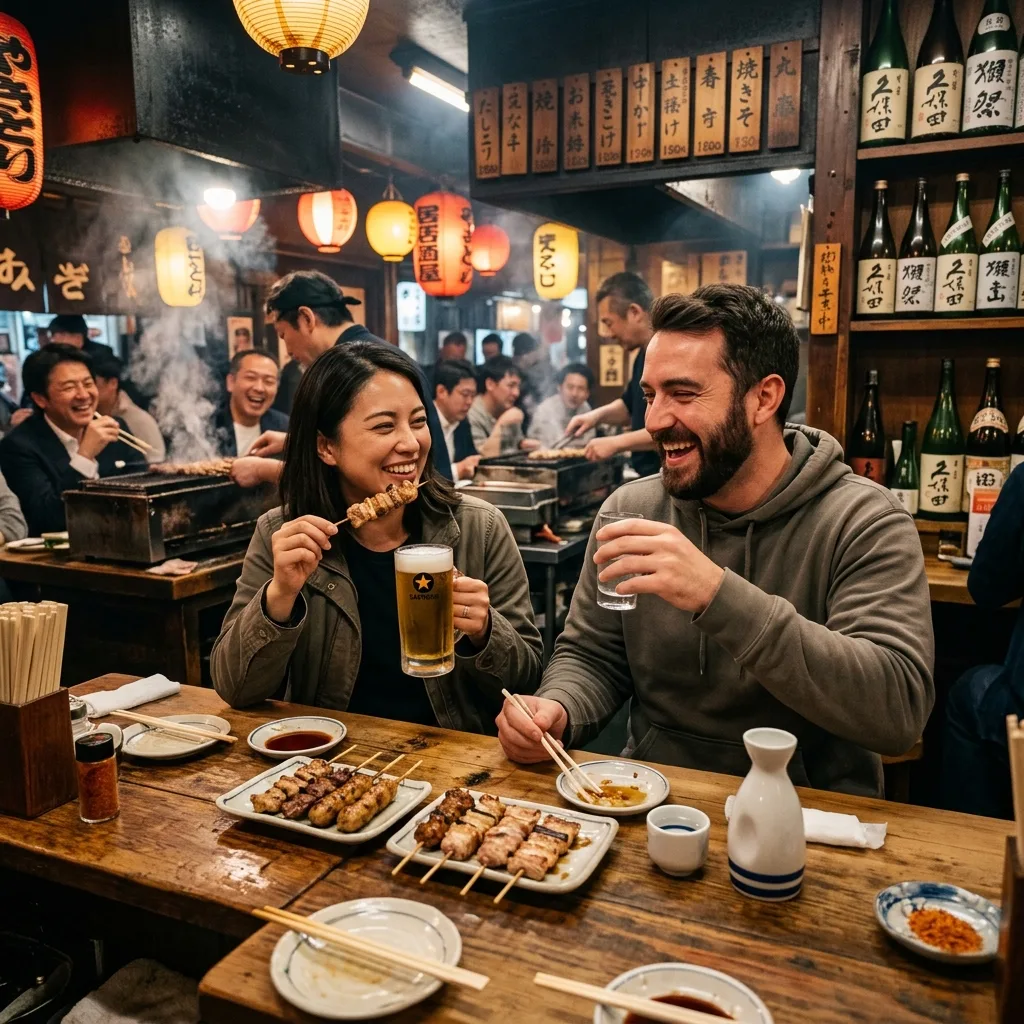
You found the place — a glowing red lantern hanging over a narrow doorway, the sound of clinking glasses and laughter spilling out, the smell of yakitori smoke curling into the night air. You want to go in, but you freeze. How do you order? What do you say when you walk through the curtain? Is it rude to pour your own drink? The izakaya is the beating heart of Japanese nightlife, and once you know how it works, it becomes one of the most memorable dining experiences of any trip to Japan.
What Is an Izakaya?
An izakaya (居酒屋) is a Japanese gastropub that sits between a bar and a restaurant. Food arrives as small shared plates, drinks flow throughout the meal rather than at the end, and staying two to three hours at a single table is completely normal. Most open from 5 PM and serve until midnight or later.
The word breaks down as i (to stay) + sakaya (sake shop), which sums up the format perfectly: these are places you go to settle in for the evening, not rush through. Food and drink arrive in an unhurried flow, ordered in rounds rather than all at once.
Unlike a traditional restaurant, an izakaya is built around sharing. Most dishes come as small plates meant for the whole table. You drink, you order something to nibble on, you talk, you order more. The rhythm is loose and social, which is why izakayas are so beloved by Japanese salarymen unwinding after work, friend groups celebrating, and couples on casual dates alike.
For travelers, the izakaya is one of the most accessible windows into everyday Japanese food culture — more relaxed than a kappo counter, more interesting than a tourist-facing restaurant, and almost always dramatically cheaper than you would expect.
Types of Izakayas: Chains vs. Independent vs. Standing Bars
Not all izakayas are the same. Understanding the categories helps you choose the right experience for your budget and comfort level.
Chain Izakayas
Japan's major chain izakayas — Torikizoku, Watami, Shidax, Irohanihoheto, and Shirokiya — are the safest entry point for first-time visitors. They have laminated picture menus or tablet ordering systems, often with English translations, and trained staff who are used to tourists. Prices are standardized and usually very affordable — an evening of food and drinks for two people commonly runs ¥3,000–¥6,000 total.
Torikizoku is particularly famous for its single-price model: nearly everything on the menu costs ¥370 (as of 2026), including chicken skewers, fried dishes, and standard drinks. It is a great place to eat a lot without worrying about the bill.
Independent Izakayas
These are the places worth hunting for. An independent jizakaya or neighborhood spot might specialize in a regional sake, a particular style of grilling, or dishes sourced from a specific prefecture. The atmosphere is usually warmer, the food more distinctive, and the experience more genuinely Japanese. The tradeoff is that menus are often Japanese-only, and English-speaking staff are rare.
The staff at most independent izakayas are friendly and accustomed to pointing and gesturing, so language barriers are manageable. Having Google Translate's camera function ready is a good backup.
Tachinom / Standing Bars
A subset of the izakaya world is the tachinomi (standing drink) bar — a narrow counter, no seats, and drinks at ¥300–¥500 a glass. These are found near train stations throughout Japan and operate on a come-and-go basis. They are excellent for a quick beer after a long day of sightseeing and require no reservation or lingering commitment.
What to Drink: The Izakaya Drinks Menu
Drinks are the anchor of any izakaya visit, and the menu is usually more expansive than most travelers expect.
Beer (Biiru)
Lager is king at the izakaya. Japan's four major brewery groups — Sapporo, Asahi, Kirin, and Suntory — each produce clean, crisp lagers that pair effortlessly with fried and grilled food. A nama biiru (生ビール) is a draft beer served in a frosted mug. A bin biiru (瓶ビール) is bottled. Expect to pay ¥500–¥700 for a medium draft.
The important etiquette rule: do not pour your own first drink. Wait until everyone at the table is served, then pour for the person next to you. They will return the favor. This is the oshaku custom, and while younger Japanese groups are more relaxed about it, following the tradition is a nice gesture.
Highball (Haibooru)
The whisky highball has become Japan's unofficial national drink over the past decade. A good highball at an izakaya — Suntory Tory's blended whisky, poured over ice, topped with cold soda — is one of the great simple pleasures of Japanese nightlife. Many izakayas pour them with a particular pride, adjusting the whisky-to-soda ratio carefully. Expect ¥400–¥600.
Shochu and Chuhai
Shochu (焼酎) is a distilled spirit made from sweet potato, barley, rice, or buckwheat, and it is significantly cheaper than sake or whisky at most izakayas. It is typically served on the rocks (rokku), mixed with warm water (oyuwari), or cold water (mizuwari). A chuhai (チューハイ) is shochu mixed with soda water and fruit flavoring — think of it as Japan's answer to a hard seltzer. These are popular with younger drinkers and can be very low-cost, sometimes ¥300 or less.
Sake (Nihonshu)
Traditional sake at an izakaya is usually served cold (reishu) or warmed (atsukan). Many izakayas have a short house sake list. At chain locations, sake tends to be standard and inexpensive. At independent spots, you may find regional jizake poured from unlabeled carafes — worth asking about if you are curious.
Non-Alcoholic Options
Oolong tea (ウーロン茶) is the standard non-alcoholic choice at izakayas, and it pairs remarkably well with the oily, salty food. Soft drinks, mugicha (barley tea), and sometimes fresh juice are also available. Non-drinkers should feel no awkwardness — ordering oolong tea and eating freely is completely normal.
What to Eat: Essential Izakaya Dishes
The izakaya menu is one of the most satisfying expressions of Japanese home cooking. These are the dishes to look for on your first visit.
Yakitori (Grilled Chicken Skewers)
Yakitori is the dish most associated with izakayas, and for good reason. Skewers of chicken — thigh, breast, skin, cartilage, heart, liver, and neck — are grilled over bincho charcoal and brushed with either tare (sweet soy glaze) or served plain (shio, salt). The momo (thigh) and tsukune (chicken meatball) skewers are the crowd-pleasers. Skewers are typically ¥100–¥200 each, making them an extremely good-value snack.
Karaage (Japanese Fried Chicken)
Karaage (唐揚げ) is boneless chicken thigh, marinated in soy sauce, ginger, and garlic, then double-fried to a crackling crisp exterior with a juicy interior. It comes with mayonnaise and a wedge of lemon, and it is almost universally on every izakaya menu. It is one of the best versions of fried chicken you will encounter anywhere in the world.
Edamame
Steamed salted edamame (枝豆) is the izakaya equivalent of bread and butter — it appears almost automatically when you sit down at some places, or it is the first order of business. Pop the beans directly from the pod into your mouth and leave the pod in a side dish. Easy, addictive, and inexpensive.
Gyoza
Pan-fried dumplings (gyoza, 餃子) at an izakaya are usually the crispy, flat-bottomed type — browned on one side, steamed on the other, served in a row of six or eight. Dip in a mixture of soy sauce and rice vinegar, adding chili oil if it is on the table. They pair particularly well with beer.
Agedashi Tofu
Agedashi tofu (揚げ出し豆腐) is lightly battered silken tofu, deep-fried until the outside is just crispy, then served in a light dashi broth with grated daikon, bonito flakes, and green onion. It is a dish that seems simple and turns out to be remarkably comforting and complex. A good test of any izakaya kitchen.
Sashimi and Seafood
Many izakayas offer a short sashimi plate — usually tuna, salmon, and yellowtail — as a lighter counter to all the fried and grilled items. At coastal izakayas or those specializing in seafood, you might find tako waasa (octopus with wasabi), shirako (cod sperm sac, a winter delicacy), or whole grilled fish. For travelers who want to dig into Japan's seafood culture beyond sushi counters, the izakaya is an excellent introduction.
Nankotsu Karaage (Crispy Cartilage)
This is the dish that surprises first-time visitors: deep-fried chicken cartilage, crunchy all the way through, seasoned with salt and pepper. It sounds alarming on paper and tastes addictive. Order it at least once.
Ochazuke
As the evening winds down, many izakayas offer ochazuke (お茶漬け) — a bowl of rice with tea or dashi poured over it, garnished with pickles, seaweed, and a few toppings. It is the Japanese equivalent of a late-night noodle soup: restorative, light, and perfect after a long night of drinking.
How to Order: The Step-by-Step Process
Entering and Being Seated
Walk in and wait to be greeted — the staff will call out "Irasshaimase!" (welcome). Tell them your party size: "Futari desu" (two people) or hold up fingers. At most izakayas you will be asked if you have a reservation (yoyaku wa arimasu ka?). If not, say "Iie, nai desu" (no, I don't).
Most izakayas have a choice of seating: zashiki (low tables on tatami, shoes off), counter seats, or regular chairs and tables. Indicate your preference if you have one.
The Otoshi
Almost every izakaya will charge a small cover fee called otoshi (お通し) — usually ¥300–¥600 per person. In return, you receive a small appetizer that you did not order: a little dish of pickles, a few pieces of tofu, a small salad. This is not optional and is considered the standard exchange for securing the seat. Think of it as the cover charge at a music venue. Do not try to refuse it.
Ordering Drinks First
The first thing that will happen after you sit is someone asking for your drink order. This is standard — at an izakaya you always order drinks before food. Say "Biiru wo hitotsu" (one beer) or point to the picture menu. At chain izakayas with tablet ordering, this is all done on screen.
Ordering Food
Food is ordered gradually throughout the evening, not all at once. Start with two or three dishes, eat and drink, then order more. This is the izakaya rhythm and it feels natural once you embrace it. At chain locations, tablets make reordering effortless. At independent spots, catch the eye of a staff member by raising your hand slightly and saying "Sumimasen" (excuse me).
The Bill
When you are ready to leave, signal for the bill by saying "Okaikei onegaishimasu" (お会計お願いします) or crossing your index fingers in an X shape — this is the universal Japanese gesture for "the bill, please." Bills are usually brought to the table and paid in full at the register on the way out. Most chain izakayas now accept credit cards and IC cards (Suica, Pasmo). Independent spots may be cash-only — have yen available.
Practical Details: Hours, Prices & Where to Find Izakayas
Hours
Izakayas typically open in the late afternoon or early evening — most start service between 5:00 PM and 6:30 PM. Closing times vary: chain izakayas in busy areas sometimes stay open until 2:00 AM or 5:00 AM; neighborhood spots often close at midnight or 1:00 AM. Last order is usually called 30 minutes before closing.
Prices
An average izakaya evening for one person — four or five small dishes and two to three drinks — typically costs ¥2,500–¥4,500 at a chain, and ¥3,500–¥6,000 at a mid-range independent. High-end or specialty izakayas can run higher, but it is genuinely difficult to spend a lot at a standard place unless you are ordering premium whisky or sake.
Many izakayas also offer a nomihodai (飲み放題) all-you-can-drink package for a set period — usually 90 minutes or 2 hours — for around ¥1,500–¥2,500 per person. This typically covers draft beer, shochu, highball, and soft drinks. Combined with a tabehodai (all-you-can-eat) option, it is among the best-value dining experiences in Japan.
Where to Find Them
Izakayas cluster around train stations, particularly in the entertainment and business districts just outside the ticket gates. In Tokyo, look in Shinjuku (the Golden Gai alley network and the east exit), Shibuya, Yurakucho under the train tracks, and the alleyways of Ebisu and Nakameguro. In Osaka, the Namba and Shinsaibashi areas are dense with options — the Osaka Food Guide: Takoyaki, Okonomiyaki & the Dotonbori Night Walk covers the broader food geography of the city.
For a broader primer on Japanese cuisine before planning your izakaya evenings, the Japanese Food Guide: Ramen, Sushi, Yakitori & What to Eat and Where provides useful context on the regional food cultures you will encounter across the country.
Etiquette and Common Mistakes
Do Not Fill Your Own Glass
The rule around pouring drinks in Japan is precise: you pour for others, others pour for you. Keep an eye on the glasses around you and refill when they are low. If someone fills your glass, hold it up slightly with both hands as they pour — this is polite form. At casual tables with close friends, this rule relaxes considerably, but it is a good default.
The Kampai Moment
When everyone has a drink, the first sip is always preceded by a kampai (乾杯) — glasses raised and clinked. Wait for this moment rather than drinking alone, even if you are parched. At more formal gatherings, hold your glass slightly lower than the most senior person at the table as a sign of respect.
Splitting the Bill
Japan traditionally operates on the warikan (割り勘) principle — splitting the bill evenly. It is unusual for one person to pick up the tab unless they are clearly treating the group. At most izakayas, the register will split the total evenly on request.
Smoking
Smoking policies vary by establishment. Japan's indoor smoking regulations have tightened significantly since 2020, but smaller izakayas (under a certain employee threshold) may still allow smoking. Designated smoking rooms (kitsuen shitsu) are common in chain izakayas. If smoke bothers you, check before sitting down.
Dietary Restrictions
Communicating dietary restrictions at a Japanese izakaya can be challenging. Most izakaya food contains some form of fish-based dashi broth, so vegetarians and pescatarians should clarify carefully. The phrase "niku to sakana wa taberaremasen" (I cannot eat meat or fish) is useful. Dedicated vegan izakayas exist in Tokyo but are rare elsewhere.
Tips Most Guides Miss
Order the house specialty, not the familiar. Every neighborhood izakaya has a signature: sometimes it is a specific cut of yakitori, a regional sake, or a seasonal small plate. Ask "Osusume wa nani desu ka?" (What do you recommend?) and point to what comes back. This single question consistently produces the best meals.
The smoking room is often where the best seats are. Counterintuitive, but in izakayas that still have smoking areas, these sections often have the best counter seats facing the grill. If smoke does not bother you, consider it.
Go early or very late. The 6:00–8:00 PM window is peak rush at most izakayas and walk-ins are hardest then. Arriving at 5:30 PM (early by Japanese standards but fine for travelers) or after 9:00 PM gives you the best chance of a relaxed seat and unhurried service.
Izakayas near universities are typically the cheapest. Student areas in Tokyo (Shimokitazawa, Koenji, Nakano) and Osaka (Tanimachi) have izakayas priced for young budgets — full evenings for ¥1,500–¥2,000 per person are possible.
The standing bar before the sit-down izakaya. A popular Tokyo and Osaka local move: start at a cheap tachinomi standing bar near the station for one quick drink and a snack, then move to a full-service izakaya. It paces the evening and often reveals hidden neighborhood spots along the way.
FAQ
Do I need a reservation at an izakaya? For chain izakayas, no reservation is needed and walk-ins are always welcome. For popular independent spots, especially on Friday and Saturday nights, reservations are strongly recommended — tables can be fully booked by 6:00 PM. Calling ahead (or having your hotel concierge call) is the most reliable method. Tabelog and Google Maps both allow online reservations for many restaurants.
Is it okay to go alone? Absolutely. Counter seating (kauntaa seki) is specifically designed for solo diners and drinkers, and izakaya staff are accustomed to single guests. Sitting alone at the counter, eating yakitori and sipping a highball while watching the kitchen, is one of the great solo travel pleasures in Japan.
What if I don't drink alcohol? Non-alcoholic dining at an izakaya is completely normal. Order oolong tea, soft drinks, or fresh juice. The food menu is extensive and does not require drinking to fully enjoy. Some chain izakayas also offer non-alcoholic cocktail menus.
How do I know if a place is good? Look for izakayas that are full of Japanese people in their 30s–50s by 7:00 PM — this is usually the best sign. Tabelog (Japan's dominant restaurant review platform) is highly reliable, especially for locations rated 3.5 or above. Google Maps reviews from local users are also useful.
What should I order on a first visit? Start with edamame, karaage, one or two yakitori skewers (momo and tsukune), and a beer or highball. This covers the izakaya fundamentals and costs under ¥2,000 per person. From there, expand based on what looks good or what the server recommends.
Getting Connected Before Your Japan Trip
One practical tip before diving into izakaya nights: having reliable mobile data in Japan makes a significant difference when navigating to restaurants, reading menus via Google Translate's camera, or booking tables. The Pocket WiFi vs SIM Card in Japan: Best Picks for 2026 Travelers breaks down the current options for staying connected throughout the country.
And if you want to extend your Japanese food education beyond izakayas, the Sushi Etiquette in Japan: Omakase, Kaitenzushi & How to Order Right covers the equally important world of sushi dining — a different register from the izakaya, but equally worth mastering.
Conclusion
The izakaya is not a complicated institution — it is a place built for the simple pleasure of eating and drinking well with people you like, or with strangers who become people you like. The mechanics are intuitive once you have sat down a single time: drinks first, food in rounds, otoshi accepted, glasses filled for others, kampai called before the first sip.
What makes the izakaya special as a travel experience is precisely its ordinariness. This is not a tourist attraction or a culinary event — it is Tuesday night for millions of Japanese people. Walking in with a basic grasp of how it works, ordering karaage and yakitori, stumbling through a beer in clinking glasses with the table next to you: that is the experience. It does not require a guide or a reservation service or a translator. It just requires walking through the curtain.
Find the glowing lantern. Go in.