Healing Pension Stays in Gangwon: Best Rural Retreats Near Seoul

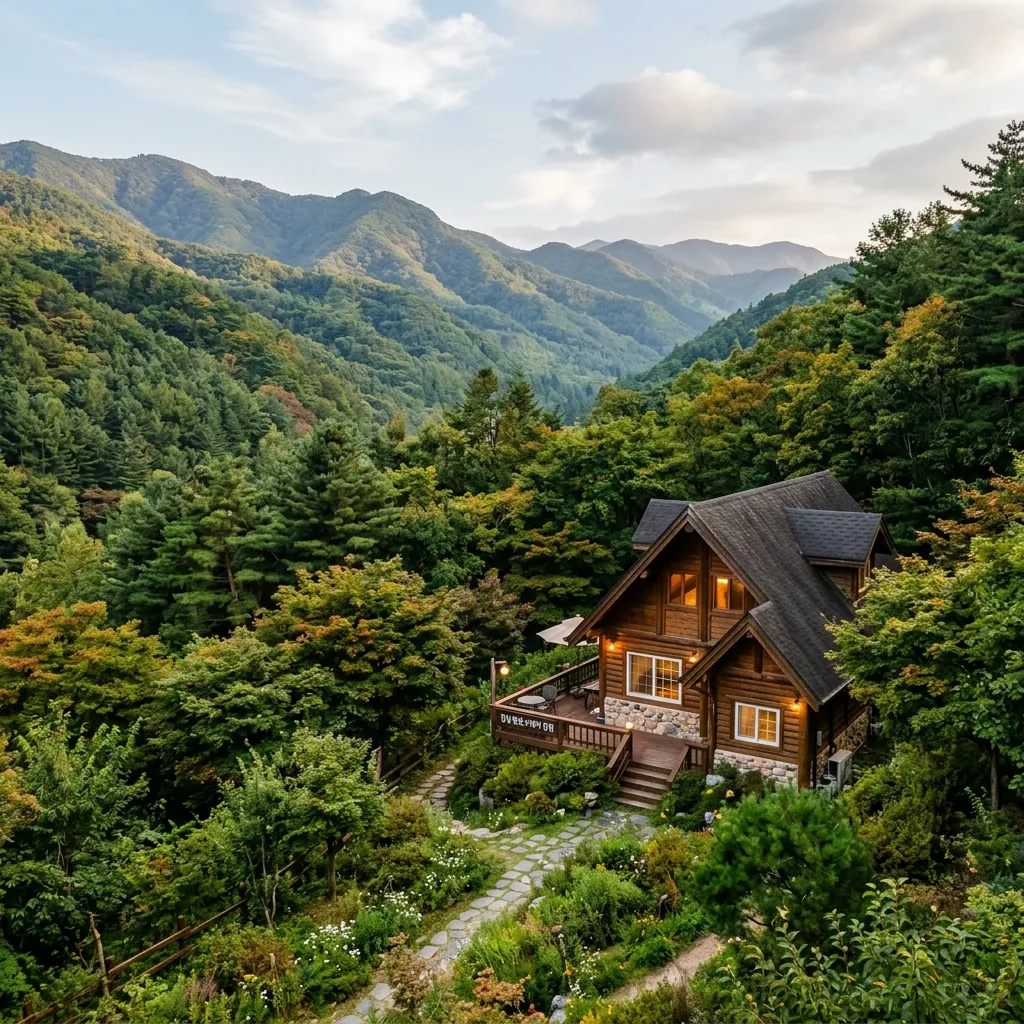
There is a particular kind of tiredness that accumulates in Seoul — not just physical fatigue, but a low-grade overstimulation from crowds, screens, and noise that a good night's sleep cannot fix. Koreans have a word for the antidote: healing (힐링). And for millions of Seoul residents, the first stop on any healing itinerary is Gangwon-do, a province of pine forests, mountain valleys, and clean coastal air just two to three hours from the capital. The accommodation of choice when heading there is not a hotel — it is the pension (펜션), Korea's answer to the European guesthouse: private, nature-adjacent, and built around the idea that rest is its own kind of activity.
What Is a Korean Pension — and Why It Is Not a Hotel
A Korean pension (펜션) is a privately owned vacation rental — typically a standalone cabin, villa, or small building in a rural setting — rented by the entire unit. Guests get a full kitchen, private outdoor space, and no shared facilities. Prices cover the whole unit, not per person, making pensions excellent value for couples and small groups.
A Korean pension is a privately owned accommodation unit, typically a standalone cabin, villa, or small building set within a landscaped compound in a rural or semi-rural location. The word comes from the French pension, but Korean pensions have evolved into their own distinct category. Understanding what you are booking before you arrive saves a lot of confusion and sets you up for the experience you actually came for.
Pensions are rented by the entire unit, not by the room. You pay for the space — a one-bedroom cabin, a two-story villa, or a dome tent with a private deck — and the price reflects the unit size rather than a per-person rate. This makes them excellent value for couples, small families, or friend groups of three to five people. A cabin in Gangwon-do that costs ₩120,000–₩180,000 per night might sleep four people comfortably, putting the per-person cost well below a comparable Seoul hotel room.
The amenities follow the unit-rental logic. Most pensions include a full kitchen or kitchenette, a private barbecue area, and outdoor space (a deck, garden, or yard). Many have amenities like outdoor fire pits, indoor saunas or hot tubs, and small swimming pools open in summer. Some properties cater specifically to pet owners, with fenced yards and pet-washing stations. What you typically do not get is daily housekeeping, a restaurant, or a front desk staffed around the clock — check-in is often handled via keypad code, and the owner communicates by KakaoTalk.
This self-contained, low-service nature is precisely the point. A healing pension stay is not about being waited on. It is about having a private space in nature where you control the pace: you cook when you want, light the grill at 9 p.m., sit on the deck watching the stars, and sleep without an alarm. For anyone burned out by Seoul's rhythm, that autonomy is the luxury.
Why Gangwon-do Is Korea's Healing Destination of Choice
Gangwon-do sits directly east of Seoul across the Taebaek Mountain Range, which means two things: an easy escape route, and a genuinely different environment. The KTX and ITX-Cheongchun trains reach Gangneung and Chuncheon respectively in under two and a half hours. Express buses from Seoul's Dong Seoul Terminal and Central City Terminal cover most of the province. The mountains act as a weather barrier, giving Gangwon-do's inland valleys a colder, crisper winter and a cooler summer than Seoul's humid basin.
The landscape variety within the province is remarkable. The coastal strip — Gangneung, Sokcho, Yangyang — offers ocean-facing pensions with sea views and access to uncrowded beaches. The highland plateau around Pyeongchang and Daegwallyeong is pasture country at 700–800 m elevation, covered in fog in the mornings and quiet in a way that feels genuinely remote despite being two hours from the capital. Further inland, the river valleys of Yeongwol and Jeongseon cut through karst terrain, with green water, limestone cliffs, and almost no tourist infrastructure. Each zone suits a different kind of traveler and a different kind of rest.
For travelers who want to combine a pension stay with outdoor activity, Gangwon-do delivers. The province contains Seoraksan, one of Korea's most spectacular national parks and a top destination for autumn foliage hiking — if you plan to hike the park's main ridges during your stay, read our full guide to A Guide to Hiking Seoraksan National Park: Stunning Peaks and Temples before you go, as trail access and timing matter significantly.
The Best Regions for Healing Pension Stays in Gangwon-do
Gangneung: Ocean Air and Pine Forests
Gangneung is Gangwon-do's largest city and its most accessible pension hub, reached by KTX in just over two hours from Seoul Station. But the pensions worth booking are not in the city itself — they cluster around Gyeongpo Lake, along the coastal pinewoods of Anmok and Sacheon, and in the valleys behind Jeongdongjin.
Gangneung Gyeongpo Healing Stay Pension sits near Gyeongpo Lake, a sheltered freshwater lagoon separated from the sea by a narrow strip of pine forest. The combination of lake views, coastal proximity, and the famous Gyeongpo pine grove creates a sense of being tucked into the landscape rather than overlooking it. Rooms and cabins here are styled for couples seeking quiet, with private outdoor tubs and minimalist interiors that feel deliberately restful.
Gangneung Healing Time Pension and Gangneung Healing House Pension (the latter with an indoor swimming pool and spa facilities) represent the more full-amenity end of the Gangneung market. Healing House in particular suits travelers who want the pension atmosphere — private unit, natural surroundings — but also want structured wellness options like a sauna or pool that they do not need to share with the rest of the property.
Gangneung Healing Yearn Pension is popular with couples who book specifically for the view; units face the ocean across a sloping garden, and the morning light off the East Sea is the main attraction. It is bookable through Klook, which handles foreign-language customer support and English-language confirmation — a practical consideration if you do not read Korean.
Prices in Gangneung cluster in the ₩100,000–₩200,000 per night range for standard units, with premium ocean-view cabins reaching ₩250,000–₩350,000 on weekends. Note that Gangneung pensions charge a significant weekend premium (Friday and Saturday nights cost noticeably more than Sunday through Thursday), and holiday weekends like Chuseok and Lunar New Year book out months in advance.
Pyeongchang: High Plateau Calm
Pyeongchang-gun is best known internationally for the 2018 Winter Olympics, but its appeal for domestic healing tourism predates and outlasts that moment. The Daegwallyeong plateau — the high ridge between Pyeongchang and Gangneung — sits at around 830 m and is covered in sheep pastures, wind farms, and a particular quality of mountain light. The air here is noticeably different from Seoul's: colder, cleaner, and quiet in a way that feels like a physical release.
Pyeongchang Daegwallyeong House Pension is positioned on the plateau itself, with mountain pasture views and easy access to the Daegwallyeong Sheep Farm (대관령 양떼목장), one of Korea's most beloved pastoral landscapes. The pension suits travelers who want to spend mornings walking the pasture paths and afternoons reading in a cabin.
Pyeongchang Pension Maeul is situated closer to the Alpensia and Yongpyeong resort area, making it the right choice if you plan to ski in winter or use the resort facilities in summer. The zone has dense pension infrastructure built for the ski crowd, which means good competition on pricing even in high season.
Heolya Pension near Pyeongchang takes a more exclusive approach: it is rented to a single group at a time, accommodating up to 10 people based on a 6-person rate. The property has an indoor fireplace for winter stays and an outdoor swimming pool for summer, and the exclusive-use model means you have the grounds entirely to yourself — no encountering other guests at the barbecue station. This format is increasingly popular for family trips or group gatherings.
Pyeongchang pension prices start around ₩90,000 per night for smaller units during the week and can reach ₩300,000+ for large villas on ski-season weekends. Summer is considerably more affordable than winter in this region, reversing the coastal pattern.
Yeongwol and Jeongseon: River Valley Solitude
The least visited of Gangwon-do's pension zones, the river valleys of Yeongwol-gun and Jeongseon-gun reward travelers who prioritize silence and natural scenery over amenities and proximity. These counties sit in the interior of the Taebaek range, where the Han River tributaries have carved deep valleys through limestone and sandstone. The water runs clear green in summer; the autumn foliage is among the most dramatic in Korea.
Small Breeze Pension in Yeongwol (소소한 쉼터 계열) represents the ethos of this zone: a quiet resting place with river access, mountain walks, and old forest paths good for leisurely wandering. Pensions here are smaller, more personal, and often run by the owners themselves rather than managed remotely. You are more likely to meet the person who built the cabin and get recommendations that do not appear on any travel site.
Pyeongchang Soop42Gil Pension, rated highly on TripAdvisor and situated in Jeongseon-gun, leans into the forest theme — soop (숲) means forest in Korean — with wooded grounds and cabin-style accommodation. The name captures the promise: a path through the forest, 42 kilometers from the nearest city noise.
Getting to Yeongwol and Jeongseon requires more planning. The Taebaek Line train from Cheongnyangni Station in Seoul reaches Yeongwol in about three hours. For Jeongseon, the local rail line adds another hour. Driving is often faster and more practical, particularly for groups staying in larger pensions that benefit from a car for grocery runs and local exploration. The Jungang Expressway from Seoul reaches Yeongwol in roughly two to two and a half hours depending on traffic.
Practical Guide: Prices, Booking, and Getting There
Typical Price Ranges (2026)
| Region | Weeknight (per unit) | Weekend Night (per unit) |
|---|---|---|
| Gangneung coastal | ₩100,000–₩180,000 | ₩180,000–₩350,000 |
| Pyeongchang plateau | ₩90,000–₩150,000 | ₩150,000–₩300,000 |
| Yeongwol / Jeongseon | ₩70,000–₩120,000 | ₩120,000–₩200,000 |
These are ballpark figures for standard two-to-four person units. Large villas sleeping six to ten people run higher. Most pensions have a two-night minimum on weekends, particularly during summer (July–August) and peak autumn foliage (mid-October to early November).
Where to Book
Naver Stay (stay.naver.com) is the dominant domestic platform and has the widest inventory of Korean pensions. The interface is in Korean, but Google Translate handles it adequately for basic navigation. Payment requires a Korean card or Naver Pay for some listings.
Klook lists a curated selection of Gangwon-do pensions with English-language interfaces, English customer support, and international card payment. The selection is smaller than Naver Stay but far easier to navigate for non-Korean speakers.
Airbnb has meaningful coverage in Gangneung and Pyeongchang, particularly for newer, design-forward properties whose owners specifically target international guests. English communication is standard.
Direct booking (직접 예약) through the pension's Instagram or KakaoTalk channel is common and sometimes cheaper — many owners offer a 10–15% discount for direct reservations, since they avoid platform fees. You will need basic Korean or a translation app; most owners are patient with foreign guests who make the effort.
Getting There
KTX to Gangneung: Seoul Station to Gangneung in 2 hours 10 minutes. Trains depart frequently; book on Korail's website or app (SRT and Korail). From Gangneung Station, pensions in the Gyeongpo and coastal area are a 10–20 minute taxi ride.
ITX-Cheongchun to Chuncheon: For pensions in Chuncheon-gun or northwestern Gangwon-do, this commuter rail from Yongsan or Sangbong takes about 80 minutes.
Bus to Sokcho / Yangyang: Express buses from Seoul's Dong Seoul Terminal reach Sokcho in about 2.5 hours, Yangyang in 2 hours. These routes serve the northern coastal pensions.
Driving: The most flexible option for pensions in Pyeongchang, Yeongwol, and Jeongseon. The Yeongdong Expressway (영동고속도로) and Jungang Expressway (중앙고속도로) are the main arteries. Navigation with Naver Maps or Kakao Maps is reliable throughout Gangwon-do.
Tips and Common Mistakes
Book early for peak dates. Gangwon-do pension inventory is finite and domestic demand is enormous. August weekends, Chuseok, and the mid-October foliage peak book out six to eight weeks ahead. If you have specific dates in mind, secure the pension first and plan everything else around it.
Understand what "exclusive" means. Some pensions advertise 독채 (dok-chae), which means the entire property is rented to one group — no shared facilities, no other guests. Others rent individual units within a shared compound. Read listings carefully; the distinction matters for privacy expectations.
Bring groceries from Seoul. Convenience stores and small supermarkets exist near most Gangwon-do pensions, but specialty items, good wine, and specific ingredients are easier to source at an E-Mart or Homeplus in Seoul before you leave. Most pensions have full kitchens; cooking is part of the experience.
Call ahead about bed configuration. Korean pensions sometimes use ondol-style floor sleeping (mattresses on heated floors) rather than Western beds. If you have strong preferences, confirm before arriving — this detail is not always clear in online listings.
Check the pet policy. Pet-friendly pensions (반려동물 동반 가능) are a specific category and require advance notice. Do not assume a property is pet-friendly because it has a yard. Pet fees typically run ₩20,000–₩50,000 extra per stay.
Plan for the quiet. Rural Gangwon-do pensions can be very dark and very silent at night — a genuine delight if you are coming specifically for rest, but disorienting if you expected more activity. Research nearby restaurants and cafés if evening options matter to you; some pensions are truly in the middle of nowhere.
Linen and towel policies vary. Some pensions charge a separate linen fee (침구비, ₩10,000–₩20,000 per person) not included in the listed room rate. Others include everything. Read the booking page carefully and confirm the total before paying.
FAQ
Do Gangwon-do pensions require Korean language skills? For Klook and Airbnb bookings, no — those platforms handle everything in English. For Naver Stay or direct bookings, basic Korean helps but is not strictly required. Most pension owners will communicate via KakaoTalk using stickers, photos, and short translated messages. The check-in process is typically a keypad code sent the day before arrival; no face-to-face interaction is necessary.
What is the best season to visit for a healing pension stay? All four seasons have distinct appeal. Autumn (mid-September to early November) is the most popular, with foliage in the mountains and cool temperatures ideal for hiking and barbecuing outdoors. Summer (July–August) is peak season for coastal pensions, with beach access and outdoor pools. Spring (April–May) offers mountain wildflowers and fewer crowds. Winter suits highland pensions near ski areas and those with indoor hot tubs or saunas.
Can I do a pension stay as a day trip from Seoul? Most pensions have a minimum stay of one night. Day trips to Gangwon-do are common (Gangneung's Gyeongpo beach is a popular one-day excursion), but those typically visit cafés, beaches, and attractions rather than pension stays. The pension format is designed for overnight immersion.
How far in advance should I book? For summer weekends and autumn foliage weeks: six to eight weeks. For off-peak weekdays: one to two weeks is usually sufficient. Shoulder season weekends (May, June, September) sit somewhere in between — three to four weeks ahead is safe for most properties.
Are healing pensions suitable for solo travelers? They can be, though the economics favor groups since you pay per unit. Solo travelers who enjoy solitude and cooking for themselves can have a genuinely restorative experience. Look for smaller single-room units or "mini pension" properties, which have lower base rates. Some travelers book mid-week stays when prices are lowest and settle in for two or three nights of genuine rest.
Conclusion
Gangwon-do pensions offer something that no Seoul hotel or Jeju resort quite replicates: the combination of genuine rural space, Korean domestic warmth, and a cultural framework — healing — that gives permission to simply stop. You cook, you sit, you walk, you sleep. The province's variety means there is a right match for almost any traveler, whether that is an ocean-facing cabin in Gangneung, a fog-wrapped plateau retreat in Pyeongchang, or a riverside hideaway deep in Jeongseon.
For context on what else the province offers during your stay, our guide to The East Coast Road Trip: Gangneung, Sokcho, and Yangyang covers the coastal strip comprehensively — useful if you plan to combine a pension base with day excursions. Before heading out, sort your connectivity: SIM Card vs. Pocket WiFi: The Ultimate Korea Internet Guide (2025) will help you pick the right option for navigating rural Gangwon-do roads.
The practical steps are simple: pick your region, book six weeks ahead for weekends or one to two weeks for weekdays, pack groceries from Seoul, and let the mountains do the rest.