The East Coast Road Trip: Gangneung, Sokcho, and Yangyang
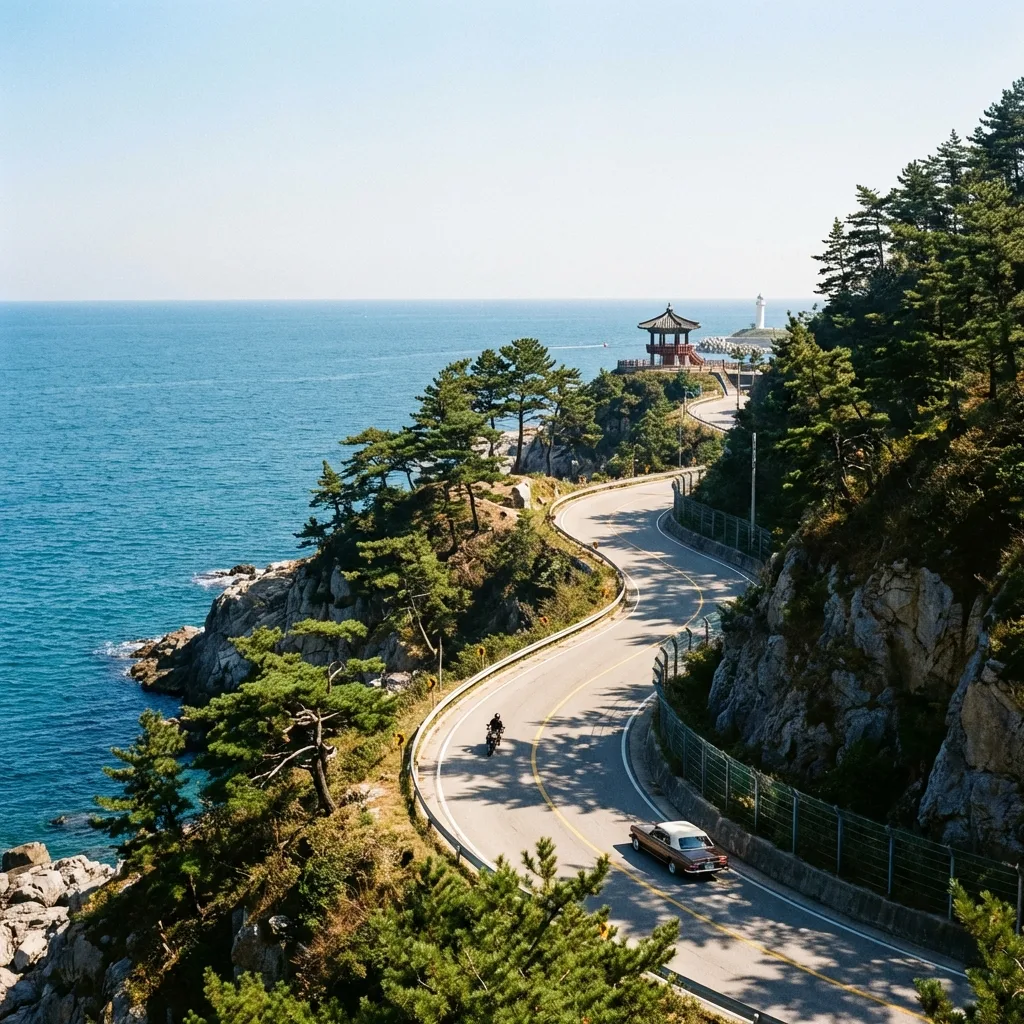
When Seoul becomes too loud, too crowded, and too relentless, Gangwon-do is where Koreans go to breathe. The province stretches across Korea's northeastern spine, where the Taebaek Mountains meet the East Sea — a coastline of deep sapphire water that looks nothing like the muddy Yellow Sea to the west. Here, the air smells of salt and pine, the roads follow clifftops above crashing waves, and three coastal cities offer completely different personalities within an hour of each other: the coffee-obsessed artisan city of Gangneung, the mountain-and-seafood gateway of Sokcho, and the laid-back surf town of Yangyang.
This road trip through Gangwon's east coast is one of the best two-to-three day escapes from Seoul in the country. The KTX now reaches Gangneung in under two hours, a coastal rental car gives you freedom between cities, and the combination of dramatic natural landscapes, exceptional regional food, and unhurried pace makes it genuinely restorative in a way that standard tourist Seoul circuit itineraries rarely are.
Getting There: The High-Speed Rail Revolution
The 2018 Winter Olympics brought one transformative piece of infrastructure to Gangwon-do: the KTX Gyeonggang Line connecting Seoul to Gangneung in approximately 1 hour 55 minutes. Before this line opened, the journey by car or bus took 3.5 to 4 hours depending on traffic. Now, the calculus has changed entirely — you can leave Seoul after a leisurely morning breakfast and be walking Gangneung's Anmok Coffee Street before noon.
Seoul to Gangneung by KTX: Trains depart from Cheongnyangni Station (not Seoul Station) and run approximately every 30 to 45 minutes during peak hours. The fare is around 27,600 KRW standard class. Book through the KorailTalk app or Trip.com if your international credit card has issues with the official system. On weekends and holidays, these trains fill up — book at least 3 to 4 days in advance, ideally a week.
Seoul to Sokcho: No KTX connects Seoul to Sokcho yet, though a line is planned. The current best option is an Express Bus from Seoul Express Bus Terminal (Gangnam) or East Seoul Bus Terminal. Premium express buses run directly to Sokcho in approximately 2 hours 30 minutes depending on traffic. The fare is around 18,400 KRW standard or 24,600 KRW premium. Premium is worth it for the wider seats and more reliable schedule.
Getting Around Between Cities: This is the key logistics decision. The three cities — Gangneung, Yangyang, and Sokcho — are strung along Route 7, the coastal highway running north-south. The distances are manageable: Gangneung to Yangyang is about 30 kilometers (30 minutes by car), and Yangyang to Sokcho is another 40 kilometers (40 minutes). Local buses connect them but run infrequently (30 to 60-minute intervals in rural stretches) and cannot access many specific attractions efficiently.
The recommendation: Arrive in Gangneung by KTX, then rent a car at Gangneung Station for the rest of the trip. Multiple rental companies (Lotte Rent a Car, SK Rent a Car, AJ Rent a Car) have offices within walking distance of the station. A compact car runs 60,000 to 80,000 KRW per day including basic insurance. Driving north along Route 7 toward Yangyang and Sokcho is one of the great Korean road experiences — the road hugs cliffs above the sea, pine forests fall to the waterline, and the views justify every turn.
Gangneung: Korea's Coffee Capital
Gangneung's identity as a coffee city is not marketing — it is historical. This is where the first generation of serious Korean artisan roasters set up shop in the early 2000s, long before the specialty coffee wave swept Seoul's neighborhoods. The reasons are local: the clean mountain water, the agricultural tradition of the surrounding region, and a culture of slower living that had no equivalent in the capital. Today, Gangneung has approximately 400 cafes for a city of 210,000 people — a ratio that would stagger most European cities.
Anmok Coffee Street (안목 커피거리)
Anmok Beach is the origin point of the modern Korean coffee culture movement, and its coffee street is simultaneously a tourist destination and a functioning neighborhood of serious cafes. The stretch runs for about 400 meters alongside the beach, and on a clear autumn morning — the mountains in the distance, the East Sea surf audible over the sound of milk steamers — it earns every bit of its reputation.
The key cafes along Anmok are not chains but independent operations with their own roasting profiles. Terarosa Coffee has a Gangneung branch and is one of the most respected specialty roasters in Korea; their Ethiopia Yirgacheffe single-origin drip is reliably excellent. Bohemian Roasters is older and more austere in presentation, but their roasting philosophy — emphasizing clarity and sweetness over fashionable flavor notes — produces consistently clean cups. For the full experience, order a hand-drip coffee rather than espresso-based drinks; the roasters design their beans with this preparation in mind.
The context note: Anmok is crowded on weekends, with visitors queuing for the view seats. Weekday mornings between 9 and 11 a.m. are the correct time to visit — cafes are calm, the beach is mostly empty, and the light on the water is extraordinary.
BTS Bus Stop at Jumunjin Beach (점원 해변)
K-pop geography has added an unexpected landmark to Gangneung's map: the bus stop featured on the BTS "Spring Day" single artwork sits on a quiet stretch of beach at Jumunjin, about 7 kilometers north of central Gangneung. The stop itself is unremarkable — a standard rural bus shelter — but its context on the beach against the sea has made it one of the most visited spots by Korean music fans globally.
The practical reality: The queue for photos at the bus stop can be substantial on weekends. Arrive before 9 a.m. or in the late afternoon. The stop is about a 20-minute drive north of Anmok Coffee Street, or approximately 25,000 KRW by taxi. Access by local bus is possible but slow. If you have a rental car, this is a natural add-on to the coffee street visit.
The beach at Jumunjin itself is worth more than the bus stop. It is a working fishing village beach, not a resort beach — fishing boats anchor offshore, nets dry on the sand, and the overall atmosphere is of a place where actual Koreans live and fish rather than perform for visitors. The contrast to the polished tourist infrastructure of Haeundae Beach in Busan is stark and appealing.
Arte Museum Gangneung (아르떼뮤지엄 강릉)
When it rains on the east coast — and it does rain, particularly in summer — Arte Museum provides one of the most genuinely impressive rainy-day activities in Korea. The museum consists of a series of dark rooms filled with large-scale immersive digital projections: waterfalls cascade across every surface, forests of light grow and change with the seasons, and abstract landscapes morph through forms pulled from Korean natural motifs.
Entry is 17,000 KRW for adults. Allow 90 minutes to 2 hours for a thorough visit. The photographic opportunities are extraordinary, which is why this museum regularly trends on Korean Instagram. It is located in the Chodang neighborhood, about 10 minutes by car from Gangneung Station. The same area is home to Chodang Sundubu Street — a cluster of restaurants specializing in soft tofu (sundubu) made from the local seawater, a regional Gangneung specialty worth lunch before or after the museum.
Yangyang: The Surf Capital of Korea
Between Gangneung and Sokcho, straddling the coast, Yangyang has transformed in the past decade from an overlooked transit town into Korea's premier surf destination. The consistent east-swells generated by the open East Sea, combined with a stretch of sandy beach with the right orientation, have made the waters around Yangyang popular with a surfing community that is young, international, and entirely unlike anything else in Korean travel culture.
Surfyy Beach (서피비치)
Surfyy Beach is a private beach complex in the Hajodae area of Yangyang that packages the surfing lifestyle into an accessible, foreigner-friendly experience. The beach has surf rental equipment, surf schools offering introductory lessons (typically 50,000 to 70,000 KRW for a 2-hour group lesson including board and wetsuit), and the infrastructure of a beach resort: loungers, music, a bar area, and food trucks operating through the summer and into autumn.
Even for visitors who have no intention of surfing, the atmosphere is worth experiencing. Yangyang's surf community is one of the few places in Korea where English is genuinely widely spoken at street level (rather than in formal tourist contexts), where the aesthetic is beach-casual rather than K-pop polished, and where the primary activity is watching the ocean rather than a screen.
Seasonality: Surfyy Beach and the surrounding surf culture operate from late spring through early autumn (May through October). Outside these months, the beaches are quiet and the surf infrastructure largely closed. If you are visiting in November through February, Yangyang itself is beautiful but the surfing scene is hibernating.
Naksansa Temple (낙산사)
On a cliff directly above the sea, about 5 kilometers north of Yangyang's town center, Naksansa Temple is one of the most beautifully sited Buddhist complexes in Korea. The original temple was founded in 671 CE by the monk Uisang, who is said to have received the Bodhisattva Gwaneum's teaching while sitting on the rocks below. The complex has burned and been rebuilt multiple times — most recently after a catastrophic wildfire in 2005 — and the current buildings represent a restoration that preserved the essential character while replacing what was lost.
The famous Uisangdae Pavilion sits on the edge of the cliff, with unobstructed views north and south along the coastline. The sound of monks chanting mixed with crashing waves below creates a genuinely transcendent auditory environment. Early morning visits (the temple opens before dawn) are particularly powerful — the pavilion at sunrise with the sea below is one of the great sensory experiences of the Korean east coast.
Entry is 4,000 KRW for adults. Allow 90 minutes to explore the full complex, including the giant Haesugwaneumsang white stone statue of Gwaneum (the Bodhisattva of Compassion) visible from the road and the surrounding walking paths through pine forest.
Sokcho: Mountains Meet Sea
Sokcho functions as the primary gateway to Seoraksan National Park, but it is also a city with its own distinct food culture and character. The city sits on a narrow strip of land between the sea and a lagoon, and its layout — fishing harbor, market, and residential neighborhoods compressed into a small peninsula — gives it a dense, village-like quality despite being a city of 80,000 people.
Seoraksan National Park (설악산 국립공원)
Seoraksan is consistently ranked among the most beautiful landscapes in Korea, and the autumn foliage season (typically mid-October to early November) draws visitors from across the country to witness the granite peaks wrapped in red and gold. The park offers hikes ranging from accessible 45-minute walks to strenuous multi-day trails, and choosing the right option significantly affects your experience.
The cable car shortcut: The Gwongeumseong Cable Car (권금성 케이블카) ascends from near the main park entrance to a rocky ridge at 800 meters elevation in about 10 minutes. From the top, the views across the Seorak massif — jagged granite towers, forested valleys, and on clear days the East Sea glinting in the distance — are exceptional without requiring any hiking fitness. The cable car operates year-round with a 15 to 30-minute queue typical on weekends. Round-trip cost is 16,000 KRW for adults.
The Ulsanbawi Ridge trail: For those willing to hike, the Ulsanbawi trail (6.4km round trip, approximately 3 hours) leads to a series of massive granite boulders at the park's northern section. The trail is moderately strenuous with some steep sections and chain-assisted scrambling near the top, but the reward — sitting on top of the 873-meter rocky formation with 360-degree views — is proportional to the effort.
Practical notes: Seoraksan requires a national park entry fee of 3,500 KRW. Parking at the main entrance can be difficult on autumn weekends; take a taxi from Sokcho (approximately 10,000 KRW from downtown) to avoid parking stress.
Sokcho Central Market and Dakgangjeong
The covered market in central Sokcho is the best place to eat in the city, and the defining food here is dakgangjeong — crispy fried chicken pieces coated in a sticky, sweet-spicy glaze made from gochujang, soy, garlic, and sugar. The most famous vendor, often identified by the long queue outside, is Manseok Dakgangjeong (만석닭강정). A large box runs about 10,000 to 15,000 KRW and is meant to be shared, though sharing is aspirational.
The market also has ojingeo sundae (오징어순대) — squid stuffed with noodles, tofu, and vegetables, then pan-fried in egg batter. This is a specifically Sokcho specialty not easily found outside the region. It is sold from several stalls in the market, sliced into rounds, and served with soy dipping sauce.
Abai Village (아바이 마을)
Abai Village is a community established by North Korean refugees who fled south during the Korean War and settled on a small spit of land connected to Sokcho by a manually-operated cable ferry. The ferry itself — the gaetbae — is an experience unique to this location: passengers grab a thick rope and pull the flat-bottomed boat hand-over-hand across the narrow channel, a method unchanged since the 1950s.
The village has a distinct atmosphere — quieter and more weathered than the rest of Sokcho, with older residents, smaller restaurants, and a sense of preserved history. The Abai Sundae sold in the village restaurants differs from standard sundae: it uses traditional North Korean preparation methods, stuffing the casing with meat, vegetables, and tofu rather than glass noodles. Lunch in Abai Village followed by the ferry return is a complete half-day activity.
Regional Food Summary
The Gangwon east coast has its own food identity separate from Seoul cuisine. These are the dishes to prioritize:
| City | Dish | What It Is | Price Range |
|---|---|---|---|
| Gangneung | Chodang Sundubu | Soft tofu made with seawater | 9,000–13,000 KRW |
| Gangneung | Ojingeo-gui | Whole grilled squid on the beach | 15,000–20,000 KRW |
| Sokcho | Dakgangjeong | Sweet-spicy crispy fried chicken | 10,000–15,000 KRW |
| Sokcho | Ojingeo Sundae | Squid stuffed with noodles | 8,000–12,000 KRW |
| Sokcho | Abai Sundae | North Korean-style blood sausage | 8,000–12,000 KRW |
| Yangyang | Songi Mushroom | Matsutake mushrooms in season | 20,000–40,000 KRW |
The Perfect 2-Day East Coast Itinerary
Day 1: Gangneung → Yangyang
8:30 a.m. — KTX from Cheongnyangni Station, Seoul. Arrive Gangneung approximately 10:30 a.m.
11:00 a.m. — Pick up rental car at Gangneung Station. Drive 10 minutes to Chodang neighborhood for sundubu lunch.
1:00 p.m. — Anmok Coffee Street. Hand-drip coffee, beach walk, 90 minutes.
3:00 p.m. — Drive north 20 minutes to Jumunjin Beach. BTS bus stop photo, walk the fishing village beach.
5:00 p.m. — Continue north 15 minutes to Yangyang. Check in to accommodation. The Yangyang Surf Hostel and Surfyy Beach accommodation options cater specifically to travelers.
7:00 p.m. — Dinner in Yangyang town center. The seafood here — raw fish (hoe) and grilled fish (gui) — is excellent and cheaper than at resort-adjacent restaurants.
Day 2: Sokcho → Return
8:00 a.m. — Drive 40 minutes north to Sokcho. Naksansa Temple at opening. Uisangdae Pavilion at sunrise light.
10:00 a.m. — Drive to Seoraksan National Park. Cable car ascent. Allow 2 hours including the walk around the upper ridgeline.
1:00 p.m. — Sokcho Central Market. Dakgangjeong lunch with ojingeo sundae.
3:00 p.m. — Abai Village. Manual ferry crossing, Abai Sundae, village walk.
5:00 p.m. — Return car at Gangneung Station (or drop at Sokcho if there is a return option) and KTX back to Seoul arriving by 7:00 p.m.
Practical Information
Best season: Autumn (October to November) is peak for foliage at Seoraksan and clear sea conditions. Summer (July to August) is beach and surf season but brings heavy crowds and humidity. Spring (April to May) offers mild temperatures and blooming azaleas on the mountain trails. Winter is cold but beautiful — Seoraksan with snow is spectacular, and the beach cafes in Gangneung remain open.
Accommodation base options:
- Gangneung is the best base if arriving by KTX without a car. Good selection of guesthouses and mid-range hotels near the station.
- Yangyang works well as a surf-centric base; accommodation is more casual and hostel-oriented.
- Sokcho has good budget options near the market and ferry terminals.
Weather note: The east coast generates its own weather patterns distinct from Seoul. Check forecasts specifically for Gangneung or Sokcho, as conditions can differ significantly from the capital. The east coast tends toward clear skies in autumn but receives substantial rainfall during summer monsoon.
Exploring the rugged east coast of Gangwon-do offers a rewarding contrast to the neon-lit streets of Seoul. Whether you're chasing the first light at Sokcho beach or hiking the granite peaks of Seoraksan, the region rewards those who take the slower path. To make your journey seamless, be sure to book your KTX tickets in advance, and see how to fit this region into a broader journey with our ultimate 10-day South Korea itinerary.
If you want to keep the coast-and-mountain route coherent, pair this with the Busan where-to-stay guide and the best national parks for fall foliage. That gives the east-coast route a clear continuation instead of leaving it isolated.