Beyond the Humidity: The Best Summer Beach Escapes in Korea
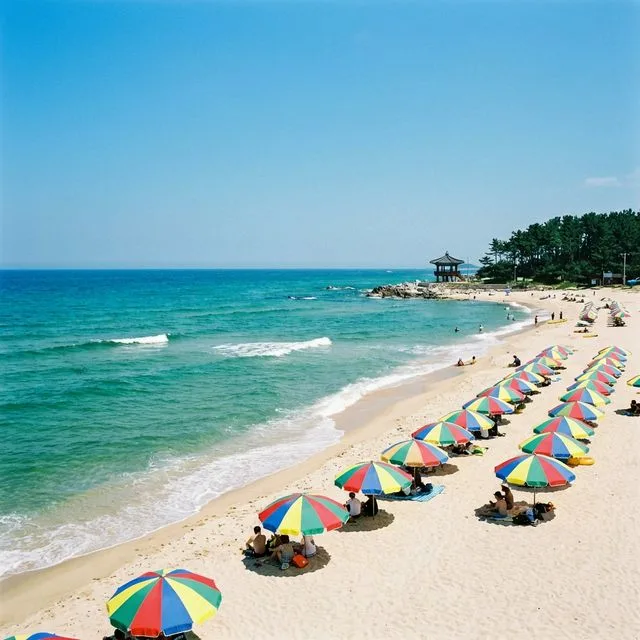
Summer in Korea (July-August) is not for the faint of heart. It is hot, sticky, and incredibly humid. But the heat is also the perfect excuse to explore the country's stunning coastline.
Whether you want to surf the waves of the East Coast, sip coffee overlooking a night bridge in Busan, or just float in turquoise water, Korea has a beach for you.
Here is your guide to escaping the city heat and finding your perfect summer spot.
Surviving the "Jangma" (Monsoon Season)
Before you book your beach trip, check the calendar. The Jangma (Rainy Season) typically hits from late June to mid-July. During these weeks, it can rain heavily and incessantly. The humidity spikes to near 100%, and your clothes will never feel fully dry.
Pro Tip: Aim for late July or August. The rain stops, the sun comes out, and the beach season officially begins.
Month-by-Month Summer Weather Guide
Understanding the rhythm of Korean summer is the single most important piece of trip planning advice you will receive. Here is an honest breakdown:
-
June (Pre-Monsoon, ~25-30°C): The heat is building and the skies are mostly clear. Beach towns are not yet overwhelmed with crowds. Water is still cool - refreshing rather than warm. This is a legitimately good time to visit if you want good weather and reasonable prices. Pack an umbrella anyway, as early-season showers can appear without warning.
-
July (Monsoon / Jangma, ~28-33°C): This is the month most experienced travelers route around. Rainfall averages between 250-400mm across the country - some years are worse than others. When it rains during Jangma, it does not drizzle politely. It dumps. The beach is not enjoyable, transportation can be disrupted, and everything feels unpleasantly damp. That said, the rain rarely runs continuously all day. There are often clear mornings or bright afternoons. If July is your only option, plan flexible days and lean into indoor culture.
-
August (Peak Beach Season, ~30-35°C): The monsoon has passed. The sun is aggressive, the sea is warm, and every Korean with school-age children has descended on the coast simultaneously. Haeundae Beach in August is estimated to draw over one million visitors on a single weekend. It is loud, crowded, extraordinary, and very Korean. This is peak season in every sense - peak heat, peak crowds, peak prices, and peak atmosphere.
-
September (The Hidden Gem, ~22-28°C): The secret that most foreign visitors do not know. After the Chuseok holiday period (which falls in late September or early October depending on the lunar calendar), beach towns empty out almost overnight. The water is still warm enough for comfortable swimming. The weather is clear and pleasant. Hotel rates drop significantly. September is arguably the best month to visit Korean beaches - you just have to be flexible enough to make it work with your schedule.
What to Do on Rainy Days
A week in a Korean beach town does not have to collapse if the weather turns. The country has quietly built one of the world's best indoor leisure cultures precisely because of its unpredictable summers.
-
Jjimjilbang (찜질방): These large public bathhouses are the definitive Korean rainy-day activity. You pay a flat fee (typically 10,000 - 15,000 KRW) and get access to gender-separated hot and cold mineral baths, a communal heated floor area, and often a sauna, a TV lounge, a sleeping area, and a food court. Jjimjilbang are open 24 hours. Some travelers effectively use them as budget overnight stays. Showing up at a jjimjilbang with wet clothes and walking out several hours later clean, warm, and relaxed is one of travel's underrated pleasures.
-
Museums and Cultural Centers: Busan has the Busan Museum of Art and the excellent Busan Museum of Movies (the city hosts one of Asia's largest film festivals every October). Gangneung has the Ojukheon Heritage Site, birthplace of scholar-artist Shin Saimdang. These are never crowded in summer because everyone is at the beach - rainy days flip the equation entirely in your favor.
-
PC방 (PC Bangs / Arcade Cafes): These are not what the name suggests to a Western ear. A PC bang is a large, air-conditioned room filled with high-spec gaming computers available by the hour (approximately 1,000-2,000 KRW/hour). They are spotlessly clean, serve food and drinks to your station, and are ubiquitous even in small beach towns. Even if you have no interest in gaming, they are an atmospheric and genuinely comfortable place to wait out a storm.
-
Pojangmacha (포장마차) Street Food Tents: When light rain falls, the covered pojangmacha tents along beach promenades come into their own. These are small, plastic-wrapped street stalls selling tteokbokki (spicy rice cakes), odeng (fish cake skewers in hot broth), and somaek (soju mixed with beer). Sitting under the orange glow of a pojangmacha canopy as rain patters on the plastic overhead, nursing a warm bowl of something spicy, is genuinely one of the best things you can do in Korea on a grey day.
Essential Summer Packing List
Korean summers punish the unprepared. This is a practical, non-negotiable list:
- Sunscreen, Korean SPF 50+ formulas: Korean sunscreens (brands like Anessa, Skin Aqua, and Round Lab) are globally recognized as among the best available. They are lighter, less greasy, and more pleasant to apply than most Western equivalents. Buy them at a local convenience store or pharmacy upon arrival - they are cheaper than at home and superior in quality.
- UV-blocking rash guard: As noted below in the beach culture section, most Koreans wear these. The practical reason is compelling: Korean summer sun at the beach is relentless and the UV index regularly hits 10+. A rash guard eliminates the need to constantly reapply sunscreen to your back and shoulders.
- Micro-towel: Beach towel rental exists but is inconsistent outside major resorts. A compact, quick-dry micro-towel takes up almost no space in a bag and pays for itself immediately.
- Insect repellent: Relevant primarily for river areas, rice field regions, and anywhere near standing water - particularly during and after the monsoon period. Mountain trails near coastal areas (Sokcho near Seoraksan, for example) can have mosquitoes. DEET-based repellent is widely available in Korean pharmacies.
- A lightweight, packable rain jacket: Not an umbrella (Korea's wind makes umbrellas useless in heavy rain). A compact rain jacket folds into a fist-sized ball and can stay in your day bag all summer.
1. Busan: The Summer Capital
Busan is to Seoul what Miami is to New York. It is urban, energetic, and unapologetically loud.
Haeundae Beach: The Miami of Korea
This is the most famous beach in the country. Imagine a wide stretch of sand backed by 80-story skyscrapers and luxury hotels.
- The Vibe: Crowded, expensive, and exciting. It's where you go to see and be seen.
- What to Do: Rent a tube and float in the waves. Visit The Bay 101 at night for fish and chips with a view of the Marine City skyline.
- Read More: Seoul to Busan Transport Guide
Gwangalli Beach: The Romantic Alternative
Just a few subway stops away is Gwangalli.
- The Vibe: Younger, more relaxed, and famous for its night views.
- What to Do: The Gwangandaegyo (Diamond Bridge) lights up at night, creating a glittering backdrop for the hundreds of cafes and bars lining the beach. On Saturday nights, catch the free M Drone Light Show.
Busan's Beach-to-Neighborhood Route
One of Busan's great underappreciated strengths is its subway system, which connects the major beaches with surprising efficiency. Rather than staying pinned to one beach, you can use a single day to ride the coast.
-
Haeundae (Haeundae Station, Metro Line 2): Start your morning here. The beach faces east, which means morning light is excellent and crowds are thinner before 11am. Grab an Americano from one of the beachfront cafes and watch the paragliders launch from the nearby Dalmaji Hill.
-
Gwangalli (Geumnyeonsan Station, Line 2, then a short walk): Head here for lunch and the afternoon. The streets behind Gwangalli are full of independent cafes and small restaurants. The beach itself is more gravel than sand in some sections, but the views of Gwangandaegyo from water level are better than any other vantage point in the city.
-
Songdo Beach (Seodaesin-dong area, Bus 26 from Nampo Station): The oldest beach in Busan and still one of its best-kept secrets from international tourists. Songdo was Korea's first public beach, opened in 1913, and it retains a slightly old-fashioned, relaxed character compared to Haeundae. The main draw is the Songdo Ocean Sky Walk - a glass-bottomed sky cable car that runs over the water, giving you uninterrupted views of the bay. The cable car costs approximately 15,000 KRW round trip and is genuinely spectacular.
Busan's Summer Food Scene
Busan has its own distinct food culture, separate from Seoul's, and the summer menu reflects the coastal setting with precision.
-
Jagalchi Market: The largest seafood market in Korea, located near Nampo-dong. Come for breakfast or early lunch - the morning hours are when the market is at full activity, with vendors hauling in live fish, sea cucumber, crab, and shellfish from the docked boats. The upper floors of the main building have restaurants where you can have your chosen seafood cooked to order. A meal of fresh hoe (raw fish, Korean style) with rice and banchan here is a defining Busan experience.
-
Milmyeon (밀면): This is the Busan summer staple and it is non-negotiable. Milmyeon is a cold noodle dish - thin wheat noodles served in a chilled beef broth with a soft-boiled egg, sliced beef, and a drizzle of spicy mustard. It was invented by Korean War refugees in Busan who could not access buckwheat (the traditional noodle ingredient for cold noodles) and adapted with wheat flour instead. On a 35-degree afternoon, a bowl of icy milmyeon is one of the most restorative things you can consume. Head to Gaya Milmyeon near Seomyeon for one of the most respected bowls in the city.
-
Ssiat Hotteok (씨앗호떡): Find these on the beachside promenade near Haeundae. Hotteok is a Korean sweet pancake, traditionally filled with brown sugar and cinnamon. The Busan variation is filled with mixed seeds and nuts and fried flatter and crispier than the Seoul version. They are served in a paper cup and eaten standing up, still steaming, and they cost about 2,000 KRW. It is impossible to eat just one.
-
Gukje Market Cold Drink Stalls: Inland from Jagalchi, Gukje (International) Market is Busan's largest traditional market. Along its covered alleys, look for the stands selling sikhye (a sweet rice punch served ice-cold) and bingsu (shaved ice dessert). In August heat, these stalls develop queues that tell you exactly how good they are.
2. Gangneung & Yangyang: The Trendy East Coast
The East Coast (Gangwon-do Province) has cleaner water and a completely different vibe. It's accessible from Seoul by KTX (to Gangneung) or bus.
Yangyang (Surfyy Beach): The Surfing Mecca
Ten years ago, Yangyang was a quiet fishing village. Now, it is the coolest spot in Korea for the under-30 crowd.
- The Vibe: Hipster paradise. Think bean bags, tropical bars, DJs spinning at sunset, and surfboards everywhere.
- Surfyy Beach: This private beach zone is dedicated to surfing. You can take lessons, rent boards, or just chill in a hammock with a beer. Note that swimming is restricted in some surfing zones.
Sokcho Beach: Family Fun
Further north, near Seoraksan National Park, is Sokcho.
- The Vibe: Classic family vacation spot.
- What to Do: Ride the Sokcho Eye (Ferris Wheel) for panoramic views of the ocean and mountains. Eat Dakgangjeong (Sweet and Spicy Chicken) from the central market.
- Read More: Hiking Seoraksan Guide (Combine mountain + beach).
Gangneung Coffee Street (Anmok Beach)
There is a reason Gangneung became Korea's coffee capital, and it is not arbitrary. The city sits at the end of the KTX line that opened for the 2018 Pyeongchang Winter Olympics. That rail connection brought enormous new visitor traffic and gave entrepreneurial cafe owners a suddenly accessible customer base. The result is a coffee culture that now draws domestic tourists from Seoul who make the 90-minute train journey specifically to drink coffee on the beach.
Anmok Coffee Street runs along the foreshore near Anmok Beach, a quieter alternative to the main Gyeongpo Beach a few kilometers north. There are more than 20 independent cafes on this strip, and the quality is genuinely high. These are not chain outlets - they are individually designed spaces, many with floor-to-ceiling ocean-facing windows, serving specialty espresso alongside traditional Korean snacks. The characteristic activity is sitting inside a warm, beautifully designed cafe while watching the East Sea stretch to the horizon through floor-to-ceiling glass. In summer, this works equally well with the door open and a cold brew in hand.
For an accommodation upgrade, Haslla Art World is a boutique hotel and museum complex built into a hillside above the sea between Gangneung and Jeongdongjin. The rooms look directly over the ocean and the property has its own sculpture garden and contemporary art museum. It is not a budget option - rates in summer peak at around 300,000-500,000 KRW per night - but it represents one of the most distinctive design hotel experiences on the Korean coast.
Jeongdongjin: The Most Unique Beach in Korea
Twenty minutes south of Gangneung by local train or bus is Jeongdongjin, and it has a reasonable claim to being the strangest beach in the country, which is saying something.
The defining feature is the Jeongdongjin Train Station, which sits so close to the water that it holds a Guinness World Record for being the closest railway station to the sea. The tracks run directly beside the beach. Watching a train arrive at this station while standing on the sand, with the East Sea right there, is an experience with genuine strangeness and beauty to it.
Jeongdongjin is also one of Korea's most famous sunrise spots. The beach faces directly east, which means on clear mornings the sun rises clean out of the ocean. This matters to Korean culture significantly - the New Year's sunrise (Haetsal) draws enormous crowds to Jeongdongjin every January 1st. But it remains special year-round, and arriving on an early morning train to watch the sun come up over the water, coffee in hand, is one of those travel moments that stays with you.
The Hourglass Park (Jeongdongjin Timepiece Park) sits on the coastal hillside above the beach. The centerpiece is a 8-meter-high hourglass - the world's largest - that was installed at the millennium and takes exactly one year to drain. The park also has a decommissioned cruise ship that has been converted into a hotel and restaurant, anchored permanently to the hillside. The whole area has an endearingly eccentric quality that Korean domestic tourists clearly love.
3. Hidden Gems: Jeju's Emerald Waters
If you are flying to Jeju, skip the city beaches and head to Hamdeok or Hyeopjae.
- The Vibe: The water here is shallow, calm, and a stunning shade of emerald green. It feels more like Okinawa or the Philippines than mainland Korea.
- Read More: Jeju Island Itinerary
Hamdeok Beach
Hamdeok, on the northern coast of Jeju, is the beach that appears on every travel photographer's Jeju collection and with good reason. The water is extraordinarily clear - shallow enough that you can see the dark volcanic rock formations under the surface several meters from shore - and it graduates from pale aquamarine at the edge to deep turquoise further out. On a cloudless August morning, it looks altered.
The beach itself is compact and crescent-shaped, which gives it an intimate quality compared to the long flat beaches of the mainland. Swimming is safe here - the bay is naturally sheltered and the current is gentle. It is an excellent choice for families or anyone who wants water enjoyment without navigating surf zones.
A practical add-on: the Manjanggul Lava Tube is approximately 20 minutes by taxi from Hamdeok. This UNESCO World Heritage-listed volcanic cave runs for nearly 8km underground and maintains a year-round temperature of around 11°C. After a morning at the beach, stepping into Manjanggul is a dramatic experience - you go from 35-degree beach sun into a cool, cathedral-like underground tunnel in a matter of minutes. Bring a light layer.
The cafe scene along the road behind Hamdeok beach has grown substantially in recent years. There are now a dozen or more independently run cafes serving Jeju green tea lattes, hallabong (Jeju tangerine) ades, and various bingsu variations in spaces designed with local volcanic stone and driftwood. Spending a post-swim hour in one of these is an entirely reasonable use of an afternoon.
Hyeopjae Beach and Hallim Park
On the western coast of Jeju, Hyeopjae Beach offers something genuinely unusual: white sand. Most of Jeju's coastline involves dark volcanic rock and black sand, so the pale sand at Hyeopjae is immediately striking. The water here is also remarkably shallow - you can wade for fifty meters before the water reaches waist height, which makes it an ideal beach for children and non-swimmers.
Immediately adjacent to Hyeopjae is Hallim Park, a botanical garden that has been developed on former farmland over several decades. The park contains nine themed garden zones, including subtropical plants, bonsai gardens, and folk village recreations. It also has two lava tubes within its grounds (Hyeopjae Cave and Ssangyonggul Cave) that can be explored with guided tours. The combination of beach followed by garden stroll is a particularly relaxed half-day itinerary - especially in the shoulder hours of late afternoon when the main beach crowds begin to thin.
Iho Tewoo Beach
For something entirely different, head to Iho Tewoo Beach on the northwestern coast, just ten minutes by taxi from Jeju City center. This beach is famous for two things: its pair of horse-shaped lighthouses (a nod to Jeju's historical role as Korea's primary horse-breeding island), and its distinctive black volcanic sand.
The black sand is not a marketing invention. The volcanic geology of Jeju means that the sand here is genuinely dark, mixed with the crushed remnants of basalt rock. Lying on dark sand in August sun heats you faster than you expect - something to factor into your sunbathing plans. The beach is wide, the atmosphere is local and unhurried (far fewer tourists make the trip here compared to Hamdeok or Hyeopjae), and the horse lighthouse photos are an obligatory souvenir. Iho Tewoo is best visited in the late afternoon, when the setting sun turns the dark sand and water into something resembling a painter's vision of a volcanic coastline.
Korean Beach Culture: What to Expect
If it's your first time at a Korean beach, a few things might surprise you:
- Rash Guards Everywhere: Most Koreans wear long-sleeved rash guards and shorts over bikinis. It's for sun protection (pale skin is prized) and modesty. You can wear a bikini, but you might feel a bit exposed.
- The Parasol System: You rarely bring your own umbrella. Instead, beaches are lined with rows of identical parasols available for rent (10,000 - 20,000 KRW/day).
- Delivery Food: Yes, you can order fried chicken and beer directly to your beach towel. Look for the "Delivery Zone" markers, get the location number, and order via an app (or ask a friendly local to help). Eating Chimaek (Chicken + Beer) on the sand at sunset is a peak Korean summer experience.
Summer Festivals and Events at Korean Beaches
If your timing aligns, Korean beach towns run major events throughout summer that are worth building a trip around.
-
Boryeong Mud Festival (보령 머드 축제): Every July, the city of Boryeong on the West Coast hosts what has become one of Asia's most internationally attended beach festivals. The premise is simple and slightly absurd: the coastal mud flats of the region produce mineral-rich grey mud, and the festival essentially turns the entire beach into a giant mud wrestling arena, with mud slides, mud pools, mud fireworks (yes), and mud spa installations. It draws hundreds of thousands of visitors annually. It is chaotic, joyful, and exactly as messy as it sounds. Boryeong is accessible from Seoul by bus in approximately two hours.
-
Busan Sea Festival (부산 바다 축제): Held at Haeundae Beach in late July or early August, this week-long municipal festival includes a beach parade, fireworks displays, water sports demonstrations, K-pop performances, and sand sculpture competitions. The festival's closing fireworks over the Haeundae waterfront is one of the signature visual events of the Korean summer calendar. Entry to most events is free.
-
Gwangalli Eobang Festival: Gwangalli Beach hosts its own separate festival in spring (usually April or May), but the Gwangandaegyo drone and fireworks shows run throughout summer on designated weekends. The M Drone Light Show coordinates hundreds of drones in formations above the bridge and beach - it is free to watch from the beach and runs on most Saturday nights during the peak summer period. Arrive by 9pm for good position.
-
Busan International Rock Festival (BIGROC): Held in late July at the Tom Tom Outdoor Stage near Busan, this is one of Korea's longest-running rock festivals, featuring a mix of Korean and international acts. It is a counterpoint to the beach pop culture - if your summer travel overlaps with BIGROC, the combination of festival, beaches, and Busan's bar scene makes for an exceptionally full week.
Practical Tips: Booking and Costs
Korean beach tourism operates on near-absolute peak pricing in August, and planning ahead is not optional - it is essential.
Accommodation Costs and Timing
-
Peak Season (late July - mid August): Hotel rates at Haeundae Beach in this window routinely run 200,000 - 500,000 KRW per night for a mid-range property. Budget guesthouses and motel-style yeogwan exist in the 80,000 - 150,000 KRW range but fill months in advance. Book at minimum 6-8 weeks before arrival for peak dates; Korean domestic travelers book earlier than most international visitors expect.
-
Shoulder Season (June, September): Rates drop by 30-50%. A room that costs 300,000 KRW in August often runs 150,000-180,000 KRW in September with identical quality and views.
-
Accommodation Type Guidance: In Busan, staying within walking distance of your chosen beach adds significant convenience - the city is large and taxi costs accumulate. In Gangneung, guesthouses near Gyeongpo Lake or Anmok Beach are quieter and cheaper than oceanfront properties. In Yangyang, many visitors stay in surf-camp style accommodation (often a dormitory or small private room attached to a surf school) - this is genuinely part of the experience rather than a compromise. In Jeju, budget travelers often base in Jeju City and take taxis or rent bicycles to beaches.
Daily Budget for a Beach Day
A realistic daily budget for a Korean beach day, excluding accommodation:
- Budget (25,000 - 45,000 KRW): Convenience store breakfast, parasol rental, one beach food delivery (chimaek), street food dinner.
- Mid-Range (60,000 - 100,000 KRW): Cafe breakfast, parasol rental with sun lounger, restaurant lunch (seafood or milmyeon), evening dinner and drinks at a beach bar.
- Splurge (150,000+ KRW): Hotel pool access, restaurant meals throughout the day, cocktail bars at night, activities like jet ski rental or cable car.
Getting Around at Coastal Destinations
- Busan: The city subway is efficient and covers all major beaches. A single T-Money card (loaded at any convenience store) handles subway, bus, and transfers seamlessly. Buy one at Busan Station on arrival.
- Gangneung and East Coast: The city is smaller and buses are infrequent. Taxis are widely available and affordable for short distances (most beach-to-beach trips run 8,000-15,000 KRW). Renting a bicycle is practical in Gangneung proper, where dedicated cycling paths run along the coast.
- Yangyang: Largely car or taxi-dependent once you arrive. The intercity bus from Seoul drops you at Yangyang Bus Terminal, from which the beach areas are a short taxi ride. Many surf camps offer airport and station pickup arrangements.
- Jeju: Jeju's public bus network has improved considerably since 2020 but still requires patience. The intercity bus routes connect main beaches adequately, but schedules can be infrequent. Renting a car (widely available and reasonably priced at around 60,000-80,000 KRW/day) transforms Jeju from a somewhat frustrating destination into an extremely comfortable one.
So pack your sunscreen (and maybe a rash guard), and dive in. The water is fine. For the best coastal base, our 4-day Jeju itinerary builds a full summer island escape around beaches and culture. If you're heading to the east coast from Seoul, the 10-day itinerary for first-timers shows how to efficiently route from city to sea. And for seamless travel between beach towns, our T-Money card guide will keep your transit spending minimal.