Maglev Train Experience in Shanghai: How to Ride the World's Fastest Train

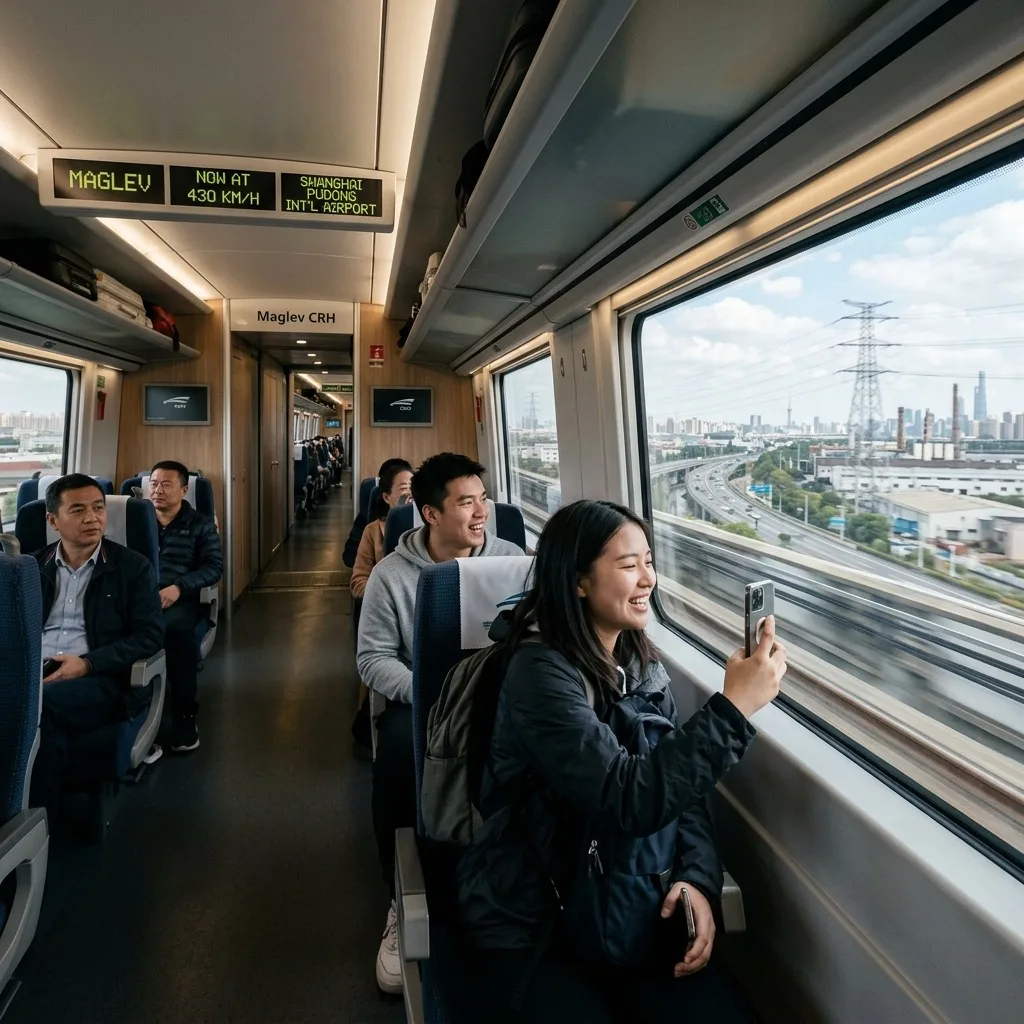
The hum of electromagnetic forces, the blur of the cityscape, and a feeling of effortless glide – welcome to the future of transportation aboard the Shanghai Maglev train. For first-time visitors to Shanghai, navigating arrival at Pudong International Airport can be a daunting prospect, but the Maglev offers a thrilling, efficient, and surprisingly easy solution to whisk you into the city. More than just a transfer, it's an experience, a testament to modern engineering that catapults you from the airport to the Longyang Road Station in a mere eight minutes. This guide will equip you with everything you need to know to confidently ride the world's first commercial maglev line, ensuring a smooth start to your Shanghai adventure.
Introduction to the Shanghai Maglev Train
The Shanghai Maglev Train (SMT) isn't just a mode of transport; it's a marvel of modern engineering and a symbol of China's technological prowess. Inaugurated in 2002, it was the first commercial maglev line in the world, utilizing electromagnetic forces to levitate the train above its tracks, eliminating friction and allowing for incredible speeds. This groundbreaking technology propels passengers at an astonishing maximum speed of 431 kilometers per hour (268 mph), making it the fastest commercial train service globally. It primarily serves as a high-speed link between Pudong International Airport (PVG) and Longyang Road Station in the Pudong district, offering both local residents and international travelers an unparalleled transit experience. Imagine gliding almost silently at speeds that rival small aircraft, yet remaining firmly grounded and enjoying panoramic views of the evolving cityscape – that's the Maglev promise. This isn't just about reaching your destination quickly; it's about starting your journey with an unforgettable adventure.
The Technology Behind the Speed: A Deeper Dive
The Maglev operates on the sophisticated principle of electromagnetic suspension (EMS). Unlike traditional trains that rely on wheels rolling on steel tracks, the Maglev literally floats. Powerful electromagnets strategically placed along the underside of the train cars and within the guideway interact to create both lift and propulsion. These magnets lift the train approximately 10 millimeters (about 0.4 inches) above the track, completely eliminating friction. Further sets of electromagnets then create a fluctuating magnetic field that pushes and pulls the train forward.
This lack of physical contact is the secret to its incredible speed and remarkably smooth ride. Passengers often describe the sensation as akin to flying, experiencing none of the bumps or vibrations associated with conventional rail travel, even when accelerating to its top speed. The control systems are incredibly precise, ensuring the train remains perfectly centered and stable on its guideway. This advanced engineering not only allows for rapid transit but also contributes to a quieter journey and significantly reduces wear and tear, making it a highly sustainable and efficient transportation solution.
A Gateway to Shanghai: Beyond Just Transport
While its primary function is undoubtedly to transport passengers swiftly from PVG into the heart of Shanghai's outer districts, the Maglev experience extends beyond mere utility. For many international visitors, it serves as their very first impressive introduction to Shanghai's forward-thinking ethos and technological ambition. The ride itself is a spectacle: sleek, futuristic carriages, digital displays tracking the increasing speed, and the dramatic shift from the airport's sprawl to the urban tapestry of Pudong.
As you hurtle towards Longyang Road, you get a unique, high-speed perspective of the city's dynamic development. It's a testament to how quickly Shanghai has embraced modernity while retaining its unique charm. The convenience of connecting directly to the city's extensive and equally efficient metro network from Longyang Road Station means that your journey from the airport to virtually any destination in Shanghai is streamlined, minimizing stress and maximizing your valuable travel time. Consider this journey not just as a means to an end, but as an integral part of your Shanghai adventure, setting an exhilarating tone for the discoveries that await. For a comprehensive overview of the city's iconic sights and hidden treasures, check out our Shanghai Travel Guide: The Bund, French Concession & Hidden Gems.
Understanding the Maglev Route and Stations: Navigating Your Arrival
The Shanghai Maglev system is elegantly simple, connecting just two crucial points: Pudong International Airport (PVG) and Longyang Road Station. This direct connection is designed for efficiency, making it incredibly easy for travelers to navigate. However, understanding the nuances of each station's layout and onward connections is key to ensuring a completely stress-free arrival or departure.
Pudong International Airport Station (PVG): Your Entry Point
Upon arrival at Shanghai Pudong International Airport, locating the Maglev station is surprisingly straightforward thanks to excellent signage in both English and Mandarin. After you've cleared immigration, collected your luggage, and passed through customs, simply follow the prominent signs that read "Maglev Train" or "磁浮列车" (cí fú liè chē). The Maglev station is conveniently situated on the second floor of the airport's Terminal 2 complex, in close proximity to the entrance for Metro Line 2, facilitating easy transfers for those continuing their journey via subway.
Key Features and Amenities at PVG Station:
- Effortless Access: The station is designed for smooth passenger flow, even with luggage. Escalators and elevators are readily available.
- Comprehensive Ticketing: You'll find multiple manual ticket counters staffed by helpful personnel who can answer questions and assist with various ticket options, including discounted fares. Additionally, numerous self-service ticket machines are available, offering multi-language interfaces for quick and easy purchases using cash or popular Chinese mobile payment apps like WeChat Pay and Alipay.
- Comfortable Waiting Areas: Spacious and clean waiting lounges provide seating, digital screens displaying train schedules, and information about the Maglev service.
- Integrated Facilities: Being within the airport terminal, you have immediate access to a wide array of airport amenities, including currency exchange services, various dining establishments ranging from fast food to sit-down restaurants, duty-free shops, and convenience stores for any last-minute necessities.
- Seamless Metro Connection: A direct passageway connects the Maglev station to the Shanghai Metro Line 2 station. This is a critical feature for most travelers, allowing for a swift transition from the high-speed Maglev to the extensive city metro network. For a more in-depth understanding of navigating the city's subway system, consult our Shanghai Metro Guide: Which Line Goes Where & How to Ride.
Longyang Road Station (龙阳路站): Your Downtown Transit Hub
Longyang Road Station, located in the Pudong district, serves as the Maglev's urban terminus. While not in the absolute geographic center of Shanghai, it is a bustling and strategically important transportation nexus. Its primary value lies in its exceptional connectivity to the wider Shanghai Metro system, making it an ideal point for transferring to your final destination within the city. The area immediately surrounding the station is a blend of commercial spaces and residential developments, with ongoing infrastructure projects reflecting Shanghai's constant growth.
Key Features and Onward Connectivity:
- Major Metro Interchange: Longyang Road is a pivotal transfer point, boasting connections to three vital Shanghai Metro lines:
- Metro Line 2 (Green Line): This is arguably the most important connection for tourists and business travelers. Line 2 traverses Shanghai horizontally, linking major landmarks and districts. From Longyang Road, you can easily reach iconic destinations such as the financial hub of Lujiazui (home to the Oriental Pearl TV Tower and Shanghai Tower), People's Square (a central meeting point and home to museums), and Nanjing Road (Shanghai's premier shopping street). It also extends further west to Hongqiao International Airport and Hongqiao Railway Station.
- Metro Line 7 (Orange Line): This line offers access to other significant areas, including Jing'an Temple, a beautiful historic temple amidst a modern commercial district, and various university campuses.
- Metro Line 16 (Blue Line): This line extends south-eastward into more suburban areas of Pudong, serving as a commuter route for residents.
- Surface Transportation Options: Outside the station, you'll find well-organized taxi stands where you can easily hire a cab to your destination. Numerous bus stops also serve the station, providing additional localized transport options, though for longer distances into the city, the metro is generally preferred for its speed and avoidance of traffic.
- Local Amenities: The immediate vicinity of Longyang Road Station includes several smaller shopping centers, cafes, and restaurants, offering convenient spots for a quick meal or to pick up essentials before continuing your journey.
Planning Your Maglev Journey: Practical Details for 2026
To ensure a smooth and enjoyable experience on the Shanghai Maglev, it's essential to be aware of its operating hours, ticket prices, and purchasing options, especially considering any updates for 2026.
Operating Hours (2026)
The Maglev operates frequently throughout the day, with slightly different schedules depending on the direction of travel and the day of the week.
- From Longyang Road Station: Generally, the first train departs at 06:45 and the last train at 21:40.
- From Pudong International Airport (PVG): The first train usually departs at 07:02 and the last at 21:42.
Frequency: Trains typically run every 15 to 20 minutes, ensuring minimal waiting times. It's always advisable to check the most current schedule upon arrival, as slight adjustments can occur due to maintenance or public holidays.
Ticket Prices (2026)
As of 2026, the Shanghai Maglev train prices remain consistent. Here’s a breakdown of the standard and discounted fares:
| Ticket Type | Ordinary Seat | VIP Seat |
|---|---|---|
| Single Trip | 50 RMB (~$7 USD) | 100 RMB (~$14 USD) |
| Round Trip (Valid for 7 days) | 80 RMB (~$11 USD) | 160 RMB (~$22 USD) |
Important Discounts & Special Offers:
- Air Passenger Discount: Present your airline boarding pass (paper or electronic) for a flight on the same day to purchase a single-trip ordinary ticket for just 40 RMB. This is a significant saving and highly recommended for arriving passengers.
- Children: Up to two children with a height of 1.3 meters (4.27 ft) or below can travel for free when accompanied by a paying adult.
- Shanghai Public Transportation Card (SPTC): If you possess an SPTC, you can use it to pay for the Maglev fare. This often applies the discounted 40 RMB rate for a single trip. For a broader understanding of how integrated public transport systems work in leading Asian economies, you might also find our The Ultimate Guide to Public Transportation in Korea (2025 Edition) insightful.
- Maglev & Metro Pass: For added convenience and savings, consider these combined passes:
- Single Trip Maglev + Metro 1-Day Pass: 55 RMB
- Round Trip Maglev + Metro 1-Day Pass: 85 RMB These passes are particularly useful if you plan to use the Shanghai Metro extensively on the same day as your Maglev journey.
Where to Buy Tickets
Purchasing tickets for the Maglev is straightforward and can be done at both the Pudong International Airport and Longyang Road stations.
- Manual Counters: Look for staffed ticket counters where you can purchase tickets from an agent. They can assist with questions and explain the different ticket options.
- Self-Service Machines: Numerous user-friendly self-service machines are available. These machines typically offer instructions in multiple languages, including English. You can usually pay with cash or common mobile payment platforms like WeChat Pay and Alipay.
- Online Platforms (Exchange Required): While platforms like Klook or Trip.com may offer Maglev tickets, be aware that you will usually receive a voucher or QR code that still needs to be exchanged for a physical ticket at the station's ticket counter. This doesn't necessarily save time, but it can be convenient for pre-planning.
Tips for a Smooth Maglev Experience and Avoiding Common Mistakes
Riding the Shanghai Maglev is generally a straightforward process, but a few insider tips and awareness of common pitfalls can make your journey even more enjoyable and efficient.
Maximizing Your Experience
- Boarding Pass Discount: Always keep your inbound flight's boarding pass handy if you're arriving at PVG. The 40 RMB single-trip fare is a great deal. This simple trick can save you a significant amount, especially if you're traveling on a budget, and is a benefit often overlooked by first-time visitors.
- Choose Your Seat Wisely: If you want to experience the sensation of speed to its fullest, try to secure a window seat. The perspective of the landscape blurring past is a key part of the Maglev's appeal. Additionally, sitting towards the front or back of the train can offer a clearer view of the track disappearing behind you or rushing towards you, enhancing the unique "floating" sensation.
- Time Your Ride for Top Speed: The Maglev reaches its top speed of 431 km/h only during specific periods of the day, typically between 9:00 AM – 10:45 AM and 1:00 PM – 4:45 PM. Outside these times, it usually operates at a maximum of 300 km/h. If witnessing the highest speed is a priority, plan your travel accordingly. While 300 km/h is still incredibly fast, the sensation of hitting 431 km/h is a truly memorable part of the experience.
- Combine with Metro Pass: If you anticipate extensive metro travel after your Maglev ride, the combined Maglev and Metro 1-Day Pass offers excellent value. Shanghai's metro system is vast and efficient, and having a combined pass eliminates the need to purchase separate tickets, saving both time and money.
- Luggage Considerations: While there are no strict luggage restrictions, be mindful of managing your bags on and off the train. The Maglev carriages are spacious, with dedicated luggage racks, but during peak hours, they can get busy. Try to keep your belongings close and organized for quick disembarkation. If you have particularly large or numerous pieces of luggage, consider traveling during off-peak hours for a more comfortable experience.
Common Mistakes to Avoid
- Confusing Maglev with Metro: A frequent error made by visitors is confusing the Maglev with Shanghai Metro Line 2. While both go to Pudong Airport, they are distinct services. The Maglev is significantly faster but only goes to Longyang Road. Metro Line 2 offers more stops directly into the city but takes much longer (approximately an hour vs. 8 minutes for the Maglev). Ensure you're following signs for the "Maglev" if speed is your priority.
- Ignoring the Boarding Pass Discount: Forgetting to present your boarding pass at the ticket counter means missing out on the single-trip discount, making your journey unnecessarily more expensive. This is a common oversight that can be easily avoided.
- Underestimating Transfer Time at Longyang Road: While the Maglev ride is quick, factor in adequate time for purchasing tickets, waiting for the train (though frequencies are high), and transferring to the metro at Longyang Road Station. If you have a tight connecting flight or appointment, allow at least 20-30 minutes for the entire transfer process, especially if unfamiliar with the station layout.
- Attempting to Book Online for Immediate Use Without Understanding Exchange Requirements: If you see online deals for Maglev tickets (e.g., on Klook or Trip.com), always double-check if they require physical ticket exchange at the station. Often, these online purchases provide a voucher that still needs to be swapped for a ticket, which might not save you time. For immediate travel, buying directly at the station is often the quickest and most hassle-free method.
- Not Having Local Payment Methods: While cash is accepted, Shanghai is a largely cashless society. Having WeChat Pay or Alipay set up on your phone will make purchasing tickets at self-service machines, and indeed most transactions in China, much smoother and more convenient. Consider setting these up before your trip or having small denominations of RMB cash.
- Forgetting Your Camera: This is a unique experience! Don't forget to capture the moment, especially the speed display inside the train and the sleek exterior at the station.
Frequently Asked Questions About the Shanghai Maglev
Here are some common questions first-time visitors have about the Shanghai Maglev train, providing quick answers to help with your planning.
Q: How fast does the Shanghai Maglev train actually go?
A: The Shanghai Maglev can reach a maximum operational speed of 431 km/h (268 mph). However, it only operates at this top speed during specific hours of the day (generally mid-morning from 9:00 AM to 10:45 AM and mid-afternoon from 1:00 PM to 4:45 PM). Outside these times, it typically runs at a maximum of 300 km/h, which is still incredibly fast.
Q: How long does the journey take from Pudong Airport to Longyang Road?
A: The entire journey from Pudong International Airport to Longyang Road Station takes approximately 8 minutes. This covers a distance of about 30 kilometers (19 miles), making it the fastest airport transfer in the world.
Q: Where does the Maglev train go in Shanghai?
A: The Shanghai Maglev operates exclusively between Pudong International Airport (PVG) and Longyang Road Station. It does not have any intermediate stops. From Longyang Road, you can seamlessly transfer to Shanghai Metro Lines 2, 7, or 16 to reach various other parts of the city.
Q: Can I use my Shanghai Public Transportation Card (SPTC) on the Maglev, and are there any other payment options?
A: Yes, you can use your Shanghai Public Transportation Card (SPTC) to pay for the Maglev fare. Using the SPTC often grants you the discounted 40 RMB single-trip rate. Additionally, tickets can be purchased with cash (RMB) at ticket counters, and most self-service machines accept popular Chinese mobile payment platforms like WeChat Pay and Alipay.
Q: Is the Maglev train worth the cost compared to the metro?
A: If you value speed, efficiency, and a unique travel experience, the Maglev is definitely worth it, especially if you're traveling to or from Pudong Airport with time constraints. It's the fastest way to get to Longyang Road Station and offers a fascinating glimpse into advanced transportation technology. For those on a tight budget or not in a hurry, the Metro Line 2 offers a cheaper but much slower alternative (approximately 60 minutes) directly from PVG with more stops into the city. The choice depends on your priorities: speed and novelty versus cost-effectiveness.
Q: What is the best time to ride the Maglev to experience its top speed?
A: To experience the Maglev hitting its top speed of 431 km/h, plan your ride between 9:00 AM – 10:45 AM or 1:00 PM – 4:45 PM. Outside these peak speed windows, the train will operate at a maximum of 300 km/h.
Q: Are there luggage restrictions on the Shanghai Maglev?
A: There are no explicit luggage restrictions on the Shanghai Maglev. The carriages are designed with ample space and luggage racks to accommodate traveler's bags. However, passengers are expected to manage their own luggage on and off the train. During peak hours, it's advisable to be mindful of fellow passengers.
Conclusion: Your Express Gateway to Shanghai and Beyond
The Shanghai Maglev train offers more than just a quick transfer; it provides an exhilarating and efficient gateway to one of the world's most vibrant and technologically advanced cities. From its cutting-edge technology that defies gravity to its seamless connection with Shanghai's extensive metro network, the Maglev is an experience not to be missed for any traveler. By understanding its operating hours, leveraging ticket options like the boarding pass discount, and following a few practical tips, you can confidently embark on this futuristic journey. Arriving at your destination refreshed, impressed, and ready to explore all that Shanghai has to offer, the Maglev sets the perfect, fast-paced tone for an incredible adventure. Make the Maglev your first unforgettable memory in China, setting the pace for a journey filled with discovery and wonder.