Nara deer park in half a day: the deer, the temple, and the train from Osaka

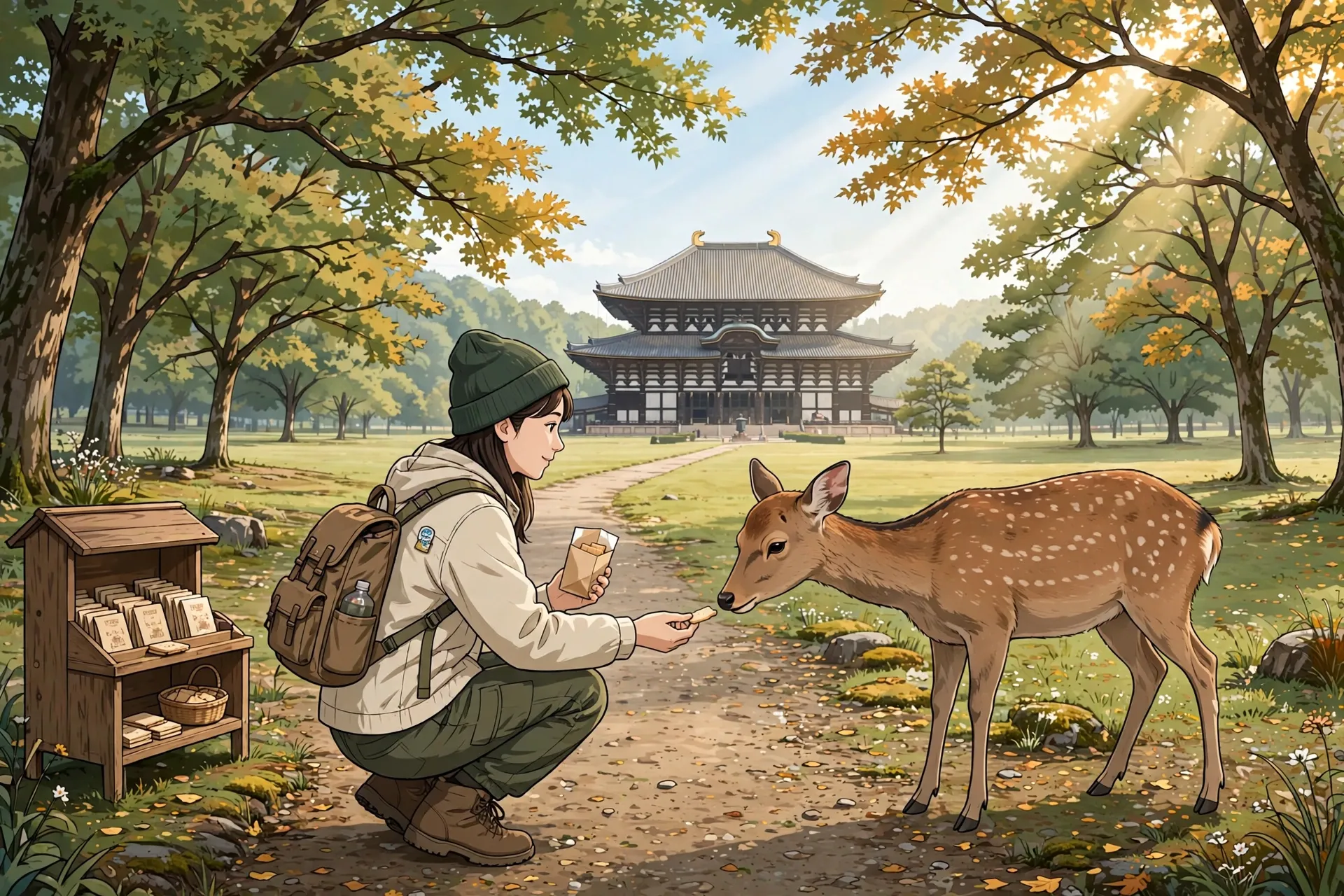
Nara rewards a simple plan: arrive at the closer station, skip the pushiest deer near the station, see the Great Buddha Hall while the morning is still quiet, walk out to Kasuga Taisha, and ride the same line back to Osaka. Get the order wrong and the trip turns into a scramble through crowds and closing halls, with the deer doing most of the directing.
This guide covers the decisions that shape the visit: which station to use, where to buy deer crackers, whether the temple or the deer should come first, whether the walk to Kasuga Taisha is worth it, and how to time the return. The park itself is free and open around the clock, while the halls charge separately, so the plan below keeps the free outdoor walking and the paid entries in the right sequence.
Which station: Nara vs Kintetsu-Nara for the park walk
Take the Kintetsu-Nara Line Rapid Express from Osaka-Namba. It reaches Kintetsu-Nara in about 40 minutes with no transfers, and Kintetsu-Nara is about a 5-minute walk to the park. JR Nara, by contrast, is about a 20-minute walk to the park, so the Kintetsu arrival saves a long walk at the start of the visit.
The station choice also affects the deer encounter. Deer near the station are the most aggressive, while deer deeper in the park toward Todaiji are much calmer. Arriving at Kintetsu-Nara puts you close to the park, but walk past the station-area deer before feeding any of them.
Deer crackers: where to buy and how not to get bitten
Official deer crackers cost 200 yen per packet, sold from carts and stands across the park mostly for coins, with vending machines as backup. They are the only food the deer should be given, so do not feed the deer anything else.
Buy deeper in the park rather than at the station, where the deer are calmer, and feed there. Bring coins for the cracker stands, and carry cash generally: there are no cash machines among the temples and the park.
Todaiji first or deer first: beating the school groups
Do Todaiji in the morning before the school groups. Mornings are ideal for beating the crowds, and the morning order matters because individual temples and shrines typically close between 16:00 and 17:00, while Nara Park itself is free and open 24 hours.
Todaiji Great Buddha Hall hours run 7:30 to 17:30 in April to October and 8:00 to 17:00 in November to March, with hall admission about 800 yen and 1,200 yen with the museum. Hall admission figures vary between guides, so reconfirm before travel and carry cash. A full visit with Todaiji, Kasuga Shrine, Kofukuji, and a museum or garden takes 5 to 7 hours, so a shorter visit should keep Todaiji at the front of the morning and treat the rest as flexible.
Kasuga Taisha lanterns: worth the walk or not
Yes, for the walk itself: walking the park, the Todaiji precinct, and the Kasuga Taisha approach is free, so the approach costs nothing to try. Going inside costs a few hundred yen each, including the Great Buddha Hall and the Kasuga Taisha inner area, so treat the inner area as a paid decision rather than part of the free walk.
Go while the morning order still holds. Since shrines typically close between 16:00 and 17:00, leave Kasuga Taisha in the middle of the visit rather than saving it for the end of the day, when closing times can cut it short.
The train back: timing the return to Osaka
Return on the same Kintetsu line. The Rapid Express from Kintetsu-Nara reaches Osaka-Namba in about 40 minutes with no transfers, mirroring the outward trip.
Two things to settle before leaving Nara. Kintetsu trains are not covered by the Japan Rail Pass, so do not count on a rail pass for this ride. And confirm the current timetable before travel, since times were checked on the date the evidence was gathered and timetables can change. If a baseball game is also on your Japan itinerary, see how foreigners buy tickets and what game day looks like.