Watching baseball in Japan: how foreigners buy tickets and what game day looks like

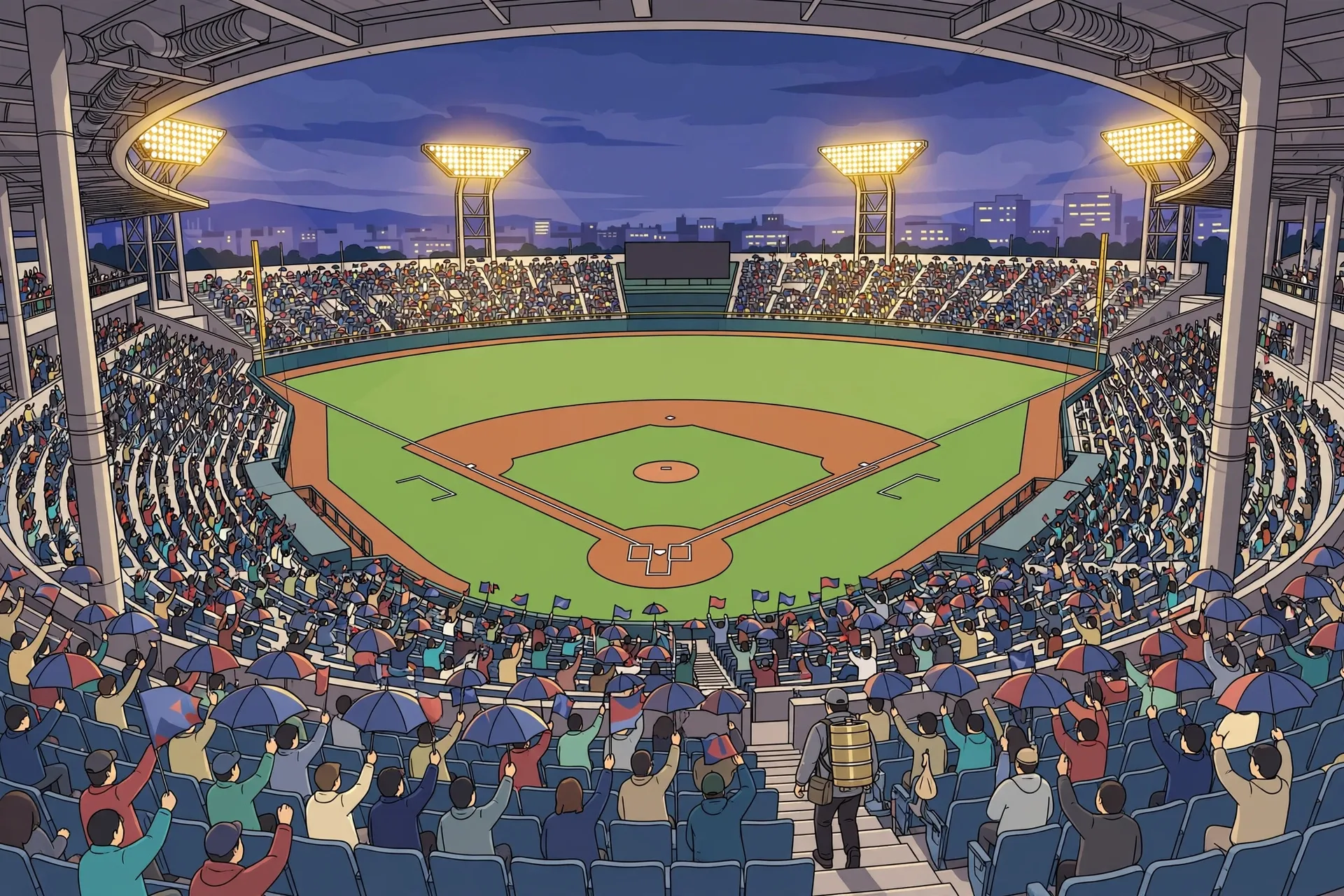
Japanese professional baseball — NPB — is one of the best nights out a visitor can have in Japan. The games move quicker than their American cousins, the atmosphere is rhythmic rather than rowdy, and a decent seat costs less than a mid-range dinner in Tokyo. But the ticket is the tricky part: there is no single NPB ticket portal. Each of the twelve clubs runs its own system, with its own accounts, on-sale dates, and rules — and some Japanese-language pages simply do not work for international cards.
This guide gives you a practical decision path through all of it: which stadium suits a first visit, the three ticket-buying routes that actually work for foreigners, what the seating chart really means, the food and customs worth knowing, and what happens when rain or extra innings enter the picture. By the end, you will know exactly where to click, where to sit, and what to do on game day.
Which stadium: Tokyo Dome vs Koshien vs the regional parks
Foreigners buy NPB tickets through the club English page, services like Tickets in Japan or JapanBall, or Klook and KKday for listed clubs. Stadium box offices open two to three hours before first pitch for same day seats. Choose infield for calm or outfield for cheering.
The twelve NPB clubs play in twelve different home stadiums, and for a first-time visitor the choice comes down to three archetypes: the giant dome, the legendary outdoor park, and the regional stadiums where the local fan culture is arguably the strongest.
Tokyo Dome: the easy first game
Tokyo Dome, home of the Yomiuri Giants, is the simplest choice for a first-timer. It is indoors, so weather never cancels a game; it sits on top of two train stations — Suidobashi on the JR Chuo-Sobu line and the Toei Mita line, and Korakuen on the Tokyo Metro — so getting there is trivial; and the Giants run one of the clearest English-language ticket pages in the league. The club lists its authorized sellers explicitly: Giants Online Ticket, e+, Quickpia, KLOOK, KKday, and GET YOUR GUIDE. That list matters, because the club warns that tickets from unlisted platforms may be resold illegally and could result in denied entry at the gate.
Tokyo Dome is also fully cashless, so plan on paying with a card or an IC card like Suica or Pasmo inside the building. If you buy through e-tix.jp, the foreign-visitor ticket site that supports four languages, you can collect your tickets at a 7-Eleven for a 220-yen fee — handy if you prefer a paper ticket in hand before game day.
The tradeoff is atmosphere versus convenience: the Dome is enormous, loud in a manufactured way, and the least "Japanese baseball" of the options in terms of tradition. If you want the postcard version of the sport, keep reading.
Koshien: the pilgrimage
Hanshin Koshien Stadium in Nishinomiya, between Osaka and Kobe, is the spiritual home of Japanese baseball. It is an outdoor stadium with real grass, ivy on the outfield walls, and the most famous fan base in the country. Hanshin Tigers supporters sing the team anthem, Rokko Oroshi, with a volume and coordination that has to be heard to be believed. If your trip includes the Kansai region, this is the game to target.
Two practical notes. First, because it is outdoors, games here are subject to weather. Second, Tigers games — especially against the Giants — are among the hardest tickets in NPB to get, so start your search early and have a backup date in mind.
The regional parks: where the culture runs deepest
The remaining stadiums reward travelers who venture beyond Tokyo and Osaka. Meiji Jingu Stadium, home of the Tokyo Yakult Swallows, is a compact outdoor park in central Tokyo with a famously festive crowd; after a Swallows run, fans perform the umbrella dance, opening miniature umbrellas and waving them in unison. Mazda Zoom-Zoom Stadium in Hiroshima hosts the Carp, whose supporters turn the park into a sea of red. Yokohama Stadium, home of the DeNA BayStars, sits near the waterfront in a pleasant part of the city and pairs well with a day of sightseeing.
The NPB regular season runs from late March to early autumn, with each team playing 144 games; the top three clubs in each league advance to the playoffs, which culminate in the Nippon Series in late October. That gives you roughly seven months of options, with the sweet spots for visitors being April to June and September — pleasant weather, and the pennant race adds drama late in the season.
Buying tickets as a foreigner: lotteries, resale, and game-day counters
There are three routes that reliably work for overseas visitors. Pick the one that matches your timing and tolerance for Japanese-language websites.
Route 1: the club's official English page
Start here. Find your game on the club's schedule, then look for the English ticket page — the Giants, for example, run a dedicated English BUY TICKET page, and the club notes that the Japanese-language page may not function properly for international users. On the English page you will find the authorized sellers for that club and the on-sale dates, which are published in Japan time. Note the release date the moment you pick your game: tickets for popular matchups can go quickly once the sale opens, and sales are typically released in groups of games rather than one at a time.
For the biggest matchups, clubs sometimes run an advance lottery (chusen) round before the general sale. If you see one listed on the schedule page, enter it — it costs nothing to apply, and if you miss out, the general sale is your next shot. If the page asks for a Japanese address or phone number you do not have, stop and switch to route 2 instead of fighting the form.
Route 2: foreigner-friendly ticket services
If the club site defeats you, use a service built for inbound visitors. The six Pacific League clubs have partnered with Tickets in Japan, a ticketing service exclusively for international tourists: it accepts overseas credit cards as well as Apple Pay and Google Pay, offers customer support in English, Traditional Chinese, and Korean, and issues electronic tickets bundled with venue directions and match-day guidelines. Similar visitor-oriented options include JapanBall and the travel platforms Klook and KKday, which appear on the Giants' own authorized-seller list.
One warning that applies everywhere: buy only from sellers the club authorizes. The Giants state it plainly — tickets purchased through platforms not listed on the club's site may be resold illegally and could result in denied entry. A bargain on a random resale site is not worth being turned away at the gate.
Route 3: convenience stores and the stadium box office
The classic Japanese method still works and is worth knowing about. Tickets are sold through the kiosk machines in convenience stores: Lawson (enter the L-code at the Loppi terminal), FamilyMart (the P-code at FamiPort), and 7-Eleven (the 7-code at the multi-copy machine). Confirm the game details on the machine, print the payment slip, pay at the cashier, and exchange the receipt for the actual ticket at the stadium. If you booked through e-tix.jp, the 7-Eleven pickup costs 220 yen and the site walks you through it in four languages.
Stadium ticket counters open two to three hours before first pitch and sell same-day tickets — a genuine option at less in-demand venues, where arriving about an hour early can still secure lower-priced upper-deck seats. But treat this as a backup, not a plan: popular games sell out fast, and nothing ruins an evening like a sold-out sign.
On prices: to calibrate expectations, 2026 Giants tickets run from roughly the low 2,000-yen range for cheaper reserved and outfield seats to the mid-7,000-yen range for higher-tier reserved seats. Some clubs, such as Orix, use dynamic pricing, so the same seat can cost different amounts depending on demand. Either way, NPB remains one of the great value nights out in Japanese entertainment — a good seat for the price of a casual dinner.
Seating decoded: cheering sections vs reserved seats
Japanese stadiums divide into two worlds: the reserved infield seats, where you watch the game in relative calm, and the outfield bleachers, where the ouendan — the organized cheering groups — run the show.
The ouendan experience
The ouendan are the soul of Japanese baseball. These organized groups stand in the outfield bleachers leading synchronized chants, songs, and trumpet melodies for the entire game; each team — and often each individual player — has its own cheer song, and the whole section performs them in unison. The right side of the outfield belongs to the home team's supporters, the left side to the visiting team's. This is where you go for full immersion: standing, singing, and moving with thousands of people.
It is also the section with the most etiquette attached. Sit in the home side wearing the visiting team's colors and you will draw stares at best. The conventions are simple: cheer loudly when your team is batting, stay respectfully quiet when they are on the field, and keep everything positive — Japanese baseball culture values sportsmanship, and heckling the opposition is not part of the deal.
Reserved seats: the relaxed view
Infield reserved seats give you the best view of the whole field and a calmer evening: you sit, you watch, you eat, and you join the big stadium-wide moments when they come. For a first visit with kids, or if you simply want to study the game, this is the right call. The price bands above apply here — outfield bleacher tickets sit at the cheap end, infield reserved seats climb from there.
A practical tip for choosing: look at the seating chart on the club's ticket page before you buy and check that seats for your group are together. Ticket systems in Japan do not always default to adjacent seats, and discovering you are scattered across a row after paying is an avoidable annoyance.
Game-day food, beer vendors, and the seventh-inning stretch
Eat at the stadium. Japanese ballpark food goes far beyond hot dogs: yakitori skewers, takoyaki, ramen, karaage fried chicken, and proper bento boxes are all widely sold inside the parks. Arrive early enough to do a lap of the concession stands before first pitch — part of the fun is surveying the options with a full nine innings ahead of you.
The beer vendors deserve their own mention. Young women with kegs strapped to their backs walk the aisles all game long; you pass money along your row and a cup of beer comes back in seconds, poured from a pitcher. It is efficient, charming, and a genuinely Japanese solution to the problem of never missing a pitch. Note the cashless point from earlier: at Tokyo Dome you will be paying by card or IC card, so make sure yours works before you get thirsty.
Traditions vary by club, and they are worth knowing in advance so you can join in. The Swallows' umbrella dance — miniature umbrellas raised and waved after a run — is the most famous, and the seventh-inning stretch in Japanese parks is a participatory moment rather than background music. Watch what the section around you does and follow along; nobody expects a visitor to know every song, but making the effort is noticed and appreciated.
If you are watching the trip budget overall, the stadium is not the place to economize on fun — but the rest of your food spending can be. Our guide to eating well in Japan on a budget covers the conbini, izakaya, and depachika strategy that keeps daily food costs down between ballgames.
One more etiquette note that surprises first-timers: the "cheer when batting, quiet when fielding" convention from the seating section applies stadium-wide, not just in the ouendan sections. When your team takes the field, the volume drops and the other side takes over. It is one of the small rhythms that make the evening feel different from baseball anywhere else.
Rainouts, extra innings, and the refund rules
Two rule quirks can shape your evening, and both are worth knowing before you buy.
Rain
Domed stadiums — Tokyo Dome first among them — are weather-proof: the game goes ahead regardless of what the sky is doing. Outdoor parks like Koshien, Jingu, Mazda Stadium, and Yokohama are not. If heavy rain is forecast, check the club's official site and social channels on game day; cancellation decisions are announced there, usually a few hours before first pitch.
When a game is cancelled, the club publishes the refund procedure on its official channels — follow those instructions rather than improvising. The general pattern is that refunds flow back through the channel you bought from: e-ticket platforms reverse the charge, while conbini-purchased tickets are typically refunded at the store or the stadium box office with your receipt. Keep your e-ticket accessible and hold onto any paper receipts until the game is actually played. Do not throw anything away at the gate.
Extra innings and ties
Here is the rule that most surprises visitors from MLB countries: NPB regular-season games do not go on forever. If the score is tied after nine innings, teams play extra innings — but the game stops after the 12th inning. If neither side leads by then, it is recorded as a draw. That gives the teams three extra frames to settle it before everyone goes home, which keeps night games on a predictable schedule for players, stadium staff, and fans catching the last train.
The practical consequence for you: a tied game will never turn into a midnight marathon, but it can still run long. If you are relying on the last train — and in Tokyo or Osaka you very likely are — check the departure time before the game and give yourself an exit plan for the 11th or 12th inning. Missing the last train after a draw is a classic visitor mistake, and taxis from stadium districts late at night are priced accordingly.
Postseason games play under different rules and continue until there is a winner, so if you are lucky enough to catch a playoff game, plan for a longer night.
Putting it together
Pick your stadium for the experience you want — Dome for ease, Koshien for the pilgrimage, a regional park for the deepest fan culture. Buy through an authorized channel, ideally the club's English page or a visitor-oriented service, and get your tickets before you fly. Choose your section deliberately: outfield for the ouendan, infield for the view. Arrive early, eat well, follow the section's lead on the songs, and keep one eye on the train schedule. Do that, and a night at a Japanese ballpark will be one of the easiest highlights of the trip to explain to friends back home.