Shimokitazawa vintage shopping: the shops, the prices, and the route

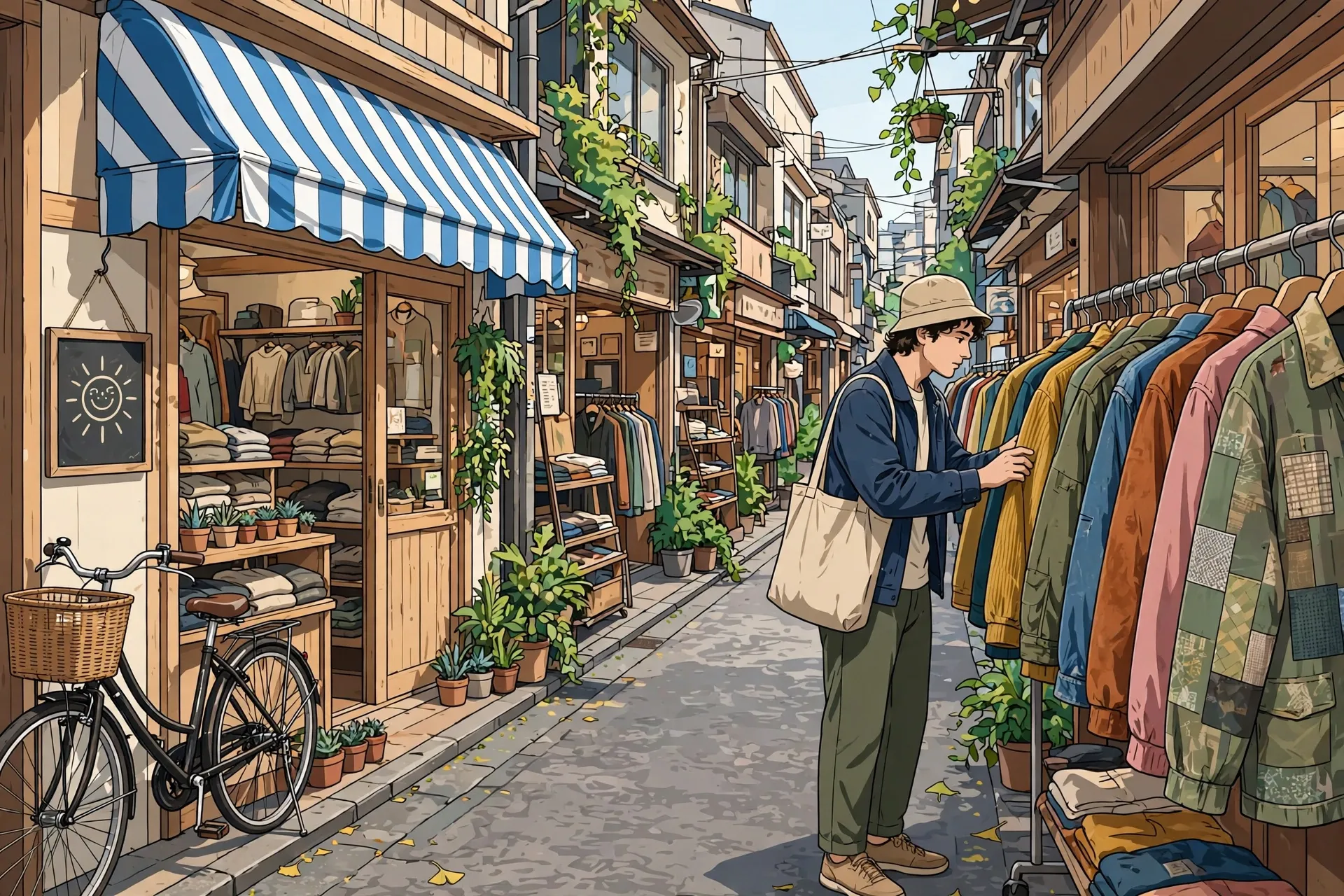
Shimokitazawa rewards shoppers who arrive with a plan. The district packs its vintage shops into a compact, walkable area around the station, but the racks vary wildly in price and quality, and most shops do not open until midday. Go in the afternoon, start at the right exit, and work the shops in an order that teaches you prices before you spend. This guide gives you that order: the exit to use, the stores to visit in sequence, the price tiers to expect, where to rest, and which racks to walk past.
Which exit: the station exit that starts the route right
Start at the north exit. The station's north exit is ground zero for vintage clothing, and the vintage lanes are densest on that side. MICMO 2nd sits right by the north exit and is the natural opening stop on a north-exit thrifting crawl, with stock starting from a few hundred yen. Its hours are weekdays 12:00 to 20:00 and weekends and holidays 11:00 to 20:00, which fits the district's afternoon rhythm.
The south exit leans a different way, into live music venues, tiny theaters, and independent cafes. That side is worth wandering later in the day, but it is not where the vintage route begins. If you start south, you will spend your early shopping time walking back toward the densest lanes. Start north, and the route builds from there.
Shop order: the big stores first or the small ones
Go big first, then small. Begin at MICMO 2nd by the north exit, then head to Flamingo, a reliable opening stop for calibrating prices and quality. From there, work through the mid-range names: New York Joe and Chicago, then KINJI. Finish with the unmarked side-street shops, where browsing pays off once you already know what a fair price looks like.
This order matters because the big stores set your baseline. Once you have handled the curated racks at Flamingo and the mid-range stock at New York Joe and Chicago, you can judge the smaller shops quickly instead of guessing at every tag. The district is small enough to walk in 2 to 3 hours but interesting enough to stay longer, so there is no need to rush the small shops at the end.
Price anchors: what vintage actually costs here
Shimokitazawa holds about 200 vintage and second-hand shops within a 10-minute walk of the station, in three tiers: budget bins at 200 to 1,000 yen, curated vintage at 1,500 to 8,000 yen, and collector pieces from 5,000 to 30,000 yen or more. Use those tiers to sort every rack you touch. If a plain thrift piece carries a collector-tier tag, keep walking.
Store averages sharpen the picture. New York Joe Exchange averages 2,000 to 3,000 yen, with everything half off on the first Sunday of each month. Chicago runs 2,000 to 5,000 yen, KINJI runs 2,000 to 5,000 yen and sometimes down to a few hundred yen, and Flamingo runs 3,000 to 7,000 yen. Stick Out charges 800 yen for everything, while curated dealers run 8,000 yen and up. At New York Joe, observed tags ran from around 2,000 yen for a T-shirt to roughly 11,000 yen for a jacket, so even inside one store the range is wide. Check the tag against the tier before you buy.
The cafe break: where to rest between shops
Plan the break around the south side. The south exit leans into independent cafes alongside its live music venues and tiny theaters, so when the racks start to blur, head that way for a rest between shops. A break here also resets your price sense: step out of the vintage lanes, sit down, and decide what is actually worth going back for.
Time the break with the district's hours. Most Shimokitazawa shops open at midday and close between 20:00 and 21:00, with almost nothing open before noon, making it a poor morning stop and a good long afternoon. An afternoon route with a cafe pause in the middle fits that rhythm better than a rushed morning dash.
What to skip: the tourist-priced racks
Skip any rack where thrift stock carries collector pricing. The clearest warning sign is a tag far above the tier for that kind of piece: a basic T-shirt priced like a curated dealer item, or an ordinary jacket tagged near the top of the New York Joe range without the condition or rarity to justify it. Curated dealers run 8,000 yen and up for a reason, and that reason should be visible in the piece itself.
Also skip the morning plan itself. With almost nothing open before noon, an early start buys you closed shutters, not quiet racks. Save the visit for the afternoon, start at the north exit, calibrate at the big stores, and let the small side-street shops be the place you spend, not the place you guess.
If you are building a Japan trip around more than shopping, see our guide to watching baseball in Japan for how game day works for foreign visitors.