Miyajima in one day from Hiroshima: the torii tide, the ropeway, and the ferry

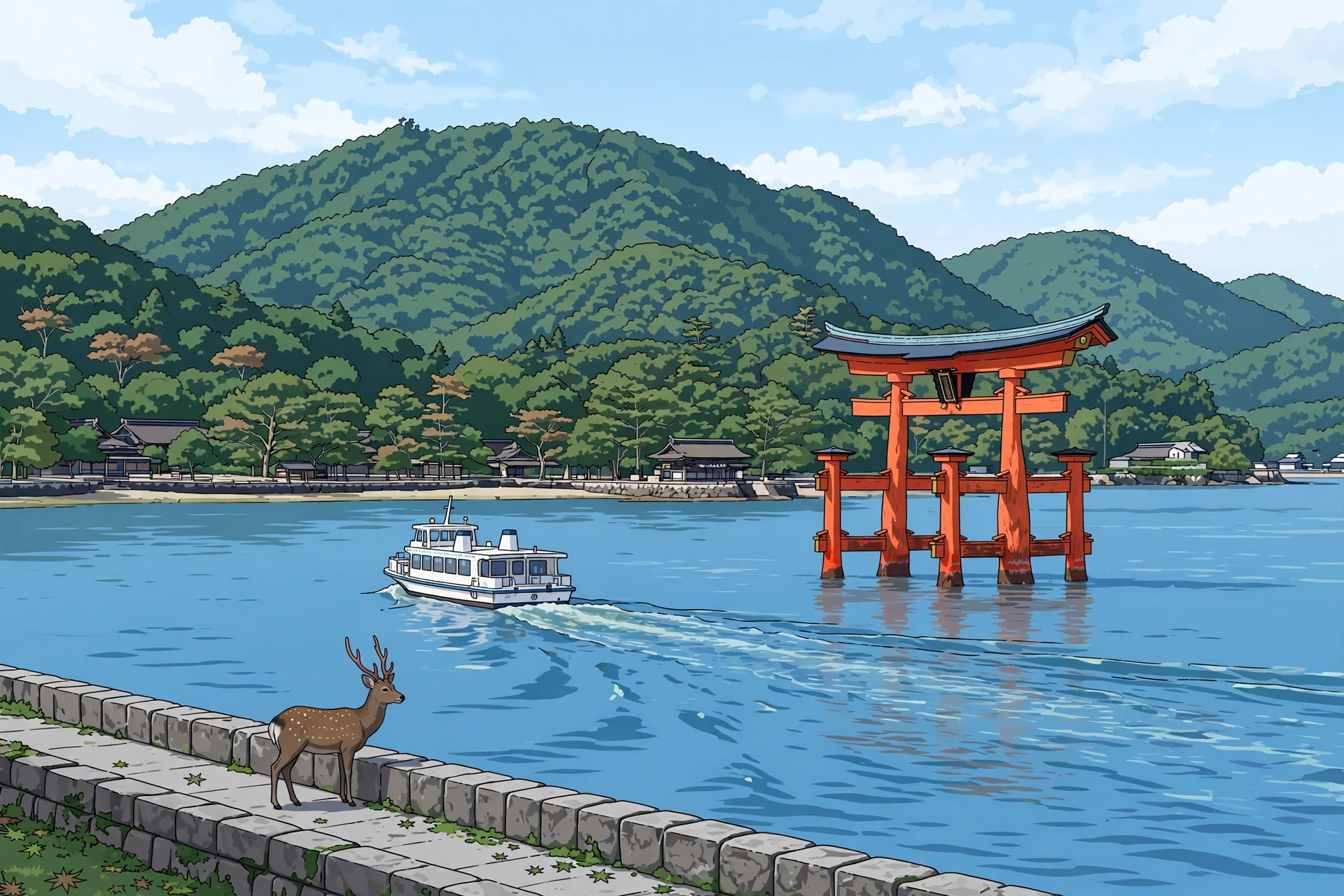
Miyajima rewards a plan and punishes a guess. The great torii looks completely different depending on the tide, the ropeway stops running while the afternoon is still light, and the ferry home is easy to miss if the summit walk runs long. Get the order right and the island feels calm and unhurried, with the shrine, the mountain views, and the waterfront lanes fitting together without backtracking. Get it wrong and the day turns into a rush between ticket counters and departure boards. This guide sorts the decisions that actually change the day: which ferry to board, when to see the torii, whether to ride or hike, where to eat, and when to head back. Follow it in order and you will leave Hiroshima, cross to the island, see the shrine at its best, and return without a last-minute sprint.
Which ferry: JR vs private, and the pass math
Two ferry companies run between Miyajimaguchi and Miyajima in about 10 minutes at the same price: a 200 yen fare plus a 100 yen visitor tax. A JR Pass covers the JR ferry fare but not the 100 yen tax, so budget for the tax even when the pass covers the ride. The JR train from Hiroshima Station to Miyajimaguchi takes about 30 minutes and costs 420 yen. Between 9:10 and 16:10, JR ferries run a Great Torii Route that swings closer to the gate, which makes the JR sailing the better pick when the timing lines up. The tram alternative from central Hiroshima costs 240 yen and takes about 50 minutes without JR Pass coverage, so it suits travellers who are already near a tram stop rather than those starting at Hiroshima Station.
Tide timing: floating torii vs walkable torii
The shrine is built over water and seems to float at high tide, which is the classic view of the great torii standing in the sea. At low tide the torii is walkable, giving a completely different visit on the same ground. Plan the shrine visit around the tide on the day you travel, and confirm the timing before you leave Hiroshima so you are not guessing at the terminal. Itsukushima Shrine admission is 300 yen for adults, and shrine hours run 6:30 to 18:00 from March to October.
Ropeway or hike: the Mount Misen call
The Miyajima ropeway runs 9:00 to 16:00 with fares of 1,100 yen one way and 2,000 yen round trip for adults, and the ride takes about 15 minutes with no reservation required. The ropeway journey splits into two sections with a transfer at Kayatani Station, and the last gondola departing from Shishiiwa Station is at 16:30. Missing it means walking down dark mountain paths, so treat 16:30 as a hard cutoff rather than a rough guide. Bad weather and periodic maintenance can suspend the ropeway, so check operation on the day before you commit to the ride. Tickets are sold at the station counter and major IC cards are accepted. Hiking is the fallback when the ropeway is suspended, but only set out when you have ample daylight and a comfortable margin before the ferry home.
The deer and the food: what to eat on the island
Build the eating stop into the middle of the day rather than squeezing it around the ropeway. A realistic pattern puts a lunch or street-food stop around 11:45, after the shrine visit and before the ropeway, so the afternoon stays unhurried. Deer wander the lanes between the shrine and the shops, so keep the lunch stop relaxed and keep moving once you have eaten rather than lingering with food in hand. Eating at the planned stop also keeps the ropeway timing intact, since a late lunch is what usually pushes the summit visit toward the last gondola.
The last ferry back: timing the return
Ferries depart about every 15 minutes from 6:25 to 22:42 from Miyajimaguchi, so the return sailing itself is frequent — the risk is the mountain, not the boat. A realistic pattern puts the ferry and train back around 17:30, after a ropeway visit in the early afternoon, and leaves the summit by mid-afternoon so the last ferry is never a run. Work backward from the 16:30 last gondola: ride down with time to spare, walk to the terminal without rushing, and confirm return ferry times on the day, since times are checked in advance and can change. If the ropeway is suspended, abandon the summit plan early enough that the ferry home stays comfortable. If your Japan trip also includes a game day, see how foreigners buy baseball tickets in Japan before you plan that leg.