Ine no Funaya: the Kyoto fishing village where boats sleep downstairs

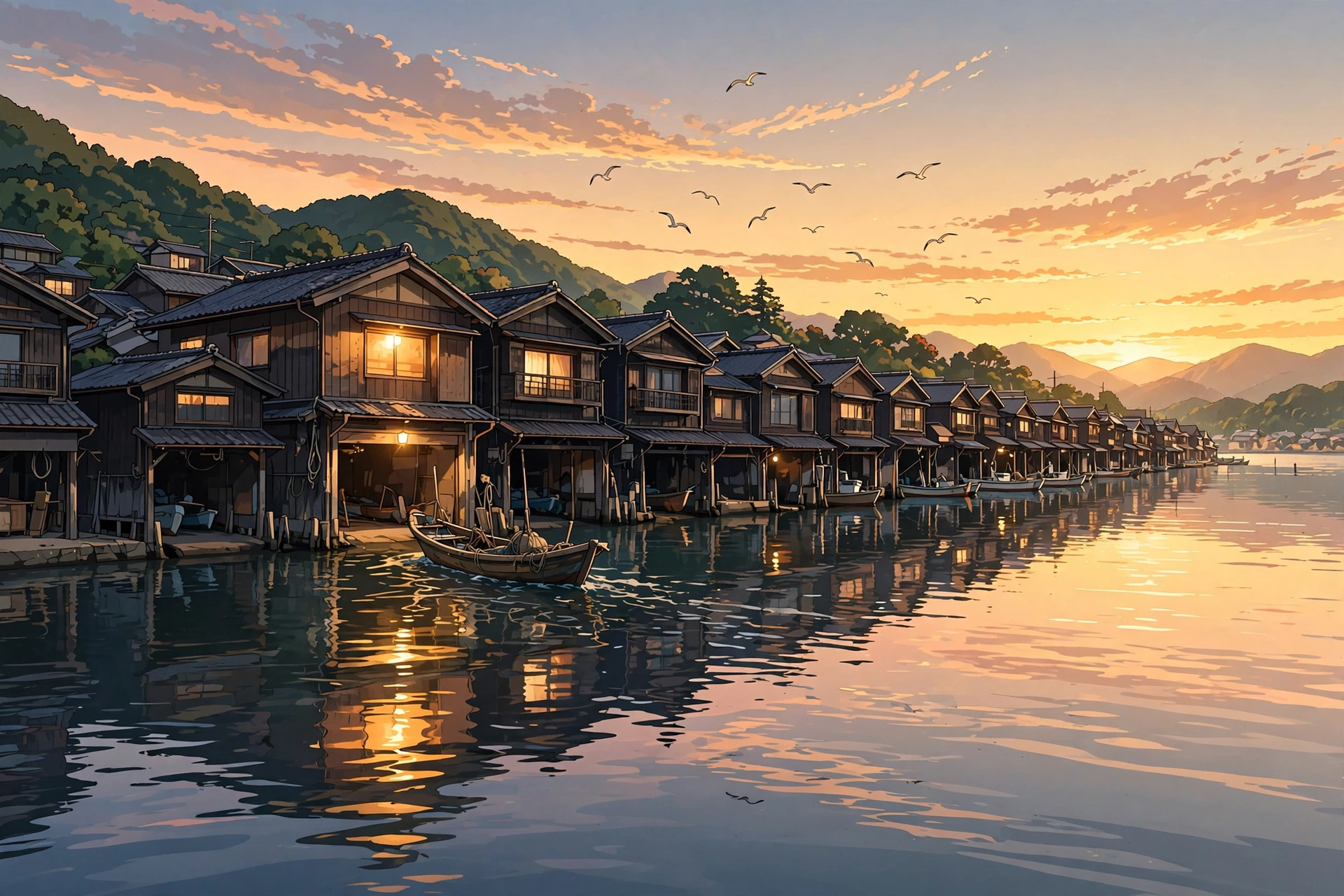
In Ine, a Kyoto fishing village, fishing boats do not sit in a harbour apart from the houses. They sleep downstairs, in garages built into the ground floor of the boathouses themselves, while families live upstairs. About 230 of these funaya line Ine Bay, and the whole townscape is designated an Important Preservation District for Groups of Traditional Buildings.
That is the sight most visitors come for, but Ine rewards a little planning. The village is a bus ride beyond Amanohashidate, the bay is best seen from the water, and the return bus shapes the whole day. This guide covers the route, the boat tour, what a night in a funaya is really like, where to eat facing the bay, and how to decide between a day trip and an overnight stay.
Get those calls right, and a quiet fishing village becomes a straightforward trip.
Getting there: the bus from Amanohashidate station
From Kyoto Station, take the JR Hashidate limited express to Amanohashidate. The ride takes about 2 hours and costs about 4,800 yen with a reserved seat. From outside Amanohashidate Station, the Tankai bus to Ine takes about 60 minutes and costs 400 yen. Buses run about hourly, and the Ine stop is a 5-minute walk from the cruise terminal.
That hourly frequency is the detail to plan around. Miss a bus and the wait reshapes the visit, so check the current schedule before leaving Kyoto, since bus times vary. Aim to arrive at Amanohashidate with enough slack to catch the bus you actually want, rather than the next available departure.
Boat tour vs walking the bay: which view wins
Take the boat. Walking shows only part of the boathouse line, while the cruise passes about 230 boathouses along the bay. The Ine Bay sightseeing cruise lasts about 25 minutes, runs 9:00 to 16:00 with departures every 30 minutes, and costs 1,200 yen for adults and 600 yen for children. Service may be suspended for high waves, so a windy day can change the plan.
The cruise is also the efficient choice. One boat tour is plenty to see the full line of boathouses from the water, and walking the shore afterwards still works as a slower way to take in the village at street level. Do the cruise first, then walk, and you get both views without doubling back on the same stretch of bay.
Staying in a funaya: what the rooms are really like
About 30 funaya operate as licensed minpaku, where guests sleep on the 2nd floor with the boat dock below. Expect to pay typically 18,000 to 35,000 yen per person per night, and in peak season properties book out 2 to 3 months ahead, so an overnight stay needs to be arranged well in advance.
The stay itself is part of the experience rather than just a bed. Funaya stays usually include two meals built around the day's fresh catch, and some offer an onsen bath. Above the village, Funaya no Sato Park gives the town's best viewpoint, especially at sunset, with restaurants and small shops nearby. Staying over also buys the quieter hours, after day visitors have left, when the bay belongs to the village again.
Seafood lunch: the restaurants that face the bay
Lunch in Ine is built around the day's fresh catch, and the natural place to eat is facing the bay itself. Restaurants and small shops sit near Funaya no Sato Park above the village, and a funaya stay usually includes two meals built around the catch, so overnight guests often eat where they sleep.
For day visitors, the practical move is to plan lunch around the cruise rather than treating it as an afterthought. Take the boat tour, then eat facing the bay while the village is still in full swing, and leave enough time afterwards to reach the bus stop without rushing. The food here is the point of the stop as much as the view, so give lunch a proper place in the schedule instead of squeezing it between transport connections.
Day trip or overnight: the last bus decision
The decision comes down to transit math. A day trip from Kyoto means 5 to 6 hours in transit for a 3 to 4 hour visit, which makes for a rushed day. A funaya night, or a night in Amanohashidate, beats a rushed day trip, because it removes the pressure of the return journey and leaves room for the cruise, lunch, and the viewpoint without watching the clock.
If Ine is part of a wider Japan trip, our guide to watching baseball in Japan covers another very different Japanese outing, from buying tickets as a foreigner to what game day looks like.
If you do go for the day, the last bus is the decision that matters most. Buses run about hourly, so work backwards from the current schedule and build in slack for the cruise and lunch, since a missed connection costs an hour. Confirm the schedule on the day, and choose the overnight option whenever the timetable would force you to cut the visit short.