Late-Night Eats in Seoul: Best 24-Hour Restaurants and Markets

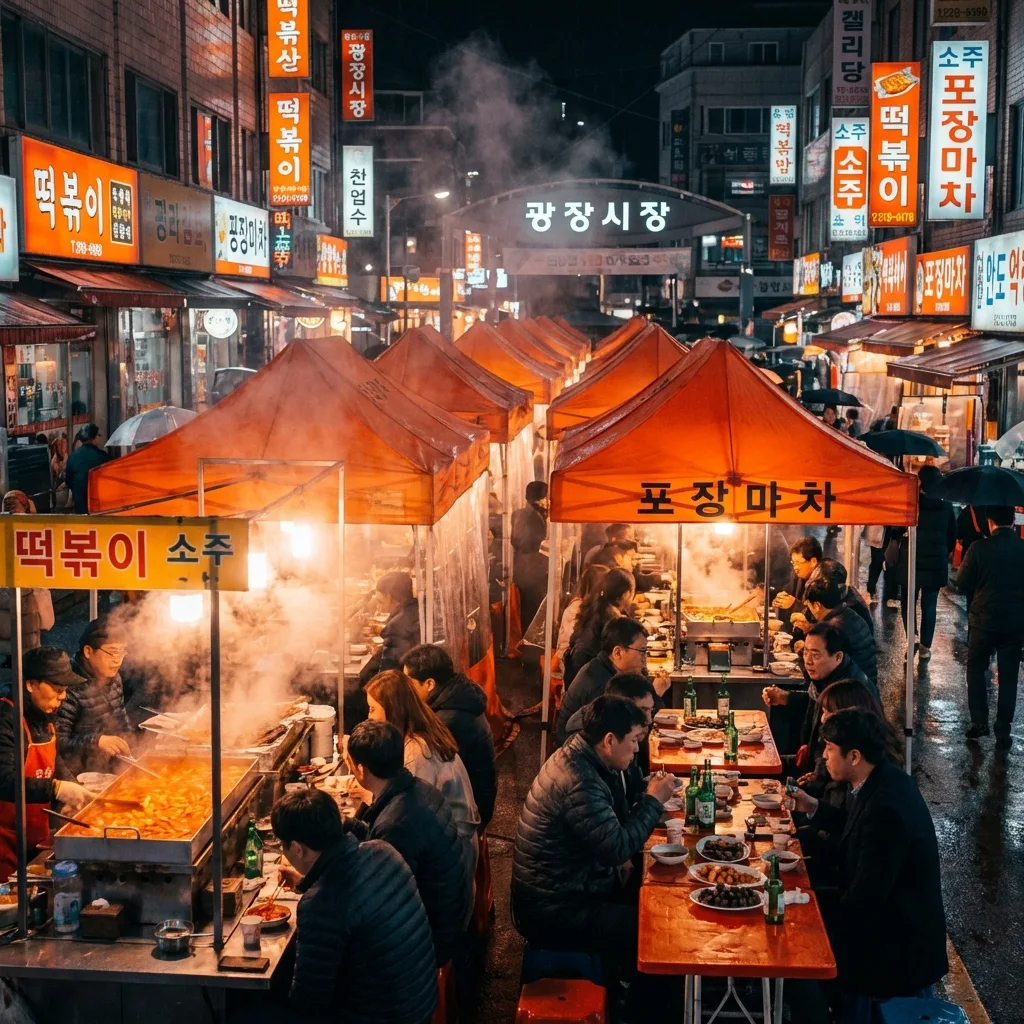
In Seoul, the city doesn't sleep, and neither does its appetite. While most global capitals begin to wind down after midnight, Seoul is just reaching its culinary peak. Whether you're a night owl finishing a late shift, a traveler wrestling with jet lag, or a group of friends extending a night of soju and karaoke, the city's 24-hour food scene is ready to welcome you with open arms and steaming bowls of soup.
From Michelin-recognized pork trotters to the neon-lit hustle of Dongdaemun's street food alleys, finding the best late-night eats in the capital is a rite of passage for any visitor. In this guide, we take you through the reliable 24/7 classics, the midnight market secrets, and the best neighborhoods to satisfy those 3 AM cravings — with prices and logistics included.
Seoul's nocturnal food culture is built on the foundation of Simya (심야, "midnight") dining. It's not just about fast food; it's about hearty, slow-cooked meals that provide comfort and energy when the rest of the world is dreaming.
The 2026 Late-Night Price Reality
Before diving in, here's what to budget for a late-night meal in Seoul:
| Category | What You Get | Avg. Cost Per Person |
|---|---|---|
| Convenience Store Meal | Triangle kimbap + cup ramen + canned coffee | ₩3,000–₩5,000 |
| Street Stall / Pojangmacha | Tteokbokki, odeng, skewers + makgeolli | ₩8,000–₩15,000 |
| Local 24hr Restaurant | Gukbap or sundaeguk + banchan + rice | ₩10,000–₩16,000 |
| Hongdae K-BBQ (24hr) | Pork belly + sides + soju per person | ₩18,000–₩30,000 |
| Premium (Jokbal, Naengmyeon) | Full portion + side dishes | ₩25,000–₩45,000 |
1. The 24/7 Classics: Restaurants That Never Close
Haejangguk Houses: The Hangover Soup Pilgrimage
Haejangguk (해장국, "hangover soup") is Korea's sacred antidote to a night of soju. These soup restaurants are specifically designed for late-night and early-morning diners. They open when the clubs close and serve the crowd stumbling home.
Top Pick: Boseung Hoegwan (보성회관)
- Specialty: Sundaeguk (blood sausage soup) and Ppyeo-haejangguk (pork bone soup)
- Why It Works: Rich, collagen-heavy broth with dense pork flavor. The heat opens blocked sinuses and settles an unhappy stomach simultaneously.
- Hours: 24 hours
- Price: ₩9,000–₩13,000 per bowl
- Branches: Myeongdong, Hongdae, Mapo
Pro-Tip: Many of these restaurants use tablet ordering with English translation. Look for the "EN" button on the screen.
Dwaeji Gukbap (돼지국밥): The Busan Classic, Now in Seoul
Originally from Busan, pork rice soup has conquered Seoul. You'll now find dedicated Dwaeji Gukbap chains open 24 hours throughout the city.
- How to Order: The bowl arrives with plain broth and rice. Add your own kimchi, saeujeot (salted shrimp), and green onion from the condiment station.
- Price: ₩9,000–₩12,000
Galbi-tang and Seolleongtang Houses
Seolleongtang (설렁탕) is a milky-white ox bone broth that has been simmered for 12+ hours. It's light yet deeply nourishing and is considered one of the best hangover foods in Korea. Many dedicated shops are open 24 hours.
- Price: ₩10,000–₩14,000
2. Midnight Markets: Feasting in the Chaos
Dongdaemun Night Market: The Fashion District's Kitchen
Dongdaemun is the fashion wholesale capital of Korea, and its wholesale market operates from 8 PM to 5 AM. The entire ecosystem around the DDP (Dongdaemun Design Plaza) is a late-night food scene unto itself.
What's Around Dongdaemun After Midnight:
| Food | Where to Find It | Price |
|---|---|---|
| Grilled corn (구운옥수수) | Street stalls along Jangchungdan-ro | ₩2,000–₩3,000 |
| Hotteok (sweet pancake) | Near DDP entrance, multiple stalls | ₩1,500–₩2,000 |
| Tteokbokki + Twigim | Pojangmacha tents east of DDP | ₩5,000–₩8,000 |
| Gyeran Ppang (egg bread) | Near bus stops on Cheonggyecheon | ₩1,500 |
| Ramyeon | Convenience stores open 24hr | ₩2,000–₩3,500 |
The Night Market Crowd: At 2 AM, the crowd here is a mix of fashion buyers from across Asia loading trucks, young clubbers stopping for a snack, and international tourists still on jet lag time. It's one of the most alive scenes in the city.
Gwangjang Market: The Evening Heartbeat
While the main fabric shops close around 8–9 PM, the food alley in the center of Gwangjang Market stays open late on weekends. In winter, vendors set up heated benches so you can eat outdoors in comfort.
Must-Order at Gwangjang (Evening Hours):
- Bindaetteok (빈대떡): Mung bean pancakes, crispy on the outside, savory inside. The most famous food of the market. ₩5,000–₩8,000
- Mayak Kimbap (마약김밥): Bite-sized rice rolls with sesame and pickled radish, dipped in mustard sauce. "Mayak" means "drug" — they're addictive. ₩3,000 for a portion
- Yukhoe (육회): Raw beef, sesame oil, pine nuts, raw egg yolk. A delicacy. ₩15,000–₩20,000
- Makgeolli: Rice wine served in a tin kettle, ₩6,000–₩8,000 per kettle
3. The Soul Food Dishes: What to Order After Midnight
Jokbal (족발): The Premium Late-Night Luxury
Braised pig trotters might not sound like standard midnight fare, but in Korea, jokbal is a premium late-night experience shared between friends.
How to Order: Jokbal comes in two versions — Oritoriori (tender, soy-braised slices) and Bulsae Jokbal (flame-kissed on a grill tableside). Order the large size (대짜) for 3–4 people.
- Best Spots: Look for "Michelin Bib Gourmand" certified jokbal restaurants in Jangchung-dong — the historic hub of this dish.
- Price: ₩35,000–₩55,000 for a large portion (feeds 3–4)
- Pair With: Naengmyeon (cold buckwheat noodles) — this is the classic jokbal pairing.
Chimaek (치맥): Fried Chicken + Beer
The immortal combination. Seoul has dozens of 24-hour fried chicken delivery services. Most restaurants in Hongdae and Itaewon serve until at least 4 AM.
2026 Chimaek Price Guide:
- Half-half chicken (반반치킨, one flavor each side): ₩18,000–₩22,000
- 1L beer pitchers: ₩10,000–₩15,000
- Delivery apps: Baemin (배민) or Coupang Eats work in English
Ramyeon at a Convenience Store: The Honest Answer
Sometimes the best late-night food in Seoul is a ₩1,500 packet of Shin Ramyeon cooked in the convenience store's self-service hot water dispenser. Eat at the plastic seats by the window while the city moves past you at 4 AM. This is Seoul in its purest form.
4. Neighborhood Deep Dives
Hongdae: University Energy at 3 AM
Hongdae's restaurant district runs on student schedules — meaning many restaurants don't even reach peak business until midnight.
Best Hongdae Late-Night Options:
- K-BBQ Strip (Sangsu-dong border): Multiple pork belly restaurants open until 5–6 AM. Look for smoke pouring out of ventilation fans as your guide.
- Simya Sikdang (심야식당, "Midnight Restaurants"): Several themed "late-night diners" in Hongdae serve comfort Korean dishes specifically marketed as Simya food. They open at 10 PM and close at sunrise.
- Dakgalbi Alley: Spicy stir-fried chicken restaurants cluster near Exit 9. Many serve until 3–4 AM.
Gangnam: Premium Past Midnight
Gangnam's late-night scene is more polished — fewer tents, more restaurant storefronts with neon lighting.
- Meonae (먹내): One of Gangnam's best-known 24-hour BBQ houses. Premium pork cuts, attentive service.
- Naengmyeon (냉면) Houses: Cold buckwheat noodles are a paradoxically popular late-night food here. Several dedicated naengmyeon restaurants in Gangnam serve 24 hours.
- Cheongdam Club Strip: After the clubs close (3–5 AM), the streets fill with people heading to Korean-Chinese restaurants (jajangmyeon and jjamppong in particular).
Itaewon / Gyeongnidan-gil: International Comfort Food
When Korean food doesn't hit the spot at 2 AM, Itaewon delivers.
| Craving | Recommendation | Price Range |
|---|---|---|
| Burger | Wolfhound Pub, Sliders | ₩12,000–₩20,000 |
| Mexican | El Rancho (24-hour-ish) | ₩12,000–₩18,000 |
| Indian | Several curry restaurants in the "Islamic food" area | ₩10,000–₩16,000 |
| Kebab | Street-level vendors near Itaewon Station Exit 1 | ₩5,000–₩8,000 |
Jongno 3-ga (종로3가): The Old Seoul Night
This is the neighborhood where older Korean night culture lives — makgeolli bars, pojangmacha, and gopchang (grilled intestines) alleys. It's less polished than Hongdae but more authentic. The crowd is a mix of office workers drinking after overtime, retired men playing janggi (Korean chess), and curious travelers.
- Gopchang Alley: A cluster of grilled organ meat restaurants, all open late. Intense flavor, very cheap (₩8,000–₩15,000 per portion).
- Makgeolli Bars (막걸리집): Traditional rice wine bars serving makgeolli with pajeon (scallion pancakes). Cash only at the older spots.
5. Street Food Guide: The 2026 Pojangmacha Circuit
The iconic orange tent is Korea's most cinematic food experience. In 2026, Mapo-gu has officially designated "Pojangmacha Preservation Zones" — meaning the best tents are concentrated and legal.
How to Navigate a Pojangmacha:
- Pull up a plastic stool or low chair.
- Point at what you want from the visible display (tteokbokki pot, fish cake skewers, corn).
- Pay cash — most prefer it, and amounts are small.
- If staying for drinks, order a bottle of makgeolli or soju.
- "Eogeo-juseyo" (어거주세요) = "I'll have this" if you can't read the menu.
The Classic Pojangmacha Order:
- Tteokbokki (spicy rice cakes): ₩4,000–₩5,000
- Odeng (fish cake broth skewers): ₩1,000 each
- Sundae (blood sausage): ₩4,000–₩5,000
- Makgeolli (1.8L bottle): ₩4,000–₩6,000
6. Logistics for the Night Owl
The Owl Bus System
When the subway stops at approximately 1 AM (slightly later on Friday/Saturday nights), look for buses with "N" before their route number (N13, N15, N16, N37, etc.). These Night Owl buses run from 11 PM to 5 AM on major routes through Seoul.
How to Use:
- Tap your T-Money card (same as the subway).
- The fare is ₩1,500–₩2,400, same as regular buses.
- Download the Topis app or check the Naver Maps bus schedule for real-time tracking.
Key Owl Bus Routes:
| Route | Covers |
|---|---|
| N13 | Gangnam ↔ Hongdae |
| N15 | City Hall ↔ Dongdaemun |
| N26 | Itaewon ↔ Yongsan |
| N37 | Gangnam ↔ Jamsil |
Taxis After Midnight
In 2026, Kakao T (카카오T) remains the gold standard for taxi booking. The app has an English mode and accepts foreign credit cards.
- Standard Taxi: ₩4,800 base, ₩100 per 132m after
- Night Surcharge: 20–40% added between midnight and 4 AM (depending on type)
- Kakao Black (luxury): Larger vehicles, quieter, ₩7,500 base
Navigation and Hours
- Naver Maps: Search for "24시" (24 hours) to filter open-now locations.
- Kakao Maps: Has a "Late-Night" filter for restaurants.
- Important: Some restaurants listed as 24 hours online are not. Call ahead for the places you most want to visit.
7. Seasonal Late-Night Specialties
Seoul's late-night food scene shifts with the seasons. Here's what to seek out depending on when you visit.
Spring (March–May): Pajeon Season
The wet spring evenings are tailor-made for pajeon (파전, scallion pancakes) eaten inside a pojangmacha with makgeolli. The combination is so classic that Koreans joke that rain literally "makes pajeon." If it's raining and you're looking for a late-night bite, walk toward any orange tent in Jongno and you'll find it.
Summer (June–August): Cold Noodle Obsession
Naengmyeon (냉면, cold buckwheat noodles in icy broth) becomes a near-obsession among Koreans during the humid summer. Even at 2 AM, dedicated naengmyeon restaurants are packed with people seeking relief from the heat. The Gangnam district has several renowned 24-hour naengmyeon houses. A bowl runs ₩12,000–₩16,000.
Autumn (September–November): Jokbal and Makgeolli Weather
The crisp autumn air makes the late-night jokbal and makgeolli experience peak. Koreans have a tradition of "sontofu" — eating together late after work in the autumn to celebrate surviving the busy September–October business season. Restaurants fill earliest in autumn; plan for crowds peaking around 10–11 PM.
Winter (December–February): Hotpot and Warm Soup Culture
Winter nights drive Koreans toward communal hotpot (jeongol) and thick bone broth. Look for budae-jjigae (부대찌개, "army stew" — a rich hotpot of kimchi, spam, ramen noodles, and tofu, with roots in post-Korean War US military base culture). A full pot for two costs ₩16,000–₩22,000 and is one of the most warming, communal meals in the entire Korean food canon.
8. The K-Drama Late-Night Food Experience
If you've watched any Korean drama set in Seoul, you've seen these scenes: friends sitting around a convenience store table at midnight, or a lone character eating ramen outside a 24-hour pojangmacha in the rain. These aren't set dressing — they're accurate.
How to Recreate the Classic K-Drama Night Meal:
- Head to any GS25 or CU convenience store after 10 PM.
- Buy: one pack of Shin Ramyeon, one triangle kimbap, one banana milk.
- Use the in-store hot water dispenser to cook the ramen in the cup.
- Take a seat at the plastic table by the window.
- Watch the city pass.
Cost: Under ₩5,000. Authenticity: 100%.
9. Dietary Needs After Midnight: Practical Guide
Vegetarian and Vegan
Korean cuisine is heavily meat and seafood-based, but late-night options exist.
- Temple-style vegan food (Sachal Eumsik): Not available at midnight, but several restaurants in Insadong and near Jogyesa Temple serve until 9–10 PM.
- Convenience store vegan options: Plain triangle kimbap with pickled vegetables (japchae or yeolmu kimbap), banana milk, fried tofu snacks. Always check ingredients — many "vegetable" kimbap still use fish sauce.
- Best 24hr vegan bet: Kongnamul Gukbap (bean sprout rice soup) — naturally vegan at most traditional soup houses. Confirm no beef bone broth is used.
Gluten-Free
Traditional Korean food (rice-based, doenjang and ganjang sauces) is more naturally gluten-tolerant than many Asian cuisines, but soy sauce (ganjang) contains wheat. Gochujang (chili paste) is typically gluten-free. At a pojangmacha, rice-based dishes are safer than wheat noodles.
Halal
Itaewon has the highest concentration of halal-certified restaurants in Seoul, several of which operate until midnight or later. The area around Itaewon Station Exit 3 (the "Halal Food Street") is the most reliable late-night option for halal-observant travelers.
10. Late-Night Safety: A Traveler’s Guide
Seoul is consistently ranked as one of the safest cities in the world, and this safety extends into its 24-hour food and nightlife culture. It is perfectly normal to see people walking alone at 3 AM or using public transportation without concern. However, for international travelers, there are a few practical cultural points to keep in mind.
- CCTV Coverage: Seoul has one of the highest densities of CCTV cameras in the world. Almost every street corner, convenience store, and taxi is monitored, which acts as a major deterrent for crime.
- The "Left Items" Culture: It is common for people to leave their phones or wallets on a table in a convenience store or restaurant to "reserve" their seat while they go to order. While we don't recommend this for travelers, it illustrates the high level of social trust in the city.
- Emergency Services: Dial 112 for police and 119 for fire/medical emergencies. If you are in a major district like Hongdae or Itaewon, there are often "Foreign Center" trailers staffed by police who speak English.
- Drunk Interaction: While physical crime is rare, late-night Seoul involves a lot of alcohol consumption. If you encounter someone who is overly intoxicated and shouting, the best approach is to simply walk past; it is almost never directed at you personally.
- "Safe Return" Apps: For solo female travelers, the "Ansim-i" (안심이) app allows you to share your real-time walking path with a monitoring center. If you deviate from your path or shake your phone in an emergency, the center can dispatch the nearest police unit or street monitor.
Conclusion
Seoul's late-night food scene is a testament to the city's Pali-pali (빨리빨리, "hurry-hurry") culture mixed with a deep appreciation for communal, slow-cooked comfort. It ranges from the grit of wholesale market stalls to the refined flavors of Michelin-recognized soup houses. And the best part: almost everything is affordable.
If you want to experience the daytime equivalent of this food culture, our Foodie's Guide to Seoul Street Food is the perfect companion. Once you've decided on which late-night spots to target, you can align your dinner plans with the entertainment outlined in our Seoul Nightlife Guide. Be sure to schedule these food adventures on days when you can afford to sleep in, as recommended in our balanced 10-Day South Korea itinerary.
Eat well, and enjoy the mystery of the Seoul night.