Japan's Best Nature Spots: Mountains, Forests & Coastal Views Guide

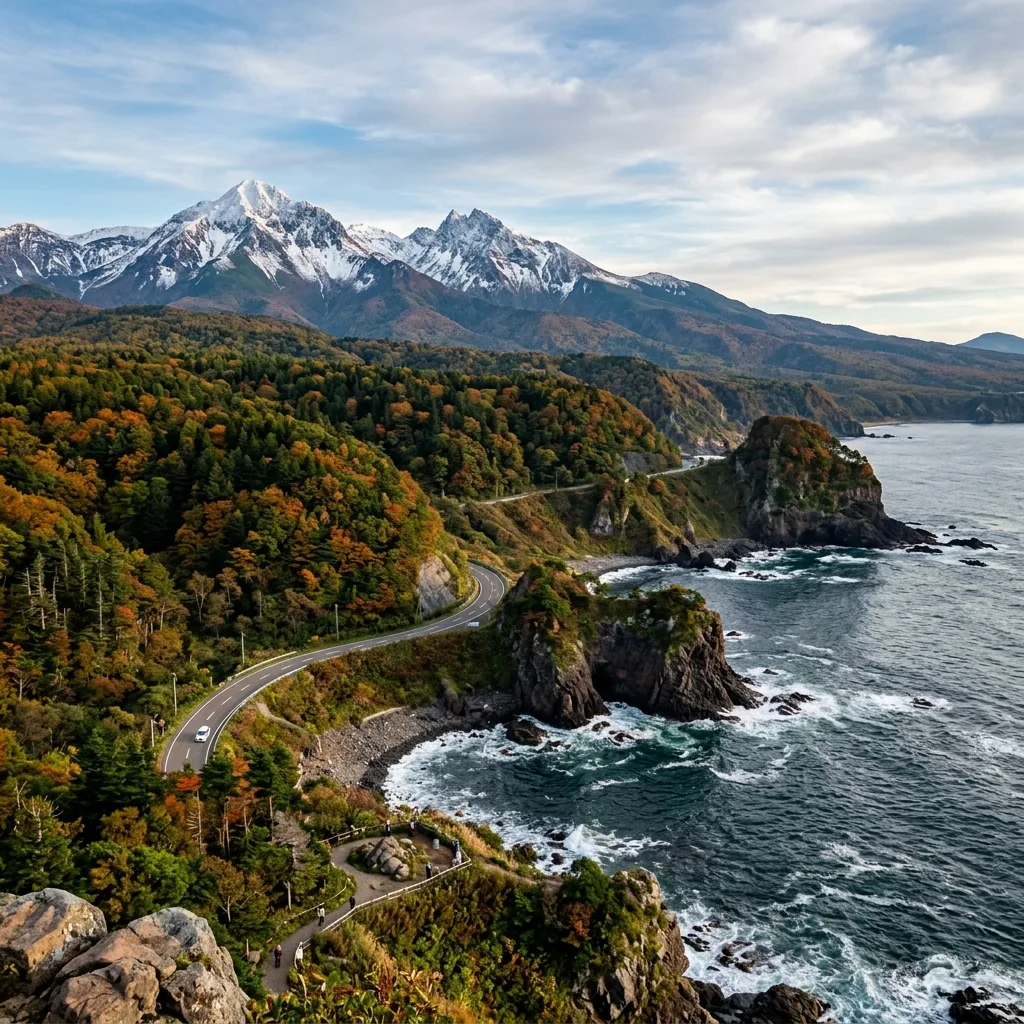
Japan can feel overwhelming if you only know it through city icons: Shibuya crossings, neon streets, ramen counters, and bullet trains. The country is just as compelling when you leave the urban core and start chasing ridgelines, cedar forests, sandbars, cliffs, and quiet coastal walks. If you want a trip that feels restorative instead of crowded, this guide will help you choose the right kind of nature for your pace, budget, and season.
If you're still stitching the rest of the trip together, start with our Japan Travel Planning: Visa, IC Card, Rail Pass & Essential Logistics Guide, then check the Japan Visa Guide for Korean, US & European Travelers: Requirements by Nationality, and pack from the Japan Packing List: What to Bring for a Stress-Free Trip.
Mountains: The Fastest Way to Feel Japan's Scale
Japan's mountain scenery is the easiest way to understand why the country inspires so many hikers, photographers, and slow travelers. Even a short day trip can deliver cool air, forested slopes, city panoramas, and a sense of distance from the metropolitan rhythm. For first-time visitors, mountains are also the most flexible category of nature travel: some are accessible by train and cable car, some reward a serious hike, and some work perfectly as half-day escapes.
If you only have one nature outing in a packed itinerary, choose a mountain destination first. Mountains often give you the broadest payoff for the least planning: changing elevation, stronger seasonal color, better air, and more room to breathe. In Japan, that can mean a gentle ropeway ride near Tokyo, a long forested climb in the Kansai region, or a rugged alpine area that deserves a full overnight. The right choice depends less on "best" and more on how much effort you want to spend getting your view.
Why mountain day trips work so well
Mountain destinations in Japan are usually well organized. Trails are marked, transport is integrated, and major scenic spots have clear access points, which makes them much friendlier to independent travelers than many people expect. That is especially helpful if you are balancing sightseeing with limited time, or if you are mixing nature with city stops in the same trip. A mountain day trip can be as relaxed or as demanding as you want it to be.
For travelers who want a low-friction mountain experience, the best strategy is to look for places with direct rail access, a cable car or lift, and a compact summit area. These places let you enjoy the atmosphere without needing technical gear or a dawn-start itinerary. If you're already planning a broader Japan route, pairing a mountain day with the kind of logistics covered in our Japan Travel Planning: Visa, IC Card, Rail Pass & Essential Logistics Guide keeps the day from becoming a transit puzzle.
Mount Takao: the easiest mountain escape from Tokyo
Mount Takao is one of the cleanest examples of what a Japanese mountain day trip should feel like. It is close enough to Tokyo to fit into a casual itinerary, but once you are on the slope, the mood changes immediately. The mountain gives you wooded trails, shrine stops, city skyline glimpses, and enough route variety that both casual walkers and more serious hikers can enjoy it.
The current official cable car and lift pricing makes the trip accessible. As of 2026, the standard fare is 490 yen one way or 980 yen round trip for adults, with reduced child pricing. The cable car runs at roughly 15-minute intervals, and the operating schedule changes by season. In the winter months, the final train on weekdays can end in the late afternoon, while summer service can extend later during seasonal events.
That matters because Mount Takao is not just a scenic platform; it is a living day-use mountain with a schedule. If you want the full experience, build your timing around the last uphill ride, not the last train back into the city. If you are visiting on a clear day, a morning start is usually best because the light is cleaner, the trail is quieter, and the summit feels less rushed. For many travelers, Mount Takao is the point where Tokyo stops feeling like a city and starts feeling like a gateway.
How to choose the right mountain style
Not every mountain experience in Japan should be treated the same way. Some destinations are ideal if you want a scenic overlook and a lunch stop. Others are better if your goal is a real workout, a temple-side ascent, or a quiet ridge walk that takes most of the day. Before you choose, ask three questions: how much time do you have, how comfortable are you with stairs and uneven terrain, and do you want a destination or a route?
If your answer is "I want a simple scenic day," pick an access-friendly mountain with a cable car, ropeway, or easy summit promenade. If your answer is "I want to feel like I earned the view," choose a trail that keeps you walking for two to four hours or more. If your answer is "I want a cool-weather escape," prioritize elevation and season. Mountain destinations are especially satisfying in spring and autumn, but snow-dusted views can be excellent in winter if the access is open and you are properly dressed.
What mountain travelers often miss
The most common mistake is assuming that a famous mountain can be done without a plan. Even easy mountain destinations need weather checks, footwear that handles damp steps, and a realistic return time. People also underestimate how much colder it can feel at elevation, especially after sunset. A light city jacket may be fine in town and useless on a windy summit.
Another mistake is overcommitting on the hiking side when a scenic half-day would have been better. Japan's mountains reward restraint. If you have a long sightseeing day ahead, choose the trail or cable car option that leaves energy for the rest of your trip. Nature travel should restore you, not empty you out before dinner.
Forests: Cedar, Moss, and Quiet Trails
If mountains are about scale, forests are about atmosphere. Japan's forest landscapes are among the most memorable in Asia because they combine visual density with a sense of order. You get stone paths, moss, cedar trunks, stream crossings, filtered light, and a kind of silence that feels designed rather than accidental. Forest destinations are especially good when you want a slower, more reflective day.
The best forest trips in Japan are rarely about seeing "a forest" in the abstract. They are about walking through a specific texture of place: old-growth cedar on Yakushima, bamboo and temple gardens in Kyoto, or satoyama landscapes where cultivated land and woodland blend together. If you choose well, a forest stop can become the emotional center of your entire itinerary.
Yakusugi Land on Yakushima
Yakushima is one of Japan's strongest arguments for making space in your itinerary. The island is famous for its ancient cedars, humid mountain weather, and deep green scenery that changes with rain, mist, and sunlight. Yakusugi Land is one of the most accessible ways to experience that environment without committing to an extreme hike. It is a natural recreational forest park with several maintained routes, so it works for both casual visitors and more serious walkers.
Current listings show a standard admission fee of 500 yen for high school students and above, and the park is generally described as open year-round. The trail system is also unusually flexible: visitors can choose routes that take roughly 30 minutes, 50 minutes, 80 minutes, 150 minutes, or 210 minutes. That makes it easy to match the outing to your energy level, weather window, and transport schedule.
That flexibility is important because Yakushima weather can change the experience quickly. In practice, forest travel there is as much about conditions as destination. Access can be restricted during weather warnings or snow cover, so a same-day check is worth the effort. If you want the island to feel calm instead of stressful, leave extra time in your plan and avoid stacking too many back-to-back transfers. Yakusugi Land is best appreciated when you are not racing it.
Why forest walks feel different in Japan
Japanese forest routes often feel more curated than wild, but that is a strength rather than a weakness. Good access, clear trail marking, and preserved natural texture let you focus on the environment instead of on navigation. You can pay attention to moss on stone, the smell of wet bark, and the way the sound changes when you step under denser canopy.
That is one reason many travelers remember forest walks more vividly than the "big ticket" sights they expected to love. A well-paced forest visit gives you a contrast that city travel cannot. It also resets your attention. After hours in train stations, convenience stores, and dense commercial districts, a cedar trail can feel almost physically quiet.
What to pack for forest walking
You do not need mountaineering gear for every forest spot in Japan, but you do need to respect moisture and terrain. Comfortable shoes with real grip matter more than style. A light rain shell is useful in more places than not, especially on Yakushima or in other coastal mountain environments where weather shifts quickly. Water, a small towel, and an easy-to-carry snack are simple additions that make longer walks much more pleasant.
Clothing should also be chosen with layers in mind. Even if you start in mild weather, shaded forest areas can feel cooler and damper than nearby streets. If you are visiting in summer, think about humidity and bugs. If you are visiting in autumn or winter, think about mud, temperature drop, and shorter daylight. Forest travel is one of the easiest ways to make a Japan trip feel special, but only if you avoid treating it like a city walk.
Forest etiquette and access limits
Some forest destinations are protected precisely because they are fragile. That means the best visitor is the one who leaves the least trace: stay on marked paths, avoid touching or climbing roots and trunks, and carry all waste back out with you. This is especially important in older cedar environments where repeated foot traffic can damage soil and boardwalk edges.
It also helps to remember that a "natural" destination may still be managed with very specific rules. Seasonal closures, weather warnings, and transport limits can all change your day. If you are booking other pieces of the trip at the same time, use the same careful approach you would for trains, lodging, or entry documentation. Planning the forest day with the same seriousness you would give Japan Visa Guide for Korean, US & European Travelers: Requirements by Nationality is not overkill; it is how you avoid wasting a long transfer day.
Coastal Views: Cliffs, Sandbars, and Open Horizons
Coastal scenery is the category most travelers underuse in Japan. People often associate Japan's best nature with mountains and cherry blossoms, but the coast can be just as dramatic. Long sandbars, pine-lined viewpoints, island bridges, and sea cliffs give the country a very different kind of visual rhythm. Instead of enclosure and shade, you get openness, reflected light, and the constant movement of water.
Coastal destinations are especially good when you want a nature day that still feels light and accessible. They also pair well with food-focused travel, because ports and seaside towns often have better seafood, local sweets, and regional train access than people expect. If your ideal trip includes walking, eating, and a view that changes by the hour, the coast may be your best category.
Amanohashidate as the classic scenic coastline
Amanohashidate is one of Japan's most famous scenic landscapes for a reason. The sandbar is about 3.6 kilometers long and lined with thousands of pine trees, which gives it a rare combination of sea, forest, and long-form walking. It is a place that changes depending on whether you view it from ground level, from the opposite shore, or from a high observatory.
The official View Land observatory page lists an admission fee of 1,000 yen for adults and 500 yen for children. Visitors can reach the observatory by chair lift, which takes about 6 minutes, or by monorail, which takes about 8 minutes. That means the scenic payoff is not limited to strong hikers. It is accessible to families, casual visitors, and anyone who wants a dramatic view without a steep climb.
One practical detail matters here: lift maintenance or inspection can temporarily suspend part of the service. That does not make the destination difficult to visit, but it does mean you should check the day-before status if you are building Amanohashidate into a tight route. For a coast-and-viewpoint day, the biggest win is timing. Go when the weather is clear enough to distinguish the sandbar shape and when you can linger, not rush through.
Why coastal views belong in a nature itinerary
Coastal scenery gives your trip visual variety. After several days of temples, shopping districts, and station transfers, a seaside walk can feel like a complete reset. The air changes, the sounds change, and the way you move changes. Instead of climbing toward a summit, you are often walking along a line: bridge, shore, cliff edge, or sandbar.
That line matters. Japan's coast is not just about "beach time" in the resort sense. It is about contour and distance. You see islands in layers, fishing towns tucked into inlets, and viewpoints that make the landscape feel engineered by nature rather than by tourism. If you want your trip to feel broader than a list of famous buildings, include a coast.
When coastlines beat mountains
Coastlines are better than mountains when you want two things at once: easy access and wide views. They are also better when the weather is hot and humid, because sea breezes can make a long walk more tolerable. For photographers, coastal scenery often gives cleaner horizon lines and better sunrise or sunset light than heavily wooded areas.
Coastal destinations also work well for mixed-interest groups. One traveler can photograph, another can snack, and another can simply walk without feeling pressured to "hike." That makes them particularly strong for family trips or slower itineraries. If your group includes different fitness levels, a scenic coast often solves the problem more gracefully than a steep mountain trail.
Other coastal patterns to look for
If Amanohashidate sounds appealing, you will probably enjoy other Japanese coastal landscapes that follow the same formula: a strong viewpoint, a walkable shoreline, and transport that does not require a private car. Look for peninsulas, island bridges, cape trails, and bays with observatory hills. These are the places where Japan's coastline feels scenic without being remote.
The general rule is simple: if a coastal destination offers both a ground-level path and a high overlook, it is usually worth the effort. That is because you get the landscape twice, and the contrast between the two perspectives often becomes the memory you keep.
Practical Guide
This is the part of the trip that determines whether your nature day feels smooth or annoying. For Japan nature travel, the main variables are operating hours, access type, weather, and whether the destination is built for independent visitors or guided entry. In most cases, you do not need a complicated booking system, but you do need to know what is open, when it closes, and whether transport runs on a seasonal schedule.
Hours, Admission, Prices
| Spot | Type | Current access notes |
|---|---|---|
| Mount Takao cable car and lift | Mountain access | Adult fare is 490 yen one way or 980 yen round trip; service runs at roughly 15-minute intervals, with seasonal end times that vary by month |
| Yakusugi Land | Forest park | Admission is 500 yen for high school students and above; current listings show roughly 8:30 to 16:30, and access can be restricted in weather warnings or snow |
| Amanohashidate View Land | Coastal observatory | Admission is 1,000 yen for adults and 500 yen for children; chair lift takes about 6 minutes and monorail about 8 minutes |
The takeaway is that Japan's nature sights are often more affordable than international travelers expect. Even the paid attractions usually sit in the low hundreds or low thousands of yen, which means your bigger costs are more likely to be transport, accommodation, and food. That makes nature a strong value category if you want memorable experiences without a theme-park budget.
How to get there
For Mount Takao, the easiest approach is to treat it as a rail-connected day trip from Tokyo. That keeps the logistics simple and avoids the stress of driving or parking in a busy metropolitan area. The real decision is whether you want to hike up, use the cable car, or split the difference with one uphill option and one downhill walk. If you are already using the train-heavy trip planning approach from Japan Travel Planning: Visa, IC Card, Rail Pass & Essential Logistics Guide, this is one of the easiest scenic add-ons to fit in.
For Yakusugi Land, think in terms of island logistics first and forest access second. Yakushima is reached by plane or ferry, and then by local bus or car to the park area. Because the island itself is the bigger logistical hurdle, you should ideally pair Yakusugi Land with one or two other island activities instead of trying to treat it like a quick city-side excursion. A better plan is a slow overnight or two-night stay that lets the weather work in your favor.
For Amanohashidate, rail access is straightforward enough that you can structure a day around arrival, observatory time, a sandbar walk or bike ride, and a meal. That makes it attractive to travelers who want a scenic outing without a full hiking commitment. If you are building a wider route through Kansai, this stop can fit neatly between Kyoto, northern Kyoto, and other regional excursions.
Booking links and planning
Most general nature visits in Japan do not require formal pre-booking. Mount Takao's cable car and lift are typically used like local transport, not like a timed attraction. Amanohashidate View Land is also a walk-up destination for most visitors. Yakusugi Land likewise functions more like a park entry than a ticketed timed slot for ordinary visits.
Where booking does matter is guided activity, private transport, and seasonal alternates. If you want a local guide, shuttle package, or specialized route, check the official tourism page or a reputable booking platform before you commit. This is especially useful if your wider trip includes a packed rail itinerary, because you will know whether the nature day needs a fixed departure time or whether you can leave it flexible.
As a rule, I recommend keeping one nature day very flexible. Bad weather, mist, and late transport are not exceptions in Japan; they are part of the experience. Flexible plans are what let you enjoy them instead of fighting them.
Tips & Common Mistakes
The biggest mistake travelers make with Japan's nature spots is trying to optimize too many variables at once. They want the most famous place, the cheapest route, the best photo light, the shortest transit time, and the lightest walking effort. Usually, only two or three of those goals can coexist. Once you accept that, the trip gets easier.
Don't overplan the day
Nature works best when your schedule has room for weather and transport drift. If you try to cram a mountain, a scenic meal, a shrine, and an evening train into one tight window, you will feel every minute of delay. Leave some slack. A nature day should not feel like a race clock.
Don't ignore seasonal conditions
Japan is excellent in every season, but each one changes the experience. Summer can mean humidity, insect pressure, and foggy view lines. Autumn can mean excellent color and better temperature, but also crowds. Winter can create beautiful air and clear mountain silhouettes, but short operating hours. Spring can be lovely, but the most popular scenic spots may be busier than expected.
Don't wear the wrong shoes
This sounds obvious, but it is where many casual travelers make their first avoidable mistake. A forest trail that looks smooth in photos may hide wet roots, uneven stairs, or slippery boardwalk sections. A mountain path that starts near a cable car station can still involve long stair stretches. Wear shoes that can handle real walking.
Don't treat every destination as interchangeable
Mountains, forests, and coastlines may all be "nature," but they create very different kinds of satisfaction. Mountains give you elevation and exertion. Forests give you texture and quiet. Coastlines give you openness and horizon. If you know which feeling you want, your destination choice becomes much simpler.
Use one nature day to balance the rest of the trip
If the first half of your journey is packed with trains, food stops, museums, and neighborhoods, then the nature day should be slower by design. That is part of the value. You do not need to "maximize" every day. You need to balance the trip so you still enjoy the city days after the scenery days.
If you are mapping a larger route, the same planning discipline that helps with rail and arrival logistics in Japan Travel Planning: Visa, IC Card, Rail Pass & Essential Logistics Guide will also help you avoid a rushed nature itinerary.
FAQ
What is the best Japan nature spot for first-time visitors?
If you want the most forgiving first experience, choose a place that combines strong access with a clear scenic payoff. Mount Takao is a good mountain option, Yakusugi Land is a strong forest option, and Amanohashidate is an excellent coastal option. The "best" one depends on whether you want a climb, a quiet walk, or a panoramic viewpoint.
Do I need a car to visit Japan's best nature spots?
Not always. Many famous nature destinations are designed around rail, bus, cable car, or local transport. Mount Takao is especially easy without a car. Amanohashidate is also workable by public transport. Yakusugi Land is more remote and benefits from careful transport planning, but even that can be done without driving if your schedule is built around the island's bus and ferry network.
Is Japan good for nature travel in winter?
Yes, but winter changes the experience. Some mountain and forest destinations become quieter and more dramatic, but operating hours may shorten and weather can be less forgiving. Winter is excellent if you want crisp visibility, uncrowded paths, and a slower pace. It is less ideal if you need the longest possible day or the warmest conditions.
Are these nature spots suitable for kids or older travelers?
Many are, if you choose the right access mode. Cable cars, lifts, observatories, and boardwalk-heavy forest routes can make the day much easier. Amanohashidate View Land and Mount Takao are good examples of places that can be adapted to different fitness levels. The main thing is to match the route to the group's walking tolerance.
How many nature destinations should I fit into one trip?
For most travelers, two is enough. One mountain or forest outing and one coast or scenic overlook will usually give you better memories than trying to collect five different scenery stops. Nature travel is more satisfying when you leave room to linger. If you want to add more, do it by extending the trip, not by compressing each day.
Conclusion
Japan's best nature spots work because they are varied, accessible, and memorable in different ways. Mountains give you scale and elevation. Forests give you quiet and texture. Coastlines give you distance and light. The smartest way to travel is to pick the landscape that matches the feeling you want, then build the rest of the day around it.
If your trip is still in the planning stage, start with the logistics, then choose one or two nature days that fit the season and the route. Use the rail-friendly mountain outing when you want simplicity, a cedar forest when you want depth, and a coastal viewpoint when you want a wider horizon. Japan rewards travelers who slow down enough to notice the shape of the land.
The best nature day is rarely the most ambitious one. It is the one that fits your pace, leaves room for weather, and ends with you wanting to stay outside a little longer.