Forest Healing Walks: Korea's Chonsong Healing Forest and Others

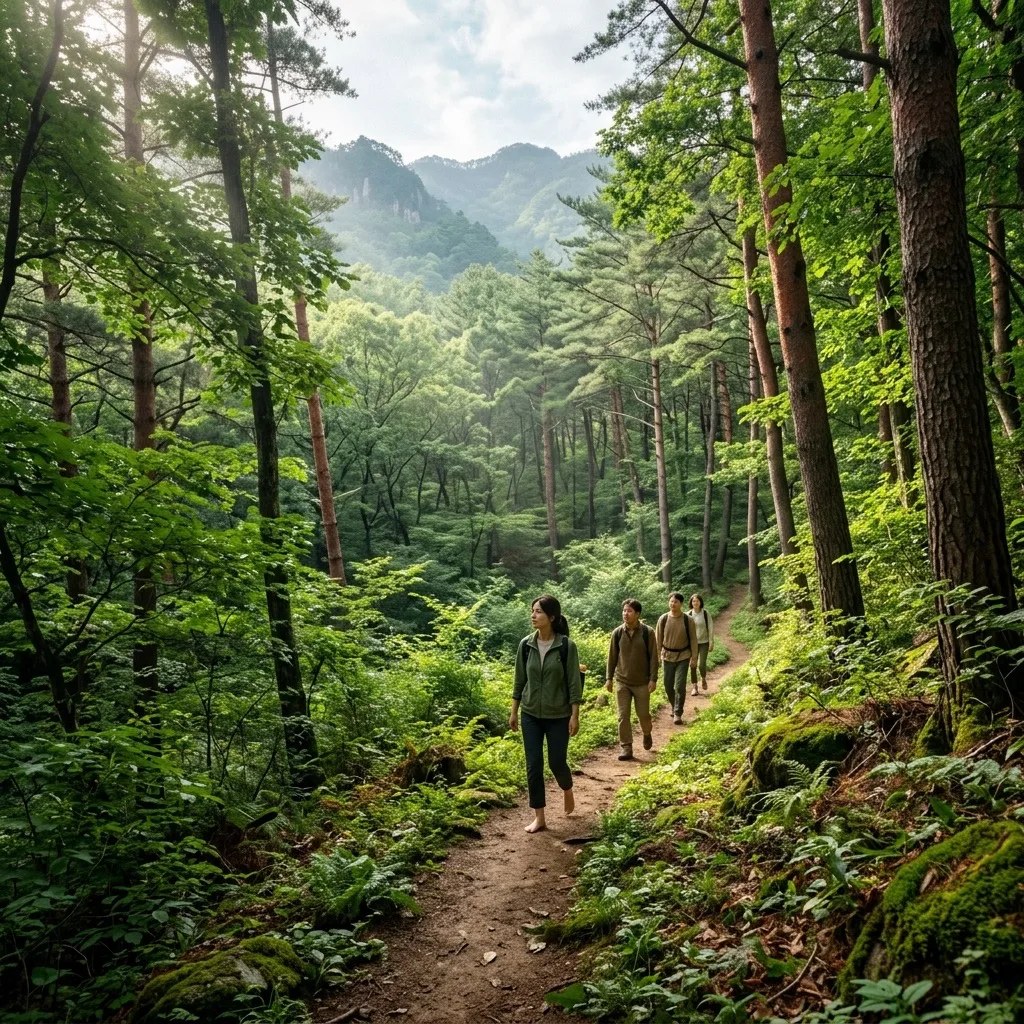
If your Korea trip needs one slow day that is not a temple stay, not a spa, and not another packed sightseeing loop, a forest healing walk is the cleanest reset you can give your itinerary. These places are built for breathing, listening, and moving at a human pace. The best versions are simple: a quiet path, a bit of shade, fresh air, and enough structure that you never wonder whether you are in the right place. In this guide, I’ll show you how Cheongsong is often used as the model for that kind of outing, what makes a forest healing walk different from a regular hike, and how to pick a trail that actually leaves you calmer instead of more exhausted.
Why Forest Healing Walks Work in Korea
Forest healing walks fit Korea unusually well because the country has made a habit of turning difficult terrain into accessible public recreation. A forest healing walk is not the same as a summit hike, and it is not meant to be a performance. It is a low-stress walk through a managed natural space where the goal is recovery, not mileage. Travelers use these routes to decompress after city-heavy stops, to recover from jet lag, or to build one slow afternoon into a high-speed itinerary. If you are already planning a temple stay, a jjimjilbang day, or a walk through the quieter corners of Seoul, a forest outing becomes another way to rebalance the trip rather than another item to rush through.
The best way to understand the appeal is to think in terms of pace and sensory load. Traditional sightseeing in Korea often means navigating subway exits, food queues, timed reservations, and dense streets. Forest healing walks strip that away. You hear insects and water instead of traffic. You follow gentle wayfinding instead of crowded museum corridors. You can still do a proper hike elsewhere, such as Hiking Bukhansan National Park: Top Trails Near Seoul, but a healing forest is for the part of the trip where you want your body to stop negotiating with the schedule.
Forest healing walks are especially useful for first-time visitors who think they need to see every “must-do” attraction in a region. They do not. In fact, one of the recurring mistakes travelers make in Korea is overfilling the day with high-input experiences, then wondering why even beautiful places start to feel tiring. A calmer forest stop gives you a buffer. It also helps if you are traveling with older parents, a partner who does not like steep ascents, or kids who need space to move but not a full mountain workout.
Another reason these walks matter is that they show a less publicized side of Korean travel. The big-city version of the country is real, but so is the everyday habit of going somewhere green for mental clarity. That is why forest visits pair so naturally with other recovery-oriented activities like a Korean spa day or a temple visit. If you have already read Korean Spa Etiquette: Do’s and Don’ts for International Visitors, you already understand the value of one quiet, intentional block in a busy itinerary. A forest walk serves the same function, just outdoors.
For travelers who like slow tourism, the point is not to “conquer” the landscape. It is to let the landscape do some of the work. A forest healing walk can be the difference between a trip that feels consumed and a trip that feels absorbed. That is why sites like Cheongsong come up so often in Korean travel planning: they are easy to explain, easy to enjoy, and hard to forget once you have done them properly.
Cheongsong as a Model for Forest Healing
Cheongsong is one of the strongest examples of how Korea packages a natural landscape for restorative travel without overdeveloping it. In search results, travelers may encounter different English renderings, including “Cheongsong Healing Forest” or “Chonsong Healing Forest,” but the experience most people are actually looking for is a peaceful forest walk in the Cheongsong area, often centered on the Cheongsong Premium Birch Forest. That distinction matters, because the site is less about a branded resort-style wellness program and more about a walkable forest path that rewards unhurried attention.
Cheongsong Premium Birch Forest sits at the foot of Muposan Mountain and is known for old birch trees and a trail that is approachable rather than punishing. According to VisitKorea, the path is divided into two courses, A and B, and both are described as not too steep, which is exactly what many travelers want from a healing forest. The atmosphere shifts with the season: soft green growth in spring, deep shade in summer, bright bark and open visibility in colder months. That seasonal change is part of the draw. You are not going for one single “best” photo. You are going for a different kind of quiet each time of year.
The birch forest also works well as a template for understanding what makes a Korean forest healing walk satisfying. First, there is clarity: you know what the place is for. Second, there is restraint: the path is the main attraction, not a long list of facilities. Third, there is accessibility: you do not need advanced hiking gear or a full expedition mindset. That combination is why travelers who enjoy places like temple grounds, scenic riverside parks, and green neighborhood walks tend to enjoy forest healing spots too.
If you are designing a broader wellbeing-focused itinerary, Cheongsong sits comfortably beside other restorative travel experiences. A temple stay adds contemplative structure, while a forest walk adds physical release. A spa visit gives the body a different kind of recovery. A city evening, perhaps along the Han River, gives the trip contrast. Put together, these pieces make the pace of the journey feel deliberate instead of fragmented. That is also why people who like The Sound of Silence: Essential Etiquette for a Korean Temple Stay often enjoy forest outings: both reward quiet behavior, slower movement, and a little more observation than talking.
Cheongsong is also useful because it gives travelers a practical answer to the question, “What do I do on a day when I do not want to queue for anything?” In major cities, every pleasant plan seems to require some kind of waiting. A forest path removes that friction. You arrive, walk, pause, and leave. There is an elegance to that simplicity. It is not dramatic, but it is memorable, and that is exactly what makes it useful in an article about travel planning.
The other thing Cheongsong gets right is that it does not pretend to be a luxury experience. Some travelers are happiest with a carefully curated premium day, and that is fine, but many genuinely need a low-cost reset that still feels intentional. Cheongsong delivers that without turning the outing into a commercial package. In a country where many high-value attractions are linked to food, shopping, or timed admissions, that matters.
Other Forest Healing Walks Worth Knowing
Cheongsong is an excellent reference point, but it is not the only forest experience in Korea that works well for restorative travel. If you are planning a longer route, it helps to understand the different “flavors” of forest outing available across the country. Some places are closer to full mountain recreation, while others behave more like landscaped ecological walks. Both can be good. The difference is what problem you want them to solve.
The first category is the accessible scenic forest. These are the places that work for travelers who want nature without a major fitness commitment. The Cheongsong birch forest sits here. So do many arboretum-style trails, municipal healing forests, and gentle path systems built around local conservation. Their main value is not altitude or challenge; it is the experience of walking without needing to constantly watch your footing or plan your water supply like you are on a summit push.
The second category is the “green counterweight” to urban sightseeing. These are the trails and parks you use when you have spent a day in a city core and need your nervous system to reset. If you are in Seoul, a day can easily be built around a morning in a busy district, a quiet lunch, and then a wooded afternoon. In that pattern, forest healing is not the headline attraction; it is the relief valve. Travelers who enjoy the slow rhythm of Exploring Han River Parks at Night: Fried Chicken and City Lights already understand this logic. Korea’s outdoor spaces often work best when they are treated as part of a sequence, not as isolated destinations.
The third category is the route for travelers who want a bit more terrain but still value calm. These are the forests near mountain parks where the walk can be adjusted in length and difficulty. They are useful if you want to feel that you earned the scenery without taking on a serious technical hike. In those cases, the right forest is the one with clear trail signage, manageable gradients, and enough rest points to let different ages and energy levels move together.
You do not need to visit many forests to benefit from the idea. One well-chosen outing is enough to change the feel of the trip. That is why a guide to forest healing should not read like a pure destination checklist. It should help the traveler identify the kind of reset they need. Some people need silence. Some need shade. Some need a walk that does not punish their knees. Some need a place that feels remote without actually being difficult to reach. Knowing the difference keeps the outing from becoming just another scenic stop.
For families, forest healing walks are often better than people expect because the trail gives children a natural task: move forward, notice the environment, and stop for breaks when needed. For older travelers, the appeal is predictability. A forest path that is flat or only mildly sloped removes much of the fear that comes with a more aggressive hike. For solo travelers, the appeal is solitude without isolation. You can be alone in a forest path while still feeling safe enough to enjoy the experience.
There is also an important cultural point here. In Korea, walking is often treated as both exercise and maintenance. People do not need a philosophical explanation to justify being outside. They simply know that time in a green place is good for them. A forest healing walk reflects that everyday practicality. It is not about spiritual branding. It is about creating a space where it is easier to slow down, breathe, and keep going with less strain.
If you are building a two- or three-day region in your itinerary, forest walks also help balance food-heavy travel. Korea is full of excellent meals, street snacks, and specialty drinks, but constant eating without movement can make the trip feel heavy. A forest day gives the body room. It is a useful habit if you are traveling between barbecue nights, cafe afternoons, and market stops. The same principle applies to holiday travel periods, which are often crowded and more draining than expected. Planning a quieter outing on either side of a dense travel day can make the whole trip feel more manageable, especially during periods covered in Chuseok and Seollal: How to Travel During Korean Holidays.
Practical Guide
Hours, Admission, and What Is Confirmed for Cheongsong
For Cheongsong Premium Birch Forest, the current visitor information that is easy to verify is refreshingly simple: VisitKorea lists the site as open 24 hours, year-round, with free admission. Parking is available, and the tourism contact listed is the Cheongsong-gun Culture and Tourism Division at +82-54-870-6240. The official tourism site is https://www.cs.go.kr/tour. Those details make Cheongsong particularly appealing for travelers who want a low-friction outing without booking drama.
That said, “open 24 hours” on a tourism listing does not mean every path condition will always be ideal at midnight, nor does it mean that every season is equally pleasant. In practice, forest walks are best done during daylight and with enough time to move slowly. The information you should treat as stable is the admission cost and the public-access nature of the trail. The thing that changes most is the visitor experience: weather, visibility, leaf cover, and the volume of other walkers.
If you are comparing Cheongsong with other healing forest options around Korea, expect different models. Some municipal or county healing forests may require reservation windows, separate program fees, or limited operating hours for indoor facilities. Others are free access but have seasonal programming. That is why it helps to distinguish between a natural walking path and a formal healing program. The former is often more flexible. The latter may include guided breathing, forest bathing sessions, or small-group interpretation.
How to Get There
Cheongsong is not a “drop by for an hour from central Seoul” kind of outing. It belongs in a regional plan. That is not a downside; it is simply the reality of visiting deeper, quieter parts of Korea. Because the area is more rural, the trip works best when paired with other attractions in North Gyeongsang Province or with an overnight stay in a nearby town. If you try to force it into a cramped same-day circuit from a major city, the forest will not have time to do its job.
For travelers using public transport, the best approach is usually to get as close as possible by intercity bus or rail and then finish with a local taxi. Exact routing can vary depending on your origin city, your travel date, and seasonal service patterns. If you are already comfortable using Korea’s transit network, you can treat the forest as part of a regional loop. If you are less experienced, build the day around one main destination and keep the last-mile movement simple.
Driving is more straightforward if you are already renting a car. That is often the cleanest way to reach a place like Cheongsong because it gives you the flexibility to stop for food, change timing if the weather shifts, and combine the forest with another nearby scenic stop. In rural Korea, this flexibility matters more than it does in the city. You also avoid the awkwardness of trying to align several bus schedules around a place meant for lingering.
What to Bring
Do not overpack for a forest healing walk, but do bring the small things that make calm more likely. Comfortable walking shoes matter more than fashion. A light layer is useful because forest shade can make the temperature feel lower than the nearby town. Water is essential even on easy paths, especially if you are visiting in warmer months. If you are prone to insect bites, carry whatever repellent you usually trust.
If you want the forest to feel genuinely restorative, avoid hauling a giant day bag full of urban survival gear. Bring what supports the pace: water, a light snack if needed, a phone charged enough for maps and photos, and maybe a compact rain shell if the weather looks uncertain. The point is not to look prepared. The point is to remove avoidable friction.
How Long to Stay
Most travelers get more out of a forest healing walk when they stay longer than they think they need to. A rushed thirty-minute visit is usually just a photo stop. A ninety-minute to three-hour visit lets the experience settle in. That time includes slow walking, pauses, and perhaps a quiet bench moment. If you are combining the forest with another nearby stop, it is often better to trim the second attraction than the forest time.
If your itinerary already has a hard ceiling, go in with one question: “Am I here to see the forest, or am I here to feel the forest?” If the answer is the second one, do not race. A healing walk works because the pace is low enough for your attention to catch up with your body.
Tips & Common Mistakes
The biggest mistake travelers make with forest healing walks is treating them like simplified hikes. That mindset leads to all the wrong choices: too much pace, too little time, and unrealistic expectations about how restorative a rushed outing can be. A healing forest is not a badge of fitness. It is a design choice. Go slower than you normally would on a sightseeing day.
Another common error is assuming that a free, open trail does not require planning. Even when admission is free, the experience still depends on timing and context. Midday summer heat, winter wind, and rainy footing all change how the trail feels. The walk is still worth it, but only if you respect the season. In Korea, the same outdoor destination can feel elegant in one month and exhausting in another.
Do not underestimate the value of weekdays versus weekends. A quiet forest path on a weekday can feel completely different from a busier weekend afternoon. If your schedule is flexible, the difference is worth exploiting. The whole point of this kind of travel is to remove pressure, so build the outing around the least stressful time possible.
Another thing many guides miss is that forest outings work best when the rest of the day does not sabotage them. If you pair a healing walk with a chaotic breakfast rush, a long taxi scramble, and a late dinner reservation across town, you undo much of the benefit. Instead, build a soft sequence: slow morning, forest, unhurried meal, and then either a light cultural stop or a quiet evening. The same logic applies if you are including a spa or temple visit in the same trip. Try not to stack all your calm experiences inside a frantic logistics shell.
If you are traveling with children, make the rules simple. The goal is not to complete a challenge. It is to move well, stay together, and notice things. If you are traveling with older parents, check the path surface before committing to a longer route. If you are traveling solo, do not let the quiet trick you into wandering without a plan. Even easy forest walks benefit from a clear start point, a rough turnaround time, and a way back that does not depend on guesswork.
A subtle but important mistake is over-relying on photos to judge whether a forest will be satisfying. Korea’s forests often look appealing in images even when they are not the right fit for your needs. What matters more is the walking experience: slope, shade, crowd level, rest points, and the emotional effect of the place. A visually dramatic forest may be less healing than a simpler one if it feels too busy or too demanding.
When in doubt, compare the outing to other forms of restorative travel. A temple stay is structured quiet. A spa is physical relaxation. A forest healing walk is moving quiet. If you already know which of those three you prefer, your itinerary will be better. For some travelers, the forest is the best entry point because it is less formal than a temple and less enclosed than a bathhouse. For others, it is the bridge between the two.
FAQ
Is a forest healing walk the same as hiking?
Not really. Hiking usually implies a goal such as a summit, a viewpoint, or a longer physical challenge. A forest healing walk prioritizes pace, sensory calm, and accessibility. You can still sweat a little, but the purpose is different. If you want a more traditional hike, use a place like Bukhansan. If you want recovery, choose a healing forest.
Do I need a reservation for Cheongsong Premium Birch Forest?
For the publicly listed walking path itself, the current information indicates free access and no standard admission fee. That is one reason the site is attractive. However, if a forest area offers separate programs, guided sessions, or seasonal facilities, those may follow their own rules. Always distinguish between the path and any optional program.
What is the best season for a forest healing walk in Korea?
There is no single best season, because each one changes the mood of the walk. Spring gives you fresh growth, summer gives you dense shade, autumn is often the most photogenic, and winter can feel spare and quiet in a good way. If your goal is comfort, aim for mild weather. If your goal is atmosphere, choose the season that matches your mood.
Can I combine a forest healing walk with a city trip?
Yes, but it works best when the forest is placed as a deliberate contrast rather than as an afterthought. A forest walk on the same day as heavy shopping or constant transit can feel like a detour. A forest walk as a reset between city blocks can feel like the best part of the trip. That is especially true if your trip already includes a temple stay or spa visit.
Is Cheongsong worth the trip if I only like easy walks?
Yes, if you value atmosphere as much as distance. Cheongsong Premium Birch Forest is appealing because it is not trying to be extreme. The site is about a calm trail, seasonal variation, and a setting that rewards unhurried movement. If you only enjoy strenuous climbs, it may feel too gentle. If you want a walk that restores rather than tests you, it is a strong choice.
Conclusion
Korea’s forest healing walks are useful because they solve a real travel problem: how to build rest into an itinerary without making the trip feel empty. Cheongsong is a good example because it offers a simple, walkable forest setting with a clear visitor value proposition. The official-style details are straightforward: the Cheongsong Premium Birch Forest is free, open 24 hours, and backed by local tourism information that makes it easy to plan around.
The deeper lesson is that not every memorable destination has to be a landmark, a food stop, or a famous photo spot. Sometimes the most valuable part of a Korea trip is an hour or two spent walking under trees where the only task is to breathe, slow down, and notice what the country looks like when it is not asking you to consume anything.
If you are planning a broader Korea route, use a forest healing walk as a balance point. Pair it with a city stay, a cultural visit, or a recovery day before a longer transit leg. If you like the quieter side of Korea, you can build an entire itinerary around that rhythm and never feel like you missed the point.