Xintiandi and Tianzifang: Comparing Shanghai's Trendy Heritage Districts

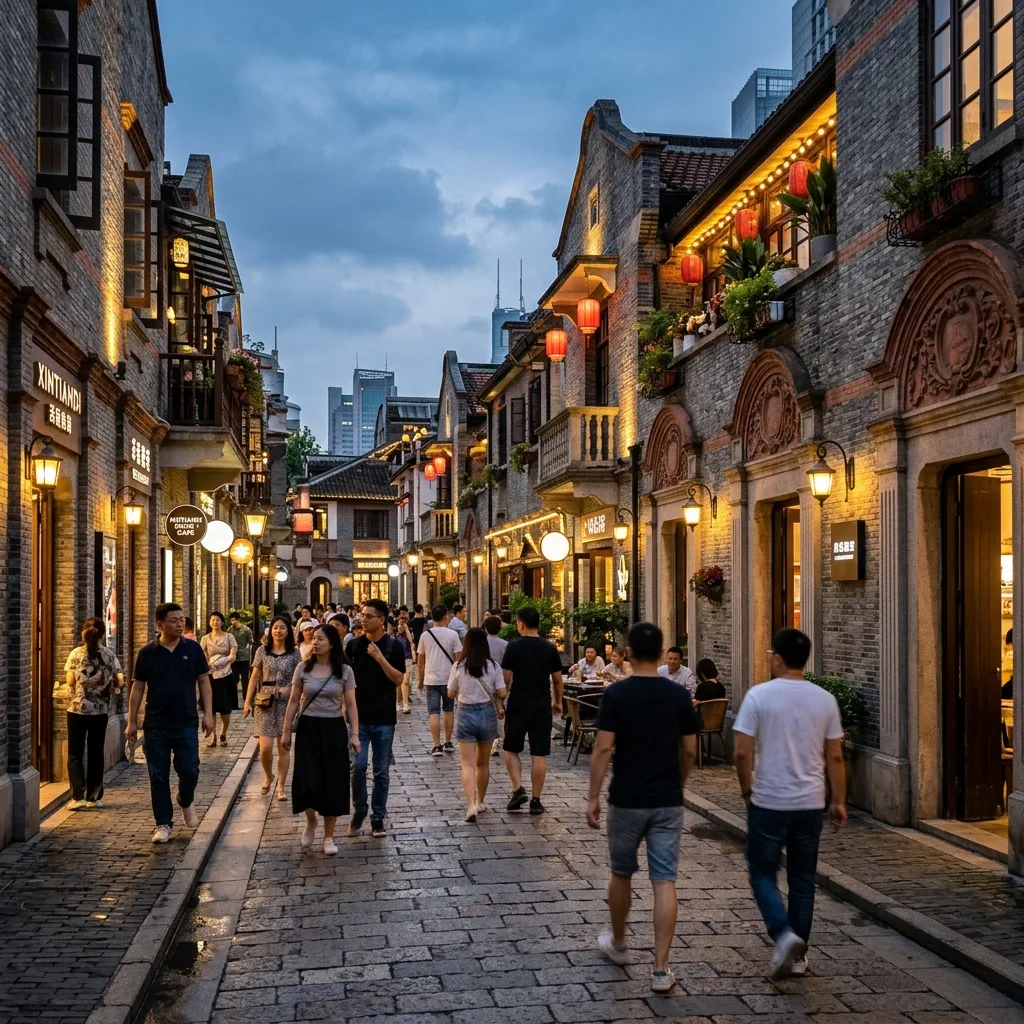
Every visitor to Shanghai hears the same two names: Xintiandi and Tianzifang. Both are built from the bones of old Shanghai's shikumen alleyways. Both draw millions of visitors each year. And yet the two neighborhoods feel nothing alike — one is polished and expensive, the other is labyrinthine and indie. If you only have a day in Shanghai and you're trying to decide which to visit (or whether to do both), this guide breaks down exactly what makes each district tick, what you'll actually spend, and how to structure your time so you leave satisfied rather than overloaded.
What Are Xintiandi and Tianzifang?
Both Xintiandi and Tianzifang are renovated shikumen neighborhoods in central Shanghai. Shikumen — literally "stone gate house" — is a housing style unique to Shanghai that fuses 19th-century Western row-house layouts with traditional Chinese courtyard design. Dark brick walls, heavy stone gate frames, and compact alleyways defined working-class Shanghai for more than a century. When the city modernized in the late 1990s and 2000s, most shikumen blocks were demolished. Xintiandi and Tianzifang survived, but in very different ways.
Xintiandi was a top-down development project by Hong Kong real estate developer Shui On Land. The shikumen shells were preserved on the outside but gutted and rebuilt for upscale commercial use on the inside. The result is a pedestrianized retail-and-dining district that opened in 2001 and now attracts corporate tenants, international restaurant chains, and a largely tourist and expat clientele.
Tianzifang evolved organically from the bottom up. Starting in the late 1990s, artists and small studios began renting cheap space in the Taikang Road lane houses of the French Concession. Boutique shops, cafes, and galleries followed. The neighborhood retained its residential character even as it became a destination — locals still live above the shops, laundry hangs between buildings, and the alleys are genuinely narrow enough that two people can barely pass.
Understanding this history tells you everything about why the two places feel so different.
Xintiandi: The Polished Shikumen Experience
What Xintiandi Looks Like
Xintiandi sits in Huangpu District, anchored around Taicang Road and Xingye Road, roughly a five-minute walk from the intersection of Huaihai Middle Road. The complex divides into two main sections:
The North Block is the more atmospheric half. Stone-paved pedestrian lanes wind between restored shikumen buildings with black lacquered gates and grey brick facades. Dim sum restaurants, specialty coffee shops, and clothing boutiques occupy most of the ground floors. It is genuinely photogenic, especially in the late afternoon when the light catches the brick walls.
The South Block leans modern. It houses a large underground shopping mall (Xintiandi Style), cinema, and a smattering of higher-end international brands. The architecture here is less interesting, but it's useful if you need air-conditioning or want a sit-down meal in a quieter setting.
At the northern edge of the complex stands the Site of the First National Congress of the Chinese Communist Party, housed in a preserved 1920s building where the Party held its founding meeting in 1921. Entry is free, and even visitors with no particular interest in the history will find the preservation of the building itself worth a peek.
The Atmosphere at Xintiandi
Xintiandi is designed to be walkable and visually coherent. The lanes are wide enough for comfortable strolling, the signage is bilingual, and the entire district is kept extremely clean. It feels more like an outdoor mall than a living neighborhood, and that is not necessarily a criticism — it is simply what it is. You know exactly where the boundaries are, the restaurants have English menus, and the overall experience is frictionless.
What you will not find here is much local color. The prices at sit-down restaurants skew toward the 100–300 RMB-per-person range, which prices out most ordinary Shanghai residents. The crowd on a weekend afternoon is heavy on tourists, expats, and young professionals celebrating a birthday or having a business lunch. Street photography is great here because the architecture is consistent and the light is good, but if you came to Shanghai for authenticity, you may feel faintly underwhelmed.
Eating and Drinking at Xintiandi
The food at Xintiandi is genuinely good, even if it is expensive by Shanghai standards.
Da Hu Chun (大壶春, multiple locations in the North Block) is essential. The chain has been making shengjian mantou — pan-fried soup dumplings with a crispy bottom — since 1932. A basket of eight costs around 20–28 RMB, and the queues on weekends are real. Go on a weekday or arrive before noon.
For coffee, several specialty roasters have set up in the North Block. Expect 38–55 RMB for a single-origin pourover. The quality is consistently high.
Sit-down options cover everything from refined Shanghainese cuisine (request dishes like hongshao rou, red-braised pork, or smoked fish) to Italian, Japanese, and international brunch menus. Budget 200 RMB minimum per person for a full meal with drinks at the nicer spots.
Tianzifang: The Creative Labyrinth
What Tianzifang Looks Like
Tianzifang occupies a cluster of alleyways around Taikang Road in the Luwan District (now merged into Huangpu). The main entrance is on Taikang Road, though the network of lanes — collectively labeled Lane 210, Lane 248, and Lane 274 — extends in every direction, with interconnected passages that make it easy to get happily lost.
The buildings are two and three stories of traditional lane housing. Balconies overflow with potted plants, cats sun themselves on windowsills, and residents' bicycles are parked at ground level next to shop entrances. The visual texture is dense and layered. Every corner reveals something different: a hand-painted sign, a courtyard with a tree growing through it, a spiral staircase leading to a rooftop gallery.
The Atmosphere at Tianzifang
Tianzifang rewards slow exploration. There is no correct route through the lanes — you should simply enter, put your phone away (or not), and wander. The experience changes depending on the hour. In the morning, it is relatively quiet and the local character is most visible. By midday, tour groups begin arriving in force and the main lanes fill quickly. Late afternoon and evening bring a shift back toward neighborhood energy, with restaurants lighting up and shops staying open until 21:00 or 22:00.
The commercial side of Tianzifang is small-scale. You will find art studios selling original work alongside shops selling mass-produced tourist trinkets — often in the same lane. Independent jewelry designers, textile artists, and ceramicists set up alongside tea houses and cat cafes. The range in quality is enormous, so take your time browsing rather than buying on impulse.
Unlike Xintiandi, Tianzifang still feels lived-in. You will occasionally interrupt residents going about their day, hear Shanghainese dialect in the background, and notice that some of the lanes are genuinely residential dead-ends that the crowd bypasses. That texture is what people mean when they say Tianzifang has "soul."
Eating and Drinking at Tianzifang
Food in Tianzifang is mostly casual and priced accordingly.
Stalls and small cafes dominate the lane entries. You will find scallion pancakes (cong you bing), stinky tofu, bubble tea, and locally made ice cream within steps of the main entrance. Prices for street snacks run 8–25 RMB. Sit-down cafes with drinks and light meals hover around 50–90 RMB per person.
The Shanghai Museum of Glass Art at 25 Taikang Road (on the edge of the Tianzifang area) is the one paid attraction in the vicinity. Admission is 54 RMB for adults, 31 RMB for students and seniors 65+, and free for children under 1.2 meters. Hours are 10:00–17:00 (last entry 16:30), closed Mondays. It is a small but genuinely unusual space, with glass installations ranging from historical pieces to contemporary art.
Side-by-Side Comparison
| Category | Xintiandi | Tianzifang |
|---|---|---|
| Entrance fee | Free | Free |
| Atmosphere | Upscale, curated | Indie, organic |
| Crowd | Tourists, expats, professionals | Mix of tourists, artists, locals |
| Lane width | Broad and comfortable | Narrow and maze-like |
| Food price range | 100–300 RMB/person (sit-down) | 8–90 RMB (snacks and cafes) |
| Shopping | International brands, boutiques | Artisan studios, souvenirs |
| Photo potential | High (architecture-focused) | High (texture and detail) |
| Authenticity feel | Low–medium | Medium–high |
| Best time to visit | Afternoon for atmosphere, evening for dining | Morning or late afternoon |
| Time needed | 2–3 hours | 2–4 hours |
Practical Guide
Hours and Admission
Both Xintiandi and Tianzifang are free to enter and have no fixed closing time for the districts themselves. Individual shops and restaurants open and close on their own schedules.
- Xintiandi shops and restaurants: generally 10:00–22:00
- Tianzifang shops: generally 10:00–21:00 or 22:00
- Tianzifang street stalls: some open as early as 9:00
- Site of the First National Congress (inside Xintiandi North Block): 09:00–17:00, free
- Shanghai Museum of Glass Art (near Tianzifang): 10:00–17:00, closed Mondays; 54 RMB adults
Getting There
Xintiandi:
- Metro Line 1: Huangpi South Road Station (exit 6 or 7), 3-minute walk
- Metro Line 10: Xintiandi Station (exit 1), 2-minute walk
Tianzifang:
- Metro Line 9: Dapuqiao Station (exit 1), 5-minute walk
- Metro Line 9: Madang Road Station, 8-minute walk
The two districts are about 1.8 km apart — a 20-minute walk through the French Concession, or a 5-minute taxi ride. If you are doing both in the same day, the logical order is Tianzifang in the morning (when it is quieter) and Xintiandi for lunch or dinner (when the restaurant scene is most lively).
Payment
Cash is largely obsolete in both areas. Nearly every vendor — including small food stalls — accepts WeChat Pay or Alipay. International visitors should link a Visa or Mastercard to Alipay's international version (Alipay+ or the tourist-mode wallet) before arriving. Having a small amount of cash (100–200 RMB) as backup is sensible, but you will rarely need it.
Booking
Neither district requires advance booking for entry. For popular restaurants in Xintiandi, especially on weekends, a reservation through the restaurant's official channel or Dianping (the Chinese equivalent of Yelp) is strongly recommended. Tianzifang cafes and street stalls are walk-in only.
Tips and Common Mistakes
Do both if you can. Most visitors choose one or the other based on reviews that describe them as alternatives. They are actually complements — Xintiandi is better for a meal or an evening drink, Tianzifang is better for aimless exploration. Doing Tianzifang in the morning and Xintiandi for lunch or dinner is a natural half-day loop.
Avoid weekends if possible. Tianzifang in particular becomes genuinely crowded between 13:00 and 17:00 on Saturday and Sunday. The lanes are narrow enough that heavy crowds eliminate the atmosphere that makes the place worth visiting. Weekday mornings are the best-kept secret.
Watch the weather. Both districts are primarily outdoor experiences. Tianzifang's lane houses provide minimal shade in summer — temperatures above 35°C make midday visits uncomfortable. Spring (April–May) and autumn (September–October) are the optimal seasons. If you are visiting in summer, aim for an early morning or evening visit and carry a small folding fan or cooling spray.
At Tianzifang: look up and go deep. The parts most visitors see are the first 50 meters of lane inside the main entrance. The best of Tianzifang — the quietest studios, the most interesting galleries, the least-touristy food — is further in, past the second and third turns. Commit to getting lost.
At Xintiandi: visit the North Block first. Most visitors walk through the South Block mall and leave disappointed. Start in the North Block, find the alley behind Xingye Road, and give yourself time to notice the architectural details before your attention is claimed by menus and shop windows.
Negotiate at Tianzifang. Prices on handcrafted goods — jewelry, ceramics, textiles — are negotiable. A respectful counter-offer of 20–30% below the asking price is normal and expected. Don't negotiate on food.
FAQ
Which One Should You Choose?
Choose Tianzifang if you want browsing, wandering, and the feeling of old lane-house Shanghai. Choose Xintiandi if you want cleaner lines, easier navigation, and a more polished meal or drink stop.
If your energy is low, Xintiandi is simpler. If your curiosity is high, Tianzifang is richer.
Is Tianzifang or Xintiandi better for first-time visitors to Shanghai?
Tianzifang gives a more authentic sense of old Shanghai's lane-house neighborhoods, while Xintiandi is more comfortable and easier to navigate. First-time visitors who prioritize atmosphere over convenience tend to prefer Tianzifang. Those looking for reliable dining and a polished experience favor Xintiandi. Ideally, visit both.
How much time do I need for each district?
Budget 2–3 hours for Xintiandi and 2–4 hours for Tianzifang. If you are doing both in one day, allow a full half-day (5–6 hours) so you are not rushing.
Is there a fee to enter Tianzifang or Xintiandi?
No. Both districts are free to enter. Individual museums, galleries, and restaurants have their own pricing. The Shanghai Museum of Glass Art near Tianzifang costs 54 RMB for adults.
What is the best way to get from Tianzifang to Xintiandi?
Walk — it is a pleasant 20-minute stroll through the French Concession, and the neighborhood between the two is worth seeing. If the weather is brutal or you are short on time, a taxi or Didi ride takes about 5 minutes and costs 15–20 RMB.
Can I pay with a foreign credit card?
Directly, rarely. Most vendors use QR-code payments (WeChat Pay or Alipay). Set up Alipay's international tourist mode before your trip by linking a Visa or Mastercard. Some restaurants at Xintiandi accept physical card payments, but do not count on it in Tianzifang.
Conclusion
Xintiandi and Tianzifang represent the two directions Shanghai took when it decided to preserve its shikumen heritage. One path was top-down, corporate, and international. The other was grassroots, creative, and local. Neither is better; they serve different moods and different moments in a trip.
If you have one afternoon, go to Tianzifang in the morning and Xintiandi for dinner. If you only have time for one, let your instinct guide you: Tianzifang if you want to wander and discover, Xintiandi if you want to relax and eat well. Either way, you will come away with a clearer picture of what makes Shanghai unlike any other city in China.
Shanghai sits in a broader constellation of iconic Chinese destinations. If you are making a longer trip through China, the contrast between Shanghai's cosmopolitan lane culture and the ancient street life of Beijing's hutong neighborhoods is especially striking — for a sense of how Beijing does its own historic alleyways, Beijing Hutong Experience: How to Explore the Old Alleyways is a useful companion read. And if you are planning to continue north after Shanghai, Beijing Food Guide: Peking Duck, Jianbing & Night Market Snacks will help you eat your way through the capital just as confidently as you explored Shanghai. For the full northern itinerary starting point, the Forbidden City Tickets & Visitor Guide: What to See and Skip covers everything you need before your first day in Beijing.