Winter Wonderland: Hwacheon Sancheoneo Ice Festival Guide
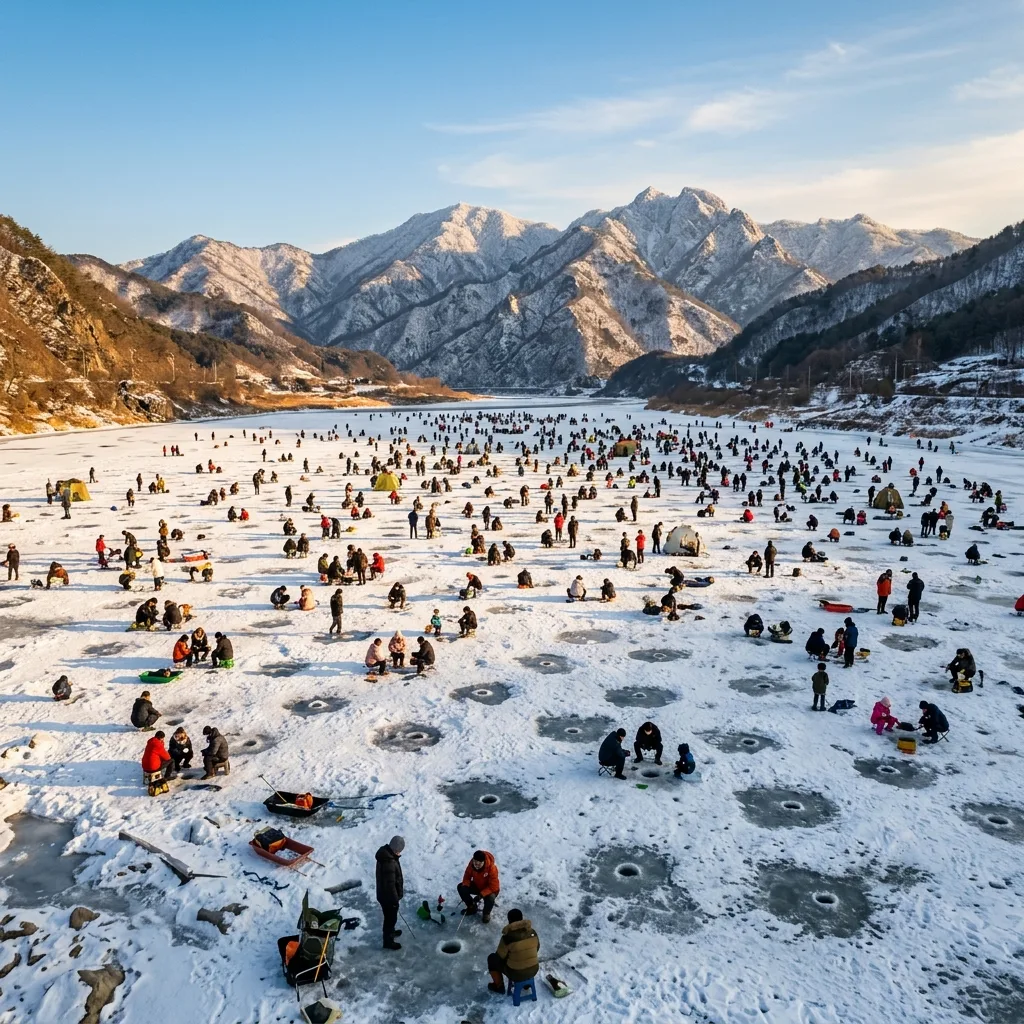
Every January, a quiet mountain town in Gangwon-do transforms into one of the coldest, most exhilarating party venues on the planet. The Hwacheon Sancheoneo Ice Festival draws over a million visitors to a frozen river where the main activity — dangling a tiny hook through a hole in the ice in hopes of landing a mountain trout — sounds almost absurdly simple. Yet it produces a particular kind of joy that no heated indoor attraction can replicate. CNN Travel once listed it among the 7 Winter Wonders of the World, and after spending a day hauling fish out of frozen water while eating grilled trout with numb fingers, it is very easy to understand why.
Whether you are a seasoned Korea traveller looking to experience something beyond Seoul's city limits, or a first-time visitor who stumbled across the festival while planning a winter trip, this guide covers everything: how to get there, what the festival actually looks like on the ground, how to catch a fish, how to eat it, and — critically — how to keep your extremities attached to your body in temperatures that regularly dip below −15°C.
🏔️ 2025 & 2026 Festival Schedule & Logistics
The Hwacheon Sancheoneo Ice Festival (화천 산천어축제) runs for approximately three weeks each January, timed to align with the deepest freeze of the Korean winter. The 2025 edition ran from January 11 to February 2, while the 2026 edition is scheduled for January 10 through February 1, giving you a generous window to plan your visit around a weekend trip from Seoul.
The festival grounds sit along the Hwacheon River (화천천) in Hwacheon-eup, Hwacheon County — a small administrative hub about two and a half hours northeast of Seoul by road. The venue spans several hundred metres of frozen river, divided into distinct zones: the main outdoor ice fishing area, the indoor ice sculpture plaza, the sledding and skating rink, and the street food market along the riverside embankment.
Operating hours run from 9:00 to 18:00 for most activities, with a coveted night fishing session from 18:00 to 21:00. Night fishing is popular because the river feels genuinely atmospheric after dark — lanterns, steam rising from grills, and the crunch of boots on ice — but spots fill up fast, so you need to book in advance or queue early.
Admission and activity fees are structured in tiers. Entry to the festival grounds themselves is modest (roughly ₩5,000–₩10,000 in recent years), but the main draw — a reserved ice fishing hole — costs extra and must be booked ahead. Shuttle bus packages from Seoul typically bundle transport, admission, a fishing rod rental, and one complimentary grilled sancheoneo (mountain trout) in a single price, which usually works out to ₩50,000–₩70,000 per person depending on the operator. Independent travellers who prefer to arrange their own transport can purchase fishing slots through the official festival website at narafestival.com.
Getting There from Seoul
The most hassle-free option for most visitors is a direct shuttle bus from Seoul. Buses depart from near Hongik University Station (홍대입구역) Exit 1, and the ride takes about two hours each way. Operators including Trazy and KoreaTravelEasy run daily shuttles during the festival period; book at least two to three days in advance since they sell out on weekends.
If you prefer independent travel, take the KTX or ITX-Cheong-chun train to Chuncheon Station (춘천역) — a roughly 70-minute ride from Seoul Yongsan — then transfer to a local intercity bus headed for Hwacheon-eup. The bus journey from Chuncheon to Hwacheon takes around 40 minutes. If you are planning to combine the festival with a broader Gangwon-do itinerary, this train-and-bus combo pairs well with stops in Gangneung or Sokcho. For train booking details, see our guide on Mastering the KTX: How to Book High-Speed Trains in Korea.
During the festival, free shuttle buses also run between Hwacheon Bus Terminal and the festival grounds, so you do not need to worry about the final stretch once you reach town.
🎣 The Art of Sancheoneo Ice Fishing
The sancheoneo (산천어) is a native Korean mountain trout — sleek, silvery, and prized for its clean flavour. In the wild, it inhabits cold, clear streams at altitude. At the festival, it inhabits a carefully managed stretch of frozen river stocked with tens of thousands of fish, and it is your job to get one out.
Equipment 101
Festival staff drill the fishing holes in advance, so you arrive to find a neat circle of open water roughly 15–20 centimetres in diameter. Each rented fishing kit consists of a short plastic rod (about 50 centimetres long), a small reel, thin monofilament line, and a tiny jig — a miniature lure weighted with a lead head. You do not need to supply anything else. If you are an experienced angler and bring your own ultralight ice fishing rod, you are welcome to use it, but the rental gear works perfectly well for beginners.
Finding the Right Hole
Not all holes are equal. Fish congregate where there is slightly more oxygenated water — near the edges of the fishing lanes rather than dead centre, and in spots with a modest current running underneath. Look for holes where other anglers are actively catching and try to set up in the same zone. Do not be shy about moving if your hole is cold (in both senses). The catch limit is three fish per person; once you reach it, you hand your fish to the staff and receive your complimentary grilling session.
The Vertical Jigging Technique
Drop your lure to the bottom. Reel up about 20–30 centimetres. Then begin a slow, rhythmic lift-and-drop motion — raise the rod tip about 10 centimetres, pause for two seconds, drop it back. Sancheoneo hit on the pause or just as the lure falls, so keep the line taut enough to feel the strike. When you feel a tap or the line goes suddenly slack (paradoxically a sign that a fish grabbed the lure and rose toward you), set the hook with a sharp upward flick of the wrist. The fish are not large — typically 30–40 centimetres — but they fight hard in the cold water, which makes the retrieval genuinely exciting.
Bare-Hand Fishing: The Brave Option
For those who want a more visceral experience, the festival offers a separate bare-hand fishing pool — an open section of frozen river where the ice has been cut away and the water is perhaps knee-deep. You wade in, wait for a fish to swim within reach, and grab it with your bare hands. The water temperature is just above freezing. Most participants last about 90 seconds before retreating, red-faced and shouting, to the nearest heat lamp — but the handful of people who actually catch a fish this way earn genuine applause from onlookers. It is entirely optional and entirely worth watching even if you do not participate.
⛄ More than Just Fishing: Winter Activities
The Hwacheon Sancheoneo Ice Festival has evolved well beyond its ice fishing origins into a full winter carnival. Even visitors who never touch a fishing rod will find three to four hours of things to do.
The World's Largest Indoor Ice Sculpture Plaza
The festival's signature set piece is its indoor ice sculpture exhibition — billed as one of the largest in the world. The cavernous hall is kept at a constant sub-zero temperature (dress accordingly — do not walk in without your outer layer) and filled with elaborate ice carvings: Korean folk characters, mythological creatures, interactive tunnels, and illuminated figures that glow blue and white under LED lighting. Children love the ice slides carved directly into the sculptures. Adults tend to spend 20–30 minutes wandering and photographing before the cold drives them back out. There is no separate admission charge for the ice plaza; it is included in the general festival ticket.
Ice Sledding and the Bobsled Run
A network of sledding tracks of varying intensity runs alongside the frozen river. The gentle beginner slopes use traditional Korean wooden sleds (썰매 — sseolle) that you steer by dragging your feet, which guarantees a certain amount of ungainly spinning. The more exciting option is the festival's bobsled run: a purpose-built ice channel where participants ride two-person sleds down a banked track at speeds that feel considerably faster than they probably are. Queue times on weekends can stretch to 45 minutes, so hit the bobsled early in the morning if it is on your list.
Ice Skating
A groomed skating rink sits adjacent to the main fishing area. Skate rentals are available on-site. The rink is not vast, but it offers a pleasant way to warm up (paradoxically) between activities. Skating alongside a frozen mountain river with pine-covered ridges in the background is precisely the kind of image people come to Korea in winter to find.
Night Festival Atmosphere
If you can stay for the evening session, the festival takes on a different character after dark. Paper lanterns line the riverbank, the grilling stalls operate at full capacity, and the ice beneath your feet catches the ambient light in a way that feels genuinely otherworldly. This is also when the bare-hand fishing pool closes and the night fishing session opens — a calmer, more meditative experience than the daytime scramble.
🍴 Catch It, Grill It, Eat It
The food is a central part of the Hwacheon Sancheoneo experience, and the festival has it well organised.
The Grilling Stations
Once you have caught your sancheoneo (or received one as part of your ticket package), you take it to one of the designated grilling stations along the riverbank. Staff clean and skewer the fish for you, then hand it back to grill over charcoal at a low table. The fish take about 12–15 minutes per side over moderate heat. Most first-timers are surprised by how good a simple charcoal-grilled trout can be — the flesh is firm and mild, the skin crisps up beautifully, and there is something deeply satisfying about eating an animal you pulled out of a frozen river 20 minutes earlier.
Raw Sancheoneo (회 — Hoe)
For the adventurous, the fish can also be eaten raw in the Korean style — thin slices served on ice with a dipping sauce of gochujang (fermented chili paste) mixed with vinegar and sesame oil, or with a simple soy-and-wasabi combination. Raw sancheoneo has a firmer texture and cleaner taste than the farmed salmon you might encounter in Seoul's sushi restaurants. If you eat it within minutes of catching it, the quality is exceptional.
Street Food Along the Riverbank
The festival market runs the full length of the embankment and is worth a slow walk even if you are already full. Key items to try:
- Roasted sweet potatoes (군고구마 — gun goguma): Sold from gas-heated drums, these are caramelised on the outside and fluffy within — one of the best cold-weather snacks in Korea. A standard portion costs around ₩2,000–₩3,000.
- Eomuk (어묵 / fish cake skewers): Long skewers of pressed fish cake simmered in a mild broth. The broth is free to drink — vendors expect you to pour yourself a cup while you stand at their stall. This is one of the most warming things you can consume in sub-zero temperatures.
- Tteokkbokki (떡볶이): Chewy rice cakes in spicy gochujang sauce. Look for stalls where locals are crowded — those are the ones with the freshest rice cakes.
- Makgeolli (막걸리): Milky rice wine served warm in a bowl. A bowl or two takes the edge off the cold without the heaviness of soju.
🧣 Survival Guide: Staying Warm in Hwacheon
The Hwacheon River valley channels cold air from the surrounding mountains with considerable efficiency. January temperatures in Hwacheon frequently fall below −10°C during the day and can reach −15°C or lower at night. Wind chill on the open river makes it feel colder still. Most first-time festival visitors underestimate the cold significantly.
Essential Layering Strategy
The standard Korean winter wardrobe — a padded coat over a knit sweater — is not sufficient for four to six hours on a frozen river. You need a genuine three-layer system:
- Base layer: Thermal long underwear (wool or synthetic, never cotton). Cotton absorbs moisture and then holds it against your skin, which turns genuinely dangerous in these temperatures.
- Mid layer: A fleece pullover or down vest. This is the insulation layer — its job is to trap body heat.
- Outer layer: A windproof, ideally waterproof shell. You will be kneeling on ice and potentially handling wet fish, so water resistance matters.
Extremities: The Critical Points
Your hands and feet are the most vulnerable points. Standard cotton gloves are useless. You need:
- Waterproof winter gloves with a fleece or wool lining. Many experienced festival-goers bring two pairs and swap to dry ones after the bare-hand fishing pool (if they try it).
- Thermal socks — wool is ideal, synthetic merino blends are acceptable.
- Insulated, waterproof boots with a sole rated to at least −20°C. Standard hiking boots without insulation will leave your feet painfully cold within an hour.
- Earmuffs or a balaclava. A beanie that covers the ears is a minimum; full coverage is better.
Hot Packs
Single-use chemical hand warmers (핫팩 — hatpack) are sold at virtually every convenience store and festival stall for around ₩1,000–₩1,500 each. Buy several before you go. Slip one inside each glove and one into each boot (against the arch of the foot, not the sole — they need to breathe to activate). They last four to six hours and represent one of the best value-for-money travel purchases you can make in a Korean winter.
Warming Stations
The festival provides heated tents at intervals along the riverbank. Use them proactively — do not wait until you are shivering to step inside. A ten-minute warmup every hour keeps your core temperature stable and significantly extends how long you can comfortably stay outdoors.
Jeans Are Not Appropriate
This is worth stating plainly because it is the most common mistake. Denim is thick enough to feel warm but provides virtually no insulation once it gets damp, which happens quickly when you are sitting on ice. Wear thermal-lined trousers or layer thermal underwear under your regular trousers. Many experienced visitors wear ski pants, which are ideal.
Getting the Most Out of Your Day
If you are visiting for a single day from Seoul — which is the most common approach — a rough schedule might look like this:
- 9:00–9:30: Arrive, collect fishing equipment, find your hole.
- 9:30–11:30: Ice fishing (the river is least crowded and coldest in the morning, which is actually when fishing is best).
- 11:30–12:30: Lunch — grill your catch and work through the street food market.
- 12:30–14:00: Ice sculpture plaza, sledding, and any secondary activities.
- 14:00–15:00: Bobsled run (queue is shorter in the early afternoon than at midday).
- 15:00–17:00: Free exploration, additional market stalls, skating if desired.
- 17:00: Return shuttle bus (if on a package) or head to Hwacheon Bus Terminal.
If you booked the night fishing session, adjust accordingly — arrive later in the afternoon, eat dinner at the market stalls, and fish under the lanterns from 18:00.
Combine with a Wider Gangwon-do Trip
Hwacheon sits close to some of the most scenic terrain in South Korea. If you have an extra day, the coastal towns of Gangneung, Sokcho, and the surrounding area are all within reach by bus. Our guide to The East Coast Road Trip: Gangneung, Sokcho, and Yangyang covers the highlights in detail. For a broader picture of Korean winter travel — including ski resorts and other seasonal festivals — see Frozen Fun: The Ultimate Guide to Winter in South Korea.
Conclusion
The Hwacheon Sancheoneo Ice Festival occupies a specific category of travel experience: the kind that sounds vaguely miserable in description and becomes one of the clearest memories of a trip. You will be cold. Your fingers will go numb. You will probably wait in more queues than you expected. And when a trout finally hits your lure and you haul it out of that perfectly round hole in the ice, grinning in a way you cannot entirely explain, you will understand exactly why over a million people make the journey to this small mountain town every January.
Book your shuttle early, dress for actual winter, arrive when the gates open, and leave room in your itinerary for at least one bowl of warm eomuk broth beside the frozen river. Hwacheon delivers something that very few winter destinations anywhere in the world can — a festival built on a single, simple idea, executed with the kind of Korean thoroughness that turns it into something genuinely extraordinary.
Festival dates, prices, and shuttle schedules change annually. Verify current information at the official festival website (narafestival.com) or through booking platforms like Trazy and Klook before your visit.