Visiting Real-Life Restaurants Featured in Korean Dramas
There's a particular kind of hunger that K-dramas create — not just for the story, but for the food. Whether it's Park Saeroyi gripping a tray in Itaewon Class or Woo Young-woo obsessing over kimbap in Extraordinary Attorney Woo, the restaurants and meals that anchor these shows have a way of becoming characters in their own right. And for fans making the trip to South Korea, visiting these real-life locations is one of the most personal, most delicious ways to step inside the screen.
This guide walks you through the most beloved drama dining destinations in Korea — where they are, what to order, how to get there, and what to expect when you arrive. Whether you're a seasoned K-drama pilgrim or planning your first fan trip, these restaurants offer something no regular tour can: the feeling that you already belong here.
Why K-Drama Restaurants Hit Different
The 40–50 word summary for search: K-drama restaurants are real, visitable locations across Seoul, Suwon, and beyond. Each one served as a filming set for a beloved series, and visiting them offers fans a tangible, sensory way to connect with shows like Itaewon Class, Extraordinary Attorney Woo, and My Mister.
Korean dramas are one of the most meticulously location-scouted productions in the world. Unlike many Hollywood productions that rely on closed sets, K-dramas frequently film in functioning restaurants, cafes, and pojangmacha tents. This means that once a show airs, dedicated fans can immediately begin planning their own visit. The phenomenon even has a name borrowed from Japanese pop culture: 성지순례 (seongjisunrye), or "sacred site pilgrimage."
This culture of location tourism is enormous in Korea. Naver Maps hosts dedicated review categories for drama filming spots, and Instagram tags like #DramaFilmingLocation accumulate hundreds of thousands of posts. Local neighborhoods actively embrace the attention — many restaurants display framed production stills, signed props, and banners advertising their role in a beloved series.
Food is also central to K-drama storytelling in ways that go beyond simple product placement. Meals reveal character relationships, punctuate emotional turning points, and serve as visual shorthand for comfort and belonging. When you sit down at DanBam's filming location, you're not just eating — you're participating in a ritual that millions of fans understand intuitively.
For travelers building a deeper Korean experience, these locations complement visits to filming sites beautifully. If you're already working through a broader K-drama travel bucket list of iconic destinations, adding the restaurant circuit adds a whole new sensory dimension to the itinerary.
The Spirit of Itaewon: DanBam and Beyond
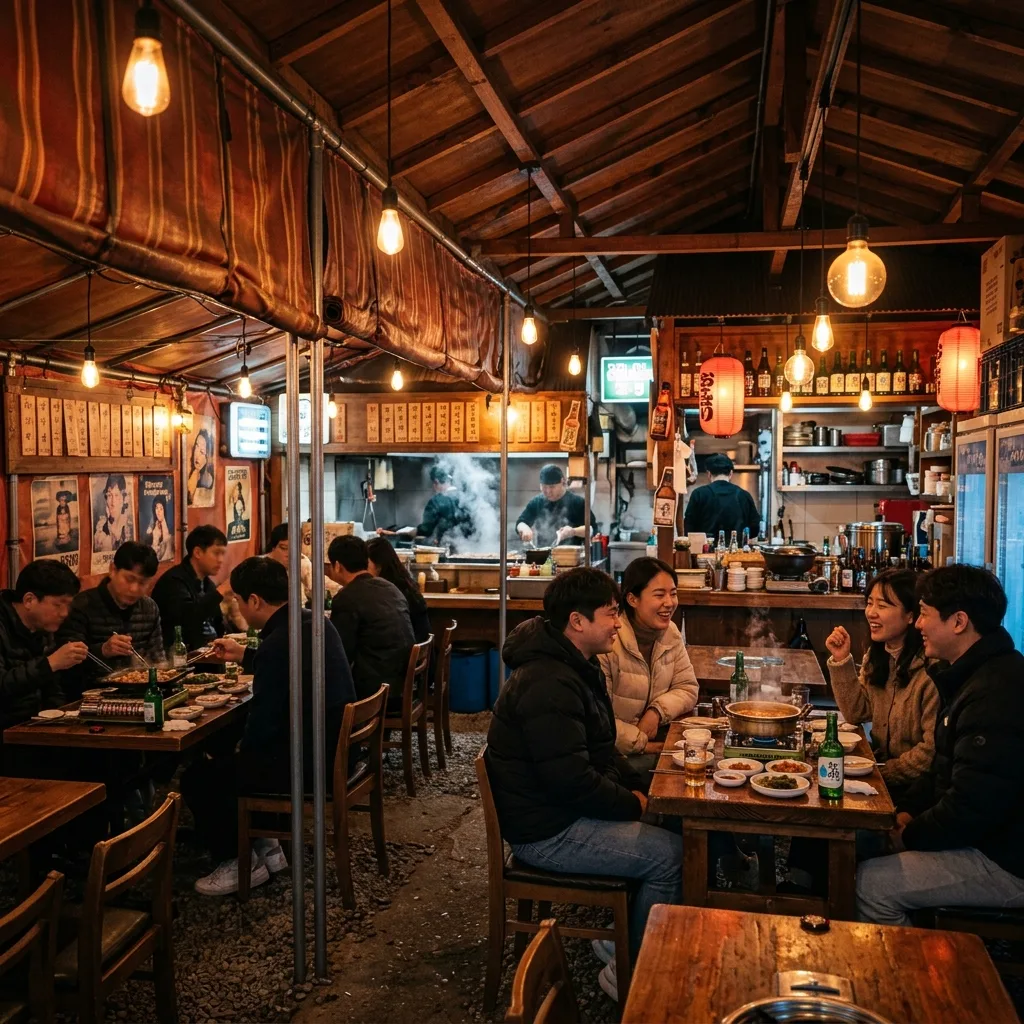
Itaewon Class (2020) is one of the defining dramas of the decade — a revenge story wrapped around a bar-restaurant called DanBam (단밤, meaning "sweet night"). Park Saeroyi's scrappy pocha in Itaewon became so culturally embedded that even viewers who hadn't seen the show recognized the aesthetic: warm Edison bulbs, a handwritten menu on a chalkboard, and the specific energy of a place built on stubborn dreams.
Seoulbam (서울밤) — The DanBam Location
The real filming location for DanBam is Seoulbam, a pojangmacha-style bar situated on the slopes of Itaewon near Noksapyeong Station (녹사평역). The address is in the Usadan-ro area (우사단로), just a short walk uphill from the main Itaewon strip.
What to expect:
Seoulbam isn't a museum — it's a working bar that happened to become famous. The exterior is almost unchanged from the drama's filming, which is exactly what fans come to see. The yellow signage, the narrow wooden tables set outside on good-weather days, and the backdrop of low-rise Itaewon hillside buildings all look exactly as they did on screen.
The menu centers on traditional pocha food: tteokbokki (rice cakes in spicy sauce), soondae (blood sausage), pajeon (scallion pancakes), and fried snacks. Pair these with a round of makgeolli or soju, and you have the DanBam experience at its most authentic.
When to visit: Evenings are the most atmospheric, when the string lights come on and the neighborhood fills with the gentle noise of nearby tables. Weekends can be crowded with fans, so weeknight visits often allow for more breathing room and better photos.
Getting there: Exit 2 from Noksapyeong Station (Line 6), then follow the signs for Usadan-ro. The walk takes about 10 minutes uphill — wear comfortable shoes.
The Finest Lounge — Cinematic Views, Dramatic Atmosphere
A short distance from Seoulbam, The Finest Lounge was used for several of the more upscale scenes in Itaewon Class, particularly those involving the Jangga Group antagonists. This rooftop bar overlooks Namsan Tower, and on a clear night, the view is genuinely cinematic.
The cocktail menu skews toward premium spirits and Korean makgeolli cocktails. While it's more expensive than the average Itaewon bar, the combination of the drama pedigree and the actual view justifies the price for fans. Reservations are advisable on weekends.
Experiencing Itaewon as a Drama Fan
Itaewon itself has undergone significant changes since the filming of Itaewon Class, and a visit today comes with some context to understand. The neighborhood has long been Seoul's most internationally diverse district — home to embassies, halal restaurants, LGBTQ+ venues, and an eclectic mix of bars and boutiques.
The drama's portrayal of Itaewon as scrappy, soulful, and overlooked resonated with many longtime fans of the neighborhood. Wandering the side streets of Usadan-ro and Gyeongnidan-gil (경리단길) gives you a feel for the real Itaewon that the production team clearly fell in love with. For a broader look at where to eat and drink in the area, the best K-drama filming locations in Seoul guide maps out the full Itaewon landscape.
More Than Just Kimbap: Suwon's Hidden Star
Extraordinary Attorney Woo (2022) became a global phenomenon in ways few dramas achieve. The story of Woo Young-woo, a brilliant autistic attorney who loves whales and kimbap with an almost spiritual devotion, turned its food references into cultural touchstones. But the restaurant most closely associated with the show isn't a kimbap joint — it's a Japanese restaurant in Suwon.
Kajaguruma (까자구루마) — Suwon's Most Famous Table
Kajaguruma is the Japanese restaurant in Suwon where Woo Young-woo and her father regularly dined in the drama. The restaurant's name means something like "little cart" in a blend of Korean and Japanese, and the place is known for its handmade udon noodles and tonkatsu (breaded pork cutlet).
The filming location is in Suwon's older commercial district, easily accessible from Suwon Station on Line 1 or the KTX. The exterior features the now-iconic yellow sign that fans recognize from the show, and the storefront has changed very little since production.
What to order: The restaurant's udon and tonkatsu sets are the most-photographed items. The thick, chewy house-made noodles in a clear dashi broth are about as close as you'll get to traditional Japanese comfort food outside of Japan, and at Korean prices — typically 12,000–15,000 won per main dish.
Photo spots: The yellow exterior sign is the primary fan photo target. The restaurant staff are generally accommodating of photo requests before and after service, but avoid photographing while other diners are eating. The interior is small, so waiting times on weekends can stretch to 30–45 minutes.
When to visit: Weekday lunch (11:30 AM – 1:30 PM) is quieter and often has shorter waits. The restaurant follows standard Korean restaurant hours and closes on some public holidays — check the Naver Maps listing before traveling from Seoul, as the trip takes around 40 minutes by express train.
The Kimbap Connection
While Kajaguruma is the drama's most famous real location, the kimbap obsession of Woo Young-woo has inspired something broader: a kind of renewed appreciation for Korean convenience food. Several kimbap specialty restaurants in Seoul have leaned into the drama's popularity, and the character's specific preferences — mayo, pickled radish, sesame — are now part of fan discourse in ways that feel genuinely charming.
If you want to honor the spirit of the drama rather than track down a specific location, buying kimbap from a 김밥천국 (Kimbap Cheonguk) — the ubiquitous Korean fast-casual chain — and eating it somewhere scenic is its own kind of pilgrimage.
The Unavoidable Icon: The Subway Phenomenon
No guide to K-drama restaurants would be complete without addressing the elephant in the room: Subway. The American sandwich chain appears with almost supernatural frequency in Korean dramas, and its role in the genre has evolved from simple product placement into something approaching cultural mythology.
Why Subway Is Everywhere in K-Dramas
The answer is simple: PPL, or product placement (간접광고, ganjeopgwanggo). Korean broadcasters rely heavily on in-drama advertising, and Subway has been one of the most consistent and visible investors. Viewers have catalogued Subway appearances across dozens of shows — characters in Goblin, While You Were Sleeping, Crash Landing on You, and many others have all conspicuously enjoyed foot-long sandwiches at pivotal moments.
The result is a kind of meta-appreciation among fans. Noticing the Subway placement, discussing it on fan forums, and then going to a Korean Subway as a knowing wink to the genre has become its own tradition.
Visiting a Korean Subway
Korean Subway locations are nearly identical to their global counterparts, but there are some local variations worth knowing. The menu includes a few Korea-specific options — the teriyaki chicken sub and certain seasonal sauces appear more prominently in Korean locations. Some stores are designed with more polished interiors than the average Western Subway, reflecting the premium coffee-shop aesthetic that Korean fast food often adopts.
There's nothing sacred about which Subway to visit — part of the charm is that any location works. But if you want the most drama-adjacent experience, find a Subway in Mapo, Hongdae, or Apgujeong, neighborhoods that appear frequently as drama backdrops. Sit down, eat your sandwich slowly, and try to look as meaningful as the characters always manage to.
Foodie Photography and Etiquette
Documenting your drama dining experience is part of the fun, but a few etiquette considerations keep the experience positive for everyone — especially the restaurant owners who have often been more than generous in welcoming fans.
Capturing Your Meal Without Disrupting the Business
Ask before you photograph the exterior with staff in frame. Most drama restaurant staff are gracious about fan visits, but asking permission before pointing a camera at people is basic courtesy. A quick "사진 찍어도 돼요?" (Can I take a photo?) goes a long way.
Sit down and order something. Restaurants that became famous through dramas often deal with tourists who walk in, take photos, and leave without purchasing anything. This erodes the goodwill that makes these visits possible. Always order at least a drink or snack.
Avoid peak meal times for photography. The best light for interior photos is usually mid-afternoon, between the lunch and dinner rushes (roughly 2–5 PM). This is also when staff have the most patience for fans lingering longer than typical diners.
Use portrait mode thoughtfully. The goal is a memory, not a portfolio shoot. A quick set of photos — food, exterior, maybe a selfie — takes five minutes and leaves the atmosphere intact for everyone else.
Using Naver Maps for Sacred Site Pilgrimage (성지순례)
Naver Maps is vastly more useful than Google Maps for this kind of travel in Korea. The platform has integrated drama and entertainment location tags into its review system, and user-generated "places" often include specific notes like "DanBam filming location" or "used in Episode 4."
To search effectively:
- Download Naver Maps (available in Korean App Store/Play Store with English UI option)
- Search the drama name in Korean (이태원 클라쓰, 이상한 변호사 우영우, etc.)
- Look for the "장소" (places) tab, which often surfaces fan-tagged locations
- Check recent reviews for current operating status — drama popularity cycles mean some locations become more or less accessible over time
For a structured approach to planning the full fan pilgrimage, comparing guided K-drama tours versus DIY travel covers the tradeoffs in detail. If you're visiting multiple drama sites in a single trip, a guided tour often proves more efficient than self-navigating; if food locations are your primary focus, DIY gives you the flexibility to linger.
Expanding Your Drama Dining Map
The restaurants covered here are the most famous, but Korea's drama filming location ecosystem extends far beyond this list. A few additional spots worth knowing:
Goblin filming locations in Gangnam and Incheon: Goblin (2016) filmed several pivotal scenes at restaurants and cafes in the Bukchon Hanok Village and Incheon's Chinatown. The Quebec-style French cafe scenes were filmed in Incheon's cafe district, which is worth visiting for its architectural contrast alone.
My Mister (나의 아저씨) — the pojangmacha circuit: This 2018 drama is beloved for its atmospheric street food scenes. The pojangmacha (outdoor tent bar) culture it depicts is best experienced in real life in the Jongno or Mapo areas on a late weeknight — no specific filming location required, just the ambiance.
Crash Landing on You — the North Korean village scenes: The North Korean village sequences were filmed in a Suwon folk village and at various locations in South Korea's countryside. While these aren't restaurants, the nearby cafes and rest stops have become part of the fan circuit and often have their own drama connections.
The soul food arc of Reply 1988: Set in Ssangmun-dong in northern Seoul, this drama's neighborhood food culture is best experienced by actually visiting Ssangmun-dong. Several of the local restaurants in the area embrace the drama's nostalgia angle, and the neighborhood itself has changed less than most Seoul districts.
Practical Travel Tips for Drama Food Tourism
Transportation: Seoul's subway system reaches most drama neighborhoods cleanly. Itaewon is on Line 6 (Noksapyeong or Itaewon Station), Suwon is on Line 1 (express trains from Seoul Station take about 40 minutes), and Mapo/Hongdae locations are served by Line 2 and Line 6.
Budget: Most drama filming locations are working-class or casual restaurants — DanBam types rather than fine dining. Budget 15,000–30,000 won per person for a full meal with drinks. Kajaguruma in Suwon runs slightly higher at 15,000–20,000 won per main dish.
Language: At smaller locations like pojangmacha and neighborhood restaurants, staff may not speak English. Having the Korean name of your destination ready on your phone (for showing to taxi drivers or asking locals) prevents confusion. Naver Papago handles food menus well for on-the-spot translation.
Seasonality: Evening visits in fall and spring (April–May and October–November) offer the best conditions for atmospheric outdoor photography. Summer evenings are lively but humid; winter visits to outdoor pocha spots can be magical with the right outerwear.
Going deeper on the food culture: Seoul's broader food scene offers remarkable depth beyond the drama trail. For context on the street food that forms the backdrop of so many K-drama scenes, Seoul's top street food guide covers the essential dishes and where to find the best versions across the city.
Conclusion: Why These Visits Matter
K-drama restaurant tourism is sometimes dismissed as shallow fan behavior — as if seeking out a filming location is less legitimate than visiting a historical site or a natural landmark. But there's something genuinely meaningful happening in these visits.
When you sit at the table where Park Saeroyi built his comeback, or order udon at the restaurant where Woo Young-woo found comfort, you're participating in a cultural moment that millions of people around the world have already shared. These locations become shorthand for experiences that transcend language — the drama's emotional core is present in the physical space in a way that's difficult to explain but easy to feel.
Korea's restaurants and bars are also, simply, excellent — the food at DanBam's filming location would be worth visiting regardless of the drama connection. The drama history is an added layer on top of experiences that stand on their own.
That combination — genuinely good food, accessible locations, and the emotional resonance of a story you love — is what makes K-drama restaurant tourism one of the more rewarding niches in modern travel. Plan carefully, eat generously, and don't forget to look up from your phone long enough to actually be there.
Have you visited a K-drama filming location restaurant? Share your experience — whether it lived up to the screen or surprised you entirely.