Jinhae Cherry Blossom Festival: How to Beat the Crowds

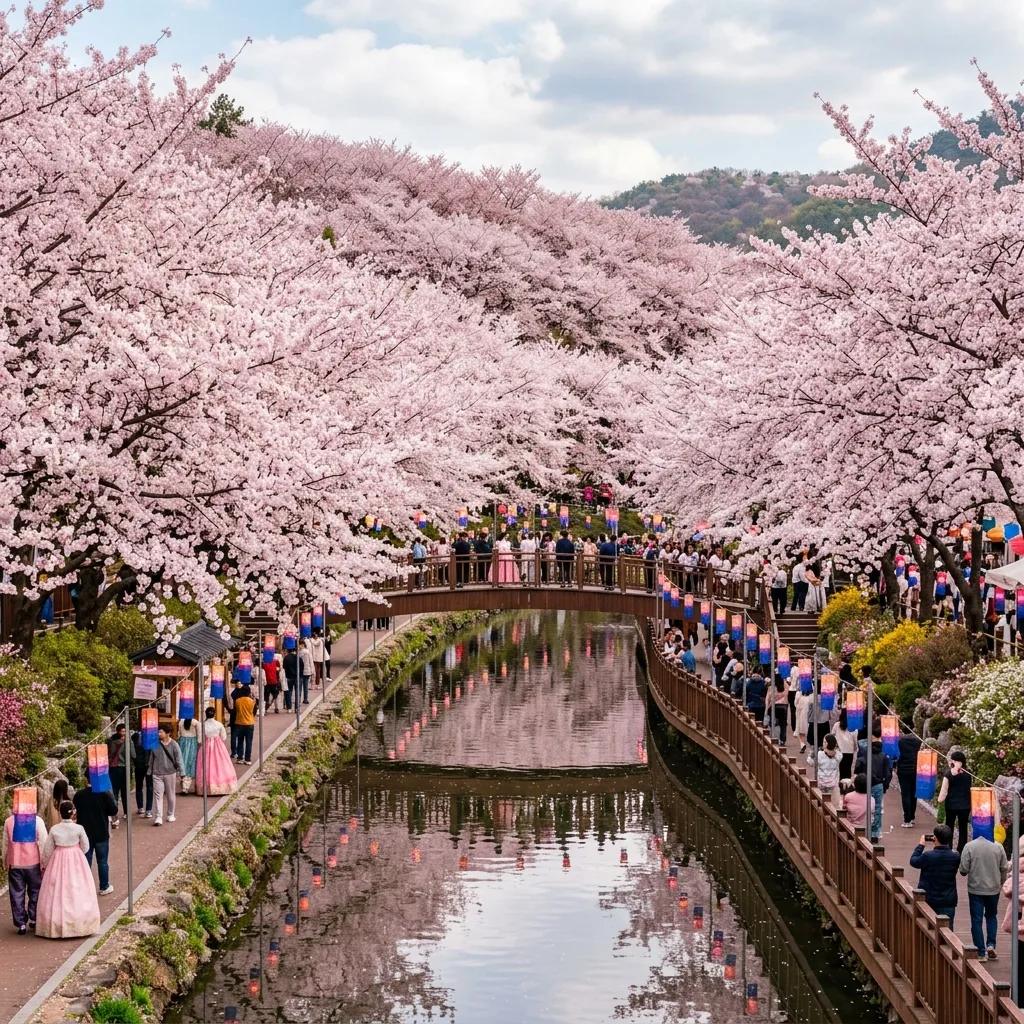
The air in Jinhae, South Korea, transforms each spring, painting the city in a breathtaking symphony of pink. As over 360,000 cherry trees burst into bloom, Jinhae becomes the undisputed "pink capital" of Korea, drawing millions to its annual Gunhangje Festival. But this isn't just any flower festival; it's a vibrant celebration steeped in naval heritage, honoring the revered Admiral Yi Sun-sin. While the spectacle is unforgettable, so too are the crowds. If you dream of wandering beneath a canopy of blossoms without battling elbow-to-elbow with fellow admirers, this guide is your essential blueprint for experiencing the Jinhae Cherry Blossom Festival 2025 like a seasoned local – serene, strategic, and spectacular.
🌸 Peak Bloom 2025: Dates & Logistics for the Jinhae Cherry Blossom Festival
The Jinhae Gunhangje Festival 2025 is officially scheduled from March 28 (Friday) to April 6 (Sunday). These dates typically align with the expected peak bloom of Jinhae's famous cherry blossoms, offering approximately ten days to immerse yourself in the pink wonderland. However, cherry blossom bloom can be fickle, shifting slightly with weather patterns, so it's always wise to monitor local forecasts closer to your travel dates.
To make the most of your Jinhae Cherry Blossom Festival experience in 2025, strategic planning is key, especially concerning travel and accommodations. The festival's primary dates run from March 28th to April 6th, encompassing two precious weekends where crowds surge. While it's impossible to avoid everyone, targeting weekday visits, particularly in the early mornings, offers a more serene experience. The festival is renowned for its stunning cherry blossom tunnels, vibrant military parades, and unique cultural events, all centered around the historical significance of Admiral Yi Sun-sin. For the first time in 57 years, the Ungdong Reservoir Cherry Blossom Colony will also be open to the public, providing a fresh perspective on Jinhae's floral splendor.
Getting There: Your Gateway to Jinhae
Jinhae is relatively well-connected, but its popularity during the festival means booking transport in advance is non-negotiable.
From Seoul:
- KTX (High-Speed Train): The fastest option is to take the KTX from Seoul Station to Changwonjungang Station. This journey typically takes around 3 hours. From Changwonjungang, you'll need to transfer to a local bus (approximately 40 minutes) or a taxi to reach Jinhae. Keep in mind that KTX tickets, especially for peak travel times, sell out rapidly.
- Express Bus: Direct express buses are available from Seoul Express Bus Terminal or Nambu Terminal directly to Jinhae Intercity Bus Terminal. The bus journey is longer, approximately 4.5 hours, but eliminates the need for transfers. This is often a more budget-friendly option, but like KTX, tickets will require advance booking, often weeks ahead of the festival.
From Busan:
- Intercity Bus: This is the most common and convenient way to reach Jinhae from Busan. Buses depart frequently (every 15-20 minutes) from Busan Sasang (Seobu) Bus Terminal directly to Jinhae. The ride is quick, usually around 1 hour.
- Day Tours: Many visitors opt for organized day tours from Busan. These shuttles often depart from central locations like Seomyeon or Busan Station and handle all transportation logistics, making it a hassle-free option, especially if you're not comfortable navigating local public transport systems in a foreign language.
Local Transport in Jinhae: During the festival, traffic congestion in Jinhae is notorious. Driving your own car is highly discouraged due to limited parking and extensive road closures or "bus only" lanes. The city wisely implements special shuttle buses that connect all the major cherry blossom viewing sites, such as Gyeonghwa Station and Yeojwacheon Stream. Walking is also a fantastic option, as many of the key attractions in the downtown area, like Jungwon Rotary and Yeojwacheon, are within comfortable walking distance of each other. Embrace the walk; it's the best way to fully soak in the atmosphere.
🏃 The Survival Plan: How to Beat the Crowds
Successfully navigating the Jinhae Cherry Blossom Festival requires a strategic approach to avoid the densest crowds. Here's your survival guide:
Iconic Spot 1: Yeojwa Stream (Romance Bridge)
Perhaps the most iconic and frequently photographed spot in Jinhae, Yeojwa Stream is famed for its "Romance Bridge" and the stunning cherry trees that arch overhead, forming a magical tunnel.
- The "Magic Hour" (7:00 AM): To truly experience the serene beauty of Yeojwa Stream without the throngs, aim to arrive as early as possible. By 7:00 AM, the soft morning light filters through the blossoms, creating perfect conditions for photography and peaceful strolls. You'll have a brief window before tour buses start arriving and the area fills up.
- Seeing the Night Illuminations: If early mornings aren't your forte, consider visiting in the evening. Yeojwa Stream is beautifully illuminated after dark, transforming into a romantic wonderland. While still popular, the evening crowd often differs from the daytime rush, and the atmosphere is entirely different. It's a fantastic alternative if you miss the morning's quietude.
Iconic Spot 2: Gyeonghwa Station (The Railway Line)
Another postcard-perfect location, Gyeonghwa Station features a disused railway track lined with magnificent cherry trees. Although trains no longer run regularly on this section, a stationary train is often placed on the tracks, providing a fantastic prop for photographers.
- Capturing the Perfect Train Shot: To get that coveted shot of the cherry blossoms framing the old train, patience and timing are crucial. Again, early mornings (before 8:00 AM) are your best bet. You might still find photographers setting up, but the sheer volume of people will be significantly lower.
- Walking the 1.5km Track at Off-Peak Hours: The entire stretch of cherry-lined track is about 1.5 kilometers. Walking it allows you to discover different angles and less crowded spots. Visit during lunch hours or later in the afternoon (after 4:00 PM) when some of the morning crowds have dispersed, or closer to sunset for a different lighting dynamic.
🎖️ Honor & Tradition: Military Parades & Shows
The Jinhae Gunhangje Festival is unique due to its strong ties to naval heritage and the commemoration of Admiral Yi Sun-sin. This means alongside the floral beauty, you'll witness impressive military displays.
The Military Band & Honor Guard Festival is a central event, scheduled from April 4 (Friday) to April 6 (Sunday), 2025. These performances showcase the precision and discipline of various branches of the Korean military, including the Army, Navy, Air Force, Marine Corps, and even the U.S. 8th Army Band.
A major highlight is the Black Eagles Air Show, performed by the Republic of Korea Air Force's aerobatic team. For 2025, the main air show is scheduled for April 5 (Saturday) at 2:00 PM (14:00), soaring above the Jinhae Public Stadium. This breathtaking display of aerial acrobatics is a must-see, but remember that air show schedules can be subject to change or cancellation due to weather conditions. Arrive early to secure a good viewing spot.
Accompanying these events are several parades:
- Patriotic Parade: Scheduled for April 5 and April 6 at 1:30 PM. This parade marches from Bukwon Rotary through Jungwon Rotary, culminating at the Jinhae Public Stadium just before the Black Eagles air show.
- Admiral Yi Sun-sin Victory Parade: Commemorating the naval hero, this parade takes place on April 4 at 3:00 PM, starting from Docheon Elementary School and proceeding to Jungwon Rotary.
Another distinctive feature of the festival is the temporary opening of the Korea Naval Academy. During the festival period, the public gains rare access to the academy grounds, where you can see a life-size replica of a Geobukseon (Turtle Ship) and explore various naval exhibits. This offers a fascinating glimpse into Korea's maritime history and military prowess.
🌆 Panoramic Views: Jaehwangsan Park
For a different perspective of Jinhae's cherry blossom splendor, head to Jaehwangsan Park. Perched on a hill, it offers unparalleled panoramic views of the entire city blanketed in pink.
To reach the summit, you have two options:
- The Monorail: A comfortable and scenic ascent. The monorail provides gentle, unhindered views as it glides up the hillside. Expect a nominal fee for a round trip (approximately 3,000 KRW, subject to slight variations). This is ideal for those with mobility concerns or who prefer a leisurely ride.
- The 365 Stairs: For the more adventurous, a climb of 365 steps leads you to the top. Each step represents a day of the year, making it a symbolic journey. While it's a workout, the reward is not just the view, but also the sense of accomplishment and perhaps finding some less crowded spots along the way.
From the top, you'll witness an awe-inspiring sight: a vast sea of cherry blossoms stretching to the horizon, punctuated by the city's landmarks and the sparkling waters of Jinhae Bay. It's a perfect spot for photography and simply taking in the grandeur of the festival.
🍱 Jinhae’s Spring Snacks
No festival experience is complete without indulging in local treats. Jinhae offers its own unique culinary delights that embrace the spirit of spring and the cherry blossom season.
- Cherry Blossom Bread (Beotkkot-ppang): This delicate pastry is a must-try. Shaped like a cherry blossom and often infused with subtle floral notes, it's a sweet and charming souvenir or snack. You'll find vendors selling it throughout the festival grounds.
- Local Street Specialties: Beyond the cherry blossom theme, the festival streets are a foodie's paradise. Explore stalls offering classic Korean street foods such as tteokbokki (spicy rice cakes), odeng (fish cakes on skewers), hotteok (sweet pancakes), and various fried delicacies. It's an excellent opportunity to savor authentic Korean flavors amidst the festive atmosphere. Look for vendors near Jungwon Rotary and along the main thoroughfares.
🏨 Where to Stay for the Jinhae Cherry Blossom Festival
Accommodation options within Jinhae itself are limited, and rooms sell out months in advance once festival dates are announced. Here are your three main strategies.
Stay in Jinhae (book immediately): A small selection of guesthouses and budget hotels operate within Jinhae. If you can secure a room here — ideally through Naver Hotel or Yeogi Eottae — do so the moment official festival dates are confirmed. Staying in Jinhae means you can access Yeojwa Stream at 6:30 AM before the day-trippers arrive, and you can linger at Gyeonghwa Station in the late evening once the crowds thin out. Rates during the festival period typically run ₩80,000–₩150,000 per night for a standard room.
Stay in Changwon: The larger neighboring city of Changwon, about 20–30 minutes from central Jinhae by bus, offers a much wider selection of hotels at competitive prices, including business hotels and branded chains near Changwon City Hall. This is the most practical base for most visitors. From Changwon, festival shuttle buses and local buses run frequently throughout the day.
Stay in Busan: If you're combining Jinhae with broader Gyeongsang Province travel, Busan is a comfortable base roughly 60–90 minutes away by intercity bus. Busan's accommodation is plentiful and competitively priced year-round. The trade-off is the commute: departing Busan by 7:00 AM to reach Yeojwa Stream for the morning's quiet hour is entirely feasible but demands early discipline.
📸 Photography Tips for the Jinhae Festival
Shoot in RAW and Embrace Overcast Light
Cherry blossoms photograph beautifully under the soft, diffused light of a lightly overcast day. Harsh direct sunlight bleaches the delicate pink tones and creates distracting shadows. If you are shooting with a mirrorless or DSLR, capture in RAW format to retain the tonal range of the petals in post-processing. A circular polarizer filter reduces glare on wet petals after rain — and Jinhae in late March frequently delivers brief showers.
Use a Telephoto Lens at Gyeonghwa Station
The stationary train at Gyeonghwa Station is best captured with a moderate telephoto lens (85–135mm) to compress the cherry tunnel and draw the blossoms closer to the subject. Wide-angle lenses tend to exaggerate the empty space around the train and diminish the canopy effect. Arrive well before 8:00 AM and set up on the far end of the platform for the most striking composition.
Drones Are Restricted
Jinhae is situated within the Korea Naval District, which imposes strict no-fly zones across much of the city, particularly around the naval base and Korea Naval Academy. Do not attempt to fly a drone without prior authorization from the Korea Civil Aviation Safety Authority (CASA). Penalties for unauthorized drone operation in restricted military zones are severe. For aerial perspectives, Jaehwangsan Park's summit offers the best elevated viewpoint without any restrictions.
Evening Illuminations Are Underrated
Most visitors focus on daytime visits, but the festival's evening illuminations along Yeojwa Stream and Jungwon Rotary transform the landscape entirely. Pink and white lights reflect off the water beneath the blossoms, creating conditions ideal for long-exposure photography. Bring a compact tripod or gorilla pod and experiment with shutter speeds of 1–4 seconds to render the water as a smooth mirror.
Packing Checklist for the Festival
The Jinhae Cherry Blossom Festival spans ten days that straddle late March and early April — a period when Korean weather can shift sharply between mild afternoons and cold evenings. A light down jacket or fleece layer is essential, particularly for early-morning visits to Yeojwa Stream when temperatures can sit close to 8–10°C before 9:00 AM. Comfortable walking shoes are non-negotiable; the festival route from Gyeonghwa Station to Yeojwa Stream and up to Jaehwangsan Park involves several kilometres of walking over mixed terrain including stone paths and hill stairs. A portable battery pack keeps your phone running through a full day of navigation and photography. Cash remains useful for street food vendors and the monorail at Jaehwangsan, though most shops in the festival area accept card payments. Arriving with a confirmed accommodation reservation and a printed or downloaded copy of the shuttle bus timetable will save significant stress on peak weekend days when mobile networks in Jinhae can slow under the load of thousands of simultaneous visitors.
Accessibility Notes
The Jinhae Gunhangje Festival is largely walkable for visitors with average mobility, but several key areas involve uneven terrain. Yeojwa Stream and Jungwon Rotary are flat and accessible. Gyeonghwa Station involves minor inclines along the track. Jaehwangsan Park's 365 stairs are steep and may not be suitable for visitors with limited mobility; the monorail is the recommended alternative and is fully accessible. Festival shuttle buses are generally low-floor vehicles, but confirming accessibility features in advance with the Jinhae City tourism office is advisable for wheelchair users.
Conclusion
The Jinhae Cherry Blossom Festival is more than just a seasonal event; it's a vibrant cultural experience that combines natural beauty with deep historical pride. While the crowds are a testament to its immense popularity, with a bit of strategic planning – focusing on early mornings, utilizing public transport, and knowing the schedules of key events – you can truly beat the rush and capture the magic of Jinhae's pink embrace. The Jinhae Gunhangje Festival 2025, with its expanded access to Ungdong Reservoir and the thrilling Black Eagles air show, promises an unforgettable journey. So, mark your calendars for March 28 – April 6, 2025, and start planning your escape to Korea's most enchanting spring spectacle. Your serene cherry blossom adventure awaits!
The Ultimate 10-Day South Korea Itinerary for First-Timers Mastering the T-Money Card guide Exploring Busan: A Complete Guide to South Korea's Coastal Gem Seoul Travel Guide