Beyond the Layover: A Day Trip Guide to Incheon

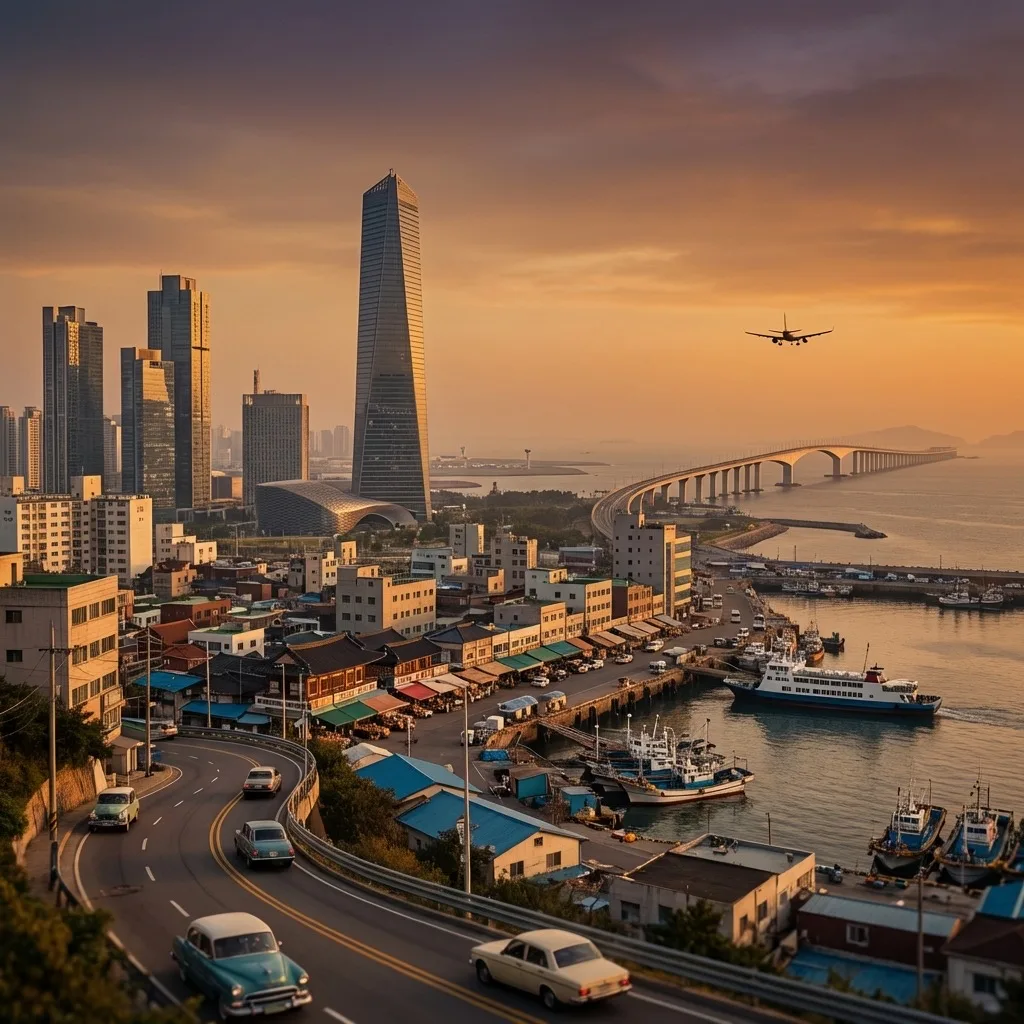
Most travelers treat Incheon as a waiting room — the place you sit between your flight and your Seoul hotel. That is a significant miscalculation. Incheon is a city of extraordinary contrasts: one of the most ambitious planned urban districts ever built on reclaimed land, directly adjacent to a 19th-century port district where the alleyways still smell of the black bean noodles invented here over a century ago. If you have six hours or more between flights, or if you are looking for a day trip that feels nothing like Seoul, Incheon will surprise you every time.
What Makes Incheon Worth Your Time
Incheon (인천) is South Korea's third-largest city by population, with approximately 3 million residents, and it functions as the country's primary maritime and air gateway. But beneath this logistical identity is a city with a genuinely compelling historical layering. The Open Port District (개항장) around Incheon Station preserves the physical legacy of Korea's first forced opening to foreign trade in 1883, when Japanese, Chinese, and Western trading companies established concessions that permanently altered the city's character. Less than 20 kilometers away, Songdo International Business District — built entirely on land reclaimed from the Yellow Sea between 2003 and the present — represents the opposite temporal extreme: an urban laboratory where smart city technology, planned green spaces, and architectural ambition have produced a district with no historical precedent in Korea.
The distance between these two zones is about 30 minutes by subway. Visiting both in a single day gives you something you cannot find anywhere else: 150 years of Korean urban development compressed into a morning and an afternoon.
Getting from Incheon International Airport to central Incheon is straightforward. The AREX Airport Railroad connects Incheon Airport to Incheon Station (the historic downtown) in approximately 40 minutes, with a transfer at Gyeyang Station onto Metro Line 1. Alternatively, a taxi from the airport to Chinatown runs approximately 20,000 to 25,000 KRW and takes 25 to 35 minutes depending on traffic. For full logistics on navigating Incheon Airport upon arrival, including transport options to Seoul, see the Incheon Airport arrival guide.
Songdo International Business District: The City That Planned Everything
Songdo IBD (송도국제도시) is perhaps the most ambitious urban development project in modern Korean history. Built on 600 hectares of land reclaimed from the Yellow Sea, the district was designed from scratch as a model of 21st-century urban planning: fiber-optic connectivity throughout, pneumatic underground waste disposal eliminating garbage trucks entirely, sensor-monitored water and energy systems, and 40% of the total land area dedicated to parks and waterways.
The result is a city that looks unlike anywhere else in Korea. Wide, clean boulevards lined with contemporary architecture, a central park modeled explicitly on New York's Central Park, and a skyline of glass towers that lights up dramatically after dark. Depending on your aesthetic preferences, Songdo reads as either a thrilling vision of urban futures or as slightly uncanny in its newness. Either way, it is worth seeing.
Songdo Central Park
The organizing green spine of the district, Songdo Central Park (센트럴파크) stretches approximately 1.8 kilometers along a seawater canal that connects directly to the Yellow Sea. The water in the canal and lake system is real seawater, maintained at controlled salinity, which gives it an unusual clarity and a faintly marine quality on windy days.
The park is best enjoyed on foot or by rental bicycle, with the circuit around the main lake taking about 45 minutes at a comfortable pace. Rental bikes are available at multiple docking stations throughout the park for around 3,000 KRW per hour, and electric personal mobility devices (scooters, one-wheel devices) are available through Kakao T Bike and similar apps.
The signature Songdo activity is renting a Moon Boat — a crescent-shaped electric pleasure boat illuminated with LED lighting — from the boat rental dock near the central bridge. A 30-minute boat rental costs approximately 15,000 to 20,000 KRW for a boat holding up to four people. After dark, with the towers reflected in the seawater and the moon boat's blue lights cutting through the reflection, the effect is deeply photogenic and genuinely pleasant.
The park's surrounding infrastructure is excellent: multiple cafes and restaurants with outdoor seating directly on the waterfront, clean public restroom facilities, and a well-maintained promenade that is busy with joggers and dog-walkers from early morning until well after midnight.
G-Tower Observatory: Free Views Over the Incheon Bridge
The G-Tower (G타워) on the northern edge of Songdo is a 33-floor mixed-use commercial tower that houses the district's observation deck — and the admission is free. Elevators rise to the 33rd floor, where floor-to-ceiling windows provide panoramic views north over the Incheon Free Economic Zone, west over the Yellow Sea and toward the Incheon Bridge (a 21.4-kilometer cable-stayed bridge that connects Incheon to the airport island of Yeongjong), and south over the broader Songdo district.
On clear days, the Incheon Bridge visible from G-Tower is genuinely impressive — its full length is difficult to comprehend from the ground, but from above, the scale becomes apparent. Entry is free; the building is open Monday through Friday during business hours and weekends until early evening.
Tri-Bowl Cultural Space
Near the central park waterfront, the Tri-Bowl (트라이보울) is an architectural landmark in the form of three interlocking bowl-shaped structures half-submerged into the landscape. Designed by the architectural firm Unsangdong, it serves as a cultural performance venue, exhibition space, and general public gathering point. The unusual form is best photographed from the elevated walkway that crosses the adjacent canal. Free to enter and explore.
Incheon Chinatown and the Open Port District
The contrast between Songdo and Incheon's historic downtown is jarring and deliberate. Take the Metro to Incheon Station (인천역, Line 1, the terminus), step outside, and you step into an entirely different temporal register.
Incheon Chinatown: Birthplace of Jajangmyeon
Incheon Chinatown (인천 차이나타운) is the oldest Chinese settlement in Korea and one of the few surviving Chinatowns in the country. It formed around 1884, one year after Korea opened its ports to international trade, when Chinese merchants established a concession district adjacent to the newly built Japanese concession. Today the district covers several city blocks centered on a red ceremonial gate, with restaurants, bakeries, and shops lining steep uphill alleys.
The definitive Chinatown experience is jajangmyeon (자장면) — thick wheat noodles in a glossy black bean paste sauce made with pork and onion. This dish was invented or substantially adapted in Incheon Chinatown, first served to Chinese laborers and subsequently spreading throughout Korea to become one of the country's most beloved comfort foods. The Incheon version is richer and smokier than what you find at Chinese-Korean restaurants in Seoul, because many of the district's restaurants still make their black bean paste in-house using traditional fermentation methods.
Gonghwachun (공화춘), the most famous jajangmyeon restaurant in Korea, is now a museum (the Jajangmyeon Museum, 자장면 박물관) documenting the history of the dish and of Chinatown itself. Entry costs 1,000 KRW and includes some genuinely interesting exhibits about the dish's evolution and cultural significance. For actual eating, any of the restaurants on the main Chinatown street serves the dish, typically for 7,000 to 9,000 KRW per bowl.
A word of advice: tangsuyuk (탕수육, the Korean version of sweet-and-sour pork) served alongside jajangmyeon is the standard Chinatown lunch order. Order both and you have completed the required Chinatown meal.
Other Chinatown food worth noting: hong-dubyeong (홍두병, a red bean bubble cake sold from street stalls), steamed buns filled with various savory and sweet ingredients, and the distinctive sesame candy that has been sold here for decades.
The Open Port District (Gaehang-jang)
Immediately adjacent to Chinatown, the Open Port District (개항장) preserves the physical remains of Incheon's 1883 opening to international trade. The neighborhood is walkable in about two hours and has a concentration of well-preserved late 19th and early 20th century buildings — Japanese colonial-era banks, the former Chinese consulate, a customs house, and multiple wooden-frame commercial buildings that have been converted into cafes, galleries, and small museums.
The most significant buildings:
Incheon Open Port Museum (인천개항장박물관): Housed in the former First Bank of Japan building (1883), the museum documents Incheon's role in Korea's forced opening to international trade and the subsequent Japanese colonial period. The building itself is the exhibit — its granite facade, cast-iron columns, and preserved banking hall are more atmospheric than the contents. Entry costs 500 KRW.
Former Japanese Concession Alleyways: The western side of the Open Port District preserves a grid of wooden merchant buildings from the Japanese concession period. These have largely been converted into cafes and craft shops, but the architectural bones — wooden window frames, recessed entranceways, overhanging second floors — are intact. Walking through these alleys while drinking a coffee feels like a time slip.
Modern Architecture District Murals: The walls between buildings throughout the district are covered with murals documenting Incheon's history — the arrival of the first telegraph line, the early steamship trade, scenes from the Korean War's Incheon Landing. These are less formal than official historical sites but provide a useful narrative framework for the neighborhood.
Wolmido Island: Retro Boardwalk and West Sea Sunsets
A 15-minute bus ride from Chinatown (Bus 2, from Incheon Station), Wolmido Island (월미도) is a small peninsula connected to the mainland that functions as Incheon's traditional seaside amusement district. The scale is modest compared to theme parks, but the atmosphere is uniquely Korean — a boardwalk lined with carnival games, seafood restaurants serving raw crabs and clams by the bucket, and the unmistakable smell of the Yellow Sea mixing with fried food.
Disco Pang Pang: A Korean Rite of Passage
Disco Pang Pang (디스코 팡팡) is a Wolmido institution and one of the most genuinely Korean experiences you can have in the greater Seoul area. The ride itself is simple: a large circular rotating platform with a ring of curved sofa seats. As the platform spins and tilts, a DJ operating from a booth in the center plays music and issues a continuous stream of cheerful commentary and escalating challenges to the riders. The objective, apparently, is to remain seated on the sofa without being flung sideways by centrifugal force while the DJ mocks your struggle through a microphone.
Korean teenagers and young adults treat Disco Pang Pang as a social ritual. Foreign visitors who participate — and who respond to the DJ's banter with whatever approximation of Korean they can manage — are typically greeted with enthusiasm and genuine warmth. The ride costs approximately 3,000 to 5,000 KRW per ride. There are usually lines on weekends.
Wolmido Sunset
The western edge of Wolmido faces the Yellow Sea, and the sunsets here are legitimately spectacular. The Yellow Sea's shallow waters and high silt content turn the sky and water shades of orange, rose, and deep purple that you rarely see on the eastern coast. The boardwalk fills with couples and families from around 5 p.m. onward in the months when sunset is photogenic (September through November are the most dramatic). The combination of the sunset light, the old amusement rides, and the seafood restaurants gives Wolmido a slightly melancholy retro atmosphere that is nothing like Songdo but equally worth experiencing.
Wolmido Seafood
The seafood restaurants along the Wolmido strip serve live shellfish and crab at prices competitive with Seoul markets. A plate of raw clams (bajirak, 바지락) costs approximately 10,000 to 15,000 KRW. Live Dungeness-style crab (kkotge, 꽃게) sold by weight and steamed or made into spicy tang runs 15,000 to 25,000 KRW per portion. The informal restaurants directly on the waterfront are typically fresher and less tourist-oriented than the ones farther back from the water.
Paradise City Cimer Spa: The Airport Luxury Option
If you have a layover of four to six hours and your priority is restoration rather than sightseeing, Paradise City Cimer Spa (파라다이스시티 씨메르) is among the best airport spa facilities in the world. Located in the Paradise City resort complex directly adjacent to Incheon International Airport Terminal 1, with a free shuttle running continuously every 10 minutes, it takes approximately 5 minutes to reach from the terminal.
Cimer is a large-format wellness facility spanning multiple floors. The concept fuses European thermal spa tradition with Korean jjimjilbang culture: there are hot and cold plunge pools, large communal mineral bath pools maintained at different temperatures, dedicated dry sauna caves each with a different style (crystal, salt cave, charcoal), a full steam room complex, and a rooftop infinity pool that looks directly out over the runway approach path. Watching wide-body aircraft descend through low cloud from an infinity pool is a specific experience available at very few places on earth.
Day passes run approximately 45,000 to 60,000 KRW depending on the day and package. Towels, robes, and slippers are included. The facility has restaurants and cafe spaces inside, and a separate sleeping lounge with reclining capsule chairs if you need sleep more than bathing. It is genuinely worth the cost and the brief commute.
Incheon Practical Information
Getting Around
The Metro system (Line 1, Incheon Metro Lines 1 and 2) covers the major tourist areas. The T-Money card loaded at any convenience store or metro station works on all Incheon transit. For moving between Chinatown, Wolmido, and the central areas, buses 2, 23, and 24 are the key routes.
Taxis are abundant and affordable. A journey between Chinatown and Songdo by taxi costs approximately 15,000 to 20,000 KRW. Use Kakao T for reliable taxi dispatch, particularly useful when you need a taxi from a non-central location.
Best Neighborhoods Beyond the Main Sites
The Bupyeong district (부평) in eastern Incheon has a large underground shopping complex and active street food scene worth exploring for an hour. The Sinpo International Market (신포국제시장) near Chinatown is a covered traditional market famous for dakgangjeong (crispy sweet-spicy fried chicken pieces) from Sinpo Original Dakgangjeong, a chain that claims to have invented the style.
Timing Your Visit
Chinatown is busiest on weekends but most restaurants are open seven days. Wolmido is most enjoyable in late afternoon and evening; mornings are quiet and the seafood restaurants are less fresh. Songdo is best visited on weekday afternoons when the business district is active and the park is less crowded with weekend leisure visitors.
Food and Budget Summary
| Location | Must-Try | Price Range |
|---|---|---|
| Chinatown | Jajangmyeon + tangsuyuk | 15,000 to 20,000 KRW |
| Sinpo Market | Dakgangjeong fried chicken | 10,000 to 15,000 KRW |
| Wolmido | Raw clams, steamed crab | 10,000 to 25,000 KRW |
| Songdo waterfront | Cafe dining, convenience food | 5,000 to 15,000 KRW |
| Paradise City Cimer | Full spa access | 45,000 to 60,000 KRW |
A Full Day in Incheon: Suggested Itinerary
Option A: History + Modernity
9:00 a.m. — Metro to Incheon Station. Walk to Chinatown. Jajangmyeon breakfast or early lunch at a Chinatown restaurant.
11:00 a.m. — Explore the Open Port District on foot. Visit the Incheon Open Port Museum. Walk the Japanese concession alleyways and browse the gallery-cafes.
1:00 p.m. — Bus 2 to Wolmido. Walk the boardwalk. Brave the Disco Pang Pang. Seafood at a waterfront restaurant.
3:30 p.m. — Taxi to Songdo Central Park (approximately 15,000 KRW). Walk the park circuit. G-Tower free observation deck.
5:30 p.m. — Moon Boat on the Songdo canal. Dinner at one of the waterfront restaurants.
8:00 p.m. — Metro back toward the airport or Seoul.
Option B: Layover Relaxation
Upon arrival at ICN — Free shuttle to Paradise City Cimer. 4-hour spa pass. Lunch or dinner inside the resort complex. Return shuttle to airport with time to clear security.
Incheon is far more than a transit hub; it is a gateway where Korea’s past and futuristic future collide. From the traditional flavors of Chinatown to the coastal serenity of Wolmido, the city offers a perfect start or end to any Korean adventure. For a seamless transition from the terminal, see our Incheon Airport arrival guide. Once you're ready to head further afield, learn the best way to book your KTX tickets or continue your journey down the coast with our complete guide to exploring Busan.