The Rise of Korean Cafe Culture: Why It’s So Unique
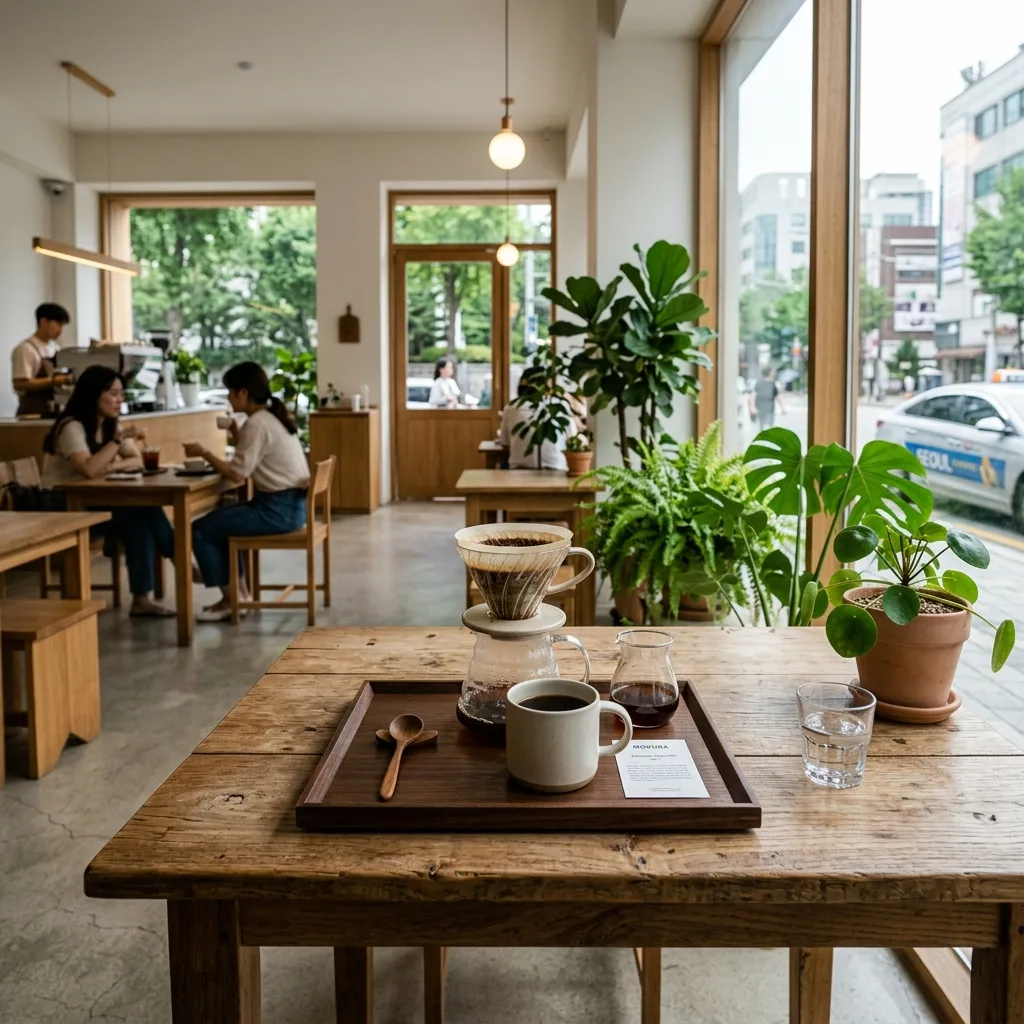
Walk into any neighborhood in Seoul at 2 p.m. on a Tuesday, and you'll find something that would surprise visitors from almost anywhere else in the world: cafes packed full of people — not rushing through a to-go cup, but settling in for hours, laptops open or just staring out the window, cradling a perfectly latte-arted flat white in a space that looks more like a contemporary art gallery than a coffee shop. Korean cafe culture isn't just a trend. It's a deeply rooted social institution, a design movement, and a mirror of modern Korean life all at once.
South Korea now has over 100,000 cafes — more per capita than almost any country on Earth. For a nation of 52 million people, that's an extraordinary number. What's driving it? The answer is more layered than caffeine addiction. It involves urban architecture, digital culture, generational identity, and the very human need for a place that feels like home — even when you're not at home.
The "Third Place" Concept: Korea's Living Room Problem
Korean cafes became the nation's de facto "third place" because dense city apartments and a culture of not hosting at home left millions without a social living room. The result: a country where one coffee purchase earns you an afternoon of unhurried, beautifully designed space — no pressure to leave.
In sociology, the "third place" refers to the social environment distinct from home (first place) and work (second place) — the neutral ground where people gather, linger, and belong. For most Koreans living in dense cities, that third place is unmistakably the cafe.
Seoul apartment sizes have long trended small. The average residential space in Korea's cities is among the most compressed in the developed world, with many young people living in one-room "gosiwons" or modest studio apartments barely large enough to swing open a laptop. Hosting friends at home is neither comfortable nor culturally expected in the way it might be in, say, a sprawling American suburb. So where do Koreans socialize, study, date, hold business meetings, or simply decompress? The cafe.
This explains one of the most distinctive features of Korean cafe culture: nobody rushes you out. Unlike the American coffeehouse model optimized for quick transactions, Korean cafes operate on an implicit understanding that you are welcome to stay. A single Americano purchased at 11 a.m. can — and often does — keep a table occupied until closing time. Cafe owners accept this as the cost of doing business, because foot traffic and atmosphere are the product. Customers lingering for hours in a beautiful space are, in effect, a form of marketing.
The phenomenon even has a name: 카공족 (kagong-jok), a portmanteau of "cafe" (카페), "study/work" (공부/공부하다), and "tribe" (족). The kagong-jok are the army of students and remote workers who treat cafes as de facto libraries and offices. Walk into a multi-story cafe in Hongdae or Sinchon near university campuses and you'll find entire floors operating in near-silence, everyone hunched over textbooks or glowing screens. This is not considered rude. It is, in fact, expected — and cafes in these neighborhoods often strategically design quiet upper floors and social lower floors to accommodate both modes.
Visual Storytelling: The Quest for the Perfect Shot
Korean cafe culture cannot be understood without understanding Instagram — or more broadly, the Korean cultural emphasis on aesthetic curation as a form of self-expression.
The interior design of a Korean cafe is not an afterthought. It is often the primary investment and the primary draw. Cafe owners hire architects and interior designers to create environments that are conceptually coherent, photogenic from every angle, and emotionally evocative. Themes range from brutalist concrete minimalism to lush greenhouse jungles, from vintage French boulangerie to Showa-era Tokyo nostalgia. In some neighborhoods, the aesthetic concept of a cafe is trademarked before the coffee recipe is finalized.
This has created what observers call the "cafe as destination" phenomenon. People don't stumble upon cafes; they research them on Naver Map, bookmark them on Instagram, and plan entire afternoons — or even entire trips — around visiting a specific space. The experience of being inside the cafe, photographing it, and sharing that content is as much the product as the drink itself.
Certain Seoul neighborhoods have become globally recognized as epicenters of this visual cafe culture. Seongsu-dong, the so-called 'Brooklyn of Seoul,' has transformed from an industrial leather-goods district into the city's most design-forward cafe corridor, with repurposed warehouses now housing roasters with ceiling-high steel beams and raw concrete walls. A single photo from Seongsu goes viral on Korean social media weekly.
Yeonnam-dong's indie cafe scene offers a softer, more literary aesthetic — cozy nooks, hand-painted murals, cafes wedged into converted hanok-adjacent townhouses along the Gyeongui Line Forest Park. Hannam-dong, meanwhile, has evolved into Seoul's high-end espresso belt, with sleek specialty roasters catering to Itaewon's design-conscious expat and fashion crowd.
The social media loop is self-reinforcing: beautiful cafe opens → influencer visits → content goes viral → tourists and locals flock → cafe becomes institution → inspires new cafes to out-design the previous ones. It's an aesthetic arms race that has raised the baseline quality of Korean cafe interiors to a level unmatched anywhere in the world.
What makes this cycle particularly powerful in Korea is the speed of information. Korean social platforms like KakaoTalk and Naver Blog propagate discoveries through tight friend networks almost instantly, and the culture of "맛집 (matjip)" exploration — obsessively seeking out the best, most authentic, most exciting versions of any food or drink experience — applies just as much to cafes as to restaurants. Finding a hidden gem cafe before it gets famous carries genuine social currency. This hunger for discovery keeps the market innovating at a pace that competitors in other countries struggle to match.
If you want a curated hit-list of where to take your best shots, Seoul's most Instagrammable cafes in 2026 span everything from Ghibli-inspired fairy-tale interiors to traditional hanok courtyards retrofitted with a third-wave espresso bar.
Innovation in a Cup: Trend-Driven Menus
Korean cafe menus are in a state of permanent, accelerating evolution. The country's coffee culture has a fascinating dual identity: one foot in the instant-coffee traditions of the 20th century, another in the hyper-sophisticated specialty roasting movement of the 21st.
Instant coffee (믹스 커피, mix coffee) — the powdered blend of coffee, creamer, and sugar dissolved in hot water — remains a beloved cultural artifact. You'll find it at rest stops, convenience stores, and grandparents' homes. It tastes like nostalgia. But it exists in a completely separate universe from the specialty cafe scene, which has embraced third-wave coffee culture with characteristic Korean intensity.
Korean baristas have won international championships. Domestic coffee companies source directly from Ethiopia, Panama, and Colombia. Single-origin pour-overs served on wooden trays with tasting notes written in calligraphy are not unusual. The price gap between a 1,000-won convenience store coffee and a 15,000-won specialty pourover reflects not snobbery but a genuinely bifurcated market, each serving a real need.
What Korean cafe culture uniquely contributes, however, is the speed and creativity of food-and-drink trend cycles. A new dessert or drink concept can go from unknown to everywhere in Seoul in under two weeks, then spread globally within a month. The pandemic-era Dalgona coffee — whipped instant coffee spooned over iced milk — is perhaps the most famous example: it originated as a nostalgic Korean street candy recreation, went viral on TikTok, and became an international sensation practically overnight, inspiring millions of home barista experiments.
Other trend cycles have been equally dramatic:
- Croffles (croissant waffles) — flaky, caramelized pastry hybrids pressed in waffle irons — swept Korean bakery cafes before spreading across Asia.
- Yuzu-ade and citrus tonic drinks became staples of every specialty menu within a single spring.
- Korean strawberry season (딸기 시즌) — roughly January through March — triggers a nationwide explosion of strawberry-themed lattes, cakes, and desserts that fills social media with red-and-white imagery.
- Bean-to-bar chocolate cafes have recently emerged, particularly in Seongsu, bringing artisanal chocolate culture into the cafe format.
What drives these cycles? A combination of highly active food bloggers, collaborative culture among cafe owners (who often share suppliers and trends rather than guarding them), and a consumer base that actively seeks novelty and is willing to line up for it.
Cafe Culture by Neighborhood
No two Seoul neighborhoods approach cafe culture the same way, and part of the pleasure of exploring the city is discovering these distinct local personalities.
Seongsu-dong: Industrial Soul
Seongsu-dong's transformation is one of the great urban stories of 21st-century Seoul. What was once the city's shoe-manufacturing district — full of leather workshops, small factories, and working-class history — has become its most design-forward neighborhood, with artisanal roasters occupying the bones of former warehouses.
The cafes here lean into their industrial context. Exposed brick, corrugated steel, raw concrete, and repurposed factory equipment are design vocabulary. Ceiling heights are generous. Natural light floods through skylights cut into former factory roofs. The coffee is serious — many of Seoul's best specialty roasters have flagships here — but so is the food, the architecture, and the crowd.
Seongsu appeals to architects, designers, photographers, and the Korean equivalent of the Brooklyn creative class. On weekends, queues outside the most popular spots can stretch around the block. The neighborhood's success has also spawned a wave of concept stores, pop-up boutiques, and gallery spaces that make a Seongsu afternoon feel like a curated cultural experience.
Yeonnam-dong: Indie Heart
Where Seongsu is sharp-edged and aspirational, Yeonnam-dong is softer and more literary. Tucked west of Hongdae near the Gyeongui Line Forest Park — a narrow greenway built on a former railway corridor — Yeonnam's cafes tend toward the cozy, the handcrafted, and the quietly eccentric.
You'll find cafes here decorated with hundreds of houseplants, others whose entire menu is handwritten in chalk calligraphy, others that specialize in single origin teas served in ceramic cups made by the owner. The vibe is bohemian in the original sense: places where artists and writers actually linger, not just pose.
The forest park itself has become an extension of the cafe district — a linear promenade where people walk between cafes, eat ice cream, read, and watch their dogs chase each other. It's one of the most pleasant afternoon itineraries in all of Seoul.
Hannam-dong: High-End Espresso Belt
Hannam-dong occupies a hillside between Itaewon and the Han River, and its cafe culture reflects its cosmopolitan, high-income character. Specialty roasters here focus on precision: dialed-in espresso, excellent milk technique, and meticulously sourced beans. Interiors are typically sleek and architectural — the kind of places that could double as showrooms for Scandinavian furniture.
Hannam's cafe scene also intersects with the international community. Many of Seoul's most acclaimed roasters — Blue Bottle, Fritz, Anthracite — have opened flagship or notable locations here, attracting both Korean coffee enthusiasts and expats who grew up with serious coffee culture elsewhere. It's the neighborhood to visit if you want to understand where Korean specialty coffee is heading.
Beyond Seoul: A Nationwide Phenomenon
It would be a mistake to treat Korean cafe culture as a Seoul-only phenomenon. Busan has its own distinctive cafe scene, particularly along Gwangalli Beach and in the Oncheoncheon area, where ocean-facing cafes serve specialty drinks to surfers and students alike. Jeonju, famous for its traditional hanok village, has developed a remarkable intersection of heritage architecture and specialty coffee, with cafes operating inside 100-year-old wooden buildings — you can drink a pour-over surrounded by curved roof tiles and paper-screen doors, the scent of cedarwood mixing with fresh espresso.
Jeju Island's cafe culture has exploded in recent years. The island's dramatic volcanic landscape — black lava stone walls, tangerine orchards, views of Hallasan mountain — has inspired a wave of destination cafes that draw visitors from the mainland specifically for the combination of scenery and excellent coffee. Some of Jeju's most celebrated cafes are architectural landmarks in their own right: low-slung glass pavilions set into hillsides, minimalist concrete boxes with panoramic ocean views, or traditional stone-walled farmhouses renovated into roasters. The island has become a template for what "nature-integrated cafe culture" can look like at its best.
Why Korean Cafe Culture Has Gone Global
Korean cultural exports — K-pop, K-drama, K-beauty — have primed global audiences to be interested in Korean aesthetics and lifestyle. But the cafe wave feels different: less mediated by celebrity, more grounded in actual daily life. When international visitors come to Seoul and experience what a properly designed, unhurried, aesthetically intentional cafe can feel like, many find that it recalibrates their expectations permanently.
Foreign visitors often remark that the Korean cafe experience makes them feel welcome in a way that transactional coffee culture elsewhere does not. There's no pressure to vacate your seat, no ambient guilt about nursing a single drink for two hours, no implicit hierarchy between the laptop worker and the couple on a date. Everyone has equal claim to the space, and the space is beautiful enough to deserve that time. This combination of openness and quality is rare — and deeply exportable.
The lessons of Korean cafe culture are being adopted, consciously or not, by cafe designers and operators worldwide:
- The importance of lingering — designing spaces that encourage extended stays rather than quick transactions
- Concept coherence — every visual element in alignment with a central aesthetic idea
- Menu as seasonal event — menus that change with the calendar and create anticipation
- Instagram as operational channel — treating social media documentation as a core part of the customer experience
Cities from New York to London to Singapore are opening cafes explicitly styled as "Korean-inspired" or managed by Korean expats. The Korean cafe aesthetic — clean, intentional, unhurried, beautiful — has become one of the most influential design movements in the global hospitality industry.
What's New in 2026: The B.E.Y.O.N.D Era
At the 2026 Seoul Cafe & Bakery Fair, industry leaders crystallized the year's defining direction under a single keyword: B.E.Y.O.N.D — cafes as resonance spaces rather than transaction points. The acronym frames six interlocking shifts reshaping how Korean cafes operate and feel:
- Better Community — cafes leaning into neighborhood identity; regulars bring their own bread baskets and treat the counter staff as extended family, creating a loyalty loop no loyalty-card app can replicate
- Original Local — sourcing interior materials, coffee beans, and seasonal ingredients from hyperlocal suppliers; a Jeju roaster serving only Jeju-grown green-tea lattes or a Jeonju cafe using locally milled rice flour in every pastry are the defining examples
- Nature Forward — eco-friendliness becoming the operational default rather than a marketing angle; reclaimed-wood furniture, lid-free cups, and composting stations visible to guests signal commitment rather than greenwashing
- Everyday Wellness — cafes now offer low-caffeine and caffeine-free herbal alternatives alongside espresso; some venues in Samcheong-dong are introducing 10-minute guided meditation slots upstairs, pairing the quietude of the space with intentional stillness
- Your Moment — the Japanese concept of ma (間, productive emptiness) adopted by Korean designers; deliberately unlit alcoves, single-seat window tables, and corners with no ambient music cater to the solo visitor who wants to think, not perform being present
- Digital Transformation — AI-personalized menu recommendations and order-ahead apps that let the kagong-jok reserve their preferred table before leaving home; the friction of finding a quiet seat disappears
2026 Price Benchmarks
Specialty coffee pricing across Seoul's independent roasters has settled into a consistent range. The gap between convenience store coffee and specialty coffee has widened — but both ends of the market are growing simultaneously.
| Item | Price (KRW) | Approx. USD |
|---|---|---|
| Filtered coffee / pour-over | ₩7,000–₩9,000 | $5.00–$6.50 |
| Espresso-based drinks | ₩5,500–₩8,000 | $4.00–$5.80 |
| Seasonal specialty drinks | ₩8,000–₩12,000 | $5.80–$8.70 |
| Croissant / pastry | ₩4,200–₩6,000 | $3.00–$4.30 |
| Convenience store canned coffee | ₩1,000–₩2,000 | $0.70–$1.45 |
The bifurcated market that has defined Korean coffee culture for a decade shows no signs of collapsing. Both the ₩1,500 convenience store cup and the ₩9,000 single-origin pour-over serve real, loyal audiences — and the distance between them is part of what makes the culture so generative.
Finding Your Own Third Place
The deepest reason Korean cafe culture resonates globally may be the simplest one: it solves a universal modern problem. Urban life is dense, apartments are small, work is relentless, and most people are desperately looking for a space that feels like a refuge — somewhere to think, connect, or simply exist without being in transit.
Korean cafes figured out how to provide exactly that, and elevated it into an art form. The result is a country where, for the price of a coffee, you can spend an afternoon inside a space that has been thoughtfully designed to make you feel human.
When you visit Korea, don't rush through your cafe stop. Take a window seat. Order something you've never tried. Let the hours pass. You'll understand, eventually, why 100,000 cafes isn't a surplus — it's barely enough.
Planning a cafe-hopping day in Seoul? Start with Seoul's most Instagrammable cafes for 2026 for a curated shortlist of the city's best spaces, and pair it with a walk through Yeonnam-dong's indie cafe streets for an afternoon you won't forget.