Rooftop Cafes with the Best Ocean Views in Busan

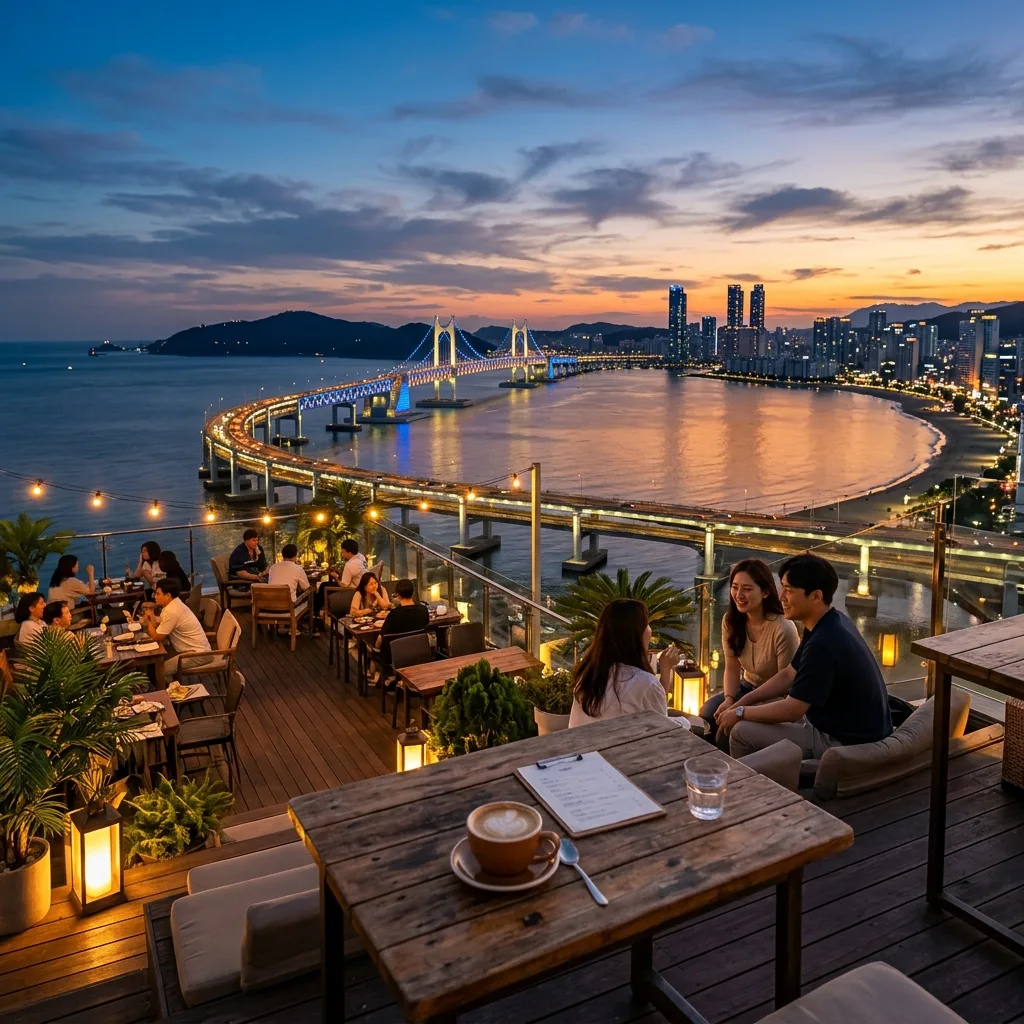
There is something quietly electric about holding a warm cup of coffee while the East Sea stretches out beneath you, the Gwangan Bridge lighting up its own reflection far below. Busan's cafe scene has taken over elevated real estate across the coastline — cliffside perches in Yeongdo, breezy sixth-floor terraces above Gwangalli Beach, and glass-walled lounges in Cheongsapo where sky and ocean blur together. These are not ordinary coffee shops. They are vantage points, and once you find the right one at the right hour, you will understand why Busan draws more repeat visitors than almost any other city in South Korea.
This guide covers the best rooftop and ocean-view cafes in Busan's three signature coastal districts — Haeundae and Cheongsapo, Gwangalli, and Yeongdo. Each district has a completely different mood, which means you can build a multi-day coffee itinerary across the city and feel like you have visited three separate destinations. Whether you are chasing the pastel-orange glow of golden hour over Haeundae or the hypnotic blue illumination of the Gwangan Bridge at midnight, there is a rooftop seat waiting for you somewhere above Busan's shoreline.
The Emerald Coast: Cheongsapo and Haeundae
Busan's eastern shoreline — from the tourist buzz of Haeundae Beach to the quieter fishing village charm of Cheongsapo — offers some of the most dramatic coastal scenery in Korea. Haeundae is the city's most internationally recognized beach, while Cheongsapo, just a few kilometers north along the Blue Line Park coastal trail, preserves a slower pace and a rawer relationship with the sea. Both neighborhoods have seen a wave of stylish cafes open in recent years, many of them stacked above the shoreline to make the most of the panoramic views.
Cafe Rooftop (Cheongsapo) is the standout destination in this stretch of coastline. Situated directly above the fishing harbor, the cafe offers a resort-style aesthetic that feels almost incongruous with the weathered boats below — white linen curtains drift in the ocean breeze, planter arrangements frame the terrace edge, and every seat has an unobstructed sightline to the horizon. The signature menu leans into visual presentation: lattes arrive with wave-foam art, and the dessert options are plated with an eye toward the Instagram generation. Come for brunch if you can — the light in the morning hours hits the water at a low angle that turns ordinary coffee time into something close to cinematic. Cheongsapo Rooftop Cafe is accessible by bus from Haeundae Station (Line 2) or via the Blue Line Park's Sky Capsule, which makes a stop nearby.
Edge 993 occupies one of the more unusual perches in Busan: a rooftop terrace positioned almost directly beneath the Sky Capsule train route. The Sky Capsule is part of the Blue Line Park coastal rail experience — small pink pastel capsules gliding along tracks that hug the cliff edge above the beach. From Edge 993's terrace, you can watch these capsules pass at eye level as the sun drops toward the sea. The cafe's name references the elevation, and it earns every meter. The coffee is strong, the atmosphere is unhurried, and the view makes it easy to lose an entire afternoon without noticing. Sunset here is particularly spectacular: the Sky Capsule trains catch the last light before darkness, and the reflection on the water below holds the warmth of the day for a few minutes longer.
For broader context on what else to see in this part of the city, the complete guide to Busan covers transportation, neighborhood highlights, and practical tips for first-time visitors.
The Bridge Magic: Gwangalli Beach
If Haeundae is Busan's family-friendly beach, Gwangalli is its night-life-adjacent, artistically inclined younger sibling. The stretch of sand here is narrower and the water shallower, but the real draw has always been what sits 875 meters offshore: the Gwangan Bridge, a double-deck suspension span that connects Suyeong to Haeundae District. During the day, the bridge is imposing and structural. After dark, it becomes something else entirely — a light canvas that shifts through programmable illumination sequences, from cool blue to warm gold, reflecting perfectly off the flat water in front of it. Cafes along the Gwangalli strip have been capitalizing on this view for years, and a few have elevated the bridge-watching experience to genuinely special heights.
Cup & Cup is regularly cited as the definitive Gwangan Bridge view cafe, and it earns the reputation. Situated on the sixth floor of a building just steps from the beach, the cafe's floor-to-ceiling windows and wide outdoor terrace place the bridge in direct, unobstructed frame. The daytime view — blue water, the bridge arc, the distant Haeundae skyline — is postcard-worthy. The nighttime view is something you will want to photograph and then put your phone away for, because screens genuinely cannot capture the scale of the illuminated bridge reflecting across the bay. Cup & Cup serves a full cafe menu including single-origin pour-overs, signature lattes, and a rotating seasonal dessert selection. Seating on the terrace fills quickly on evenings and weekends; arriving thirty minutes before sunset secures the best position.
Haute Cafe (sometimes stylized as Haut Cafe) operates on a different schedule from most cafes in Busan — it stays open until 2 AM, making it the rare establishment specifically designed around the late-night bridge experience. The Gwangan Bridge illumination program runs until midnight on most evenings, and Haute Cafe positions itself as the ideal destination for the full light show followed by a final coffee before the night ends. The interior aesthetic skews toward dark-toned luxury: low lighting, upholstered seating, and a beverage menu that includes cocktail-adjacent non-alcoholic drinks alongside espresso standards. If you are planning an evening that moves from dinner to bridge-watching to a late cafe stop, Haute Cafe makes the natural endpoint.
Industrial and Atmospheric: Yeongdo Island
Yeongdo is Busan's island borough — connected to the mainland by the famous Yeongdo Bridge and by a longer route via the Busan Port Bridge — and it has developed a cafe identity that is entirely distinct from Haeundae or Gwangalli. The dominant aesthetic here is not polished luxury or Instagram-optimized minimalism; it is raw, architectural, and maritime. Old industrial buildings have been converted into cultural spaces, and the cliffside Huinnyeoul Culture Village has become one of the most visited art communities in the city. The cafes that have emerged in this context tend to be larger, more experimental, and more willing to let the industrial bones of their spaces do the talking.
P. Ark is Yeongdo's most architecturally ambitious project. The building itself — a massive multi-use cultural complex built on land that once served industrial functions — is a destination before you have even ordered a drink. The structure incorporates raw concrete, large industrial-grade windows, and a terrace system that steps down toward the water, each level offering a slightly different angle on the ocean and the Busan Port skyline. The cafe within P. Ark serves specialty coffee, craft beer, and a food menu substantial enough to anchor a full meal. On weekends, the complex hosts art exhibitions, craft markets, and live performances, which means the people-watching is as good as the sea view. P. Ark is roughly a fifteen-minute walk from Yeongdo Bridge or accessible via taxi from Busan Station.
Aether Cafe, nestled inside the Huinnyeoul Culture Village, offers the most dramatically sited cup of coffee in Busan. The Huinnyeoul Culture Village occupies a stretch of cliffside that juts into the Korea Strait, and the homes, studios, and cafes here are built into and around the rocky face of the bluff. Aether takes this precariousness and makes it the point — the terrace essentially hovers over open water, with views across to the western industrial port districts and the open sea beyond. The coffee here is careful and well-sourced, but most visitors come for the physical sensation of drinking it above the waves. Book a window or terrace seat in advance if you are visiting on weekends; the village draws steady crowds and Aether in particular fills quickly.
Photography Tips: Getting the Best Shot from a Busan Rooftop
The difference between a good rooftop cafe photo and an extraordinary one usually comes down to timing, and Busan's coastal geography rewards photographers who understand the light.
Golden Hour — the sixty to ninety minutes after sunrise and before sunset — bathes the East Sea in warm amber and rose tones that soften the hard edges of the bridge infrastructure and turn flat water into a mirror. For the Cheongsapo and Haeundae cafes, the morning golden hour is often better because the sun rises over the sea in this part of Busan, giving you direct front-lit illumination of the water from a rooftop looking east. For Gwangalli, afternoon and evening golden hour is ideal because the bridge faces northwest, and the setting sun throws long shadows and warm gradients across the span.
Blue Hour — the twenty to thirty minutes after the sun has set but before full darkness — is arguably the most photogenic window in any coastal city. The sky shifts from orange through deep violet to indigo, and the ambient light is even enough to eliminate the harsh contrast between sky and water that makes twilight photography difficult. At Gwangalli, blue hour coincides with the bridge illumination program beginning, which creates a layered composition: deep blue sky, illuminated bridge structure, and the first reflections shimmering across the water. Bring a small tripod or use the cafe railing to stabilize your phone or camera.
Avoiding the Crowd Shot at Haeundae requires either arriving before 9 AM or after 8 PM on weekdays, or accepting that you are photographing a famous place during peak hours and leaning into the energy rather than trying to eliminate it. The cafes at Cheongsapo are less crowded than those in central Haeundae, which means you have a better chance of a clean composition — particularly on weekday mornings when the fishing boats are active and the village feels genuinely inhabited rather than staged for tourism.
For photographers serious about capturing sunset views across multiple Busan and South Korea locations, the dedicated guide to best sunset views in South Korea from Yeosu to Busan offers a broader regional perspective on the finest viewing spots.
Making a Day of It: Nearby Attractions
The rooftop cafes described in this guide are best experienced as part of a longer coastal day rather than as isolated stops. Each district has enough adjacent attractions to fill a full itinerary.
The Blue Line Park connects Cheongsapo to Haeundae via a coastal walking trail and the famous Sky Capsule train. The total route is approximately 4.7 kilometers, and the combination of seaside walking and elevated rail gives you two completely different perspectives on the same coastline. The Sky Capsule tickets sell out in advance on weekends and public holidays — book through the official Blue Line Park website or through a ticketing platform before you arrive. The walk itself is free, well-maintained, and passes several smaller cafes, observation platforms, and seafood vendors along the way.
Seafood at Jagalchi and Millak Markets: If you are spending the day in the Gwangalli area, the Millak Seafood Market is a fifteen-minute walk from the beach and offers one of the most authentic raw-fish experiences in Busan. You select your fish or shellfish from the first-floor vendors, then take it upstairs to the second-floor restaurant section where it is prepared for you. The combination of a daytime rooftop coffee at Cup & Cup followed by an evening seafood dinner at Millak is one of the standard great days in Busan for a reason.
Jagalchi Fish Market, Busan's most famous seafood market and the largest in South Korea, sits on the western end of the city near the Nampo-dong neighborhood. It pairs naturally with a visit to Yeongdo — P. Ark is a short taxi ride from Jagalchi — making a logical west-of-Busan half-day: morning coffee at P. Ark or Aether with ocean views, then a long seafood lunch at Jagalchi, then an afternoon exploring the Nampo area before heading east to Gwangalli for the bridge illumination.
Coastal Walking and Cycling: Both the Haeundae Beach promenade and the Gwangalli Beach front have well-developed walking and cycling paths. Bike rental is available at multiple points along Haeundae Beach, and a leisurely ride in either direction from the main beach gives you access to smaller, less-discovered cafes that have opened in the side streets and elevated positions just back from the main strip.
Planning your accommodation in Busan around which cafes you most want to visit makes logistical sense. A full breakdown of where to stay in Busan by neighborhood covers the trade-offs between basing yourself in Haeundae, Gwangalli, or the Seomyeon area.
Practical Information: Visiting Busan's Rooftop Cafes
Getting Around: The Busan Metro connects Haeundae (Line 2, Haeundae Station), Gwangalli (Line 2, Gwangalli Station), and the Nampo-dong / Jagalchi area (Line 1, Jagalchi Station). Yeongdo requires either a taxi or a bus from Busan Station; the metro does not extend to the island. Taxis are affordable and widely available across the city — most drivers can find major cafes and cultural spaces by name or by using Google Maps or Kakao Maps navigation.
Pricing: Most of the cafes in this guide price their drinks in the 6,000–12,000 KRW range, with specialty items and cocktail-style beverages running slightly higher. P. Ark and Haute Cafe at the higher end; smaller neighborhood spots at Cheongsapo toward the lower end. No cover charges or reservation fees apply at most locations, though some popular cafes during high season may require a wait for terrace seating.
Best Seasons: Spring (April–May) and autumn (September–October) offer the clearest skies and most comfortable temperatures for terrace sitting. Summer (June–August) brings heat and humidity, with afternoon crowds peaking during the Busan International Fireworks Festival in late October. Winter is quieter and colder, but the Gwangan Bridge illumination is unaffected by season, and an empty terrace with a hot latte above a grey winter sea has its own particular appeal.
Language: Most major cafes in tourist-heavy areas like Haeundae and Gwangalli have English menus or staff who can assist in English. Smaller village cafes in Cheongsapo and community spots in Yeongdo may have Korean-only menus — having the Papago or Google Translate app ready on your phone covers almost every situation you will encounter.
Conclusion
Busan has built one of the most interesting cafe cultures in East Asia, and its rooftop and ocean-view scene is the best evidence of that claim. The combination of dramatic coastal geography, a population that genuinely values the cafe experience, and a city government that has invested in public coastal infrastructure — the Blue Line Park, the Gwangan Bridge illumination program, the Huinnyeoul Culture Village — has created the conditions for remarkable elevated cafes to emerge across the shoreline.
The essential Busan rooftop itinerary runs something like this: mornings at Cheongsapo above the harbor, afternoon coffee at Cup & Cup with the Gwangan Bridge filling the window, and a late-night conclusion at Haute Cafe as the bridge light show completes its final sequence. Add Aether on Yeongdo for the cliffside drama and P. Ark for the architectural grandeur, and you have covered the full spectrum of what Busan's elevated coffee culture can offer.
Each of these places asks you to sit still long enough to really look at the ocean. That is, in the end, the actual offer — not just the coffee, but the permission to stop moving and take in a city that sits, more than almost any other in Korea, in intimate conversation with the sea.
Planning a broader trip to South Korea's coast? See our guide to the best sunset views from Yeosu to Busan for a road-trip perspective on the country's most scenic coastal stretches.