LGBTQ+ Travel in South Korea: A Guide to Inclusive Spaces and Events
South Korea is a land of striking contrasts, where ancient palaces sit in the shadow of glass skyscrapers and deep-rooted Confucian traditions coexist with a hyper-modern, tech-savvy society. For LGBTQ+ travelers, this duality creates a unique experience. While South Korea may not yet have the legal protections or widespread visibility found in some Western nations, it boasts a vibrant, resilient, and rapidly evolving queer culture. Whether you are looking for high-energy K-pop clubs, cozy lesbian-run cafes, or the largest pride festival in East Asia, South Korea has something to offer. This guide is designed to help you navigate the nuances of Korean society, find the most inclusive spaces, and make the most of your journey through the Land of the Morning Calm.
Quick Navigation
- Part of the Special Interest Travel in Korea series.
Introduction: The Evolving Landscape of Queer Korea
Traveling as an LGBTQ+ person in South Korea in 2026 is a vastly different experience than it was even a decade ago. While the country remains socially conservative in many ways, particularly among the older generations, the tide is turning. Influenced by global trends, a booming domestic entertainment industry, and a courageous local activist movement, younger Koreans are increasingly open and supportive of LGBTQ+ rights.
However, it is important to manage expectations. South Korea does not yet recognize same-sex marriage or civil unions, and comprehensive anti-discrimination laws are still a subject of intense political debate. Outside of the major metropolitan hubs like Seoul and Busan, visibility is low. Yet, within these urban centers, you will find thriving queer "villages," world-class drag performers, and a community that is warm, welcoming, and eager to share their culture.
The "Korean way" of navigating LGBTQ+ life is often characterized by a concept known as nunchi—the art of sensing others' feelings and the atmosphere of a room. For travelers, this means understanding the balance between personal expression and cultural sensitivity. In this guide, we will break down everything you need to know to travel safely, respectfully, and joyfully across South Korea.
A Brief History of Visibility: From Shadows to the Spotlight
To truly appreciate the current LGBTQ+ scene in South Korea, one must understand the journey the community has taken. For much of the 20th century, queer life was almost entirely underground.
The 1990s: The Birth of Activism
The mid-90s saw the first flickers of organized LGBTQ+ activism. Groups like Chingusai (Between Friends) for gay men and Kirikiri (among ourselves) for lesbian women began to form, providing much-needed support and advocacy. It was during this time that the first gay bars began to cluster in Jongno and Itaewon, creating the foundations of the neighborhoods we see today.
The Turning Point: Hong Seok-cheon and Harisu
The early 2000s brought LGBTQ+ issues into the living rooms of millions of Koreans. In 2000, actor Hong Seok-cheon became the first major Korean celebrity to come out as gay. The backlash was immediate and severe—he was fired from his television shows and faced intense public scrutiny. However, his resilience eventually turned him into a beloved national figure and a symbol of progress.
Shortly after, in 2001, Harisu emerged as Korea's first transgender entertainer. Her success in music and acting challenged the nation's rigid views on gender and paved the way for future transgender visibility. These two figures are icons for a reason; they humanized a community that many Koreans had previously considered "invisible" or "foreign."
The Present: The Fight for Equality
Fast forward to 2026, and the conversation has shifted toward legal rights. While several attempts to pass a comprehensive anti-discrimination act have stalled in the National Assembly, the public discourse is louder than ever. In 2023, a landmark court ruling recognized the rights of same-sex couples to receive health insurance benefits, a major step toward legal recognition. Travelers today arrive in a country that is in the midst of a profound cultural transformation.
Understanding the Cultural Context: Etiquette and Safety
Before diving into the nightlife and events, it is crucial to understand the social fabric of South Korea. Korea is a society built on harmony, group cohesion, and a deep respect for hierarchy.
Public Displays of Affection (PDA)
In South Korea, public displays of affection are generally frowned upon for everyone, regardless of sexual orientation. While holding hands is common among friends (often regardless of gender, which can be confusing for Westerners—female friends often hold hands or link arms as a sign of platonic closeness), kissing or intense cuddling in public is rare. For LGBTQ+ couples, keeping PDA subtle is the best way to avoid unwanted attention. In designated queer spaces like Itaewon or Jongno, you can be much more relaxed, but even there, excessive PDA might be met with quiet disapproval from more traditional locals.
Legal Status and Safety
Homosexuality is legal in South Korea, and there are no laws against being LGBTQ+. However, there are also few laws protecting you from discrimination. That said, South Korea is one of the safest countries in the world for travelers. Physical violence or overt harassment is extremely rare. Most "negative" experiences for LGBTQ+ travelers usually come in the form of staring or occasional coldness from older generations.
The Power of the "Digital Closet"
Many queer Koreans live "double lives"—fully out to their friends and within the community, but closeted at work and with family. This makes online spaces and dedicated neighborhoods incredibly important. Apps like Jack’d and Grindr are popular among men, while "Secret" apps and KakaoTalk groups are common for women. As a traveler, these apps are excellent tools for finding local events and connecting with the community.
The Heart of the Scene: Seoul’s Queer Neighborhoods
Seoul is the epicenter of LGBTQ+ life in Korea, and the scene is divided into three distinct neighborhoods, each with its own "flavor" and history.
1. Itaewon: The International Hub and "Homo Hill"
Itaewon has long been Seoul's most international district, thanks to its history as the site of a former US military base. Today, it is a melting pot of cultures, cuisines, and—most importantly—the most visible gay scene in the country.
Homo Hill (Usadan-ro 12-gil) Located on a steep slope near the Seoul Central Mosque, "Homo Hill" is a small street packed with gay bars and clubs. It is the best place for first-time visitors because it is incredibly welcoming to foreigners.
- Why Not: One of the most popular bars on the hill, known for its friendly staff and diverse crowd. It’s a great "starter" bar where you can meet locals and other travelers.
- Always Homme: A classic spot with a more laid-back vibe, perfect for a cocktail before heading to the clubs. It has a great terrace for people-watching.
- PING and Ground: These are the heavy hitters of the club scene. PING usually opens earlier with a mix of pop and house, while Ground is where the hardcore party happens until the sun comes up. Expect high-energy K-pop remixes and incredible dancing.
- Gym Club: Catering to the "bear" and muscle-fan community, this club has a dedicated following and hosts legendary circuit parties.
- Trance: A legendary drag bar that has been around for decades. It is the soul of the Itaewon scene, offering nightly performances that range from classic camp to high-fashion K-pop drag.
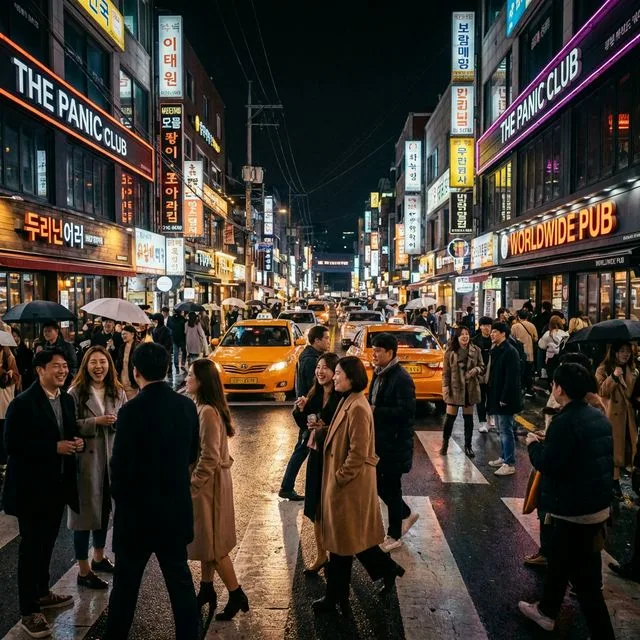
The Vibe: Itaewon is loud, proud, and international. You will hear a mix of Korean, English, and dozens of other languages. It is the only place in Korea where you might see people openly wearing rainbow flags on the street. For a broader look at Seoul's nightlife districts, our Hongdae vs. Itaewon vs. Gangnam nightlife guide is an essential read before your first night out.
2. Jongno 3-ga: The Traditional Soul of Gay Korea
If Itaewon is the "modern" face of the scene, Jongno is its heart. Located in the historic center of Seoul, Jongno is home to hundreds of small, discreet gay bars tucked away in narrow alleys.
The "Runway" The area around Jongno 3-ga Station (Exit 5) is often called "The Runway." In the evenings, the pojangmacha (orange tent food stalls) fill up with gay men eating spicy rice cakes and drinking soju.
- M Bar and Stud: Popular spots for a younger, trendier crowd. These bars often have a more modern aesthetic and play the latest Western and Korean hits.
- DZBZ (Dizzy Bizzy): A rare rooftop bar in Jongno that offers great views and a relaxed atmosphere. It's one of the few places in the neighborhood where you can enjoy the city skyline.
- Barcode: A staple of the neighborhood known for its extensive whiskey list and sophisticated vibe. It's a favorite for "salarymen" looking for a quiet drink after work.
- Shortbus: A friendly, mid-sized bar that is known for its welcoming atmosphere and regular events.
The Vibe: Jongno is more "Korean." While many bars are becoming more foreigner-friendly, some still cater primarily to a local, Korean-speaking clientele. It’s a great place to experience chimaek (chicken and beer) culture in a queer-friendly environment. The bars here are often smaller and more intimate, fostering a sense of community.
3. Hongdae: The Creative and Lesbian Hub
Hongdae is Seoul's university district, famous for its street performers, indie music, and fashion. It has a younger, more progressive energy and is the primary center for the lesbian and feminist community.
- Bar Mong: A legendary lesbian-owned bar that has been a sanctuary for women for years. It is known for its cozy atmosphere and supportive community.
- Wolfe Club: Named after Virginia Woolf, this is a feminist cafe by day and a queer-inclusive bar by night. It frequently hosts community events, poetry readings, and workshops.
- Social Haven: A stylish, inclusive bar that welcomes the entire LGBTQ+ spectrum but remains a favorite among queer women. It has an excellent cocktail menu and a modern, airy design.
- The Perch: A newer addition to the scene, offering a welcoming space for queer women and their friends with a focus on craft beer and community building.
The Vibe: Hongdae is experimental and artistic. It is less about "gay bars" and more about "inclusive spaces" where everyone is welcome. You'll find plenty of gender-neutral fashion and a crowd that values individuality and creativity.
Transgender Visibility and Inclusive Spaces
Transgender visibility in South Korea is a complex topic. While figures like Harisu brought the community into the mainstream, trans people still face significant legal and social hurdles. However, there are dedicated spaces where trans travelers can feel at home.
Trans-Friendly Bars in Itaewon
Itaewon is home to several "Trans Bars." In the Korean context, these are often bars where transgender women work as hostesses and performers. While some of these bars are geared toward a straight male clientele, many are inclusive spaces where the community gathers.
- Club Queen: A well-known spot in Itaewon that features transgender performers and a welcoming, high-energy dance floor.
- LUV: A stylish bar that is known for its inclusive atmosphere and diverse crowd.
Practical Tips for Trans Travelers
- Identification: Ensure your passport matches your current appearance to avoid issues at immigration.
- Restrooms: Gender-neutral restrooms are rare in Korea. In most malls and public buildings, restrooms are strictly divided. However, in queer-friendly districts like Itaewon and Hongdae, you will find more understanding.
- Medical Care: If you require hormone replacement therapy (HRT) or other specific care, Seoul has several clinics (such as those in the Gangnam or Mapo districts) that are known for working with international LGBTQ+ patients.
K-Pop and the Queer Gaze
You cannot talk about South Korean culture in 2026 without mentioning K-Pop. For many LGBTQ+ travelers, K-Pop is their first window into Korean culture.
The Phenomenon of "Shipping" and Fan Service
The K-Pop industry is famous for its "fan service," which often includes idols acting affectionately with members of the same gender. While this is often dismissed as "queerbaiting" by critics, for many fans, it provides a space to explore queer themes and identities. The community of "shippers" (fans who imagine romantic relationships between idols) is huge and often creates its own queer-coded subculture.
Idols Who Support the Community
A growing number of K-Pop idols have expressed support for the LGBTQ+ community. Holland, often called "the first openly gay K-Pop idol," has been a trailblazer, using his music to share his personal journey. Others, like Sunmi, Jo Kwon, and members of groups like SHINee and MAMAMOO, have frequently worn rainbow-themed clothing or spoken about inclusivity.
Queer K-Pop Parties
If you're a fan, don't miss the K-Pop nights in Itaewon. Places like PING and GRAY host nights dedicated to the biggest hits, and the atmosphere is electric. Seeing a room full of queer people singing along to "I Am The Best" or "Feel Special" is a highlight of any trip to Seoul.
Major Events: When to Visit
If you want to see the community at its most vibrant, plan your trip around one of these major events.
Seoul Queer Culture Festival (SQCF) - June 13, 2026
The SQCF is the crown jewel of the Korean LGBTQ+ calendar. Usually spanning two weeks, the festival culminates in the Seoul Queer Parade (SQP).
- The Parade: Imagine tens of thousands of people marching through the heart of Seoul (often near City Hall or Gwanghwamun), surrounded by vibrant floats and K-pop music. It is a powerful display of visibility in a country that often tries to ignore its queer citizens.
- The Booths: Before the parade, a massive fair takes place with booths from local NGOs, university groups, and international embassies (the US, UK, and EU embassies are consistent supporters). It's a great place to pick up unique pride merchandise and learn about local activism.
Seoul Drag Parade
Usually held in late May or early June, the Seoul Drag Parade is a celebration of the city's incredible drag scene. Performers from all over the world join local queens and kings for a march that is as much about performance art as it is about activism. The after-parties in Itaewon are legendary.
Korea Queer Film Festival (KQFF)
Held in conjunction with the SQCF, this film festival showcases local and international LGBTQ+ cinema. It is a fantastic way to see the stories of queer Koreans on the big screen. The screenings are often followed by Q&A sessions with directors and activists.
A 7-Day "Inclusive Seoul" Itinerary
For the traveler who wants to see it all, here is a suggested 7-day itinerary that balances cultural sightseeing with the best of queer Korea.
Day 1: Arrival and Itaewon Introduction
- Morning: Arrive at Incheon International Airport and take the AREX train to Seoul.
- Afternoon: Check into your hotel in Itaewon (e.g., Mondrian Seoul Itaewon). Take a stroll around the neighborhood and visit the Seoul Central Mosque.
- Evening: Dinner in Itaewon's diverse restaurant scene (try some Korean-Mexican fusion). Head to Why Not for a welcoming first drink.
Day 2: The Tradition of Jongno
- Morning: Visit Gyeongbokgung Palace and rent a Hanbok (many rental shops are inclusive and happy to dress you in the style of your choice).
- Afternoon: Explore the Bukchon Hanok Village and have traditional tea.
- Evening: Head to Jongno 3-ga. Eat at a pojangmacha near Exit 5, then explore the hidden bars like Barcode and Stud.
Day 3: Creative Hongdae
- Morning: Visit the Trickeye Museum or one of the many themed cafes (like the Meerkat Cafe).
- Afternoon: Shop for unique fashion in Hongdae's boutiques.
- Evening: Dinner in Hongdae followed by drinks at Bar Mong or Wolfe Club. Catch some street performers on the main Hongdae strip.
Day 4: Art and Inclusion
- Morning: Visit the Leeum Museum of Art in Hannam-dong.
- Afternoon: Explore the trendy cafes of Seongsu-dong (the "Brooklyn of Seoul").
- Evening: Return to Itaewon for a drag show at Trance.
Day 5: River Breezes and Night Markets
- Morning: Take a bike ride along the Han River.
- Afternoon: Visit the Dongdaemun Design Plaza (DDP).
- Evening: Explore the Gwangjang Market for incredible street food, then head back to the "Runway" in Jongno for a lively night out.
Day 6: Day Trip to Busan or DMZ
- Option A: Take the KTX to Busan (2.5 hours). Spend the day at Haeundae Beach and explore the Seomyeon queer scene in the evening.
- Option B: Visit the DMZ for a sobering look at Korean history, then return to Seoul for a high-energy night at Club Ground.
Day 7: Relaxation and Reflection
- Morning: Visit a Jjimjilbang (Korean spa). Many are gendered, but they are a quintessential Korean experience.
- Afternoon: Last-minute shopping in Myeongdong for K-Beauty products.
- Evening: A farewell dinner with new friends made during the week, perhaps at a rooftop bar overlooking the city.
Beyond Seoul: Exploring Other Cities
While Seoul is the main attraction, other cities are making strides in visibility.
Busan: The Coastal Connection
Busan, Korea's second-largest city, has a small but growing scene in the Seomyeon district.
- The Bars: Look for spots like L-Bar or Banana.
- The Festival: The Busan Queer Culture Festival usually takes place in the fall. It's smaller than Seoul's but has a wonderful community spirit and often takes place near the beach.
Daegu: The Resilient South
Daegu is known for being one of the most conservative cities in Korea, but it ironically hosts one of the oldest and most resilient queer festivals in the country. The Daegu Queer Culture Festival is a testament to the strength and bravery of the local community.
Practical Information for the LGBTQ+ Traveler
Accommodation
Most major international hotel chains in Seoul are LGBTQ+ friendly.
- Mondrian Seoul Itaewon: Located right near the action, this hotel is a hub for the community and often hosts queer events at its rooftop bar. Its design is bold and inclusive.
- RYSE, Autograph Collection (Hongdae): A trendy, artsy hotel that is popular with the creative queer crowd. They often feature local artists and have a very progressive vibe.
- L7 Myeongdong: A stylish, modern hotel that is centrally located and very welcoming to all guests.
Health and Safety
South Korea has an excellent healthcare system. If you need LGBTQ+-specific health services, there are several clinics in Seoul that are known for being inclusive.
- PrEP and HIV Care: While available, it can be expensive for foreigners without national insurance. It is best to bring an adequate supply of your medications with you.
- Emergency Numbers: 112 for police, 119 for medical emergencies. There are English-speaking operators available.
Language Tips
Knowing a few terms can help you navigate the scene:
- I-ban (이반): A term often used by the community to refer to themselves (a play on the word for "normal" or "regular"). It literally means "second class" or "different," a term reclaimed by the community.
- Kke-ie (게이): Gay.
- Re-jeu-bi-eon (레즈비언): Lesbian.
- Teu-raenseu-jen-deo (트랜스젠더): Transgender.
- Kkeui-sun-i (끼순이): A slang term for a "flamboyant" or "camp" gay man (use with caution as it can be derogatory or affectionate depending on the context).
Intersectionality: Tips for Diverse Travelers
- Travelers of Color: While South Korea is generally safe, racism and xenophobia can occasionally occur. Itaewon is the most welcoming district for people of all backgrounds.
- Solo Female Travelers: South Korea is incredibly safe for solo women. In Hongdae, you'll find many women-only spaces that offer a safe and supportive environment.
Conclusion: Embracing the Magic of Queer Korea
South Korea may not be the first place that comes to mind when you think of "LGBTQ+ destinations," but that is exactly why it is so special. Every rainbow flag you see, every drag performance you attend, and every conversation you have with a local queer person feels meaningful. It is a community that is fighting for its place in the sun, and as a traveler, you have the privilege of witnessing that journey.
The beauty of queer Korea lies in its resilience. Despite the lack of formal legal protections, the community has built spaces of joy, creativity, and profound connection. From the neon-soaked hills of Itaewon to the quiet, history-filled alleys of Jongno, and the artistic streets of Hongdae, there is a world here waiting to be discovered.
So, pack your most stylish outfit for Hongdae, bring your dancing shoes for Itaewon, and prepare your appetite for the alleys of Jongno. South Korea is waiting to welcome you with open arms and a story you will never forget.
Resources for Further Reading:
- Seoul Queer Culture Festival Official Website (sqcf.org)
- Chingusai (Korean Gay Men's Human Rights Group - chingusai.net)
- Solidarity for LGBT Human Rights in Korea (Haengseongin - lgbtpride.or.kr)
- The Korea Queer Film Festival (kqff.co.kr)
For travelers exploring the peninsula independently, our Solo Female Travel in South Korea: Safety Tips and Best Destinations offers great insights into safe navigation. When you're ready to dive into the legendary club scene, keep our Nightlife Safety in Korea: Tips for Solo Travelers and Groups handy. And if you're looking to lay down deeper roots and find your crowd, learn more about Building a Local Life: How to Make Friends and Find Community in Korea.