Nightlife Safety in Korea: Tips for Solo Travelers and Groups

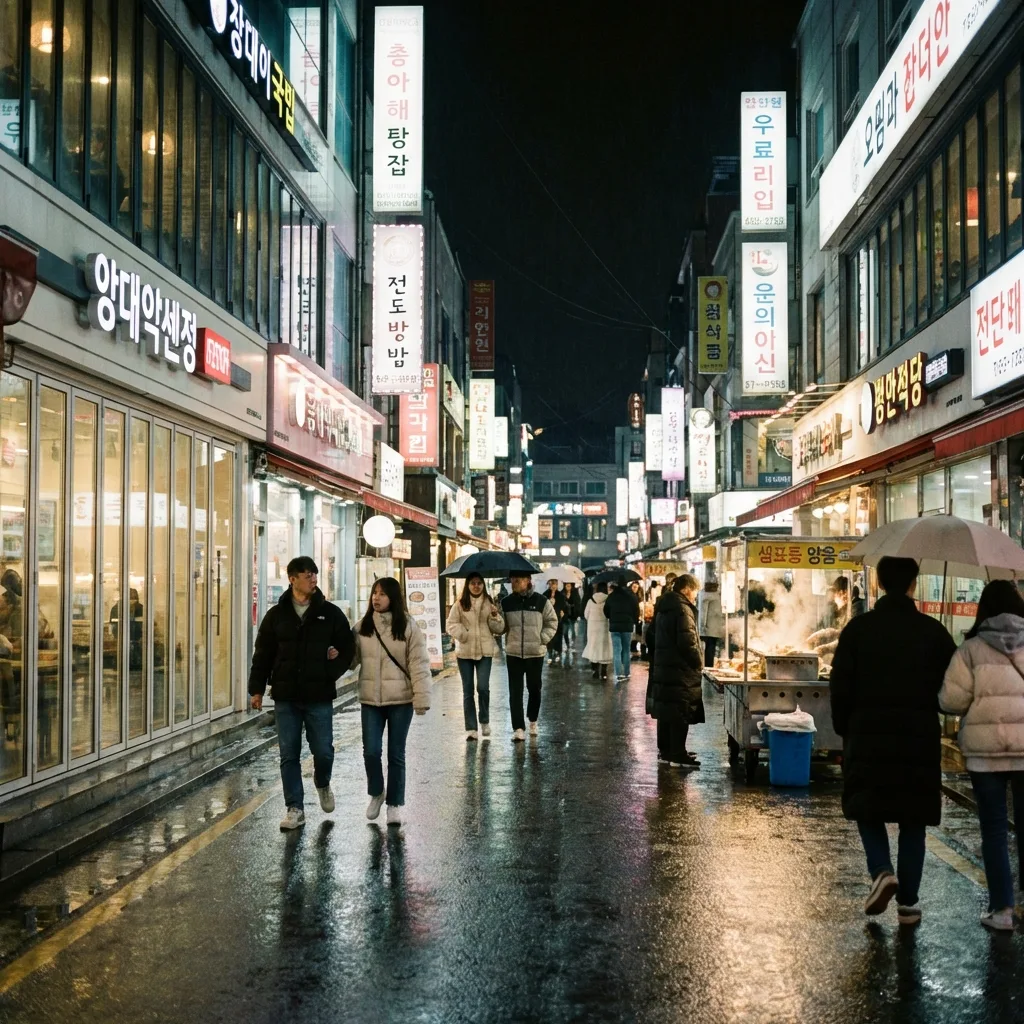
Seoul's neon lights are a global sensation—a rhythmic dance of high-tech displays and traditional charm that beckons travelers from every corner of the earth. But for many, especially those venturing out for the first time or traveling alone, a lingering question remains: Is Seoul safe at night?
The short answer is a resounding yes. South Korea consistently ranks as one of the safest countries in the world, with a nightlife culture that is more about community and celebration than chaos. However, staying informed is the key to a truly stress-free experience. In this guide, we’ll break down everything you need to know about navigating Korea’s vibrant nightlife safely, whether you’re a solo explorer or part of a group.
South Korea is a land of late-night energy. From 24-hour convenience stores to sprawling "pojangmacha" (street food tents) and high-energy clubs in Gangnam, the sun never truly sets on the Korean experience. For travelers, this means endless opportunities for adventure. But safety, while high, is never something to take for granted. This comprehensive guide will equip you with the knowledge to enjoy Korea’s nightlife with confidence.
Is South Korea Safe at Night? (The Big Picture)
When you walk through the streets of Seoul at 3:00 AM, you’ll notice something immediately different from many Western cities: people are out, the streets are well-lit, and the atmosphere feels remarkably calm.
Low Violent Crime Rates
South Korea has some of the lowest violent crime rates in the world. Theft, while it can happen, is statistically rare compared to other major tourist destinations. It’s not uncommon to see Koreans leave their expensive laptops or bags unattended in a cafe while they use the restroom—a testament to the high level of social trust.
The Role of CCTV and Proactive Policing
Korea is one of the most monitored countries on earth, with CCTV cameras covering almost every public corner, subway station, and elevator. This act as a powerful deterrent. Additionally, the Korean police force (Pol-I-Seu) is highly visible in nightlife districts, often conducting foot patrols to ensure everything remains orderly.
Solo Traveler’s Safety Kit: What to Know Before You Go Out
Traveling solo doesn't mean you have to be vulnerable. In fact, many solo travelers find Korea to be one of the easiest places to explore alone. However, a little preparation goes a long way.
Essential Apps (Your Digital Lifelines)
Before you step out into the neon glow, ensure your phone is loaded with these essential local apps:
- KakaoMap & Naver Map: Google Maps is notoriously unreliable in Korea due to government restrictions on mapping data. Use Kakao or Naver for accurate walking directions and real-time subway/bus schedules.
- Kakao Taxi: This is the "Uber of Korea." Even if you don't have a Korean phone number linked to a payment card, you can use the "Pay to Driver" option. It ensures you have a recorded history of your ride and the driver's details.
Emergency Contacts
Keep these numbers saved in your favorites:
- 112 (Police): For any immediate safety concerns or to report a crime.
- 119 (Fire & Ambulance): For medical emergencies.
- 1330 (Korea Travel Helpline): This is a 24/7 service that provides interpretation and assistance in English, Japanese, and Chinese. If you’re at a police station or hospital and can’t communicate, call 1330 and they will interpret for you.
Navigating Popular Nightlife Districts Safely
Each nightlife hub in Seoul has its own unique personality and set of safety considerations.
Hongdae: The Youthful Pulse
Hongdae is the heart of Seoul’s student life and indie music scene. It’s crowded, loud, and incredibly fun.
- Safety Tip: The main streets are very safe, but the crowds can be overwhelming on weekend nights. Watch your step during the "busking" performances, and be aware of your surroundings in the narrow alleys.
Itaewon: The International Melting Pot
Known for its international restaurants and bars, Itaewon is the most foreign-friendly district.
- Safety Tip: Due to its international nature, Itaewon can occasionally feel a bit more "intense" than other parts of Seoul. While still very safe, it’s advisable to avoid the very quiet side streets deep in the hilly residential areas late at night. Stick to the main "Hamilton Hotel" area and the "World Food Street" behind it.
Gangnam: Upscale and High-Energy
Gangnam is where you'll find the massive EDM clubs and luxury lounges.
- Safety Tip: Club culture in Gangnam can be exclusive. "Booking" (where waiters bring women to tables of men) is a traditional but fading practice in night clubs. If you’re uncomfortable, a polite "No, thank you" is usually sufficient.
Common Scams and How to Spot Them
While rare, scams do exist in Korea, and they often target foreigners in nightlife areas.
1. Cult Scams (The "Cultural Experience" Trap)
You might be approached by two friendly young people asking for directions or inviting you to a "traditional Korean tea ceremony" or "cultural ritual."
- The Reality: These are often recruitment fronts for religious cults. They will eventually ask for money or try to bring you to a private building.
- The Defense: Politely decline and keep walking. Real cultural experiences are best booked through official channels like Visit Korea.
2. Taxi Flat-Fee Scams
Late at night, when the subways have stopped, some taxi drivers near nightlife hubs might refuse to use the meter and instead quote a high "flat fee."
- The Defense: This is illegal. Always insist on the meter ("Mee-teo-gi sse-joo-se-yo") or use the Kakao Taxi app to book a ride, which pre-calculates the fare.
The Drinking Culture: Staying Safe During "Hoesik"
Drinking is a deeply rooted part of Korean social life, often centered around "Hoesik" (company dinners) and "Anju" (snacks to accompany alcohol).
Know Your Limits
Korean "Soju" is deceptively smooth but has a high alcohol content. If you're out with locals, you might be pressured to "one-shot" your drink.
- The Rule: It is perfectly acceptable to take small sips. If you're feeling pressured, just say "Han-jan-man" (Just one drink) or "Mot-masyeyo" (I can't drink much).
Protecting Your Drink
While drink spiking is statistically very low, it has been reported on social media forums like Reddit. Use the same common sense you would anywhere: never leave your drink unattended in a club, and buy your own drinks whenever possible.
Late-Night Logistics: Getting Home Safely
One of the biggest surprises for first-time visitors is that the world-class Seoul subway system stops around midnight.
The Subway Curfew
Subways typically run until approximately 12:00 AM or 12:30 AM. After this, your options are buses or taxis.
Owl Buses (N-Buses)
Seoul operates a network of night buses called "Owl Buses" (look for the "N" prefix, like N62 or N13). They cover the major nightlife corridors and are incredibly cheap (the same price as a daytime bus). Use your T-Money card to pay.
Conclusion
Exploring Korea at night is an experience unlike any other. The combination of high-tech neon glitz and a deep sense of social safety makes it a playground for travelers of all stripes. By staying connected, using local apps, and remaining aware of your surroundings, you can ensure that your only late-night "emergency" is deciding which 24-hour ramen shop to visit.
For more general advice on staying healthy and secure during your trip, don't miss our Health and Safety Tips for Travelers. Once you feel confident and prepared, you can dive headfirst into the scene using our comprehensive Seoul Nightlife Guide to choose your ideal neighborhood vibe. If you're just starting to plan your journey, begin with our Ultimate 10-Day South Korea Itinerary to map out your daytime and nighttime adventures.
Stay safe, and enjoy the lights!
District Safety Comparison: What to Expect in Each Neighborhood
Every Seoul nightlife district has its own risk profile and crowd character. This is not about avoiding neighborhoods — all are safe — but about calibrating your awareness appropriately.
| District | Overall Safety | Crowd Density | Main Risk | Best Time | Foreign-Friendliness |
|---|---|---|---|---|---|
| Hongdae | Very High | Very High | Pickpocketing, crowd crushes | 10 PM – 2 AM | High (English menus, signs) |
| Itaewon | High | High | Occasional confrontations, tourist scams | 9 PM – 1 AM | Very High |
| Gangnam (Apgujeong/Club) | High | Medium | Exclusive club culture, drink spiking (rare) | 11 PM – 4 AM | Medium |
| Sinchon/Edae | Very High | High | Crowds on weekends | 9 PM – 2 AM | High |
| Euljiro (Hipjiro) | Very High | Low–Medium | Getting lost in alleys | 8 PM – midnight | Low (little English) |
| Insadong/Jongno | Very High | Low (at night) | Almost none | 7–11 PM | Medium |
| Haebangchon (HBC) | Very High | Low–Medium | Almost none | 8 PM – 1 AM | Very High |
Important note on Hongdae crowd density: The October 2022 Itaewon tragedy permanently changed how Korean authorities manage crowd safety in entertainment districts. Since 2023, Seoul city government deploys Crowd Safety Officers (군중안전요원) in Hongdae every Friday and Saturday night from 9 PM. Safety barriers, crowd flow management, and real-time monitoring are active. The risk of crowd crush events is now managed more actively than anywhere else in the world.
Getting Home Safely: All Options Compared
The subway stopping at midnight creates the most practical safety challenge of any Seoul night out. Here are all the options with honest cost and convenience assessments.
| Method | Cost | Speed | 24-Hour? | Safety Rating | Best For |
|---|---|---|---|---|---|
| Subway (before midnight) | ₩1,400–₩2,150 | Fast | No | ★★★★★ | Anytime before 11:30 PM |
| Owl Bus (N-bus) | ₩1,400 | Moderate | Yes (midnight–5 AM) | ★★★★★ | Budget travelers; know your stop |
| Kakao T taxi | ₩5,000–₩20,000 | Fast | Yes | ★★★★★ | Most reliable late-night option |
| Street taxi (metered) | ₩5,000–₩20,000 | Fast | Yes | ★★★★☆ | Fine; insist on meter |
| Designated driver (대리운전) | ₩20,000–₩40,000 | Fast | Yes | ★★★★★ | If you drove yourself; uses your own car |
| Jjimjilbang overnight | ₩12,000–₩18,000 | N/A | Yes | ★★★★★ | Budget; avoids late-night transit entirely |
| Street taxi (flat fee) | ₩30,000–₩60,000+ | Fast | Yes | ★★☆☆☆ | Avoid; prices are inflated and illegal |
Owl Bus route finder: Download the "Seoul Bus" app (서울버스) or use Naver Map and filter for "Night Bus only." The N-buses run on the 12 major nightlife corridors. Coverage includes Hongdae↔Gangnam (N61, N62), Itaewon↔Jongno (N13), and Sinchon↔Dongdaemun (N30). Frequency: every 20–30 minutes.
Kakao T surge pricing: Like Uber, Kakao T prices surge between 12 AM–2 AM on weekend nights. A ride that costs ₩8,000 at 11 PM may cost ₩13,000 at 1 AM. If budget matters, leaving the club slightly before midnight saves both money and the subway timing stress.
Solo Female Traveler Safety: The Full Picture
South Korea is consistently rated as one of the top 5 safest countries in the world for solo female travelers. The following reflects real conditions as of 2026.
Street safety: Walking alone at night in Seoul's entertainment districts is normal and widely practiced by Korean women of all ages. The combination of dense CCTV coverage, active street-level policing, and high social trust means that hostile stranger interactions are extremely rare. The specific risk profile in Seoul is substantially lower than equivalent nightlife districts in Tokyo, London, Paris, or New York.
Specific precautions that matter:
- Avoid isolated alleys in Gangnam's club district after 2 AM. While not dangerous, the concentration of heavily intoxicated club-goers in narrow streets increases the chance of unwanted interactions. The main illuminated streets are fine.
- In clubs: The "booking" culture (where waiters invite solo female travelers to join groups of Korean men for drinks) still exists in traditional Gangnam clubs, though it has declined significantly since 2020. "No, thank you" — or ignoring the waiter entirely — is sufficient. You will not be followed or pressured beyond the initial approach.
- Drink safety: Drink spiking is statistically very rare in Korea (significantly less common than in Europe or Australia), but the standard travel precaution applies: don't leave your drink unattended in venues that feel sketchy. The risk is highest in the lower-tier venues around the edges of Hongdae's main street, lowest in established, well-lit venues.
Useful app: "SafeMap Korea" aggregates publicly available CCTV location data and safety infrastructure maps. It's primarily used by Korean women and is available in English. It shows the nearest police box (파출소), emergency call posts, and "safe houses" (편의점 세이프 존) — convenience stores that have registered to serve as emergency refuges.
If you feel uncomfortable: Enter the nearest 24-hour convenience store (GS25, CU) and tell the cashier you need help. Since 2021, all major convenience store chains have participated in the "Safe Zone" program — staff are trained to hold customers safely until police arrive and are prohibited from turning away someone seeking assistance.
What to Do If Something Goes Wrong
Despite all the safety advantages, having a step-by-step emergency plan prevents panic from compounding a bad situation.
Step 1 — Assess the situation For medical emergencies: call 119 immediately. The operator connects to English-speaking staff. For crime (theft, assault): call 112. English support is available; if not, call 1330 immediately after.
Step 2 — Call 1330 (Korea Travel Hotline) This is the most useful number for foreign travelers. Open 24/7, multilingual (English, Japanese, Chinese, Vietnamese, and more). They will:
- Interpret between you and police or medical staff
- Help you report your situation
- Direct you to the nearest appropriate resource (embassy, hospital, police station)
Step 3 — Contact your embassy The US Embassy Seoul emergency line: +82-2-397-4114 (24/7). UK: +82-2-3210-5500. Australia: +82-2-2003-0100. Canada: +82-2-3783-6000. Store your home embassy number before departure.
Step 4 — If something was stolen File a police report at the nearest station (파출소). For insurance claims, you need an official report number. The 1330 hotline will direct you to the correct station and provide interpretation. Most police stations in nightlife areas have staff with basic English ability.
Step 5 — Losing your phone This is the most common "emergency" for travelers. Before your trip: enable Find My iPhone/Find My Device with a backup account, and save your hotel address and emergency numbers in a physical note in your wallet. Many PC cafés (PC방) provide emergency internet access for ₩1,000–₩2,000/hour — ask any passerby where the nearest one is ("PC방 어디예요?").
The Late-Night Food Safety Net: 24-Hour Options
No guide to Korean nightlife safety is complete without acknowledging the role of food infrastructure in making late nights safer. Korea's 24-hour food ecosystem means that anyone feeling unwell, disoriented, or simply hungry at 3 AM has immediate, affordable, well-lit options.
Convenience stores (편의점): GS25, CU, and 7-Eleven are open 24/7 on literally every block of every entertainment district. They function as unofficial safe spaces — brightly lit, staffed, and connected to the "Safe Zone" emergency program. Ramen machines, warm food, hydration drinks, and hangover remedies are available.
Hangover recovery: The Korean hangover culture has produced an entire product category. "Condition" (컨디션) hangover drinks (₩3,500 at convenience stores) and "Morning Care" capsules taken before drinking are widely available. Koreans also swear by haejang-guk (해장국, hangover soup) available at 24-hour restaurants in every nightlife district. The bean sprout version (kongnamul gukbap) near Hongdae is open until 5 AM.
Jjimjilbang as emergency shelter: If you miss the last bus, your hotel is far, and a taxi feels expensive, the nearest jjimjilbang (₩12,000–₩18,000) provides a safe, warm, supervised environment where you can sleep until morning transit resumes at 5:30 AM. This is a genuine and widely used strategy among budget travelers and Koreans alike.