Iconic K-Drama Bridge & River Scenes: A Photography & Travel Guide 2024/2025

Ever found yourself captivated by a K-drama scene where the majestic Han River glistens under city lights, or a dramatic encounter unfolds on an ancient, ornate bridge? These cinematic backdrops are more than just scenery; they are characters in themselves, weaving emotion, destiny, and breathtaking beauty into the fabric of Korea's most beloved stories. From the heartbreaking reunions on modern steel structures to the quiet moments of contemplation beside historic waterways, K-dramas have masterfully transformed real-world locations into unforgettable settings. This guide invites you on an immersive journey to discover these iconic bridges and river scenes, including those immortalized in recent hits like Queen of Tears, the globally acclaimed Crash Landing on You, and the fantasy epic Goblin. Beyond simply identifying these spots, we'll equip you with professional photography tips to capture their magic, ensuring your travel memories are as vivid and dramatic as the dramas themselves.
The Magic of Korean Bridge & River Scenes in K-Dramas
Korean dramas masterfully utilize both natural landscapes and architectural marvels to amplify emotional depth and narrative impact. Bridges often symbolize significant transitions, fateful encounters, or moments of profound reflection, acting as thresholds between different phases of a character's journey. Rivers, with their constant, flowing nature, provide a dynamic canvas for romance, introspection, and dramatic reveals, mirroring the ebb and flow of life itself. Understanding how these elements contribute to the storytelling will undoubtedly deepen your appreciation as you visit these picturesque sites. These locations are not merely backgrounds; they are integral to the emotional resonance of each scene.
Han River Must-Visits: Seoul's Iconic Bridges
Seoul's Han River, a vibrant artery flowing through the heart of the capital, is spanned by a multitude of bridges, each possessing its own unique character and a rich history of appearances in K-dramas. Exploring these bridges offers a unique perspective on Seoul's urban landscape and its cinematic charm.
Banpo Bridge & Rainbow Fountain
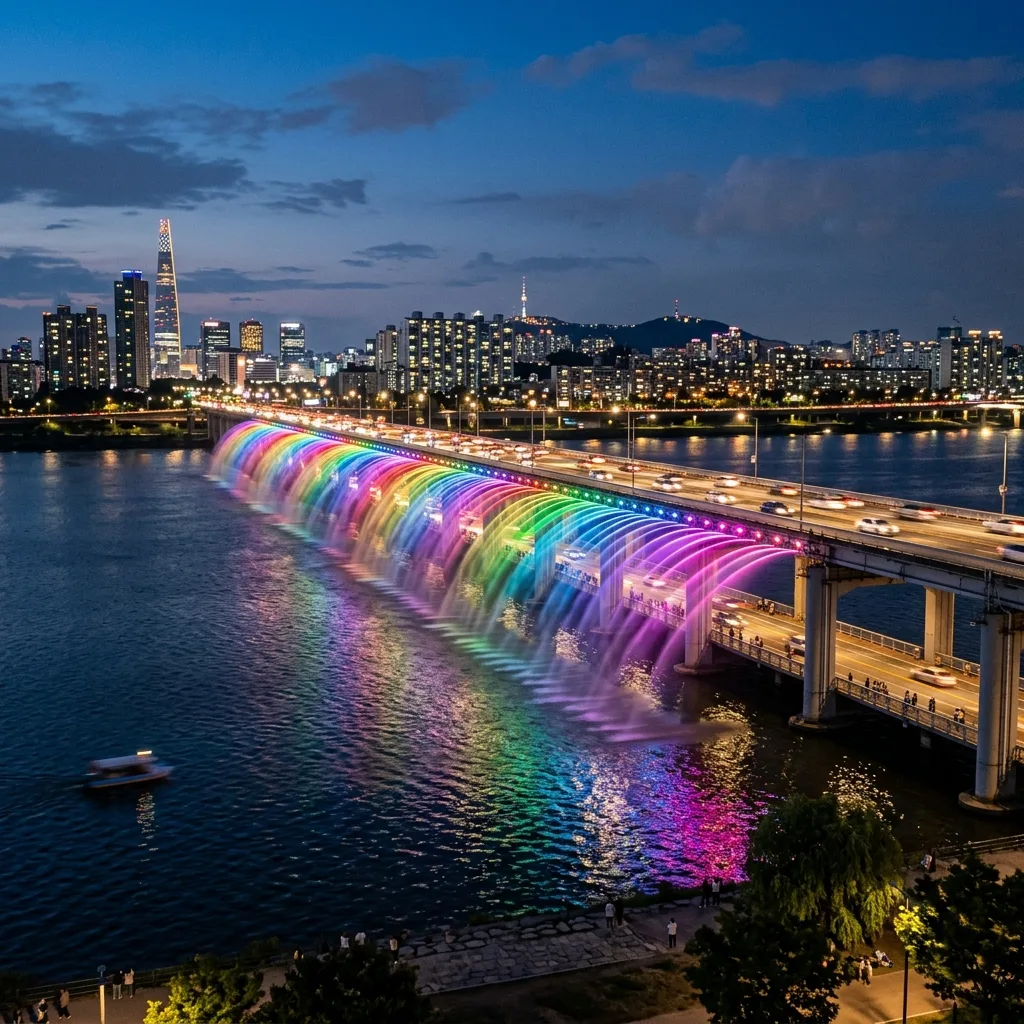
The Banpo Bridge stands as a testament to Seoul's innovative spirit, renowned globally for its spectacular Moonlight Rainbow Fountain. This dazzling display of water, light, and music has illuminated countless romantic and poignant scenes in K-dramas. Viewers will recognize its enchanting glow from popular series such as Itaewon Class, where it often mirrored the protagonists' tumultuous emotions, Legend of the Blue Sea, providing a magical backdrop for fantasy, and Boys Over Flowers, amplifying the fairytale romance. While The Glory is celebrated for its gripping narrative, its iconic scenes, particularly those involving the game of Go (Baduk), were filmed at distinct locations like Cheongna Lake Park and Cheongju Jungang Park, not on Banpo Bridge itself.
- Travel Tip: The Moonlight Rainbow Fountain operates seasonally, typically from April to October. For the 2025 season, the fountain typically runs daily from April 1 to October 31. Each show lasts for 20 minutes. The off-season (April–June, September–October) schedule includes shows at 12:00, 19:30, 20:00, 20:30, and 21:00. During the peak season (July–August), an additional show is added at 21:30. Note that the 12:00 PM show is a daytime performance without the rainbow LED lights. Shows are subject to cancellation without notice due to adverse weather conditions such as heavy rain, strong winds, or high river turbidity. Check the official operating schedule before your visit for the most spectacular viewing experience. The best viewing spot is from Banpo Hangang Park, near the Some Sevit floating islands.
Mapo Bridge
While not the primary setting for the ethereal "Bridge to the Afterlife" featured in Hotel Del Luna (those memorable scenes were actually filmed at the Bukhangang Railroad Bridge), Mapo Bridge nonetheless embodies the melancholic and transitional themes frequently explored in K-dramas that delve into concepts of life, death, and fate. Its expansive and often introspective views of the Han River make it a recurring location for characters deep in contemplation or engaged in significant, life-altering discussions. The bridge's solemn beauty offers a compelling backdrop for moments of quiet despair, profound realization, or hopeful contemplation.
Dongjak Bridge
Distinguished by its vibrant blue hue, Dongjak Bridge carved a crucial role in the thrilling finale of The First Responders 2, serving as the emotionally charged setting for the heartfelt reunion and confession between Jin Ho-gae and Song Seol. This bridge is particularly unique for its integration of transportation, carrying both vehicular traffic and Seoul Subway Line 4, making it easily accessible for visitors. Furthermore, it uniquely houses the Cloud Cafe and Sunset Cafe, which are built directly into the bridge structure, offering unparalleled panoramic views of the Han River. These cafes provide an ideal setting not only for dramatic K-drama moments but also for romantic dates or simply enjoying Seoul's breathtaking skyline, further cementing its status as a versatile K-drama location.
Epic Provincial Landmarks: Beyond Seoul's Rivers
Venturing beyond the bustling capital reveals Korea's provinces, which are home to stunning natural and historical bridges offering breathtaking scenery that has graced numerous K-dramas, adding a layer of majestic grandeur to their narratives.
Woljeonggyo Bridge (Gyeongju)
In Gyeongju, the historic capital of the Silla Kingdom, lies the exquisitely reconstructed Woljeonggyo Bridge. This covered bridge, a masterpiece of ancient Korean architecture, gained widespread fame as a recurring backdrop for the fictional Kingdom of Corea in the hit drama The King: Eternal Monarch. Its traditional aesthetic often leads to associations with historical dramas, yet it's important to note that Woljeonggyo was not a primary filming location for Moon Lovers: Scarlet Heart Ryeo; those captivating scenes were instead filmed at picturesque sites like Gwanghallu Pavilion and Wolhwawon Garden. Woljeonggyo is particularly magical when illuminated at night, casting a golden glow over the surrounding area, providing an unparalleled setting for photography and immersing visitors in the ambiance of a historical Korean drama.
Sogeumsan Suspension Bridge (Wonju)
Nestled in the scenic landscape of Wonju, Gangwon-do, the thrilling Sogeumsan Suspension Bridge featured prominently in the acclaimed series It's Okay to Not Be Okay (Episode 9). It was here that Moon Gang-tae bravely took Ko Mun-yeong on their memorable first date, a scene humorously highlighting Mun-yeong's palpable struggle with her fear of heights as the bridge swayed gently. Spanning an impressive 200 meters and suspended a dizzying 100 meters above the ground, this architectural marvel is part of the expanded Wonju Sogeumsan Mountain Grand Valley, which now offers even more attractions following a challenging climb of 578 steps. The bridge provides an exhilarating experience and panoramic views, making it a must-visit for adventure seekers and K-drama fans alike.
Hantan River Sky Bridge (Pocheon)
The Hantan River Sky Bridge holds a deeply significant and fated encounter scene in Crash Landing on You (Episode 13), where Ri Jeong-hyeok and Yoon Se-ri unexpectedly connect their past experiences in Switzerland to their intertwined present. This moment strikingly mirrors the iconic Sigriswil Panorama Bridge in Switzerland, where their paths first crossed. Located in Pocheon, Gyeonggi Province, this impressive 200-meter-long pedestrian bridge offers stunning views of the dramatic Hantan River gorge, an area recognized as part of the Hantangang River UNESCO Global Geopark. Visitors can experience a thrilling "walking in the sky" sensation thanks to its strategically placed glass floor sections, providing an unforgettable perspective of the surrounding natural beauty.
Urban Riverwalks & Streams: Intimate K-Drama Settings
Beyond the grand bridges and vast rivers, Seoul's intricate network of urban riverwalks and streams provides serene and dynamic settings, perfect for a diverse range of K-drama scenes, from romantic, reflective strolls to intense, pivotal discussions. These intimate locations offer a different kind of charm, often serving as quiet escapes within the bustling city.
Cheonggyecheon Stream (Seoul)
This beautifully restored urban stream is an exceptionally frequent K-drama filming location, beloved for its ability to convey both reflective solitude and budding romance. It has provided the backdrop for numerous memorable moments:
Queen of Tears(2024): Baek Hyun-woo and Hong Hae-in shared a poignant walk along the stream near Gwangtonggyo Bridge after a company dinner, a scene that underscored their evolving relationship.Goblin(2016): The truly fateful first meeting of the Grim Reaper and Sunny, and the mystical encounter where Eun-tak’s mother meets Samshin, were filmed on the Yongdap Station Bridge, an extended and particularly atmospheric part of the stream.Vincenzo(2021): Vincenzo Cassano and Hong Cha-young were frequently seen here, engaging in pivotal conversations that shaped the course of their revenge.True Beauty(2020): Lim Ju-kyung and Lee Su-ho shared numerous sweet moments, particularly around the iconic stepping stones area, symbolizing their playful and heartfelt connection.- Other notable appearances: This versatile stream has also featured in
Marry My Husband,Lovestruck in the City,Chicago Typewriter,Flower of Evil, and the classicMy Lovely Sam Soon. - Visitor Tip: Begin your exploration at Cheonggye Plaza near Gwanghwamun Station. This starting point offers easy access to many of the common K-drama backdrops along the stream. If you're looking to visit South Korea on a budget, exploring these free attractions along Cheonggyecheon Stream is an excellent option. For more tips on budget travel, check out our guide: How to Travel South Korea on a Budget: $35/Day Survival Guide (2025).
Yeouido Hangang Park
As one of the largest and most popular parks situated along the Han River, Yeouido Hangang Park is a sprawling green space ideal for a wide variety of outdoor scenes, ranging from leisurely picnics to intense, introspective moments.
Squid Game(2021): The park made a memorable appearance in Episode 2, serving as the jarring backdrop where Seong Gi-hun and Cho Sang-woo are abruptly dropped off after the terrifying first game, starkly highlighting their return to a grim, mundane reality.Hospital Playlist(2020): The beloved "Winter-Garden" couple (Ahn Jeong-won and Jang Gye-ul) enjoyed a romantic stroll and shared a tender kiss here in Season 2, showcasing the park's capacity for intimate moments.
The park is renowned among locals and tourists alike for its extensive pathways perfect for cycling, its vast open spaces ideal for picnics, and its numerous facilities for other leisure activities, making it a bustling hub of urban recreation.
Ttukseom Park
With its distinctive modern structures and expansive open spaces, Ttukseom Park offers a unique urban landscape that sets it apart. Its modern aesthetic has made it a popular choice for K-dramas seeking a contemporary and dynamic setting.
Lovely Runner(2024): The park played host to a particularly memorable and dramatic scene where Seon-jae bravely rescues Sol from the water, with the park's vibrant night view providing an intensely emotional and visually striking backdrop for their heroic encounter.- Other notable appearances: Ttukseom Park has also been featured in series such as
K-pop Demon Hunters,City Hunter, andThe Liar and His Lover, demonstrating its versatility for various genres. - Iconic Spot: The Seoul Saenggaengmaru (J-Bug), a visually striking giant cylindrical building that houses both a library and a cafe, frequently serves as an iconic architectural backdrop within the park, easily recognizable to K-drama enthusiasts.
Pro Tips for the Perfect Shot: Elevate Your K-Drama Photography
Capturing the cinematic essence of these iconic K-drama scenes requires more than just being there; it demands a photographer's eye and technical prowess. Elevate your travel photography to professional standards with these specialized techniques, ensuring your images tell a story as compelling as any K-drama. When planning your photography gear, consider what you'll need for varying conditions; a comprehensive guide like The Ultimate South Korea Packing List (2026 Edition): Don't Forget the Essentials can help ensure you have all your photography and travel necessities.
Best 'Blue Hour' Timing
"Blue hour" refers to the magical periods of twilight each morning and evening when the sun is positioned just below the horizon, bathing the sky in a deep, enchanting blue hue. This fleeting light is perfect for capturing stunning cityscapes and illuminated bridges. To seize this ephemeral beauty, plan to arrive at your location approximately 30 minutes before sunrise or sunset. The prime "sweet spot," where the artificial lights from bridges and cityscapes achieve a perfect, harmonious balance with the naturally deep blue sky, typically lasts for only a brief 15-20 minutes.
- Lighting Strategy: When composing your shot, consider shooting towards the direction of the sunset to capture a vibrant gradient of colors, from warm oranges to cool blues. Alternatively, shooting away from the sunset will yield a more uniform, deeper blue tone in the sky, providing a dramatic contrast to the artificial lights.
Long Exposure Settings for Water & Lights
Long exposure photography is an advanced technique that can transform dynamic elements like moving water and city lights into ethereal works of art. It can render flowing water into a silky, dreamlike blur and turn the mundane lights of moving vehicles into captivating streaks of color, an effect particularly stunning during the blue hour.
- Essential Gear: A sturdy tripod is absolutely indispensable for long exposure photography, as it eliminates camera shake during extended shutter times. Additionally, a remote shutter release or utilizing your camera's built-in 2-second self-timer is highly recommended to further minimize any subtle vibrations from pressing the shutter button.
- Optimized Camera Settings:
- Image Format: Always shoot in RAW format. This provides maximum flexibility during post-processing to adjust exposure, white balance, and retrieve detail in shadows and highlights without compromising image quality.
- ISO Sensitivity: Set your ISO to 100 (or your camera's lowest native ISO setting) to virtually eliminate digital noise, ensuring clean, sharp images.
- Aperture Control: Utilize an aperture between f/8 and f/13 for optimal sharpness across the entire depth of field, from foreground elements to distant cityscapes. This aperture range also helps create a pleasing "starburst" effect around bright light sources.
- Shutter Speed Experimentation: Begin experimenting with shutter speeds longer than 5 seconds. The exact duration will depend on the ambient light and the desired effect. Longer speeds will create silkier water and more pronounced light trails from moving cars. Don't be afraid to adjust and experiment to achieve your artistic vision.
- White Balance: Manually set your white balance to "Daylight" or "Tungsten" to preserve the cool, dramatic blue tones characteristic of the blue hour, preventing unwanted color casts.
Symmetry-Focused Composition
Symmetry in composition creates powerful, balanced, and aesthetically pleasing photographs, a technique particularly effective when capturing the grandeur of bridges and their reflections.
- Vertical Symmetry: To create a strong sense of balance and grandeur, perfectly center the bridge's main axis or a prominent architectural feature directly in the middle of your frame. Many cameras offer a grid overlay feature on their LCD screen or viewfinder, which can be invaluable for achieving precise alignment.
- Reflective (Horizontal) Symmetry: For bridges spanning over water, strive to capture a perfect reflection. Position yourself as low to the water's edge as possible and compose your shot so that the horizon line (where the bridge meets its reflection) is precisely centered in the frame. Still, calm water is absolutely crucial for clear and crisp reflections.
- Dynamic Leading Lines: Utilize the natural lines inherent in the bridge's design—its railings, supporting cables, or pathways—to act as leading lines. These visual elements effectively draw the viewer's eye through the photograph, guiding them towards a focal point, a distant vanishing point, or the intricate details of the bridge itself.
- Precision Tools: A tripod is once again indispensable for achieving the meticulous alignment required for symmetrical compositions. A wide-angle lens can enhance the sense of grandeur and emphasize the dramatic leading lines of large bridges. Furthermore, a leveling tool (either built-in to your camera or an external hot-shoe attachment) ensures your shot is perfectly straight, preventing any distracting tilts.
- Embracing Dynamic Symmetry: While perfect symmetry is visually impactful, sometimes introducing a small, carefully placed, off-center element—such as a solitary person walking, a passing boat, or a unique architectural detail—can add a dynamic point of interest and narrative without disrupting the overall balance of the symmetrical composition.
Navigating South Korea: Essential Travel Information (2024/2025)
Understanding the latest travel regulations is crucial for a smooth trip. South Korea has made significant updates to its entry requirements to enhance the visitor experience.
K-ETA and Visa Requirements (2025/2026 Updates)
For 2025 and 2026, South Korea has streamlined its entry processes, most notably by extending the K-ETA exemption for many nationalities.
- K-ETA Exemption Extended: The temporary suspension of the Korea Electronic Travel Authorization (K-ETA) for citizens of approximately 67 countries/regions (including the United States, Canada, United Kingdom, Australia, Japan, Singapore, and most of Europe) has been extended until December 31, 2026. This means travelers from these countries do not need to apply for a K-ETA for short-term visits (tourism/business) during this period.
- Optional K-ETA: If you are from an exempt country, you can still opt to apply for a K-ETA (fee: 10,000 KRW). Doing so provides the benefit of being exempt from filling out a physical arrival card upon entry, potentially speeding up your immigration process.
- e-Arrival Card: Beginning in 2025, South Korea is transitioning to a digital entry system. By 2026, the digital e-Arrival Card will become mandatory for all foreign nationals. Both paper and digital formats will be accepted through December 2025, but the digital system (accessible via
www.e-arrivalcard.go.kr) is the preferred method for 2026. Travelers with a valid K-ETA or registered residents in Korea are generally exempt from the e-Arrival Card. - Simplified Visa Requirements: For travelers from countries that do require a visa, significant simplifications were announced by the Korea Visa Application Center (KVAC), effective February 20, 2026. This includes the waiver of the three-month bank statement requirement for all visa types and more flexible document submission for students and group applications. Always verify the latest requirements on the official K-ETA website (
k-eta.go.kr) or the Korea Visa Portal (visa.go.kr) before your trip.
Getting Around Seoul: Public Transportation
Navigating Seoul's expansive public transportation system is incredibly efficient and an experience in itself. The Seoul Metro is one of the best in the world, renowned for its cleanliness, punctuality, and extensive network.
- T-Money Card: Your essential companion for public transport in Korea is the Mastering the T-Money Card: Your Key to Korea's Transit (and More). This reloadable smart card can be used on subways, buses, and even some taxis, offering discounted fares compared to single-use tickets. It can be purchased and topped up at subway stations, convenience stores, and vending machines.
- Subway: The subway is the most convenient way to travel across Seoul. Stations are well-marked in English, and clear signage makes navigation straightforward.
- Buses: Seoul's bus system is extensive, color-coded by route type (blue for main routes, green for connecting routes, red for express, yellow for循環). While slightly more challenging for first-time visitors due to less English signage, it offers a great way to see the city from above ground.
- KakaoMap/Naver Map: These local navigation apps are far more accurate and user-friendly for public transportation in Korea than international alternatives like Google Maps. Download them before your trip for seamless navigation.
Conclusion
South Korea's iconic bridges and serene river scenes offer a unique blend of cinematic history, stunning natural beauty, and vibrant urban charm. From the captivating light shows of Banpo Bridge to the dramatic vistas of the Hantan River Sky Bridge, each location tells a story, amplified by its role in beloved K-dramas. By visiting these unforgettable filming locations, equipping yourself with advanced photography techniques like mastering blue hour and long exposure, and staying informed about essential travel information like K-ETA exemptions and the e-Arrival Card, you can do more than just travel; you can immerse yourself in the magic of Korea. Capture breathtaking images, create your own compelling travel narrative, and walk in the footsteps of your favorite K-drama characters. So pack your camera, cue your favorite K-drama soundtrack, and get ready to explore the beautiful backdrops that bring these stories to life.