Chinese Street Food Safety Guide: What to Eat, What to Avoid

Introduction
The aroma of sizzling skewers, the steam rising from noodle stalls, and the vibrant colors of fresh produce beckon from every corner of China's bustling streets. Chinese street food is an unforgettable culinary adventure, offering a tantalizing glimpse into local culture and flavors. However, for first-time visitors, navigating this delicious landscape can come with a hint of apprehension: how do you ensure a safe and healthy experience without missing out on the best bites?
This guide will equip you with the knowledge to confidently explore China's street food scene. You'll learn how to identify reputable vendors, spot the freshest ingredients, and understand which dishes are generally safer bets, allowing you to savor every moment without worry.
The Allure and Risks of Chinese Street Food
Core Information and Context
Chinese street food is more than just sustenance; it's a sensory explosion and a cornerstone of daily life. From breakfast jianbing (savory crepes) to late-night chuan'r (grilled skewers), these culinary traditions offer authentic tastes often unavailable in sit-down restaurants.
However, street food stalls operate with varying standards of hygiene and food preparation. The key risks often involve:
- Water Quality: Used for washing produce, cooking, or making beverages.
- Temperature Control: Food kept at unsafe temperatures for too long can harbor bacteria.
- Ingredient Freshness: Perishable items, especially meats and seafood, need careful handling.
- Sanitation: General cleanliness of stalls, utensils, and vendor practices.
Understanding these factors is the first step to making informed choices.
Key Facts from Web Search (Simulated for this draft)
- High turnover = fresh food: Stalls with long lines and rapid sales are generally a good sign, indicating fresh ingredients and popular dishes.
- Look for visible cooking: Food cooked fresh to order, especially at high temperatures, reduces risk.
- Trust your senses: Avoid anything that looks, smells, or feels "off."
- Hygiene basics: Vendors who handle money and then food without gloves, or have visibly dirty stalls, are red flags.
- Local favorites: Stick to dishes popular with locals; they're often reliable indicators of quality and freshness.
Deeper Dive: What to Eat and What to Avoid
What to Confidently Try
-
Freshly Cooked Noodles/Dumplings:
- Why: Often boiled or fried at high temperatures immediately before serving.
- Look for: Visible preparation, boiling water, and steaming hot dishes.
- Examples: Lanzhou拉面 (lamian), jiaozi 饺子 (dumplings), huntun 馄饨 (wontons).
-
Jianbing (煎饼):
- Why: Cooked fresh on a hot griddle, ensuring high cooking temperatures.
- Look for: Crispiness, vibrant sauces, and a busy vendor.
- Tip: A breakfast staple, generally very safe.
-
Chuan'r (串儿 - Grilled Skewers):
- Why: Cooked over open flames, ensuring thorough cooking.
- Look for: Skewers cooked to order, not pre-cooked and reheated.
- Caution: Ensure meat is cooked through, especially chicken and pork.
-
Fried Tofu/Stinky Tofu (炸豆腐/臭豆腐):
- Why: Deep-fried at very high temperatures.
- Look for: Freshly fried pieces, crispy exterior.
- Note: The "stinky" part is flavor, not spoilage!
-
Packaged Snacks/Bottled Drinks:
- Why: Factory-sealed, minimizing contamination risk.
- Look for: Intact seals, expiry dates.
What to Approach with Caution (or Avoid)
-
Raw or Undercooked Seafood:
- Why: High risk of parasites and bacterial infection if not fresh or properly handled.
- Avoid if: Not cooked through, or if you're unsure about the vendor's reputation.
-
Pre-cut Fruit:
- Why: Often washed with questionable water or exposed to contaminants.
- Opt for: Whole fruits you can peel yourself.
-
Dairy Products from Unknown Sources:
- Why: Pasteurization standards can vary.
- Stick to: Reputable brands in sealed packaging.
-
Uncovered Food:
- Why: Exposed to dust, insects, and other environmental contaminants.
- Avoid if: Food has been sitting out for extended periods without cover.
-
Cold Dishes (凉菜 Liangcai):
- Why: If not prepared and stored hygienically, these can be breeding grounds for bacteria.
- Exercise caution: Observe the vendor's practices carefully.
Practical Guide
How to Spot a Safe Street Food Stall
- High Turnover: A busy stall means fresh ingredients are constantly being used.
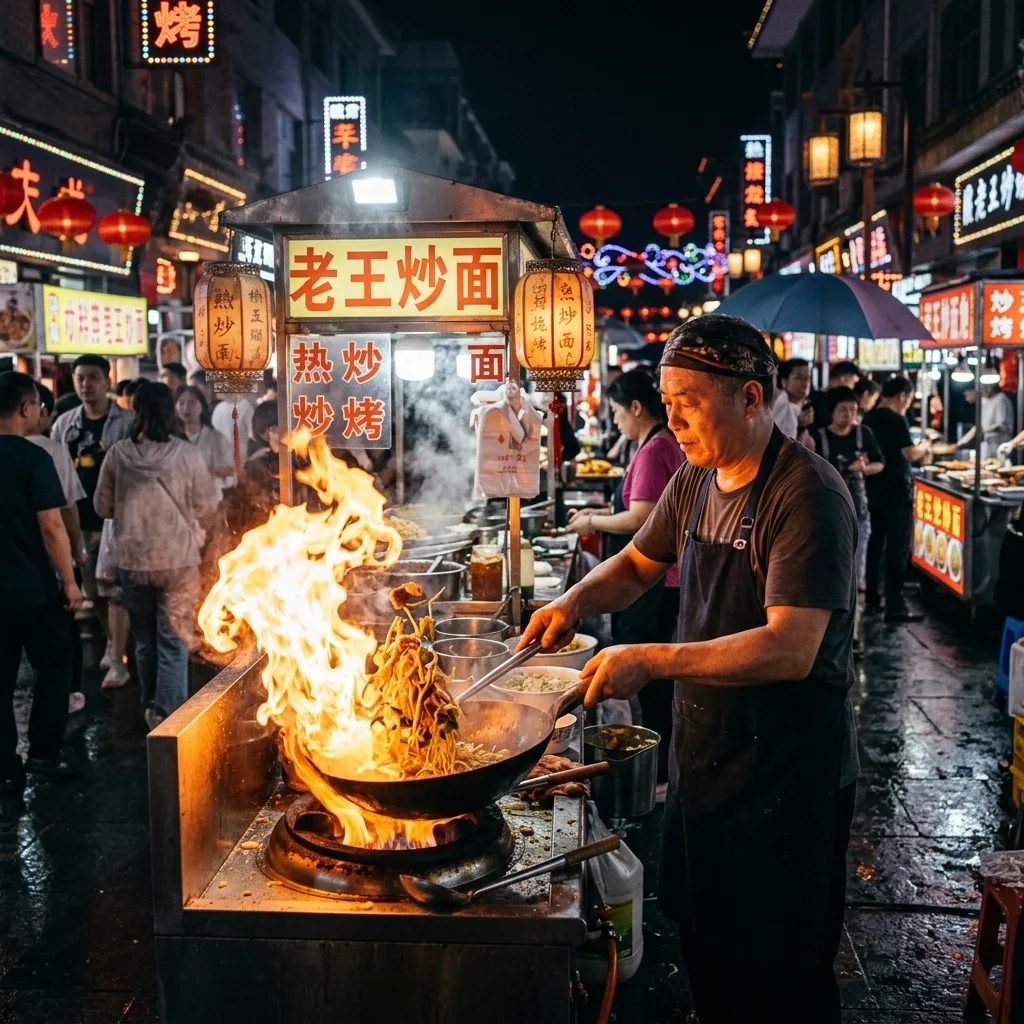
- Visible Cooking: Watch the food being prepared and cooked right in front of you. Steam and sizzle are good signs.
- Cleanliness: While street food is never spotless, look for reasonable hygiene. Do vendors use gloves? Are utensils clean? Is the cooking surface relatively tidy?
- Filtered Water: Some reputable stalls will use bottled water for washing or cooking.
- Local Crowd: If locals are lining up, it's usually a good indicator of quality and safety.
General Tips
- Eat early: Freshly prepared food is less likely to have sat out for long.
- Bring your own tissues/wipes: For personal hygiene.
- Cash is king: Most street vendors only accept cash (or local digital payments if you have them).
- Be adventurous, but cautious: Try new things, but listen to your gut feeling.
Tips & Common Mistakes
What Most Guides Miss
Many guides focus solely on popular dishes. What's often overlooked are the subtle cues: the sound of cooking, the speed of service, and the rapport between vendor and local customers. These elements speak volumes about a stall's reliability. Don't be afraid to point to what you want if language is a barrier, but make eye contact and smile to build a connection.
Insider Advice
- Portable Hand Sanitizer: Your best friend for eating on the go.
- Look for single-use utensils: Or vendors who quickly wash reusable ones.
- Avoid ice: Unless you're certain it's made from purified water.
- Carry a small phrasebook: Learning "hello," "thank you," and "no spice" can go a long way.
Regional Safety Patterns
The safest street-food choices in China are not identical everywhere. Climate, local eating habits, and the way a stall stores ingredients all change the risk profile. A few patterns are worth remembering.
Northern cities tend to be easier for first-timers. In Beijing, Xi'an, Harbin, and other northern destinations, a lot of the classic street-food lineup is wheat-based or cooked on demand: jianbing, dumpling soups, steamed buns, grilled skewers, pancakes, and noodles. These foods are usually assembled in front of you and served hot. Heat is your friend because it reduces the chance that ingredients have been sitting around.
Southern and coastal cities offer more seafood and cold dishes. That does not make them unsafe by default, but it does mean you should be more selective. If a stall specializes in seafood, pay attention to the temperature of the display, whether the shellfish is being cooked to order, and whether the vendor keeps raw and cooked items separate. A line of local customers is a better sign than a pretty menu board.
Breakfast stalls are often the lowest-risk entry point. Morning vendors typically sell items with fast turnover: soy milk, youtiao, congee, buns, egg pancakes, and fresh noodles. Because the food is moving quickly and is prepared in the open, these stalls are often a good way to ease into street eating before you try the wilder night-market foods.
Tourist streets are not always the safest streets. Popular food zones can be cleaner on the surface, but heavy tourist traffic sometimes means food is prepped for appearance rather than freshness. If a stall is too glossy, too generic, and too detached from the local crowd, it may be serving style more than substance. A modest-looking stall with a fast-moving local queue is often the better bet.
Night markets reward observation. By evening, the best vendors usually have a rhythm: one person takes orders, one cooks, one plates, and the line keeps moving. That is a positive sign. The stalls that worry me most are the ones with a full tray of cooked food sitting under heat lamps for a long time and no visible churn in customers.
A Simple Decision Tree at the Stall
When you are standing in front of a vendor and trying to decide whether to order, use this quick filter:
- Is the food cooked hot in front of me?
- Are the ingredients covered or exposed to dust and traffic?
- Is the queue moving quickly?
- Does the stall look like it serves locals, not only tourists?
- Do I understand what I am ordering well enough to know how it is prepared?
If the answer is yes to most of those questions, the stall is probably fine. If you answer no to two or more, keep walking. You do not need to justify every choice. China has so much street food that passing on one stall never means missing the experience.
What to Order on a First Night
If you want to ease in without being timid, a good first-night order usually includes one hot starch, one protein, and one simple vegetable or snack item. For example:
- A fresh jianbing or savory pancake
- A skewer plate with meat, tofu, or mushrooms
- Steamed buns or dumplings that have been cooked to order
- A bottled drink rather than an iced beverage from an open dispenser
That combination gives you flavor without pushing all the risk factors at once. It also gives your stomach a chance to tell you how it is handling the new food environment before you commit to a second round.
If you are traveling with a group, split dishes rather than each person ordering a full portion of everything. That lets you sample more without overeating. It also means you can quietly stop after one item if a particular stall feels questionable.
If You Have a Sensitive Stomach
Travelers with a sensitive digestive system should not treat street food as an all-or-nothing challenge. You can still enjoy it by narrowing the field:
- Prioritize foods that are grilled, steamed, or fried at high heat.
- Avoid raw salads, cold noodle salads, and fruit that has been cut in advance.
- Skip heavy cream sauces unless you know the vendor well.
- Be cautious with shellfish, particularly in hot weather.
- Ask for less spice if your body reacts badly to chili oil or Sichuan pepper.
It also helps to eat your first street-food meal earlier in the day, not after midnight. If your body reacts, you want time to find medicine, water, and rest before your day is over.
Some travelers bring basic stomach medication, oral rehydration packets, and probiotic tablets. That is sensible, but it is not a substitute for judgment. The best prevention is still choosing stalls that cook openly, serve food quickly, and stay busy.
If You Start Feeling Unwell
Even careful travelers occasionally get a mild stomach upset. The goal is to keep it mild.
- Stop eating immediately.
- Switch to bottled water or an oral rehydration drink.
- Avoid alcohol, raw fruit, and more street food for the rest of the day.
- Rest and give your system time to settle.
- Seek medical help if symptoms become severe, persistent, or include dehydration, fever, or blood.
Do not assume every stomach issue is from the last thing you ate. Jet lag, dehydration, heat, and overeating are common contributors too. Often the fix is a slower schedule and more water, not a dramatic diet overhaul.
A Practical Street-Food Flow
The easiest way to enjoy Chinese street food safely is to think in layers. Start with a modest, clearly cooked item. If that goes well, have one or two more things later in the evening. If you feel fine the next morning, you can expand the range of foods you try.
That approach is more realistic than trying to build a giant tasting itinerary on day one. It also lets you notice which vendors you trust and which neighborhood patterns feel comfortable. After one or two markets, your eyes will get faster at spotting good turnover, sensible hygiene, and the kind of line that signals local confidence rather than social-media hype. Over time, you will naturally learn which dishes feel gentle, which ones are worth the risk, and which stalls deserve a second visit.
What Not to Do
There are a few self-inflicted mistakes that make street food feel riskier than it has to be.
Do not show up starving and order five things at once. That makes it harder to notice which dish bothered you if your stomach reacts later. Do not treat every famous item as mandatory on the same night. And do not assume that the prettiest stall is the safest one.
It also helps not to confuse novelty with value. A vendor selling one excellent, steaming hot dish is usually a better choice than a market stall built around visual drama and photo props. If the food looks like it was prepared for the camera first and the diner second, keep moving.
The Comfort Zone Rule
If you are unsure, stay inside your comfort zone for the first 24 hours. That does not mean avoiding street food entirely. It means choosing the version of street food that feels closest to what you already know: hot noodles, grilled meat, steamed buns, dumplings, or pancakes cooked in front of you.
Once that first day goes well, widen the circle. Try one dish with a different texture, one vendor in a busier market, or one regional specialty you would normally skip. You are not trying to win a contest. You are learning how to eat confidently in a new food environment without rushing the process.
A Simple Two-Stop Plan
If you want a low-stress way to test the waters, build your first street-food night around only two stops.
- Stop 1: a breakfast or early-evening stall with one clearly cooked item.
- Stop 2: a second vendor with a different style, like dumplings after skewers or noodles after buns.
That two-stop structure gives you variety without overcommitting. It also gives your body a chance to respond before you go further. By the time you finish the second stop, you will usually know whether you can keep exploring or should switch to a lighter plan for the rest of the night.
Which Street-Food Cities Are Easiest for First-Timers?
If you are trying to decide where to start, not every Chinese food city asks the same thing from you.
| If you want... | Best starting point |
|---|---|
| Familiar, easy-to-read tourist setup | Guilin or Yangshuo |
| Big-market energy and wider variety | Xi'an or Chengdu |
| More seafood and hotter weather risk | Southern coastal cities, with extra caution |
| A gentle first street-food night | Breakfast stalls in any major city |
For a first China trip, it is usually smarter to start with hot, cooked, high-turnover basics and expand from there. Do not make your first market your most experimental one.
FAQ
Q1: What if I get sick despite taking precautions?
A: Minor stomach upsets can happen due to new bacteria strains. Carry over-the-counter remedies. For anything more serious, seek medical attention. Ensure you have travel insurance.
Q2: Is tap water safe to drink in China?
A: Generally, no. Always stick to bottled water or boiled water.
Q3: How do I order if I don't speak Chinese?
A: Point to dishes, use translation apps, or observe what others are ordering and mimic them. Many vendors are used to tourists.
Q4: Are there vegetarian/vegan options?
A: Yes, but cross-contamination can be an issue. Clearly communicate your dietary needs using translation apps or written cards. Dishes like vegetable noodles, steamed buns (mantou), and some tofu preparations are often safe bets.
Conclusion
Chinese street food offers an unparalleled gastronomic journey. By being observant, making smart choices, and trusting your instincts, you can safely indulge in the incredible flavors and vibrant culture it represents. Don't let fear hold you back; armed with this guide, you're ready to embark on a delicious adventure through China's bustling streets. Enjoy every bite!
To make this usable in a real itinerary, combine it with the broader China travel planning guide, the regional context in China's natural wonders guide, the Shanghai food scene guide, and the language barrier guide for China before you start moving between cities.